

Destination
Tangier
The story
Bissara is Morocco's other classic soup and the wintertime cousin of harira: a thick, silky purée of dried split fava beans (or, in some regions, dried split peas), cooked to collapse with olive oil, garlic and cumin, and served piping hot in a wide shallow bowl with a heavy pour of Moroccan olive oil across the top, a dusting of ground cumin and sweet paprika, and a wedge of khobz for scooping. It's the traditional breakfast of the northern towns — Chefchaouen, Tetouan, Ouezzane, Meknes — sold from small counters in the morning souks from 6am to 10am, and eaten before a hard-labour day.
Method
Cover the split fava beans with cold water and soak 4 to 8 hours (overnight is easiest). Drain. This shortens the cook time; you can skip and simmer 30 minutes longer.
Combine the drained beans, garlic cloves, olive oil, cumin, paprika, cayenne and salt in a heavy pot. Add 1.5 litres of water. Bring to a gentle simmer, skim foam, cover partially, and cook 60 to 90 minutes (or 90 to 120 if not soaked) until the beans have completely collapsed into a rough purée.
Off the heat, blend to a very smooth purée with an immersion blender (or in batches in a jug blender). The bissara should be pourable but thick — the consistency of a heavy cream soup. If too thick, add hot water; if too thin, simmer another 5 minutes to reduce.
Season with more salt if needed. The finished bissara should taste of beans, olive oil and cumin, with a whisper of chili heat.
Rinse serving bowls with hot water — bissara loses heat fast, and a warm bowl keeps the soup at the right temperature.
Ladle the hot bissara into the warm bowls. Immediately drizzle each bowl generously with olive oil — a heavy tablespoon per portion. The oil should pool on top.
Dust each bowl with a heavy pinch of ground cumin, a lighter pinch of paprika and (if using) a pinch of dried mint. The spice dust should sit on the surface like snow.
Bring to the table with fresh khobz, olives and lemon wedges. Diners tear the bread and scoop the soup. Some like a squeeze of lemon; some don't. Serve piping hot — bissara cools fast.
Tips
- Split fava beans, not whole. Dried whole fava beans have a tough outer skin that stays in the finished purée. Split fava beans ("habas peladas" or foul mudammas) are already skinned and cook smooth.
- A whole head of garlic. Bissara should be aggressively garlicky. Ten to twelve cloves per pot is the Moroccan standard.
- Olive oil is half the flavour. Use good extra-virgin oil for the drizzle at the end. A cheap olive oil gives you a dull finish; a peppery Moroccan or Spanish oil transforms the bowl.
- Blend fully smooth. Rustic-texture bissara exists but the classical Chefchaouen version is a silky, cream-soup purée. Immersion blend for 60 seconds minimum.
- Eat immediately. Bissara cools fast and thickens as it sits. Reheat with a splash of hot water; do not microwave.
More recipes
View all
Cannellini or white beans simmered in tomato, garlic, cumin and paprika until soupy-tender. The Moroccan winter one-pot, eaten with khobz.
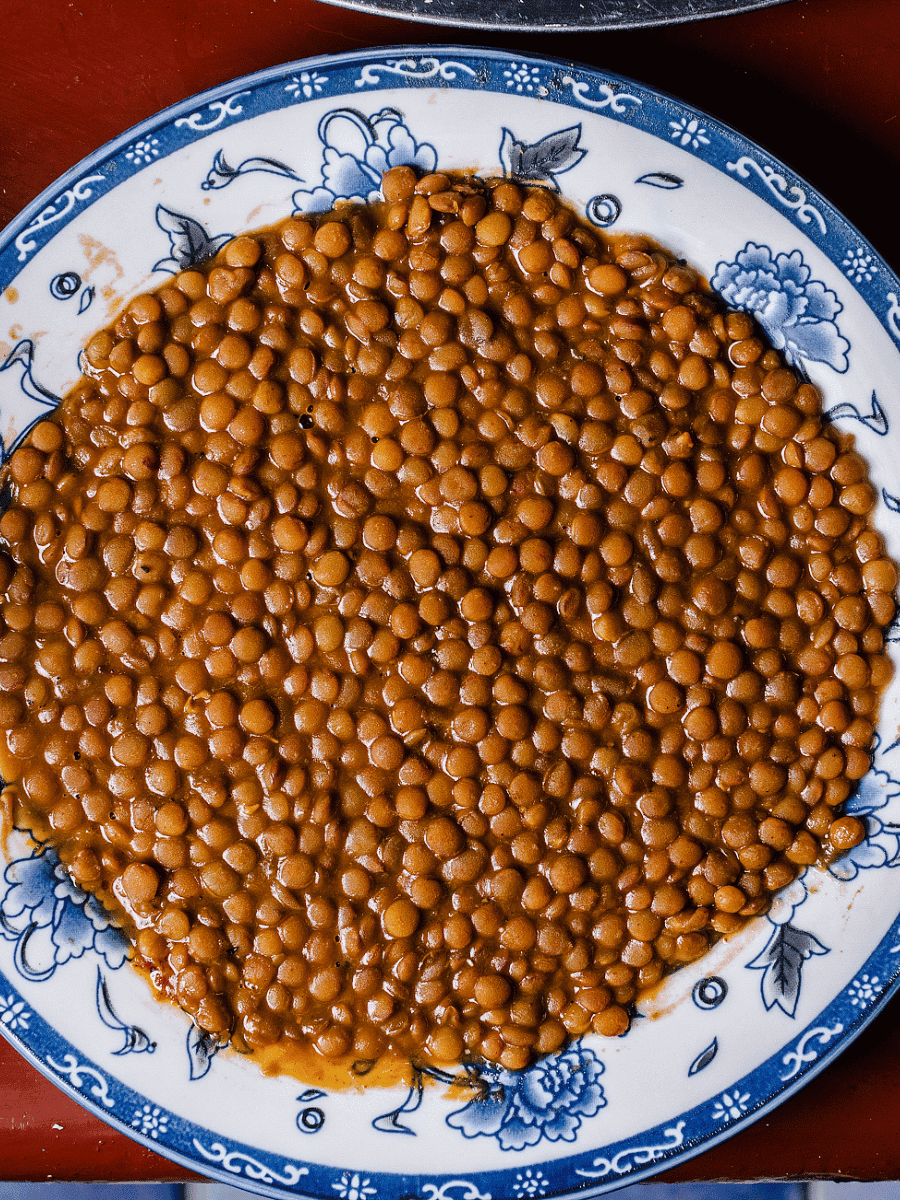
Brown lentils simmered with cumin, ginger and a spoon of tomato paste, finished with olive oil and coriander. Morocco's Monday-lunch pulse.
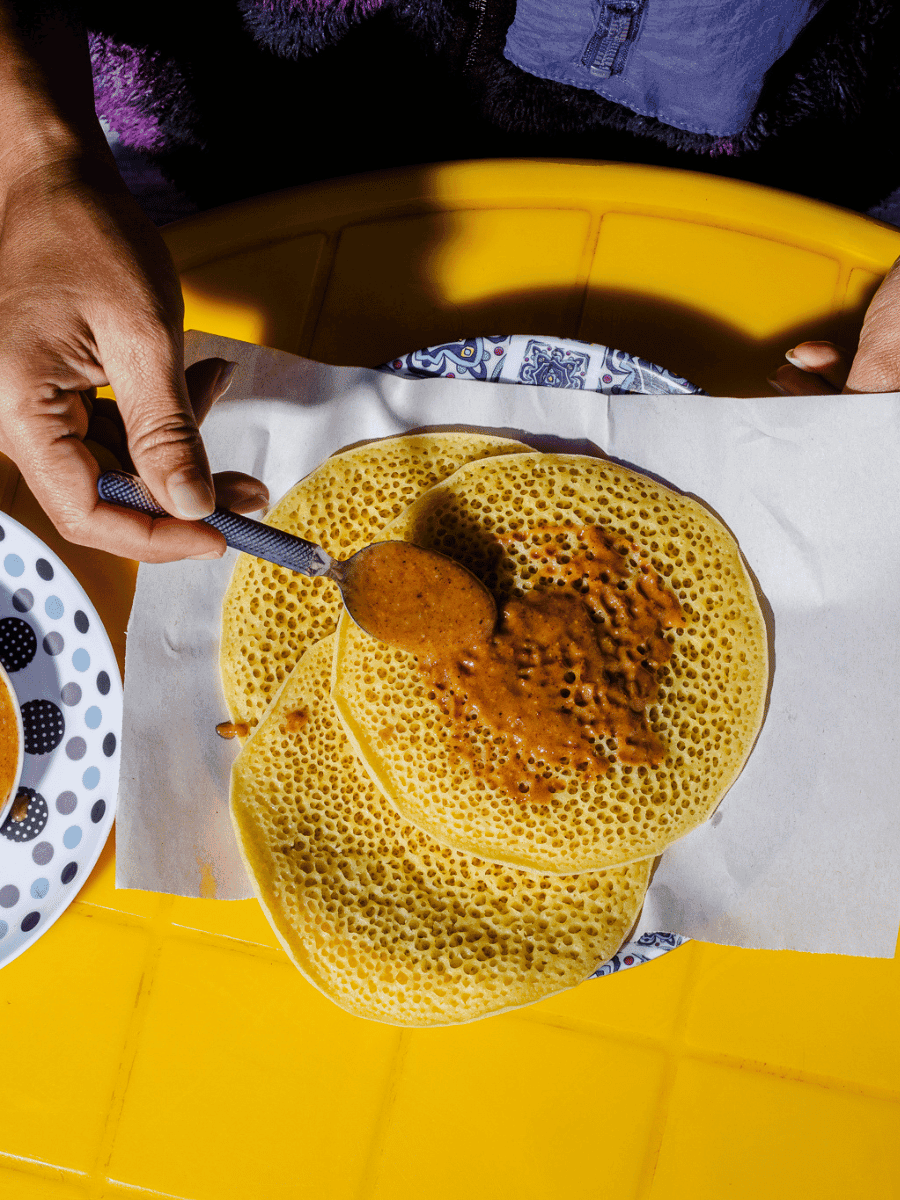
Soft yeasted semolina pancakes covered in a thousand tiny bubbles, cooked on a hot skillet on one side only. Morocco's spongy honey-soaked breakfast.

Crumbly semolina pan breads cooked on a hot skillet until the outside is golden and the inside is buttery-soft. Morocco's breakfast bread, served with honey and cheese.

Paper-thin dough folded into a flaky square, cooked on a hot skillet until golden and buttery. Morocco's laminated breakfast pastry, eaten with honey.

Ring-shaped yeast doughnuts, fried until deep gold and crackly, dusted with sugar or dipped in honey. Morocco's Sunday-morning street sweet, sold on a straw string.