
Destination
Casablanca
The story
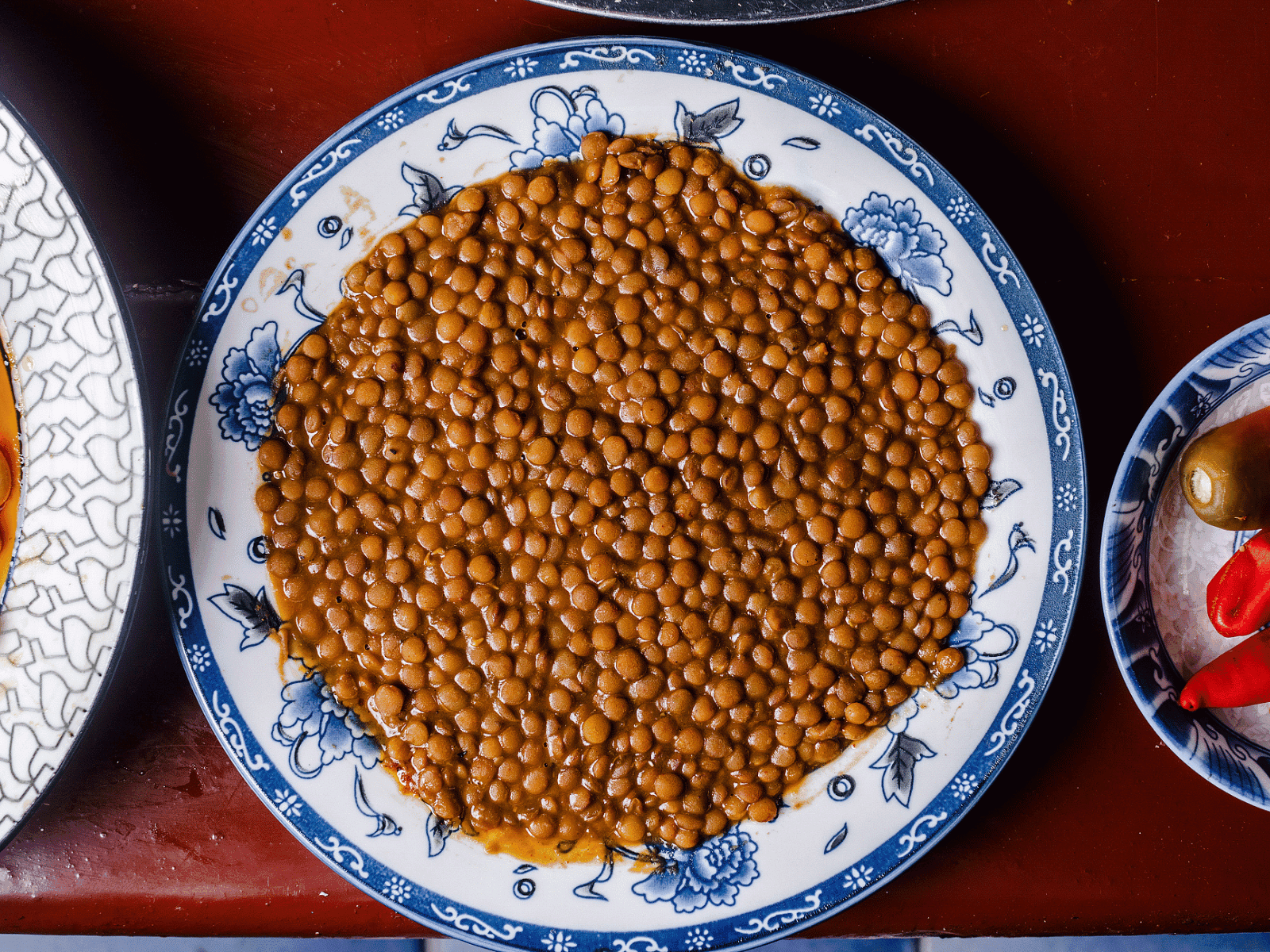
Adas — the Moroccan word for lentils, borrowed directly from the Arabic — is the country's default lunch pulse: a thick, brown, deeply savoury lentil stew, cooked with onion, garlic, cumin, ginger and turmeric, brightened with fresh coriander and a squeeze of lemon, and served with a heavy glug of olive oil and a wedge of khobz. Every Moroccan household makes it once a week, most often on a Monday (when the leftover Sunday couscous is gone), and every household has its own version. It's inexpensive, filling, and forgiving — you can double the pot without changing the recipe and it holds for days in the fridge.
Method
Warm the olive oil in a heavy pot over medium heat. Add the onion and cook 5 minutes until soft and translucent. Add the garlic and cook 60 seconds.
Add the cumin, ginger, turmeric, paprika, ras el hanout, pepper, cayenne and salt. Stir 60 seconds so the spices toast and coat the onions. This is the crucial step for Moroccan cooking — spices go in oil first, water later.
Add the chopped tomatoes (or tomato paste). Cook 5 minutes until the tomato has broken down and the oil starts to separate.
Add the drained lentils, bay leaf, and (if using) carrot and celery. Pour in the water. Bring to a simmer.
Cover partially and simmer 40 to 50 minutes, stirring occasionally, until the lentils are soft and the stew has thickened to a spoonable consistency. Add more water if it dries out too fast.
Taste. Adjust with salt and (if the finish is flat) a squeeze of lemon. Fish out the bay leaf.
Off the heat, stir in the chopped coriander and lemon juice. This keeps the herbs bright green rather than khaki-cooked.
Ladle into wide bowls. Drizzle each bowl with a heavy pour of extra virgin olive oil. Top with more coriander and, if using, thin slices of preserved lemon. Serve with fresh khobz for scooping.
Tips
- Bloom the spices in oil. This is the Moroccan technique. Dry-added spices dumped into simmering water taste raw and dusty. Cooked in oil first, they release their aromatic oils and integrate.
- Brown lentils, not red. Red lentils collapse into a purée in 15 minutes and lose their identity in a stew. Brown lentils hold their shape for the full 45-minute simmer.
- Finish with fresh herbs off the heat. Adding coriander to a still-boiling pot khakis the leaves. Off the heat, at the end, keeps them bright.
- Preserved lemon is a modern touch. Not every Moroccan cook uses it, but a tiny slice of preserved lemon on top of each bowl gives a specific salty-citrus edge that's worth trying.
- Better on day two. Adas holds beautifully for 4 days in the fridge and the flavour deepens overnight. Reheat gently with a splash of water.
More recipes
View all
Cannellini or white beans simmered in tomato, garlic, cumin and paprika until soupy-tender. The Moroccan winter one-pot, eaten with khobz.
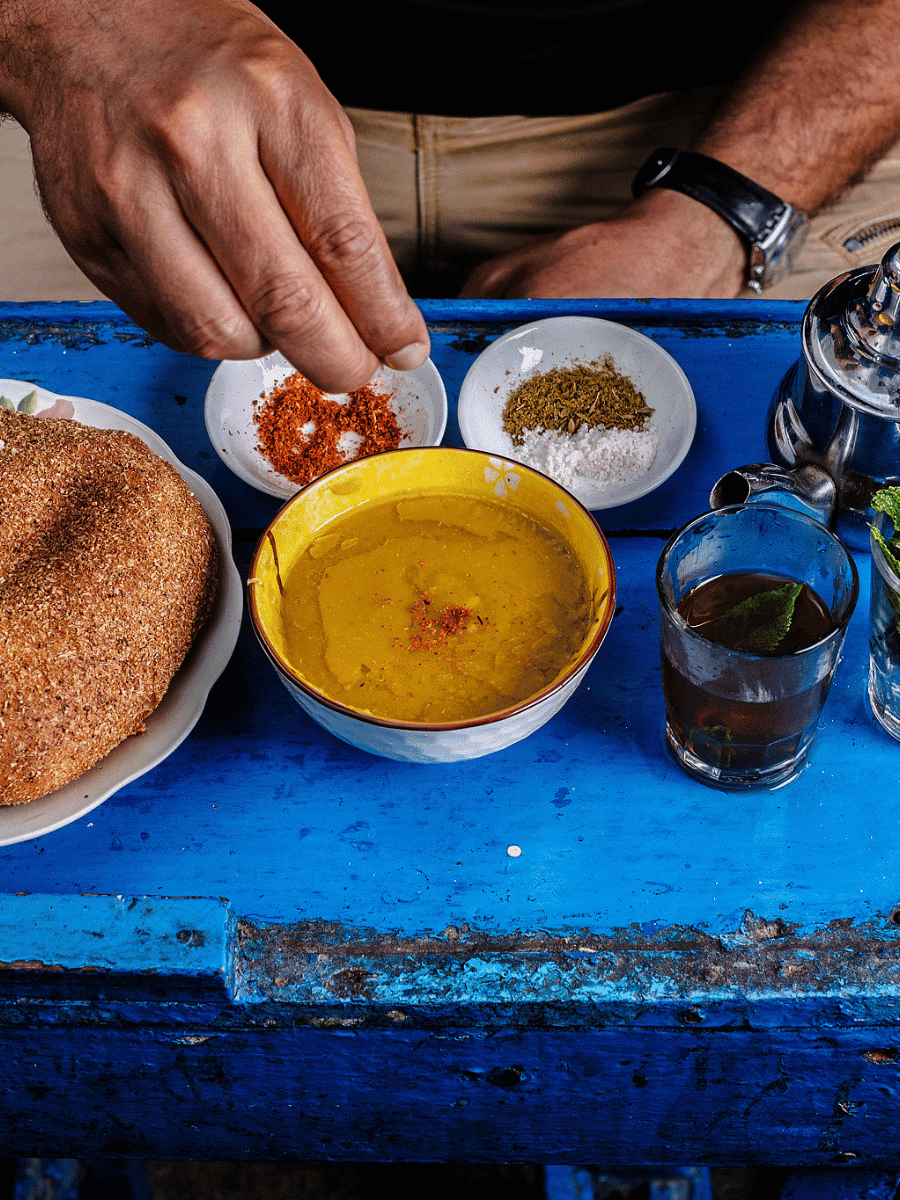
Silky split fava bean soup, drizzled with olive oil and dusted with cumin and paprika. Chefchaouen's winter breakfast, eaten with khobz.

Small spiced meatballs simmered in a garlicky tomato-cumin sauce with eggs cracked over the top. Morocco's most-shared tagine, eaten with khobz.
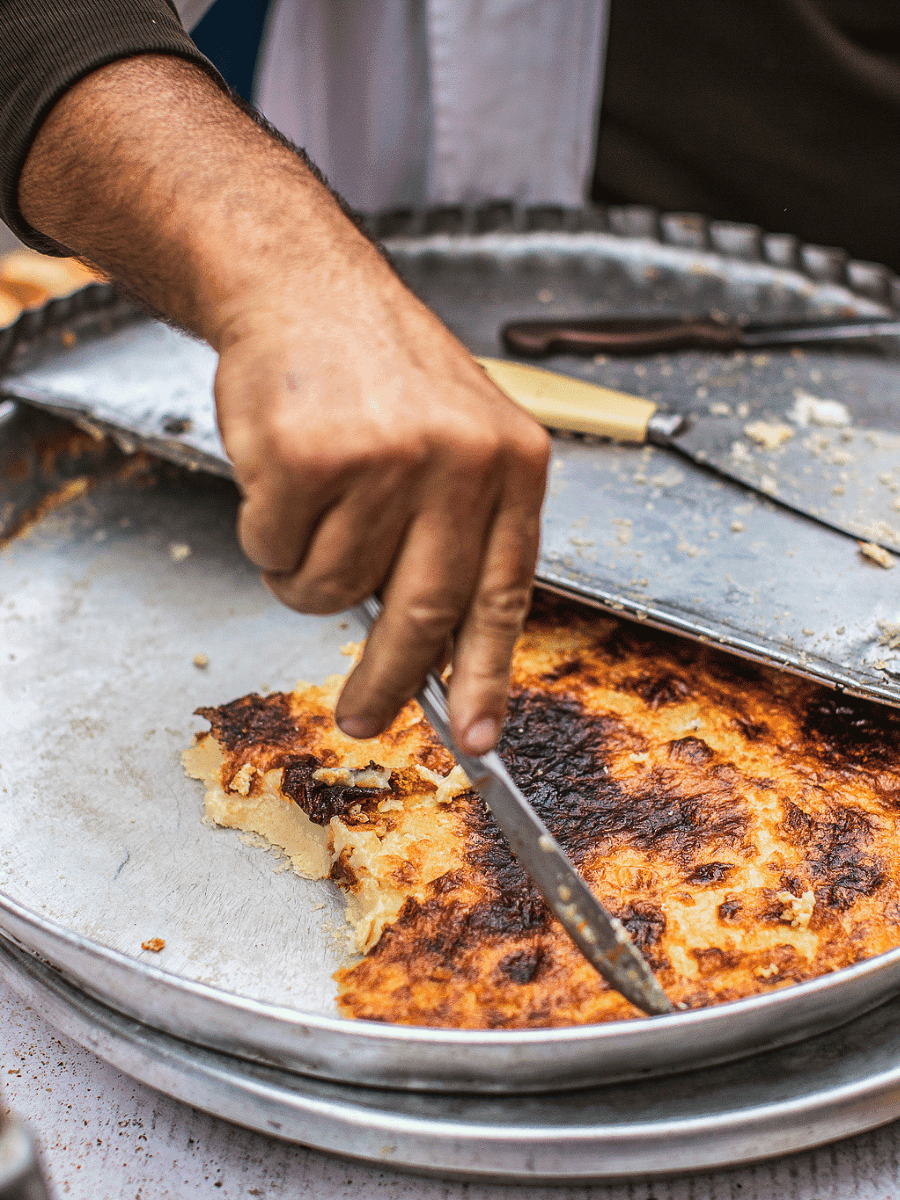
A dense, savoury chickpea-flour cake baked in a wood oven, sold sliced from paper on street corners. Tangier's Andalusi-Sephardic morning snack.

Ring-shaped yeast doughnuts, fried until deep gold and crackly, dusted with sugar or dipped in honey. Morocco's Sunday-morning street sweet, sold on a straw string.

Slow-cooked chicken tagine with preserved lemons, cracked green olives and a saffron-onion sauce. Morocco's Friday-lunch classic, eaten with khobz.