
Destination
Tangier
The story
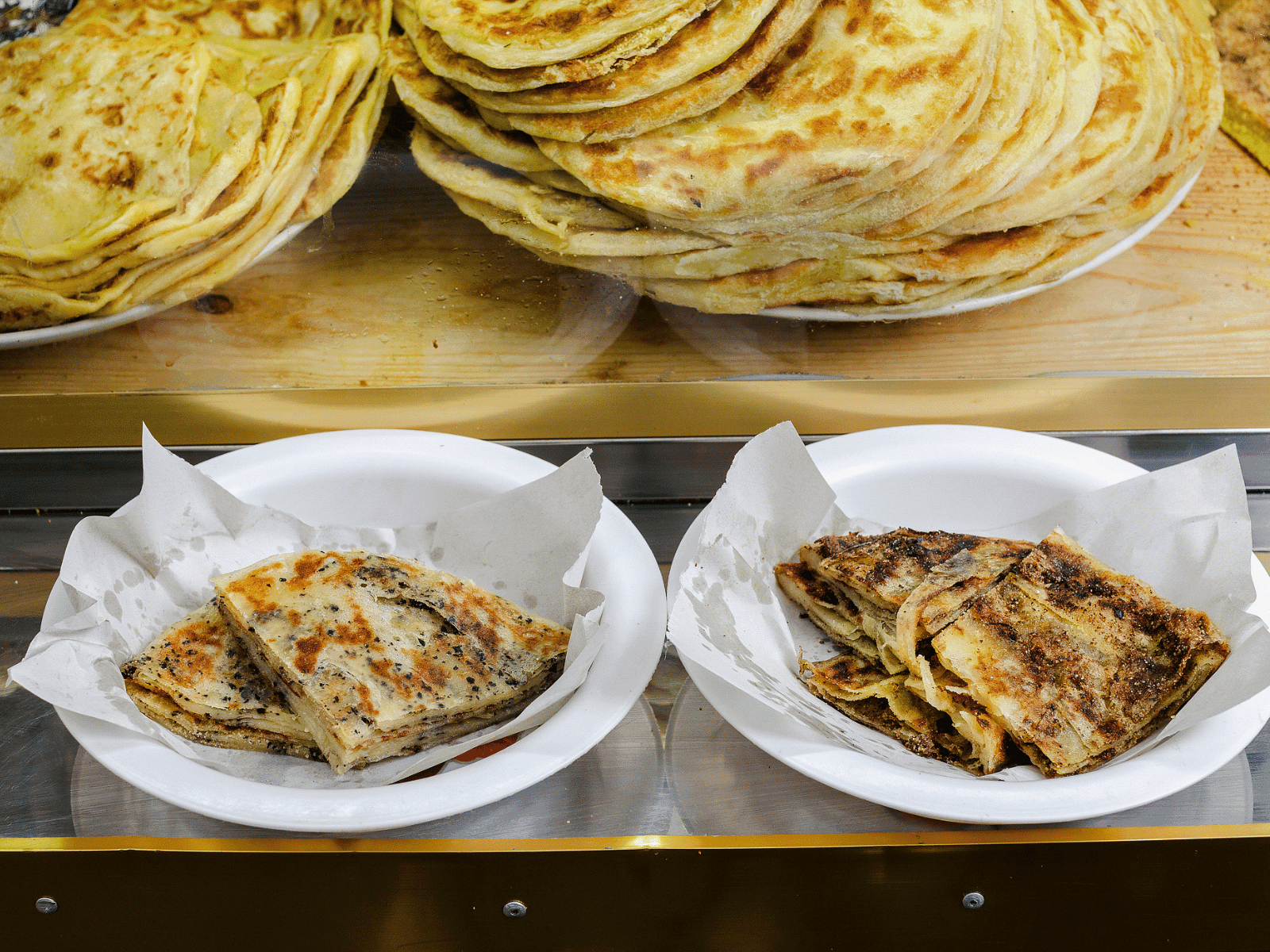
Msemmen — sometimes rghaif — is Morocco's laminated breakfast pastry: a very soft, oily dough is stretched paper-thin on an oiled counter, brushed with melted butter and semolina, folded twice into a small square, then cooked on a hot dry skillet until the layers separate into flaky, buttery leaves. Served warm, split open and stuffed with honey and butter, or with cheese, or with olives and mint tea, msemmen is the Moroccan breakfast counterpart to harcha but flakier, more delicate and more theatrical to make. Sold at every Moroccan bakery in the morning; the making-of-it is a common Moroccan family Sunday morning activity, three generations rolling and folding.
Method
In a large bowl, whisk together the flour, semolina, salt and sugar. Add the water and the 3 tbsp oil. Mix and knead 8 to 10 minutes until you have a very soft, sticky, elastic dough — softer than a bread dough. Cover with a damp towel and rest 15 minutes.
Oil your hands and a plate. Divide the dough into 12 balls. Roll each into a smooth ball and set on the oiled plate. Coat each ball generously with oil so they don't dry out. Cover and rest another 15 minutes.
Clean and oil a large flat counter or work surface — at least 40cm x 40cm per msemmen. Prepare a small bowl of melted butter, a small dish of semolina and a bowl of neutral oil for stretching.
Working with one ball at a time: place it on the oiled counter. With oiled palms, press and stretch outward from the centre until the dough is paper-thin, translucent enough to see through, forming a rough square about 30cm across. Repair holes by pinching. This is the fiddly stage; the first two will tear, the rest will come out.
Brush the stretched sheet all over with melted butter. Sprinkle 1 tsp of semolina across the surface. Fold the left third of the sheet over the middle; fold the right third over that. You now have a long strip. Fold the top third down over the middle; fold the bottom third up. You have a small square (about 10cm x 10cm) with multiple laminated layers inside.
Set the folded square on an oiled tray. Repeat with the other 11 balls. Once all are folded, rest 5 to 10 minutes before cooking.
Warm a dry heavy skillet over medium heat. Take a folded square: with oiled hands, press it out to about 15cm x 15cm on the pan. Cook 2 to 3 minutes per side, pressing gently with a spatula, until deep golden with visible layers. Cook the rest, stacking on a plate under a towel.
Serve warm. Tear or slice; layers should visibly separate. Serve with butter, honey, cheese and mint tea. Best within 2 hours of cooking. To reheat: 60 seconds a side on a dry skillet.
Tips
- Very soft dough. Msemmen dough is markedly softer than bread dough — almost sticky. Add water gradually until you can barely handle it without oiling your hands. This softness is what allows the paper-thin stretch.
- Rest twice. Once after mixing, once after portioning. Skipping either makes the dough spring back when you stretch it and gives you a thick, chewy msemmen instead of a paper-thin, flaky one.
- Semolina between layers. The tablespoon of semolina dusted between layers is what prevents the folds from fusing during cooking, and creates the visible layer separation in the finished pastry.
- Medium heat. Too hot and the outside burns before the layers set. Two to three minutes per side on medium is the sweet spot.
- Serve warm. Msemmen at its best is within 30 minutes of cooking. Reheating on a dry skillet revives day-olds; freezing works if you separate them with paper.
More recipes
View all
Crumbly semolina pan breads cooked on a hot skillet until the outside is golden and the inside is buttery-soft. Morocco's breakfast bread, served with honey and cheese.
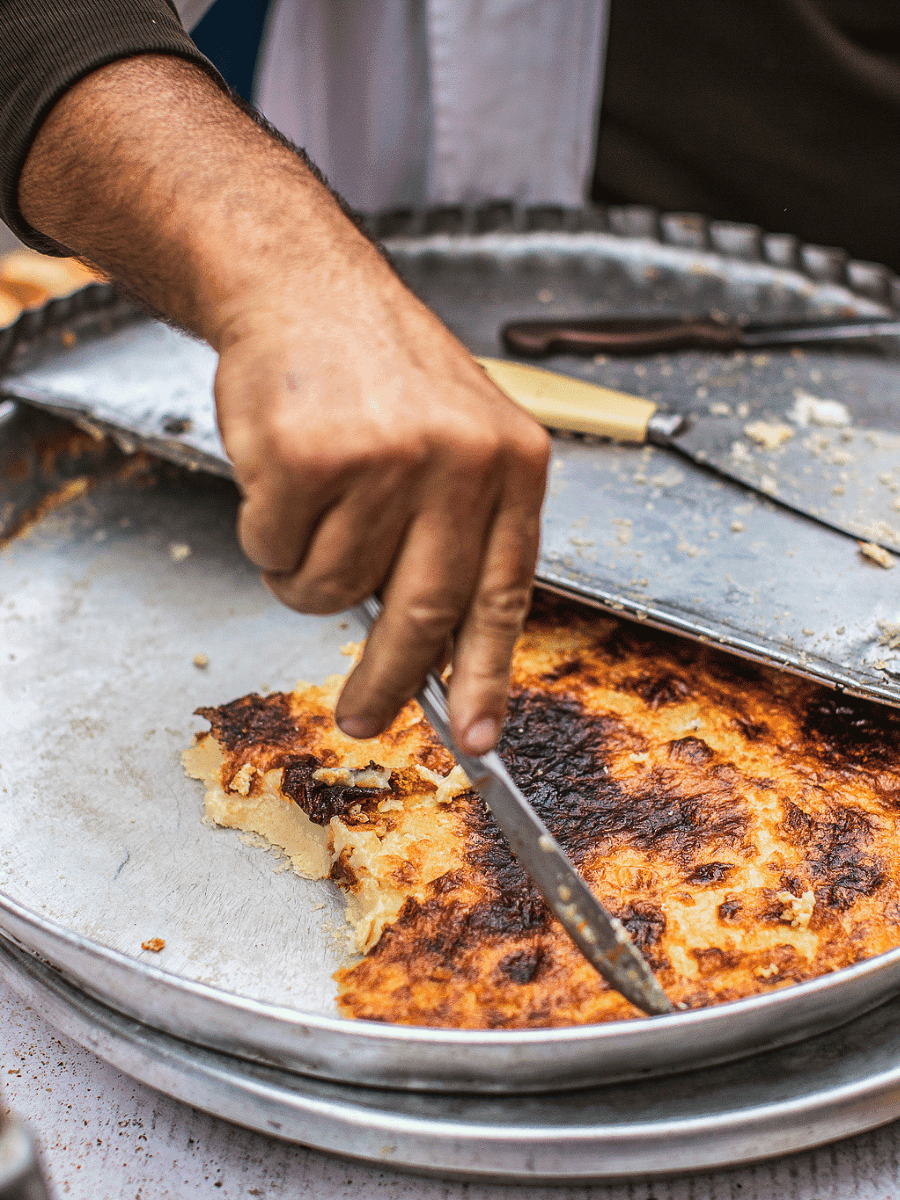
A dense, savoury chickpea-flour cake baked in a wood oven, sold sliced from paper on street corners. Tangier's Andalusi-Sephardic morning snack.
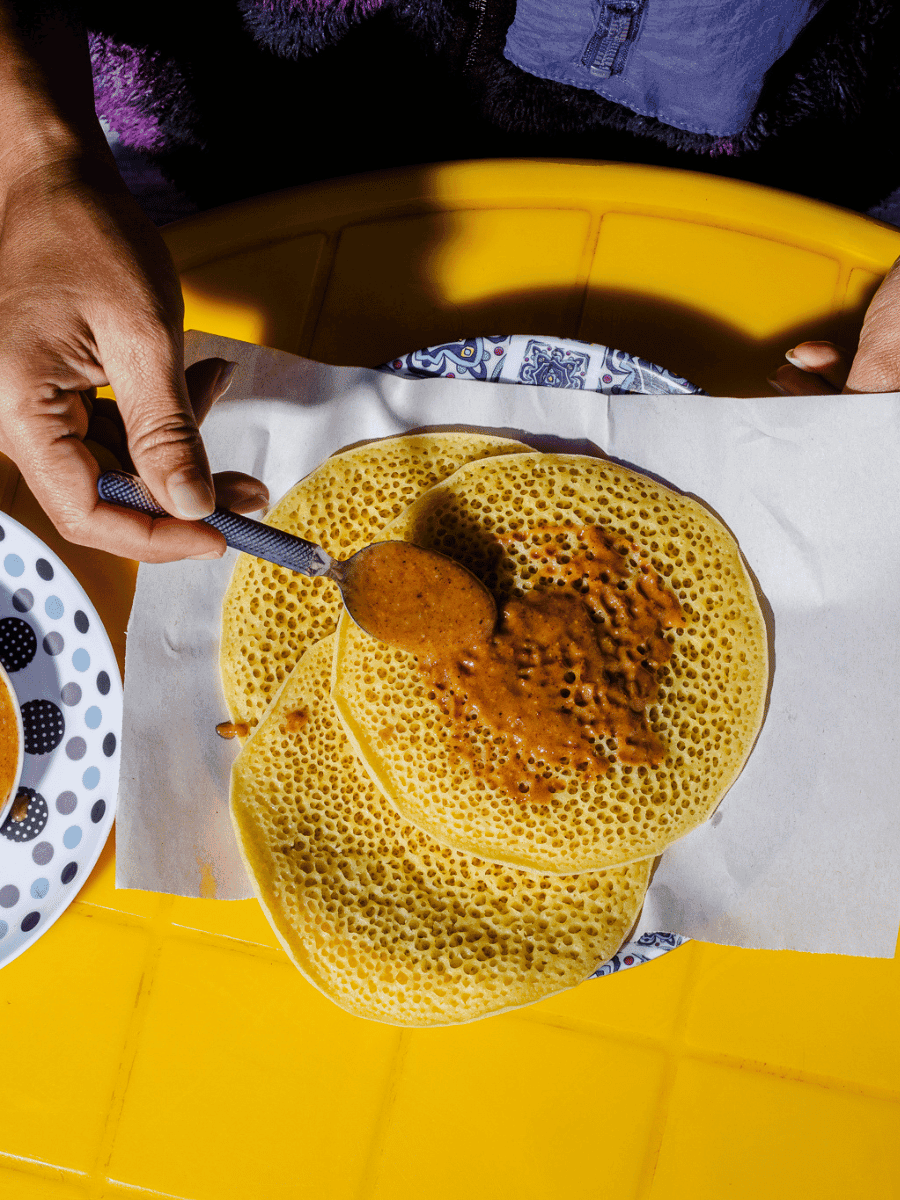
Soft yeasted semolina pancakes covered in a thousand tiny bubbles, cooked on a hot skillet on one side only. Morocco's spongy honey-soaked breakfast.

Layered filo pastry crisps sandwiched with almond-milk custard, dusted with icing sugar and cinnamon. Fes's most elegant dessert.

Ring-shaped semi-hard biscuits scented with fennel, aniseed and sesame, twice-baked until golden. Morocco's tea-dunking staple, sold by weight at every pastry souk.
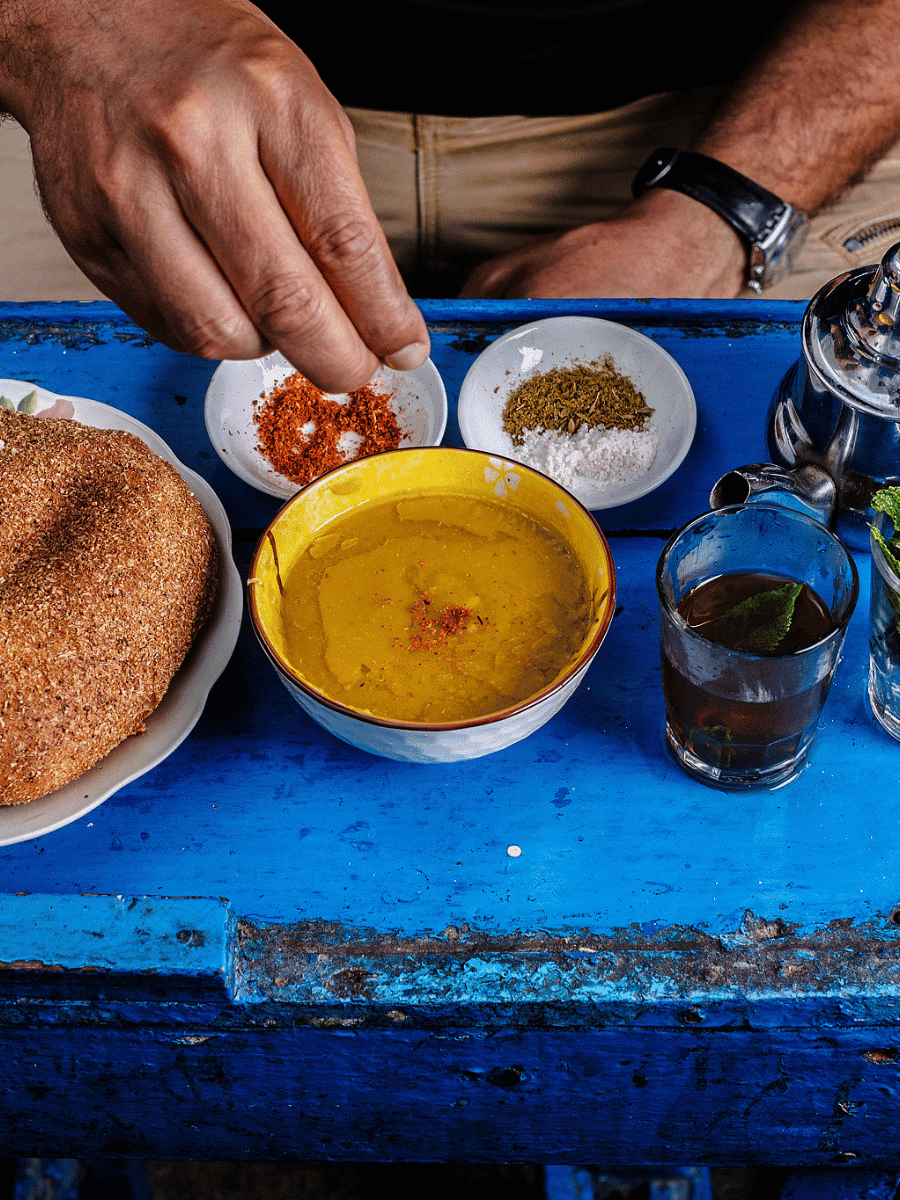
Silky split fava bean soup, drizzled with olive oil and dusted with cumin and paprika. Chefchaouen's winter breakfast, eaten with khobz.