
Destination
Tangier
The story
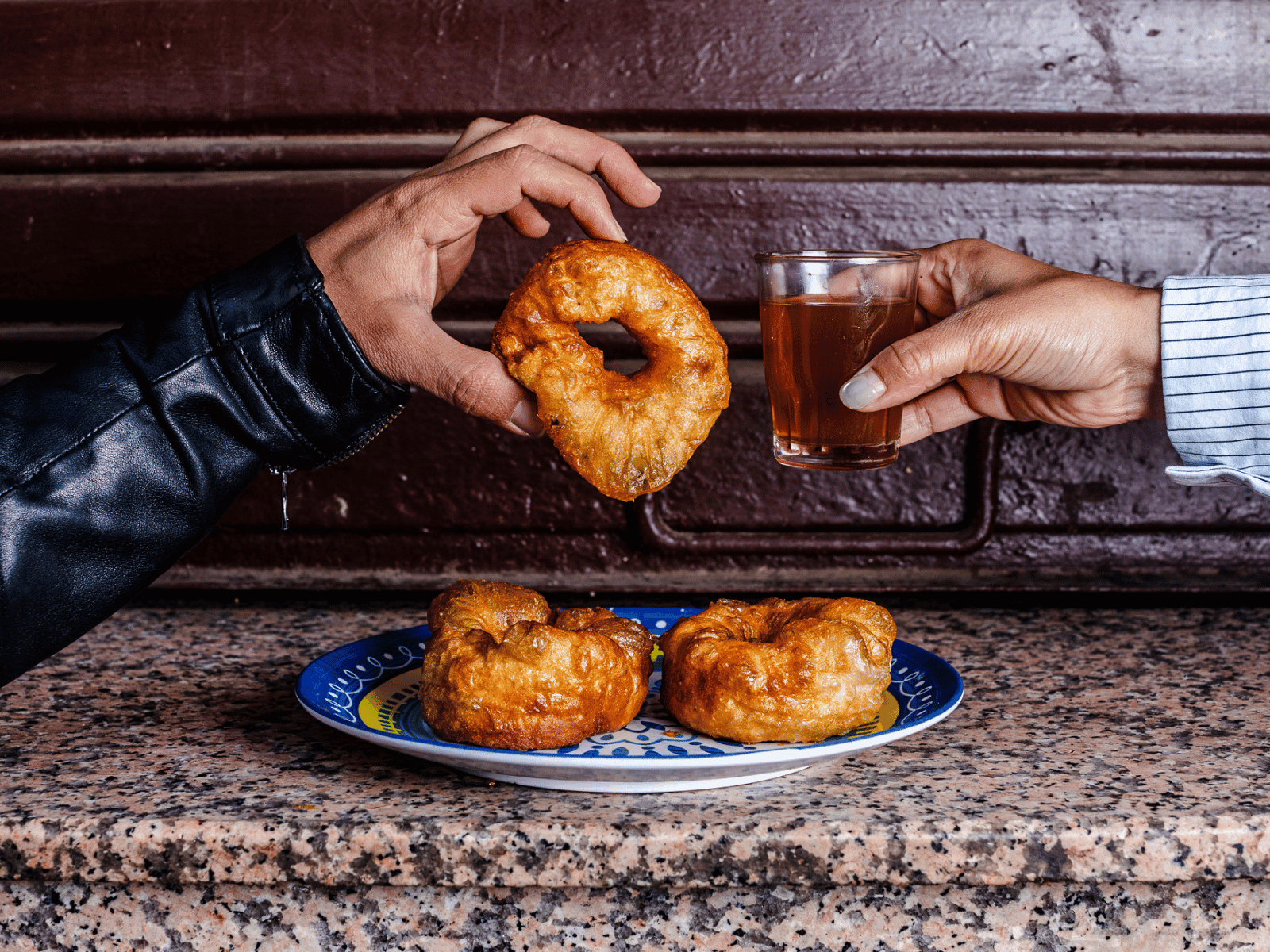
Sfenj is Morocco's most iconic street doughnut: a soft, yeasted, hand-shaped ring, fried in shallow oil until the outside is deep gold and slightly crackly and the inside is soft, chewy and full of air pockets. Sold from small carts and street counters especially on Sunday mornings, sfenj is a Moroccan street breakfast — the vendor hands you a ring, or three or four, threaded onto a piece of yellow straw string so you can carry them home hot. Eaten plain, dusted with icing sugar, or dipped in warm honey; served alongside a small glass of mint tea or a bowl of café au lait.
Method
In a large bowl, whisk together the flour, yeast, salt and sugar. Add the warm water and mix with a wooden spoon or your hand. The dough will be very sticky and wet — do not add more flour to firm it up. Beat vigorously for 3 to 4 minutes with a wooden spoon (this develops gluten in a wet dough); the dough should be elastic and pull-away sticky.
Cover the bowl with a damp towel. Rest in a warm spot 60 to 90 minutes until doubled and full of bubbles.
Warm the oil in a deep heavy pot to 170C. Test with a small piece of dough — it should sizzle immediately and float within 5 seconds.
Set a bowl of cold water next to the dough. Wet your hands generously — the wet dough will not stick to wet hands but will stick to dry ones.
With wet hands, pinch off a piece of dough about the size of a small orange. Stretch it between your palms into a rough ball. Push your finger through the middle to make a hole, then rotate to widen the hole into a doughnut ring about 10cm across.
Slide the ring carefully into the hot oil (drop from close to the surface to avoid splash). Fry 90 seconds on the first side without moving; then flip with a long chopstick or a slotted spoon and fry another 60 to 90 seconds. The finished sfenj should be deep golden and crackled on the outside, still soft when squeezed.
Lift onto a wire rack (not kitchen paper — the base goes soggy on paper). Fry the rest, adjusting oil temperature between batches.
Dust each hot sfenj with icing sugar, or dip in warm honey (whisked with orange blossom water). Serve immediately with mint tea. Best eaten within 20 minutes of frying.
Tips
- Very wet dough. Sfenj dough is far wetter than a bread dough — resist the temptation to add more flour to firm it up. Beat with a wooden spoon rather than kneading by hand.
- Wet hands, not floured. Wet hands stop the sticky dough from clinging while you shape. Keep dipping your hands into water between each ring.
- 170C oil, not 180C. A slightly cooler fry temperature gives the doughnut time to cook through before the outside darkens too much. A thermometer is essential.
- One flip only. Turn each sfenj once, halfway through. Multiple flips or moving them around gives an uneven crust.
- Serve immediately. Sfenj is a fresh food. Fifteen minutes after frying, the outside softens and the inside gets tough. Fry in batches to order for a crowd.
More recipes
View all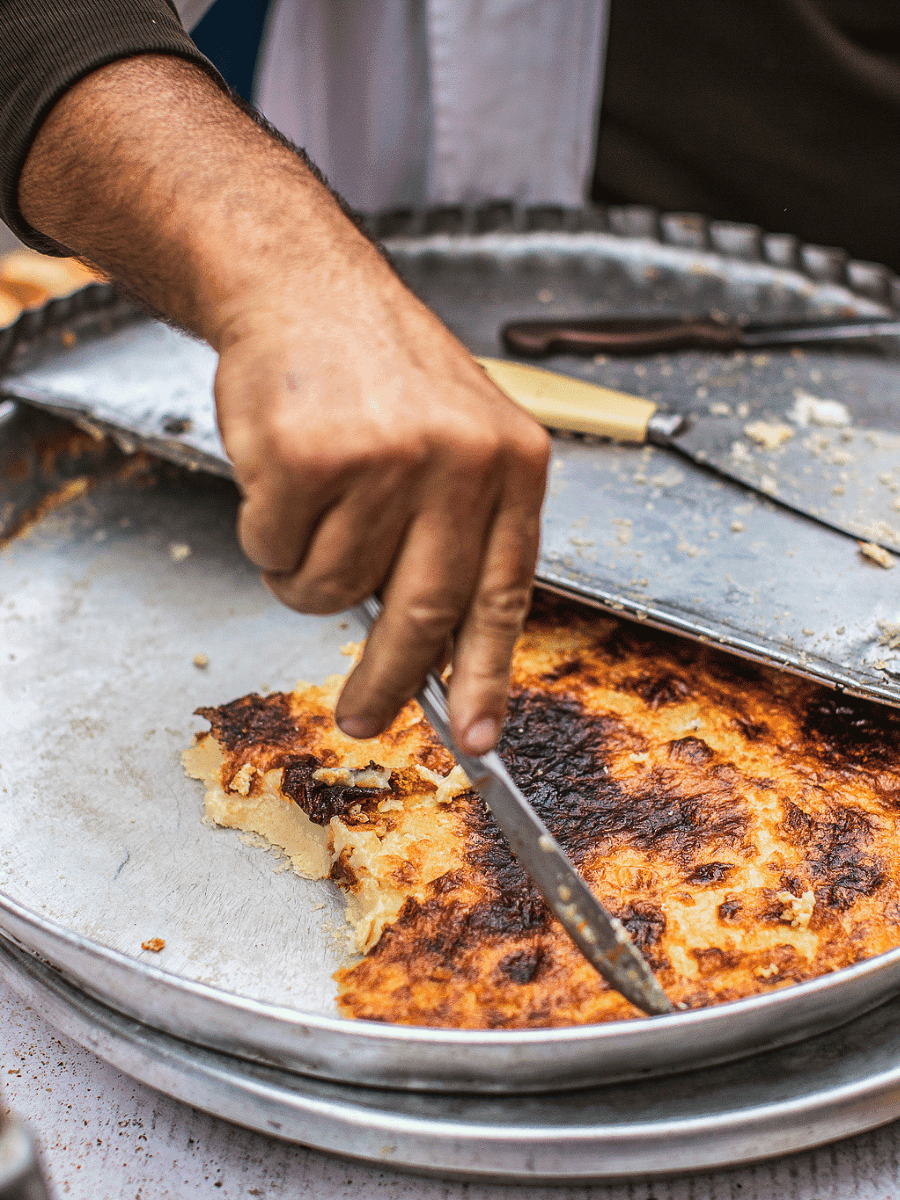
A dense, savoury chickpea-flour cake baked in a wood oven, sold sliced from paper on street corners. Tangier's Andalusi-Sephardic morning snack.
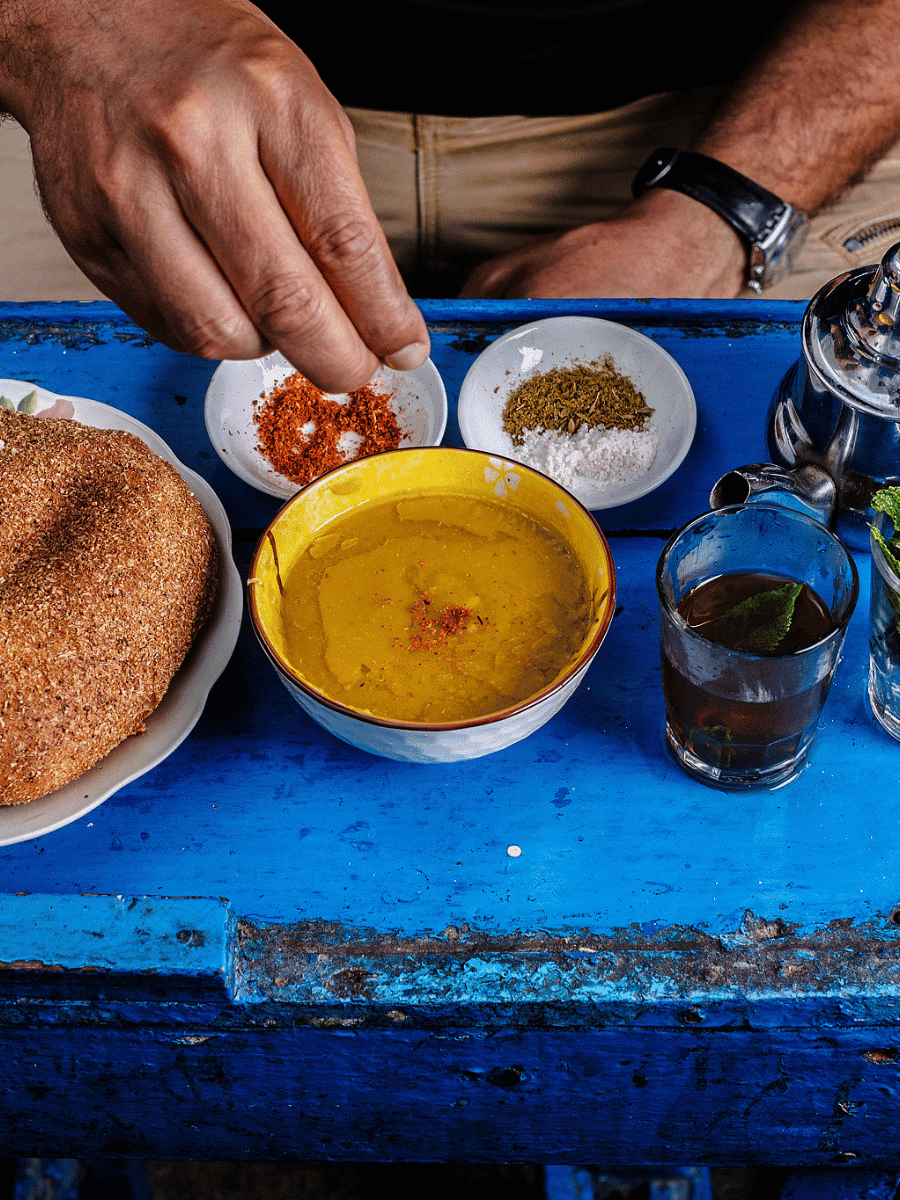
Silky split fava bean soup, drizzled with olive oil and dusted with cumin and paprika. Chefchaouen's winter breakfast, eaten with khobz.
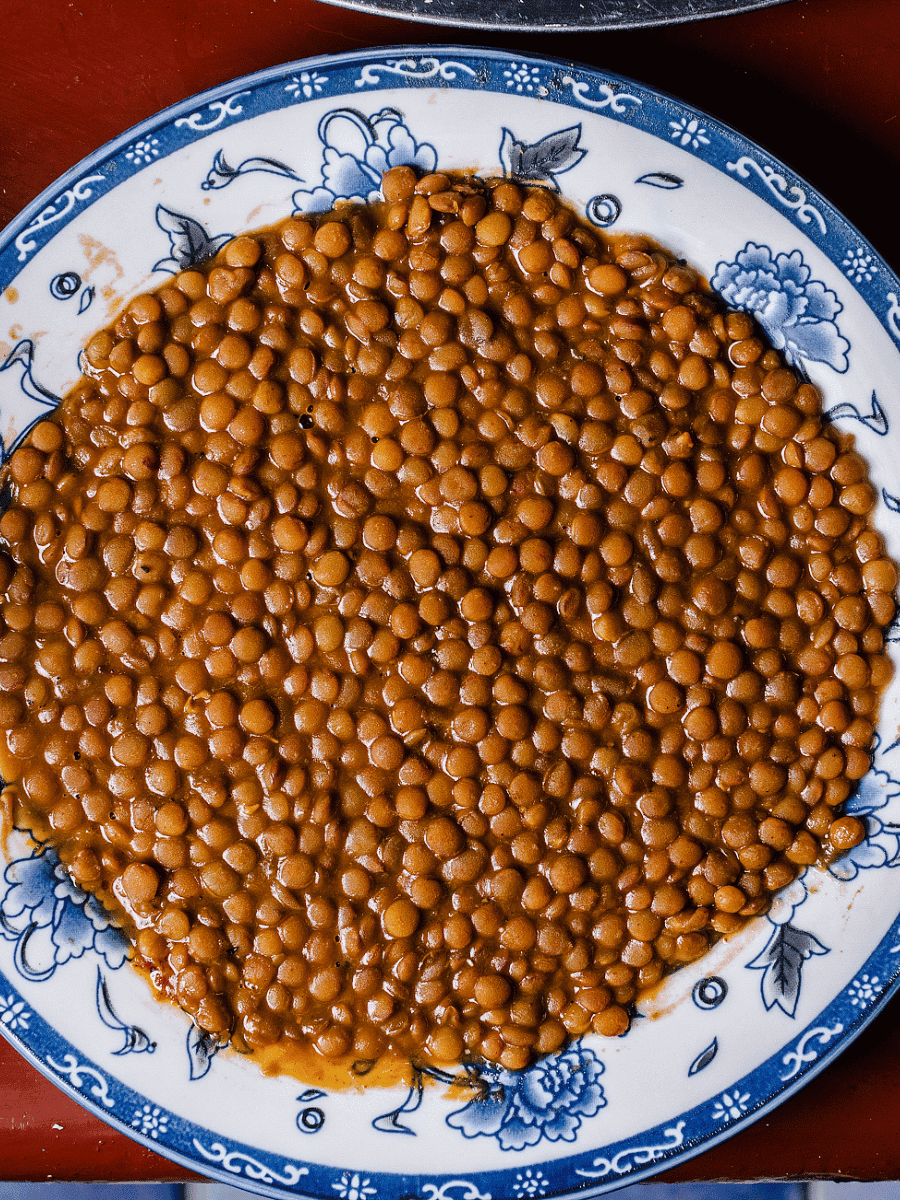
Brown lentils simmered with cumin, ginger and a spoon of tomato paste, finished with olive oil and coriander. Morocco's Monday-lunch pulse.

Cannellini or white beans simmered in tomato, garlic, cumin and paprika until soupy-tender. The Moroccan winter one-pot, eaten with khobz.

Bright mixed pickles — carrots, turnips, cauliflower, cucumbers — brined in a vinegar-and-salt bath with garlic and chilies. Every Moroccan lunch table's zing.
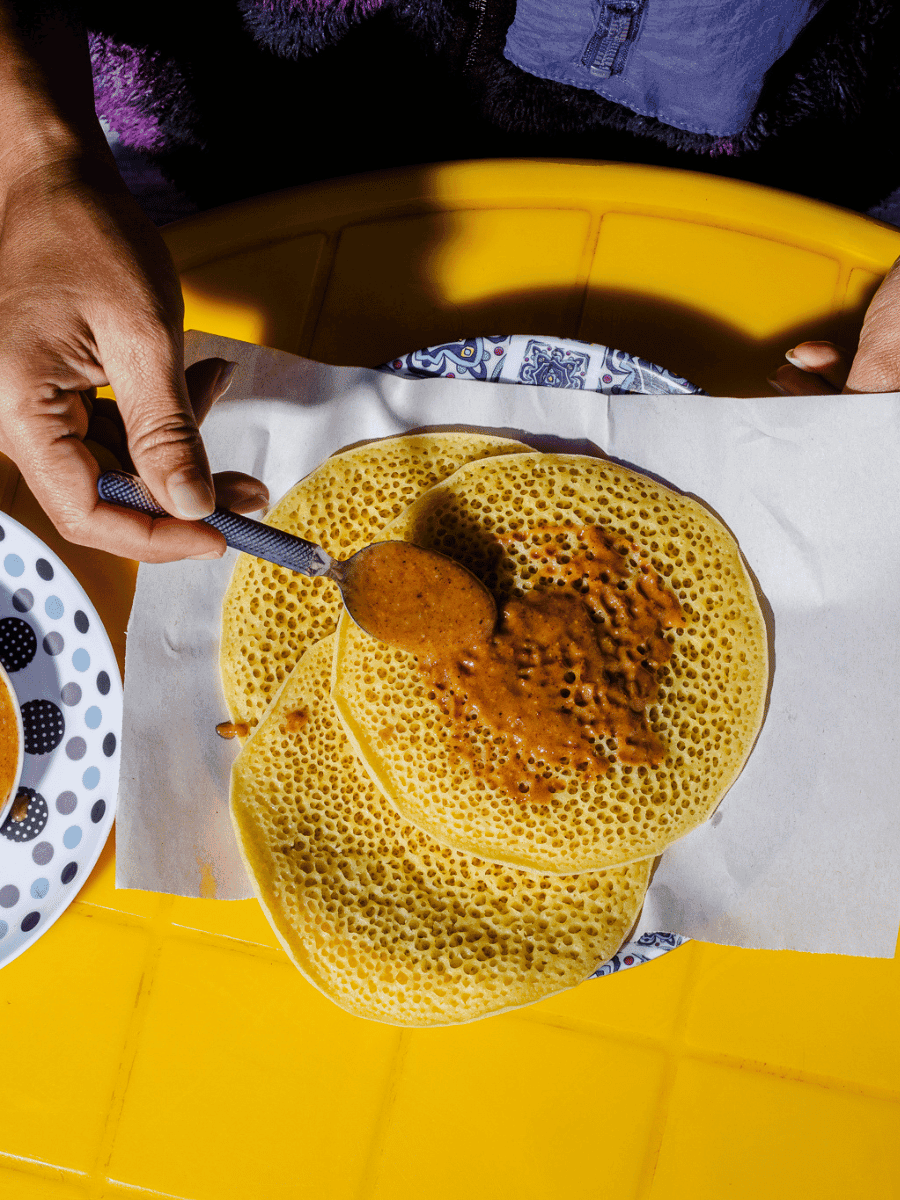
Soft yeasted semolina pancakes covered in a thousand tiny bubbles, cooked on a hot skillet on one side only. Morocco's spongy honey-soaked breakfast.