
Destination
Casablanca
The story
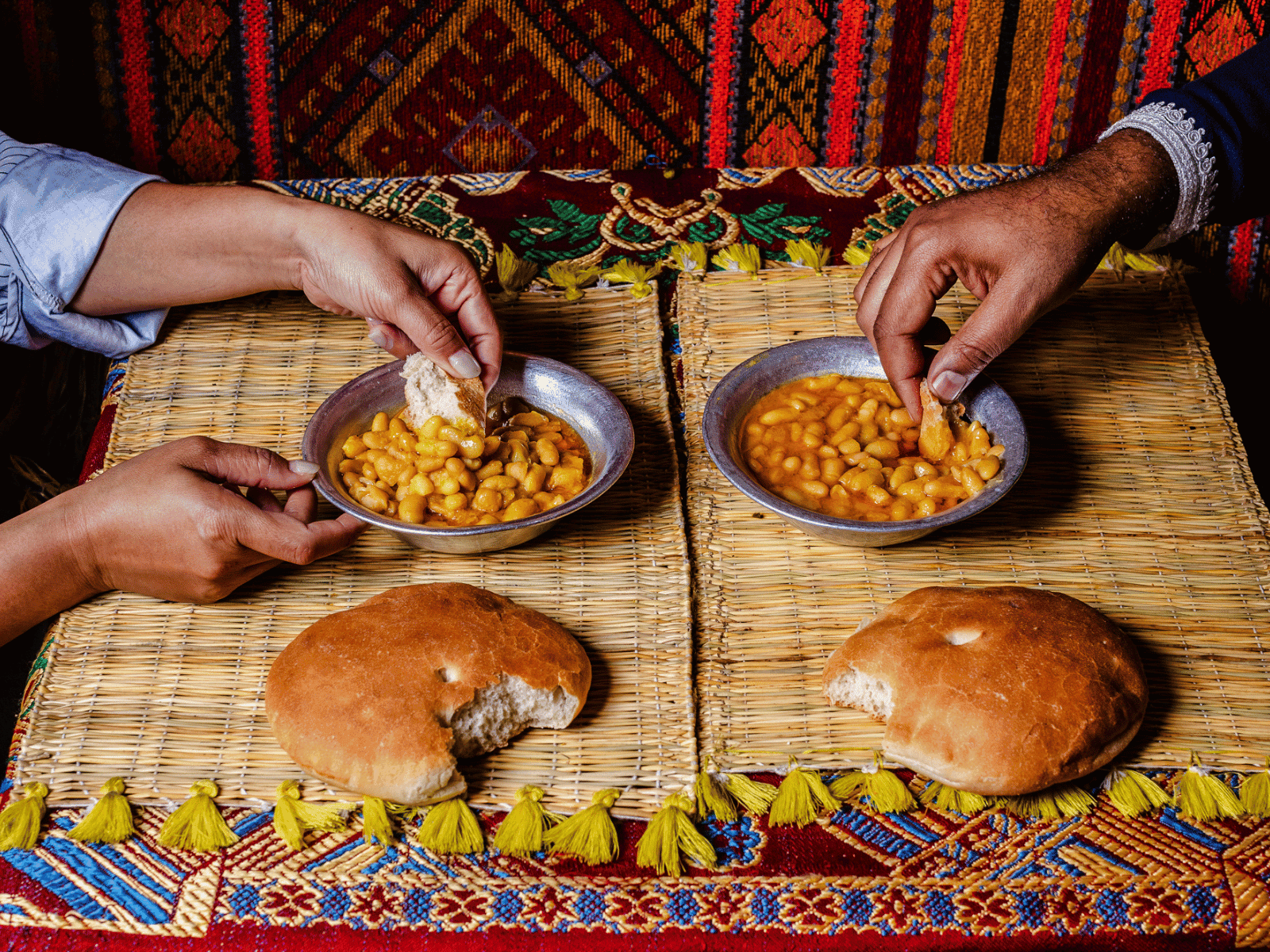
Lobia — Moroccan for white beans, from the Arabic — is the country's tomato-based bean stew and one of its most widely eaten winter dishes: dried white beans (usually white haricots or cannellini) simmered until tender with onion, garlic, tomato paste, cumin, paprika, ginger and a splash of olive oil, then finished with fresh coriander and a squeeze of lemon. It's served with khobz for scooping, sometimes with a piece of khlii (preserved beef) or a spoonful of harissa on the side, and eaten as a full meal or a soup course. The Casablanca and Rabat coastal versions add a slice of preserved lemon; the mountain versions add a small piece of lamb; the vegetarian version is arguably the most classical.
Method
Warm the olive oil in a heavy pot over medium heat. Cook the onion 6 minutes until soft. Add the garlic; cook 60 seconds.
Add the cumin, paprika, ginger, pepper, ras el hanout and cayenne (if using). Toast 60 seconds in the oil until fragrant.
Add the tomato paste; stir 60 seconds to darken. Add the chopped tomatoes. Cook 8 minutes until thick and the oil has separated at the edges.
Tip in the drained soaked beans and bay leaf. Pour in the water. Bring to a gentle simmer.
Cover partially and simmer 75 to 90 minutes (or 20 minutes if using tinned beans) until the beans are completely soft and the broth has thickened. Add more water if it dries out. Skim any foam in the first 10 minutes.
Add the salt only in the last 10 minutes of cooking. Salting early tightens the beans' skins and gives them a chalky bite.
Off the heat, stir in the chopped coriander and lemon juice.
Ladle into wide bowls. Drizzle with a generous pour of olive oil. Serve with fresh khobz and, if using, a small dish of harissa or a wedge of preserved lemon on the side. Diners tear the bread and dip.
Tips
- Salt at the end. This is the traditional Moroccan rule for any bean simmer. Salt added at the start toughens the skins; salt added in the last 10 minutes gives you soft, creamy beans.
- Soak overnight if you have the time. Skipping the soak means 30 minutes more simmering. If you forget, use tinned beans and cut the whole cook time to 30 minutes.
- Cook the tomato until oil separates. This is the Moroccan visual cue. Under-cooked tomato tastes raw in the finished stew; cooked-out tomato gives a deep, integrated base.
- Finish with olive oil. The drizzle on each bowl at serving is what marks the dish as Moroccan. Use good extra virgin — Moroccan or Spanish oil, not a supermarket blend.
- Better on day two. Lobia thickens and deepens overnight. Reheat gently with a splash of water. Freezes well.
More recipes
View all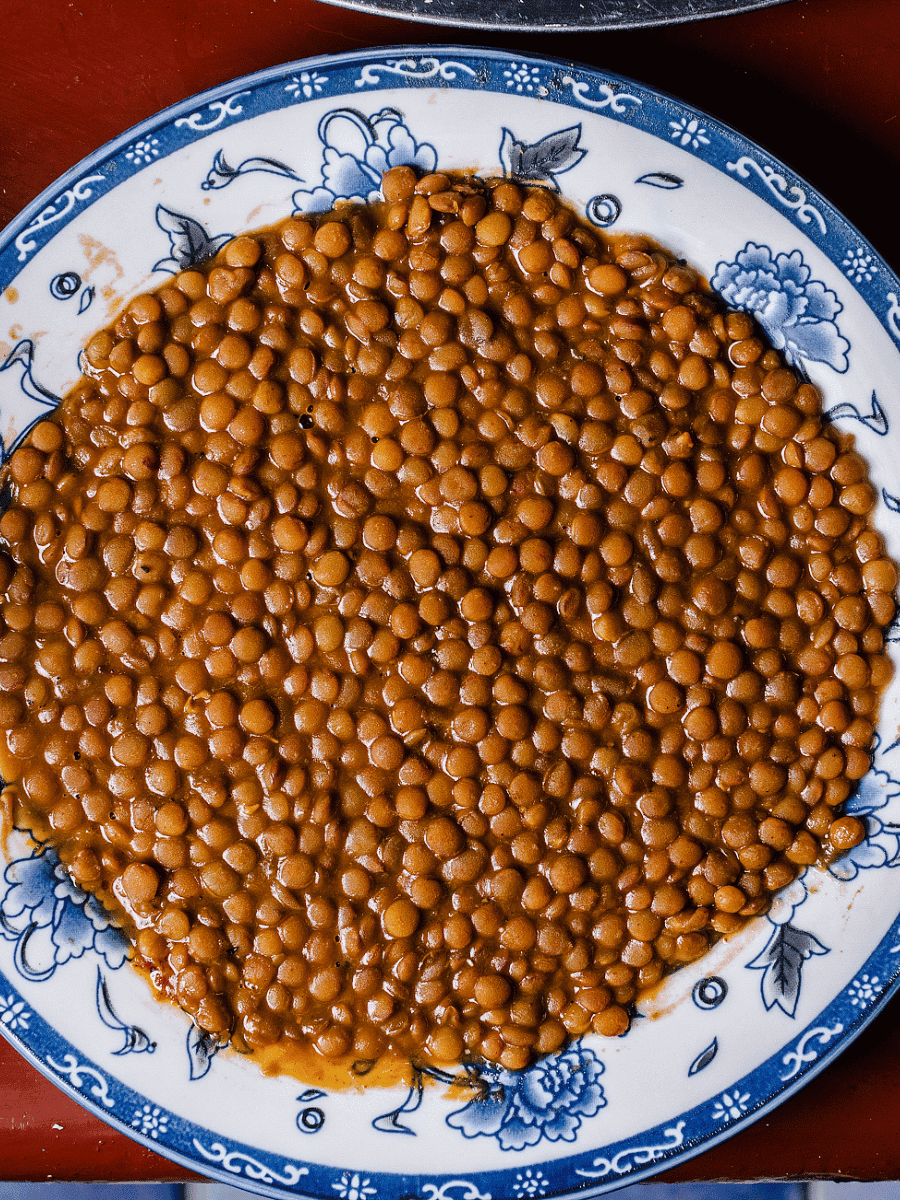
Brown lentils simmered with cumin, ginger and a spoon of tomato paste, finished with olive oil and coriander. Morocco's Monday-lunch pulse.
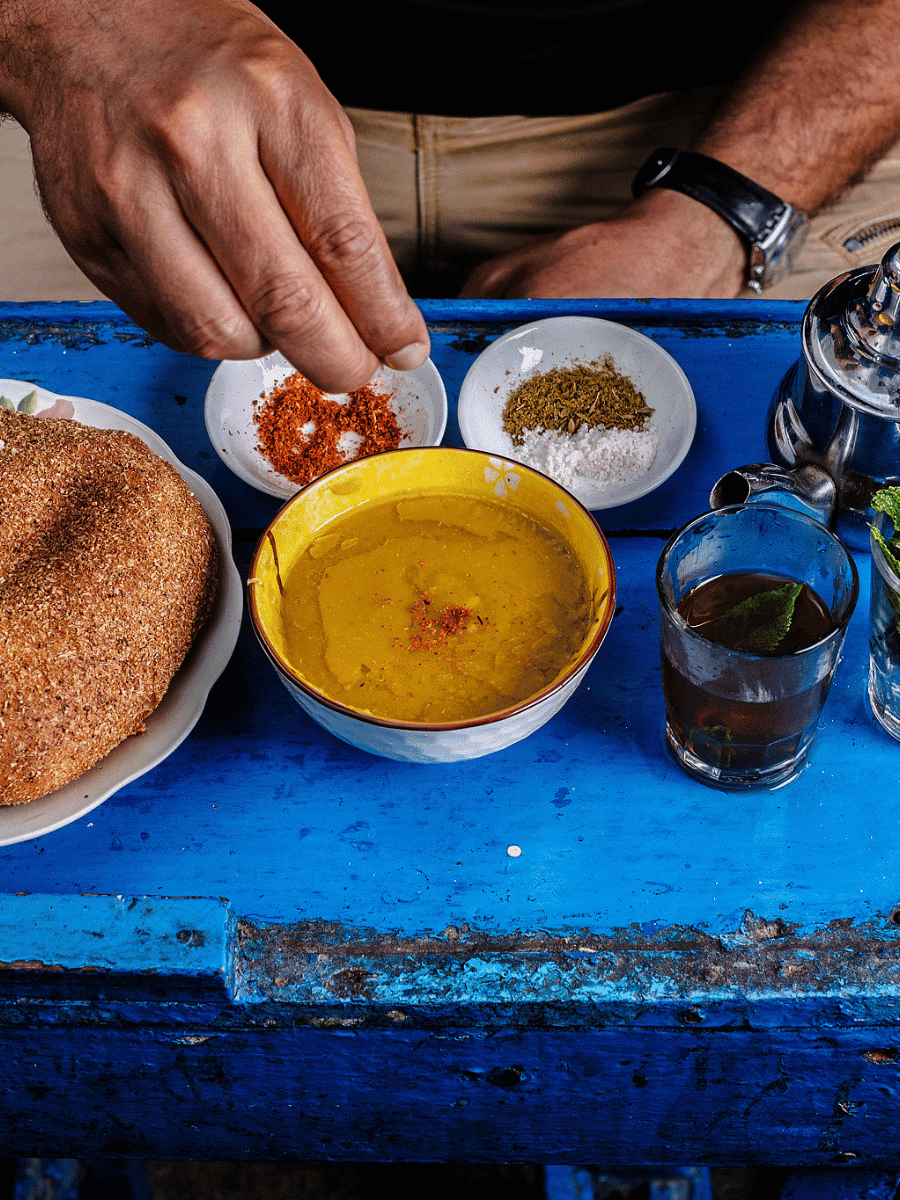
Silky split fava bean soup, drizzled with olive oil and dusted with cumin and paprika. Chefchaouen's winter breakfast, eaten with khobz.

Small spiced meatballs simmered in a garlicky tomato-cumin sauce with eggs cracked over the top. Morocco's most-shared tagine, eaten with khobz.

Ring-shaped yeast doughnuts, fried until deep gold and crackly, dusted with sugar or dipped in honey. Morocco's Sunday-morning street sweet, sold on a straw string.
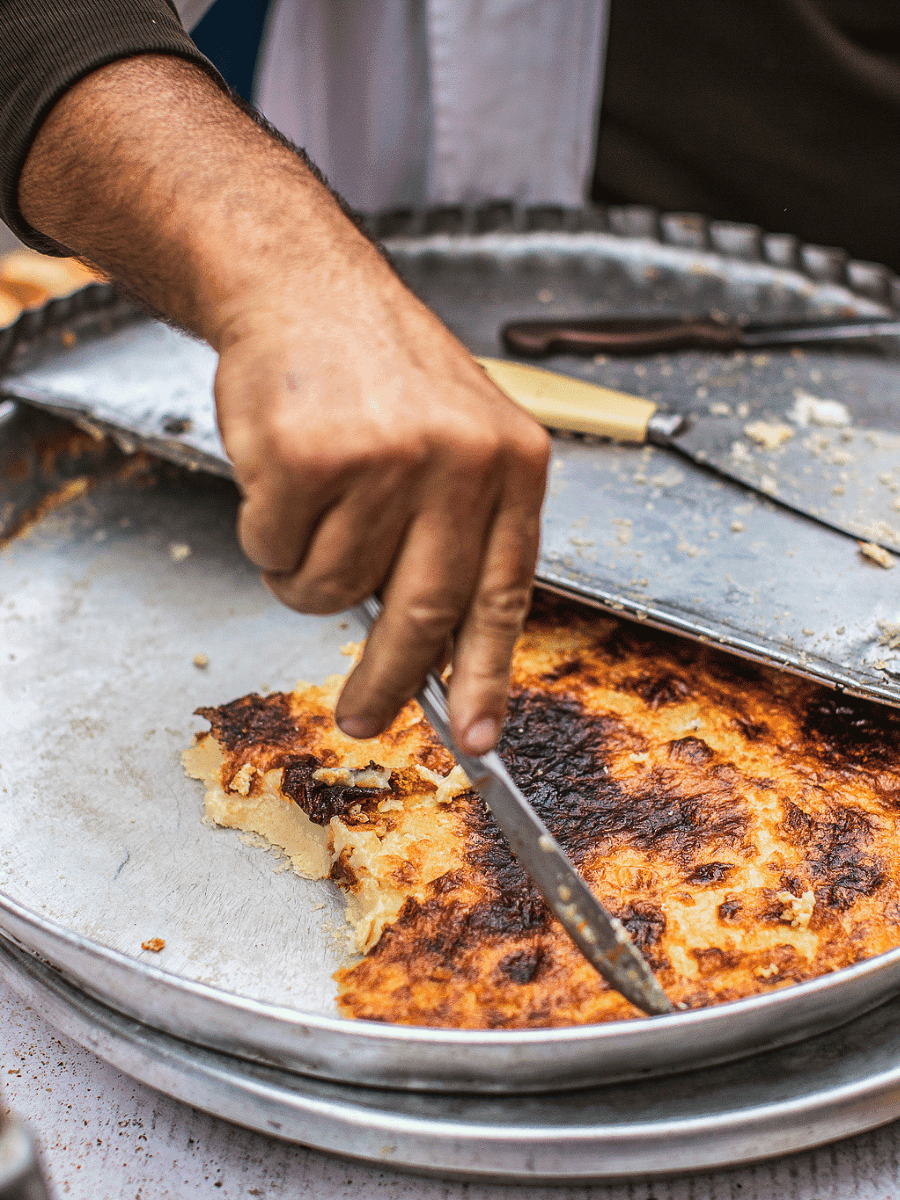
A dense, savoury chickpea-flour cake baked in a wood oven, sold sliced from paper on street corners. Tangier's Andalusi-Sephardic morning snack.

Slow-cooked chicken tagine with preserved lemons, cracked green olives and a saffron-onion sauce. Morocco's Friday-lunch classic, eaten with khobz.