

Destination
Tangier
The story
Baghrir — the "thousand-hole pancake" — is the most photogenic breakfast in Morocco: a very wet, yeasted semolina batter is poured onto a hot dry skillet where it spreads to a thin disc and, in the space of a minute, thousands of tiny bubbles form and burst on the surface, leaving a lace-like network of holes. Cooked on one side only, the finished baghrir is pale on top (all the holes) and lightly golden underneath, soft, spongy, and designed to soak up whatever it's served with — traditionally warm honey and melted butter mixed into a syrup, poured generously across the top so it seeps into every hole. Served with mint tea, ideally with your fingers.
Method
Combine semolina, flour, salt, sugar, yeast, baking powder and warm water in a blender. Blend on high 60 to 90 seconds until completely smooth and slightly foamy. The batter should be thin — like a heavy cream, not a thick pancake batter.
Pour the batter into a bowl. Cover with a damp towel and rest 30 to 45 minutes in a warm spot until the surface is visibly bubbly and the yeast has activated. Do not stir after resting.
Give the batter one gentle stir with a spoon. It should fall from the spoon in a smooth, ribbon-like pour. If too thick, whisk in a splash of water; if too thin, whisk in a spoon of semolina.
Warm a dry heavy non-stick pan (about 22cm) over medium heat. Do not oil. Test with a scant tsp of batter — it should sizzle faintly and bubbles should form within 20 seconds.
Ladle 80ml of batter into the middle of the hot pan. Do not spread it — let it flow naturally into a 15cm disc. Watch: bubbles should start forming immediately and cover the entire surface within 60 seconds. Continue cooking 90 seconds more without flipping, until the top is completely dry and set (no visible wet batter).
Lift the baghrir onto a clean plate. Do not stack while hot — they'll steam and turn soggy. Cool on the plate for 60 seconds, then stack.
Continue with the rest of the batter, adjusting heat if the bubbles stop forming (too hot) or if they cover only half the surface (too cool). Meanwhile, warm the butter and honey together in a small pan over low heat until melted and glossy. Add salt and (if using) orange blossom water.
Arrange the baghrir on a large platter, holes-side up. Pour the warm honey butter generously across them so it pools in the holes. Serve immediately, with fresh jben, amlou if using, and mint tea. Diners eat with their hands, tearing pieces and dipping into the extra honey butter.
Tips
- Blender, not a whisk. A blender at high speed for 60 seconds gives you a completely smooth, aerated batter — the technical secret to the thousand holes. A hand-whisked batter is lumpy and produces fewer, larger holes.
- Rest fully. The 30-45 minute rest activates the yeast, and the yeast is what makes the bubbles. Skip the rest and you get a solid, plain pancake.
- Cook only on one side. This is essential. Baghrir is defined by its lace-topped, pale surface. Flipping it destroys the identity.
- Medium heat, no oil. The pan is dry. Add oil and the batter can't grip; add too much heat and the base burns before the top sets.
- Serve immediately. Baghrir cools fast and turns dry. Serve within 15 minutes of cooking, warm honey butter poured across the top. Freezing works but destroys the texture — better made fresh.
More recipes
View all
Crumbly semolina pan breads cooked on a hot skillet until the outside is golden and the inside is buttery-soft. Morocco's breakfast bread, served with honey and cheese.

Paper-thin dough folded into a flaky square, cooked on a hot skillet until golden and buttery. Morocco's laminated breakfast pastry, eaten with honey.
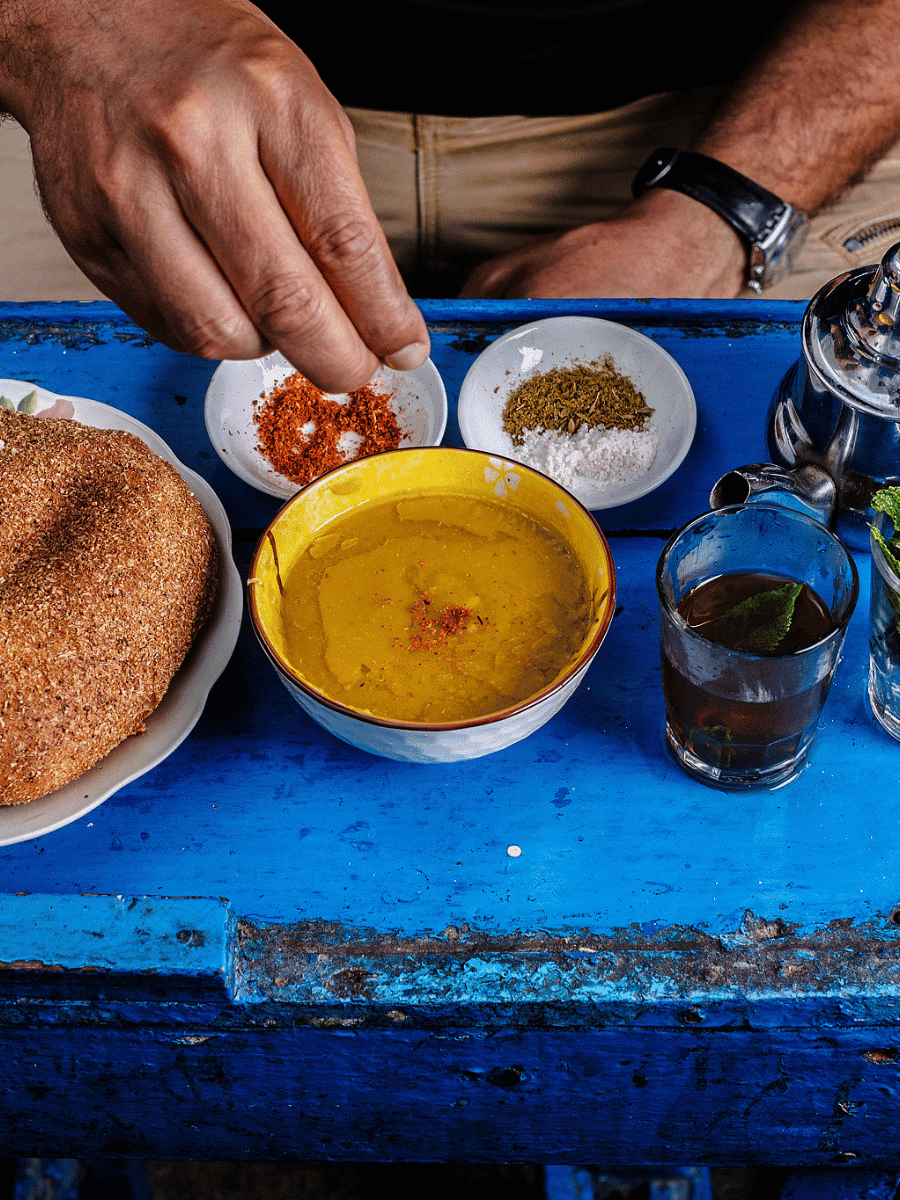
Silky split fava bean soup, drizzled with olive oil and dusted with cumin and paprika. Chefchaouen's winter breakfast, eaten with khobz.

Sweet, thick set yogurt made from whole milk and rennet, scented with orange blossom. Morocco's oldest dessert, spooned from small clay jars.

Ring-shaped yeast doughnuts, fried until deep gold and crackly, dusted with sugar or dipped in honey. Morocco's Sunday-morning street sweet, sold on a straw string.
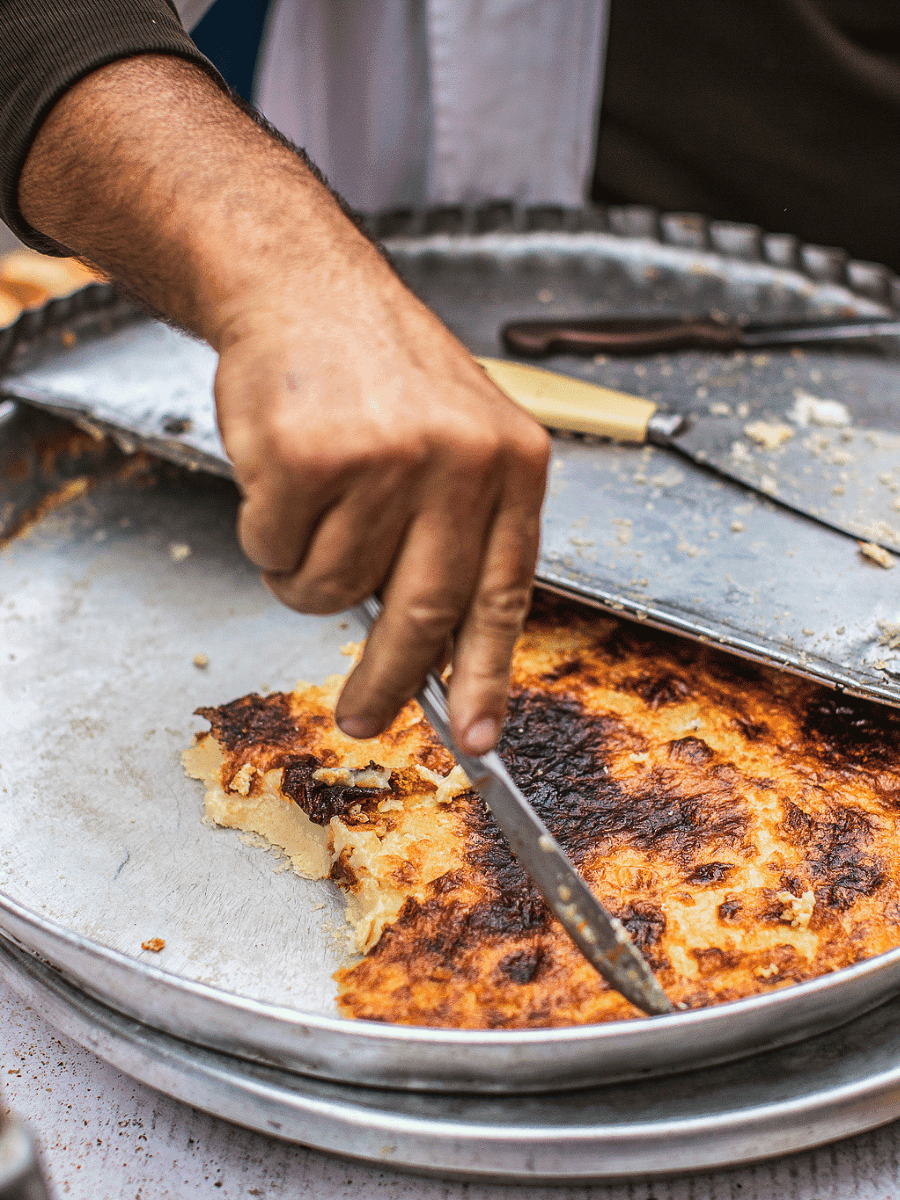
A dense, savoury chickpea-flour cake baked in a wood oven, sold sliced from paper on street corners. Tangier's Andalusi-Sephardic morning snack.