
Destination
Tangier
The story
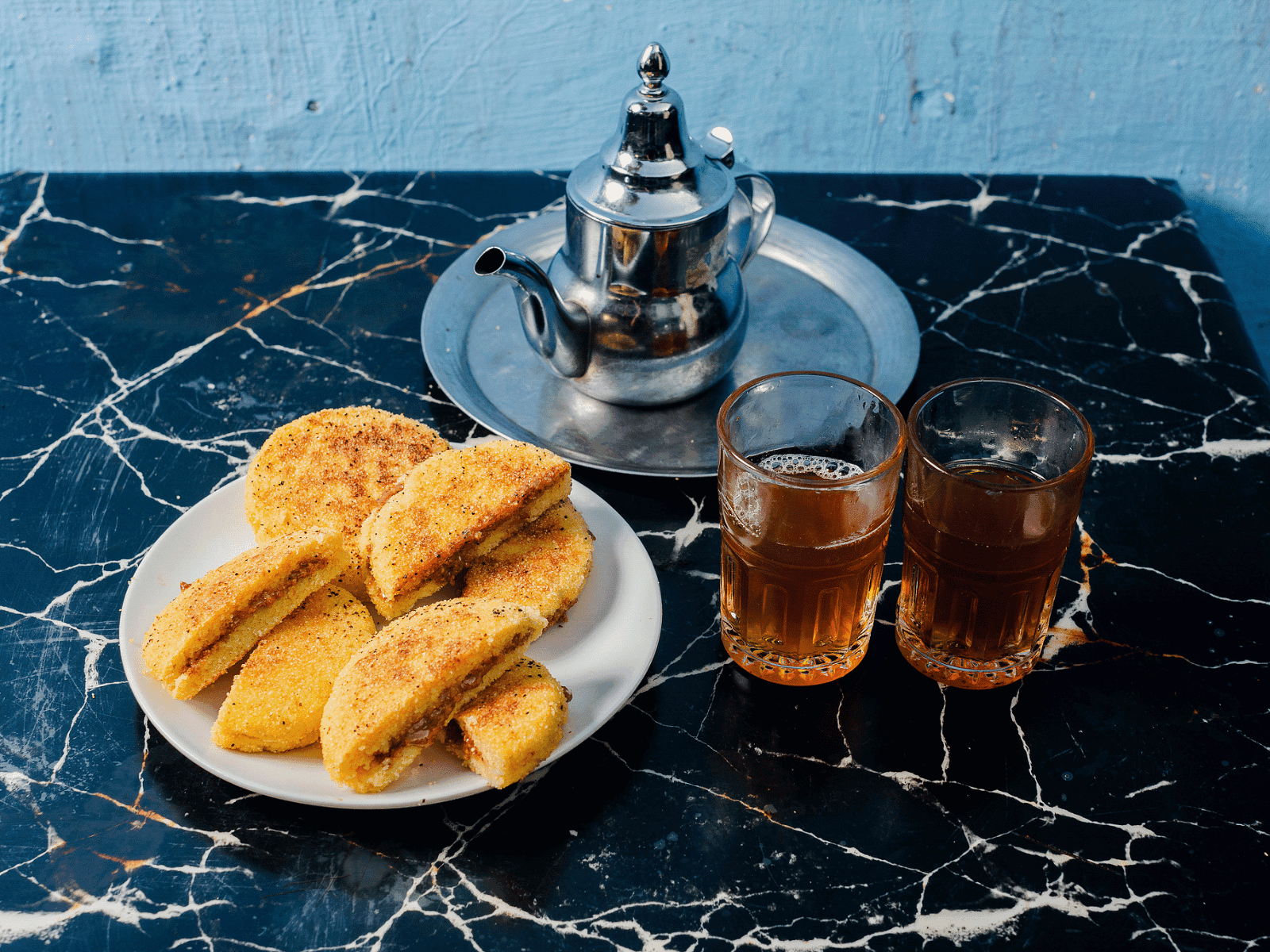
Harcha is Morocco's breakfast semolina bread: small round pan-cooked discs of coarse semolina, butter and milk, cooked on a hot dry skillet until the outside is deep-golden and crumbly-crusted and the inside is soft and slightly buttery. Split open and slathered with butter, honey, jben (fresh cheese) or amlou (almond-argan-honey butter), harcha is the traditional morning bread of Moroccan cafés and homes — you eat two of them with a small glass of mint tea before starting the day. Sold at every neighbourhood bakery in the morning; every Moroccan grandmother knows how to make it in 30 minutes flat.
Method
In a large bowl, whisk together the 300g semolina, baking powder, salt and sugar (if using).
Add the soft butter. Using your fingertips, rub the butter into the semolina until the mixture looks like coarse damp sand — 2 minutes of gentle rubbing.
Pour in most of the warm milk. Stir with your hands to combine, adding more milk gradually until you have a soft, slightly sticky dough that holds together but is not wet. Don't over-mix; harcha dough is not kneaded, only brought together.
Let the dough sit for 5 minutes so the semolina absorbs the moisture and the dough firms slightly.
Divide the dough into 8 equal balls. Working with each ball: pat with your palm into a disc about 8cm across and 1cm thick. Press each side onto a plate scattered with the coating semolina to coat both sides. Dust off the excess.
Warm a heavy dry skillet (cast-iron or non-stick) over medium heat. Brush very lightly with oil. Test with a small piece of dough — it should sizzle faintly but not smoke.
Cook the harcha discs 4 to 5 minutes on the first side without moving, then flip and cook another 4 minutes on the second side. The outside should be deep golden with a firm crust; the inside should be soft and set. If burning, lower the heat.
Serve warm. Split each harcha at the middle with a knife (like a scone) and fill with butter, honey and cheese. Serve with a small glass of mint tea. Best eaten within 1 hour of cooking; harcha stales fast.
Tips
- Semolina, not flour. This is the essential ingredient. Regular wheat flour gives you a scone, not a harcha. Coarse or medium semolina from a Middle Eastern or Moroccan grocer is the correct texture.
- Medium heat, not high. High heat browns the outside before the inside cooks. Medium heat for 4 to 5 minutes per side is the target.
- Don't skip the outer coating. Rolling each disc in extra semolina before cooking creates the golden, crumbly crust that marks a proper harcha.
- Serve warm. Harcha is at its peak within 30 minutes of leaving the pan. Reheating on a dry skillet for 60 seconds a side revives day-old ones; microwaving does not.
- Sweet or savoury. Add 1 tbsp sugar to the dough for a sweet version; leave it out for a savoury version to eat with cheese and olives. Both are traditional.
More recipes
View all
Paper-thin dough folded into a flaky square, cooked on a hot skillet until golden and buttery. Morocco's laminated breakfast pastry, eaten with honey.
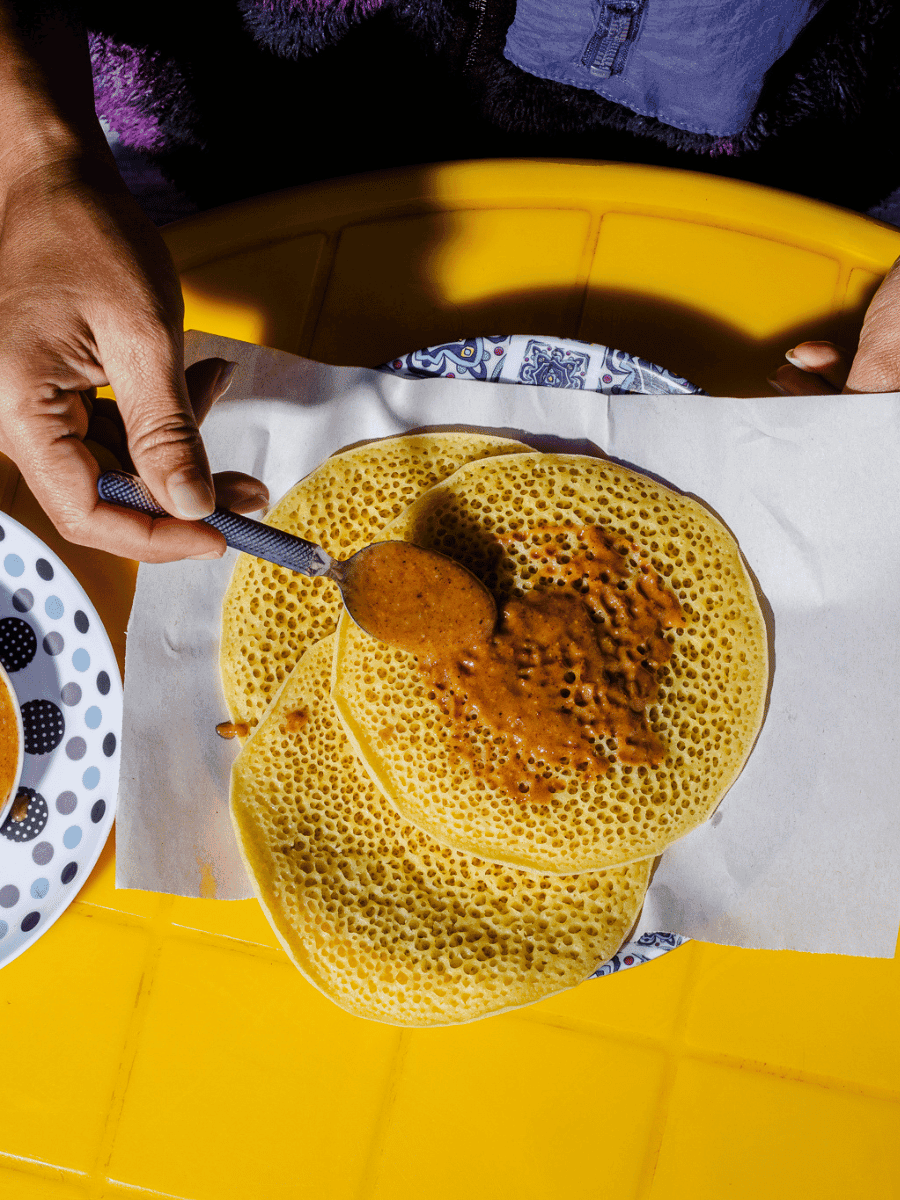
Soft yeasted semolina pancakes covered in a thousand tiny bubbles, cooked on a hot skillet on one side only. Morocco's spongy honey-soaked breakfast.
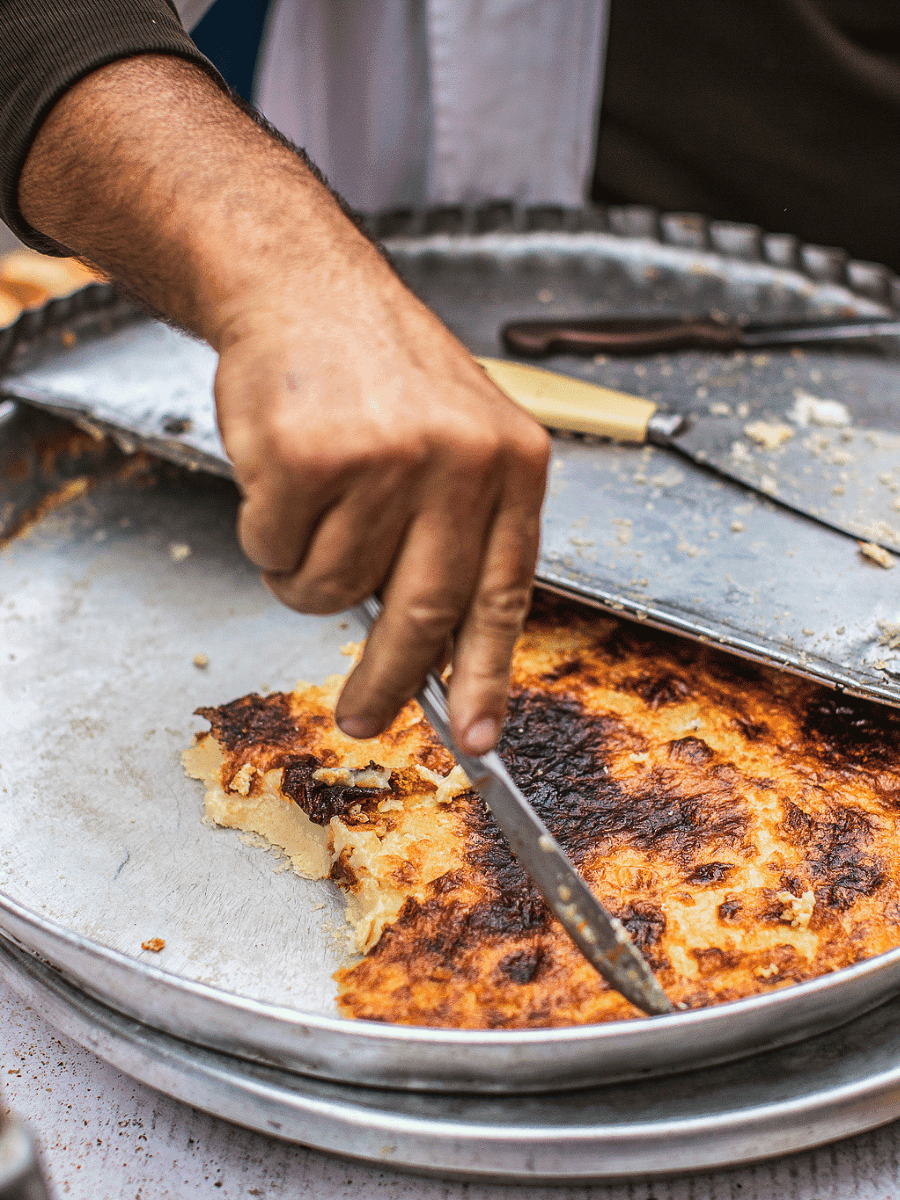
A dense, savoury chickpea-flour cake baked in a wood oven, sold sliced from paper on street corners. Tangier's Andalusi-Sephardic morning snack.
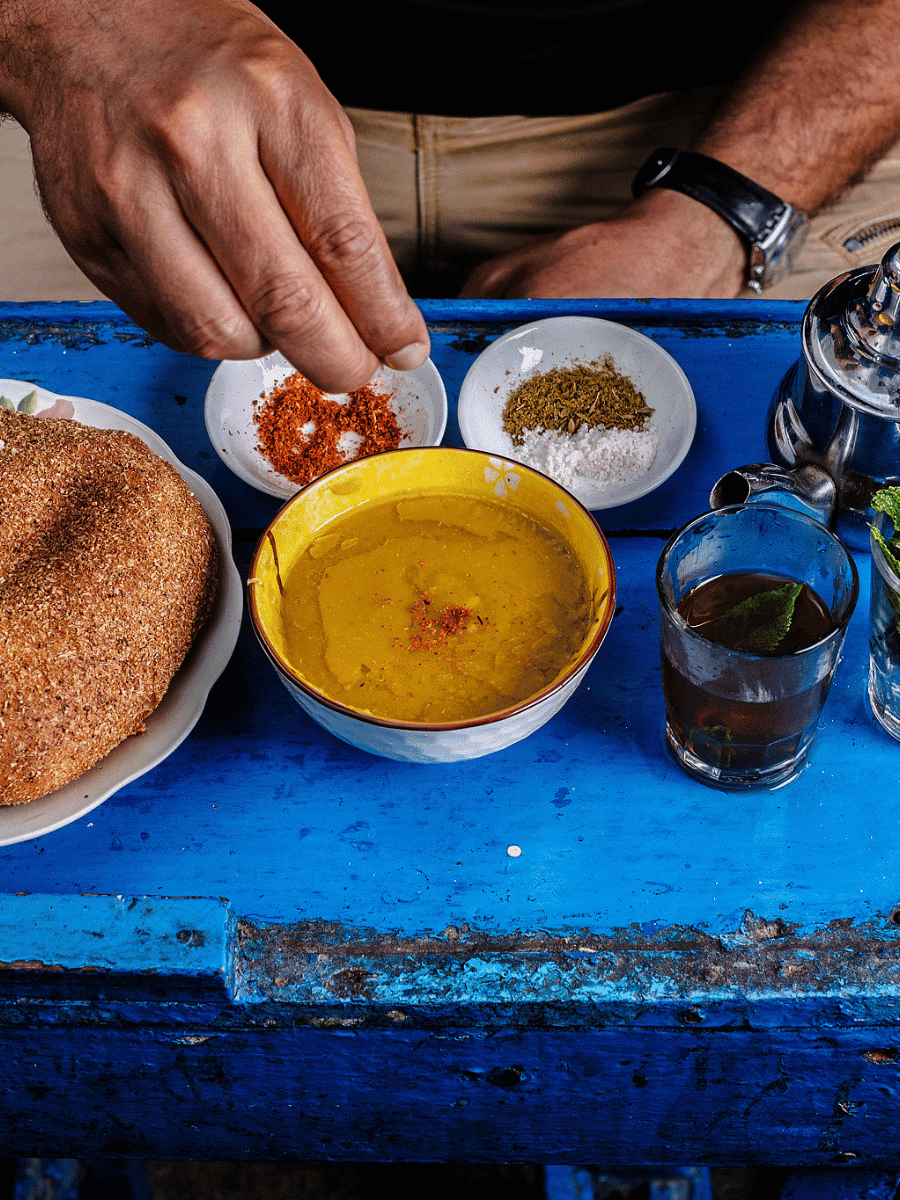
Silky split fava bean soup, drizzled with olive oil and dusted with cumin and paprika. Chefchaouen's winter breakfast, eaten with khobz.

Sweet, thick set yogurt made from whole milk and rennet, scented with orange blossom. Morocco's oldest dessert, spooned from small clay jars.

Ring-shaped yeast doughnuts, fried until deep gold and crackly, dusted with sugar or dipped in honey. Morocco's Sunday-morning street sweet, sold on a straw string.