

Destination
Tangier
The story
Torchi is Morocco's mixed pickle jar and the acidic counterpoint that sits on every Moroccan lunch table alongside tagines, couscous and rice: batons of carrot, turnip, cucumber, cauliflower florets and green pepper strips, brined in a vinegar-water-salt solution with garlic cloves, dried chilies, aniseed and bay leaves, and left to pickle for a week before serving. The vegetables retain their crunch but pick up a fierce sour-salty edge that cuts through the richness of Moroccan slow-cooked dishes. Made in every Moroccan home in glass jars, refilled year-round, and served in small dishes alongside the main meal.
Method
Wash and cut all vegetables into uniform-sized pieces so they pickle at the same rate. Do not blanch — torchi is a raw-vegetable pickle. Pat dry with a clean cloth if damp.
Wash the glass jar in hot soapy water and rinse well. For a proper long-keeping torchi, sterilise: fill with boiling water and let sit 5 minutes, then drain and dry.
Pack the vegetables tightly into the jar in mixed handfuls — no need to layer neatly, but pack tight so there's no air pocket. Include the beetroot slice if using (this stains the turnips pink over a few days).
Tuck the garlic cloves, chilies, aniseed, bay leaves, peppercorns and coriander seeds among the vegetables.
In a saucepan, combine water, vinegar, salt and sugar. Bring to a boil, stirring, until the salt and sugar dissolve. Cool to room temperature — do not pour hot brine over the vegetables, or they'll turn soft.
Pour the cooled brine over the vegetables until they are completely submerged. Weight down with a small ceramic disc or a small ziplock bag of water if any vegetables float. Seal the jar tightly.
Leave at cool room temperature (16-20C) for 5 to 7 days. Check daily — the brine should stay clear or lightly cloudy; the vegetables should stay firm. If any vegetable turns slimy or the brine grows fuzzy on the surface, discard the whole jar.
After 5 to 7 days at room temperature, transfer the jar to the fridge. Torchi is ready to eat. Serve in small dishes as a side condiment with tagines, couscous, kefta, khobz sandwiches. Keeps 3 months in the fridge.
Tips
- Uniform cuts. All vegetables at 5cm-baton or 2cm-floret size means they pickle at the same rate. Uneven cuts give you soft-and-hard bites in the same jar.
- Cool brine only. Hot brine cooks the vegetables and makes them limp. Bring to a boil to dissolve salt and sugar, then cool completely before pouring.
- Full submersion. Any vegetable poking above the brine will oxidise and mould. Weight down floaters with a small ceramic disc or a bag of water.
- Cool room temperature. Ferment at 16-20C for the first week. Hot rooms encourage bad bacteria; cold rooms slow the pickle to a crawl.
- Beetroot for pink turnips. This is the classical Moroccan visual trick. One small slice of beetroot in the jar turns all the turnips pink in a week. Skip it and everything stays cream-and-orange.
More recipes
View all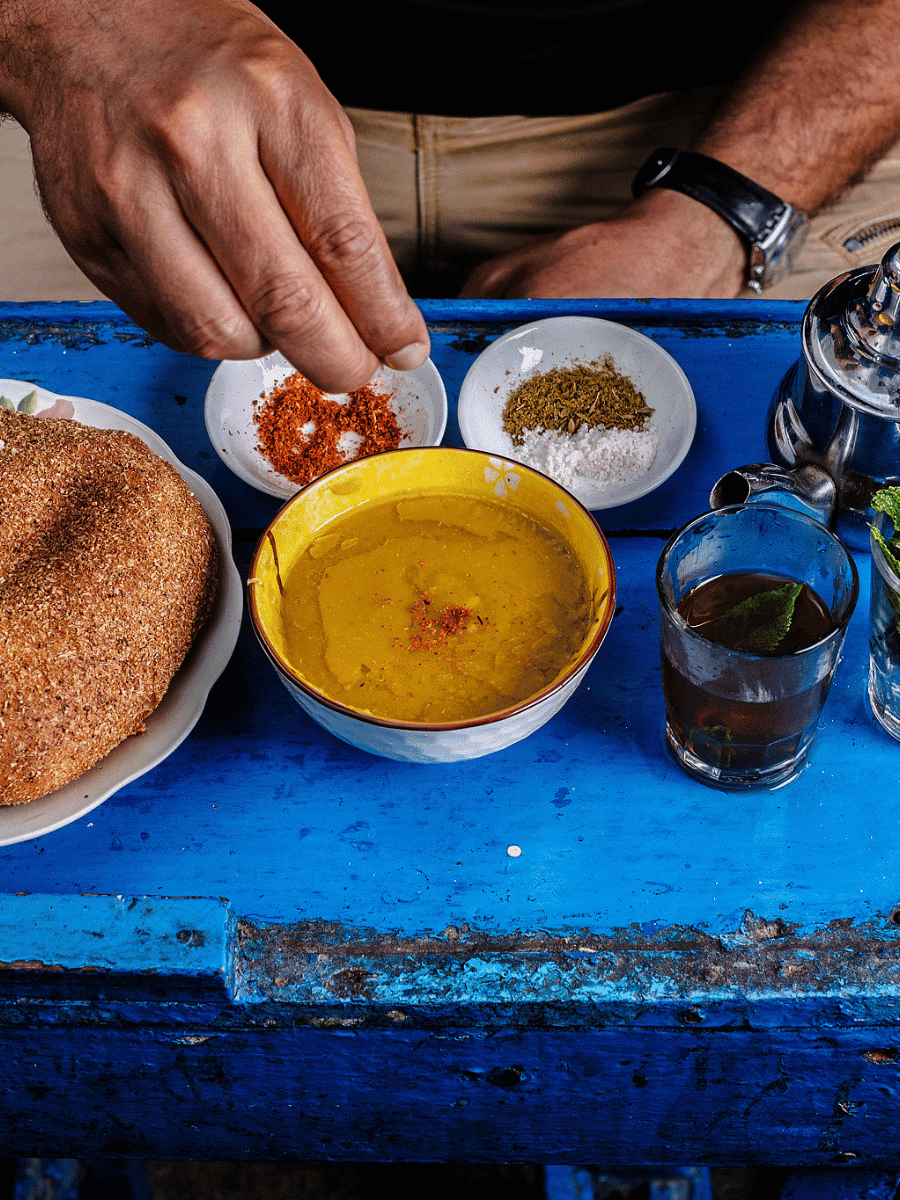
Silky split fava bean soup, drizzled with olive oil and dusted with cumin and paprika. Chefchaouen's winter breakfast, eaten with khobz.

Ring-shaped yeast doughnuts, fried until deep gold and crackly, dusted with sugar or dipped in honey. Morocco's Sunday-morning street sweet, sold on a straw string.
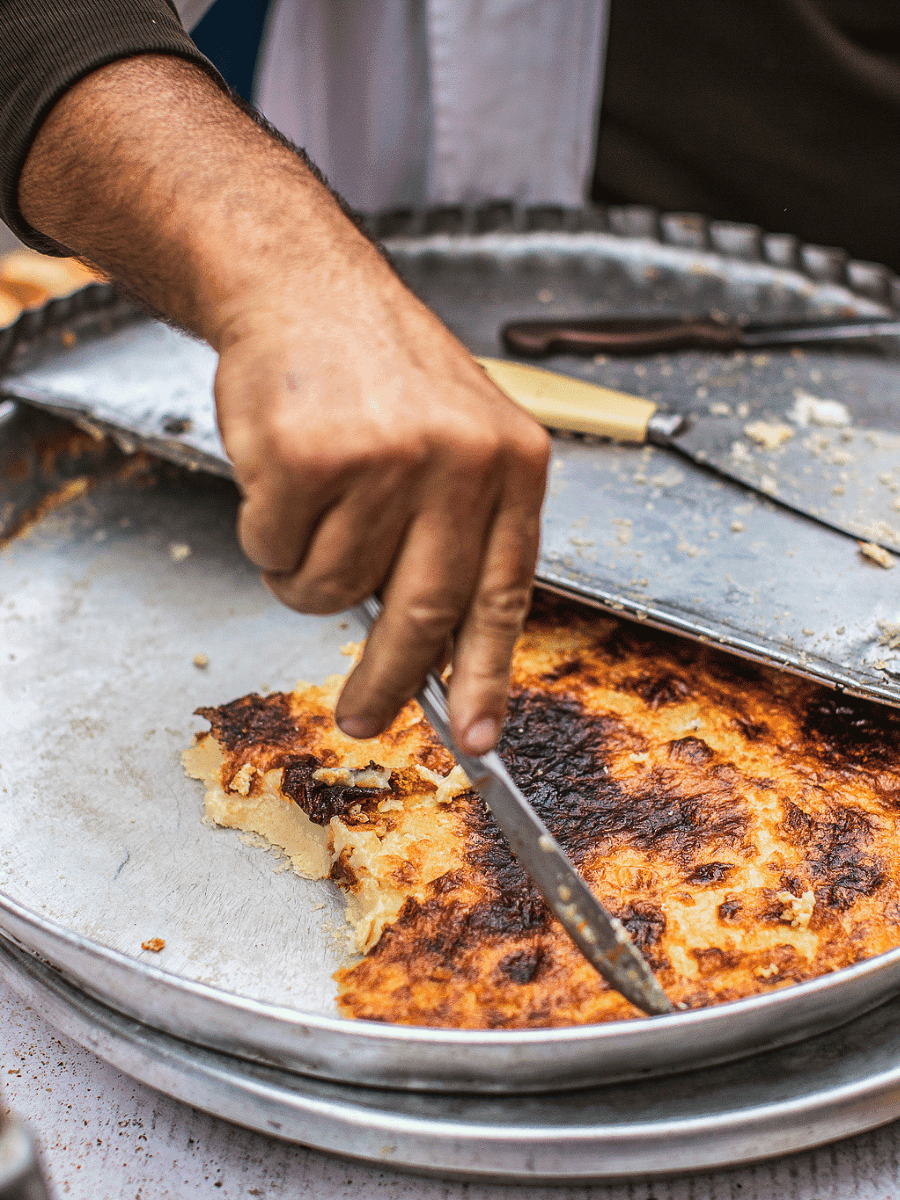
A dense, savoury chickpea-flour cake baked in a wood oven, sold sliced from paper on street corners. Tangier's Andalusi-Sephardic morning snack.

Cannellini or white beans simmered in tomato, garlic, cumin and paprika until soupy-tender. The Moroccan winter one-pot, eaten with khobz.
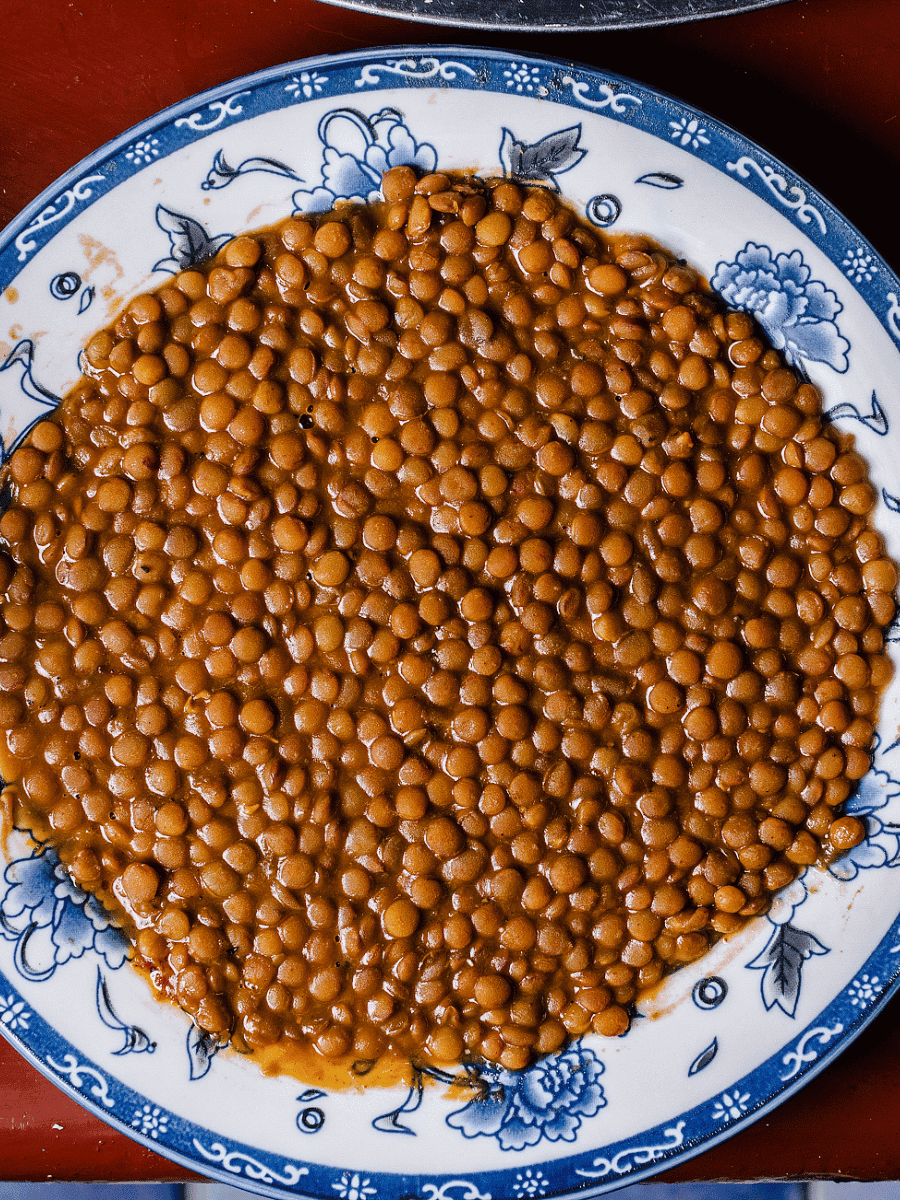
Brown lentils simmered with cumin, ginger and a spoon of tomato paste, finished with olive oil and coriander. Morocco's Monday-lunch pulse.
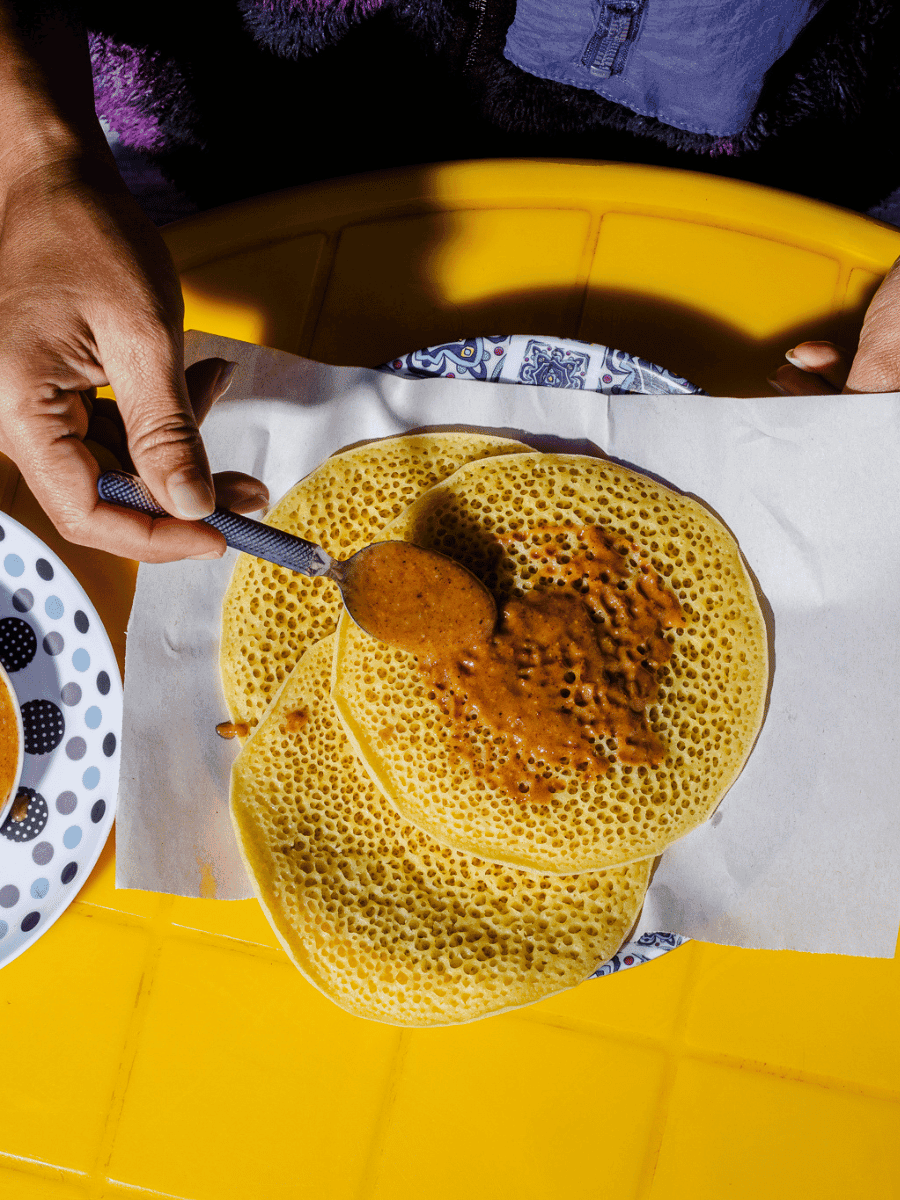
Soft yeasted semolina pancakes covered in a thousand tiny bubbles, cooked on a hot skillet on one side only. Morocco's spongy honey-soaked breakfast.