
Destination
Tangier
The story
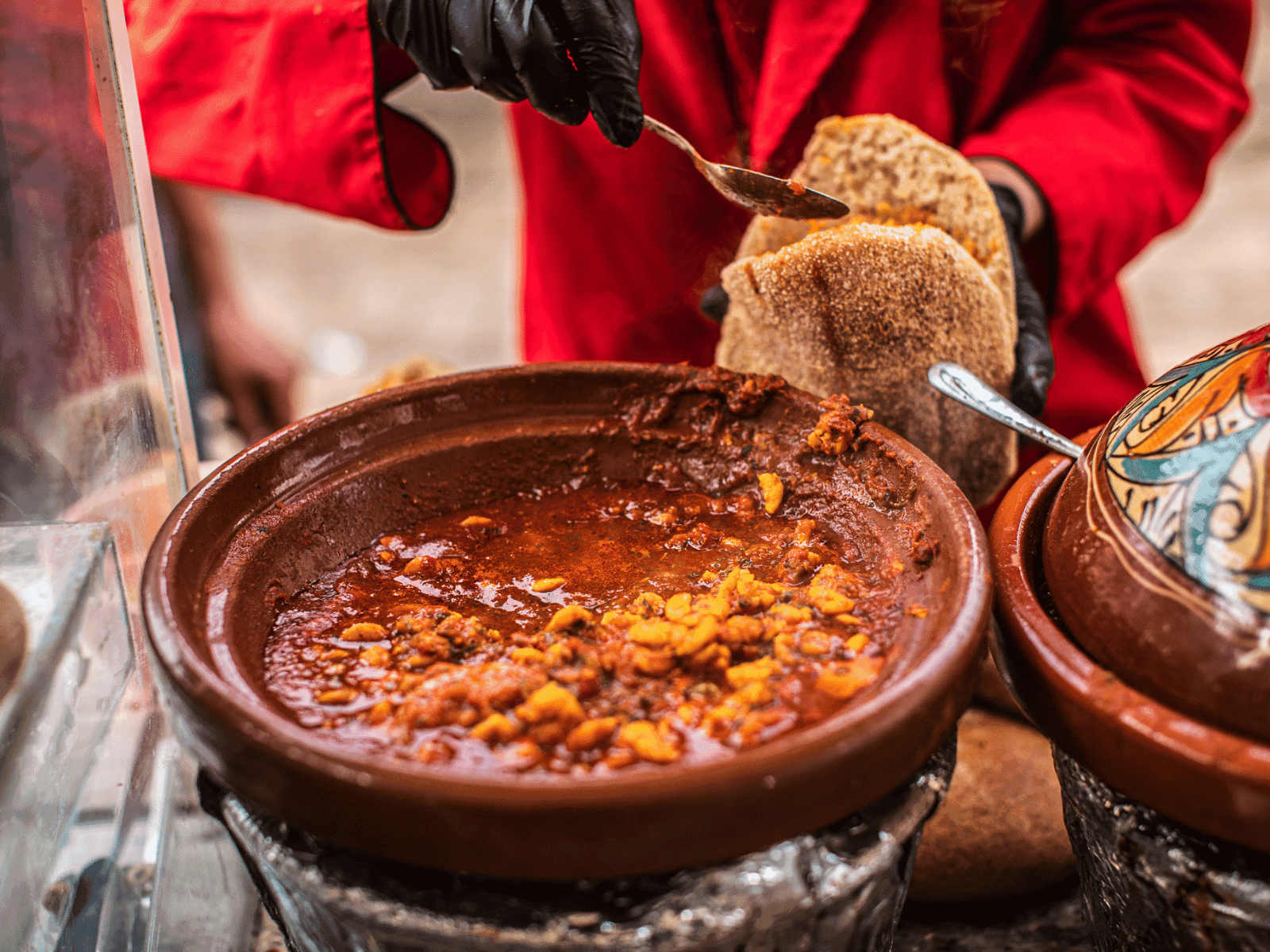
Tagine de poulpe — octopus tagine — is the specifically coastal Moroccan tagine that shows up in Essaouira, Safi, El Jadida and Casablanca, where the Atlantic waters produce some of North Africa's best octopus. Baby or medium octopus is cleaned, briefly boiled to tenderise, then slow-braised in a chermoula-tomato sauce with olives and preserved lemon for an hour until the tentacles are meltingly tender and the sauce has thickened into a deep red-orange gravy. Served in the tagine at the table with fresh khobz for scooping — this is the closest Moroccan cooking gets to a Southern European stew.
Method
Bring a large pot of salted water to a boil with the cork (or vinegar), bay leaves and halved onion. Lower the octopus in tentacles-first (this curls them nicely), then drop the head in too. Simmer gently for 40 to 50 minutes until a knife slides into the thickest tentacle with no resistance.
Lift the octopus out with a slotted spoon. Reserve 500ml of the cooking water. Discard the cork, onion and bay.
Slice the tentacles into 4cm pieces. Cut the head into strips.
Combine all chermoula ingredients in a bowl. Toss the cut octopus with half the chermoula and reserve.
Warm 4 tbsp olive oil in a wide tagine or heavy pot over medium heat. Cook the chopped onion 6 minutes until soft. Add the remaining half of the chermoula and stir 2 minutes to bloom.
Add the tomato paste and tomato purée. Cook 8 minutes until darkened and the oil separates at the edges. Add the sugar and reserved octopus water. Bring to a simmer.
Tip in the chermoula-marinated octopus. Cover and simmer over low heat 30 minutes so the octopus finishes tenderising and the sauce reduces.
Add the olives and preserved lemon strips. Simmer uncovered another 10 minutes so the sauce thickens to a rich coating consistency. Taste and adjust salt (the olives and preserved lemon are already salty). Scatter with fresh coriander. Serve directly from the tagine with lemon wedges and khobz.
Tips
- Boil first, then braise. Trying to slow-cook a raw octopus in the tagine gives you rubbery pieces surrounded by tender sauce. The two-stage cook — boil to tenderise, then braise for flavour — is the classical Moroccan technique.
- The wine cork trick. Yes, really. A cork in the boiling water tenderises the octopus — an old Portuguese fishermen's trick that Moroccan coastal cooks have adopted. The cork releases enzymes that break down the muscle proteins. Two tbsp of vinegar in the water does the same thing more prosaically.
- Reserve the cooking water. This is your flavour base for the sauce. Never throw it out — it's essentially octopus stock.
- Chermoula in two stages. Half is used to marinate the octopus after boiling; half goes into the sauce. This double-hit is what gives the tagine its layered chermoula flavour.
- Better on day two. Like most Moroccan tagines, this one improves overnight. Make Saturday for Sunday lunch; the octopus continues to soften and the sauce deepens.
More recipes
View all
Slow-cooked chicken tagine with preserved lemons, cracked green olives and a saffron-onion sauce. Morocco's Friday-lunch classic, eaten with khobz.

Small spiced meatballs simmered in a garlicky tomato-cumin sauce with eggs cracked over the top. Morocco's most-shared tagine, eaten with khobz.

Small fish marinated in chermoula, dredged in flour, and shallow-fried until crisp. The Casablanca fish-souk lunch, eaten straight from paper.

Whole fish or fillets baked in a shallow clay tagra with chermoula, tomato, potato and olives. Tangier's oven-baked answer to the tagine.

Cannellini or white beans simmered in tomato, garlic, cumin and paprika until soupy-tender. The Moroccan winter one-pot, eaten with khobz.
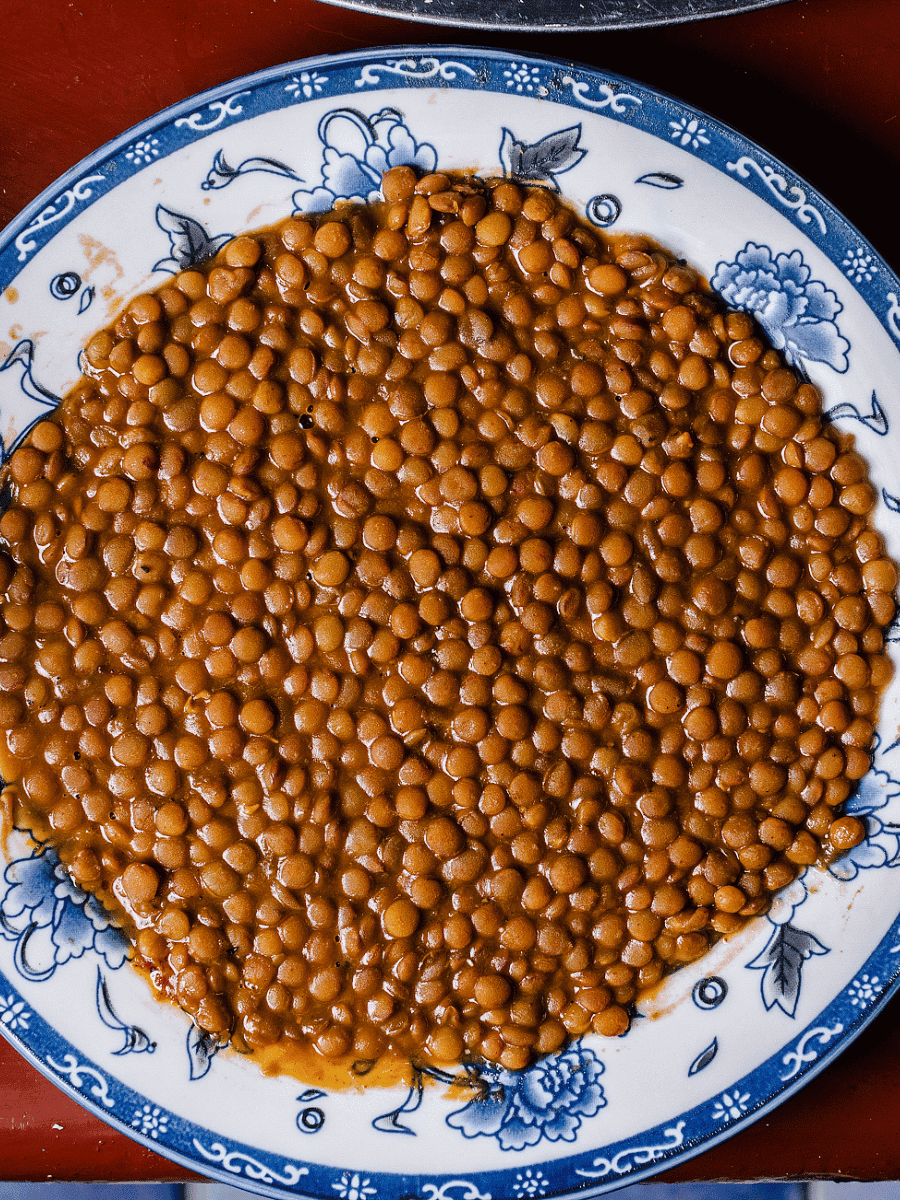
Brown lentils simmered with cumin, ginger and a spoon of tomato paste, finished with olive oil and coriander. Morocco's Monday-lunch pulse.