
Destination
Tangier
The story
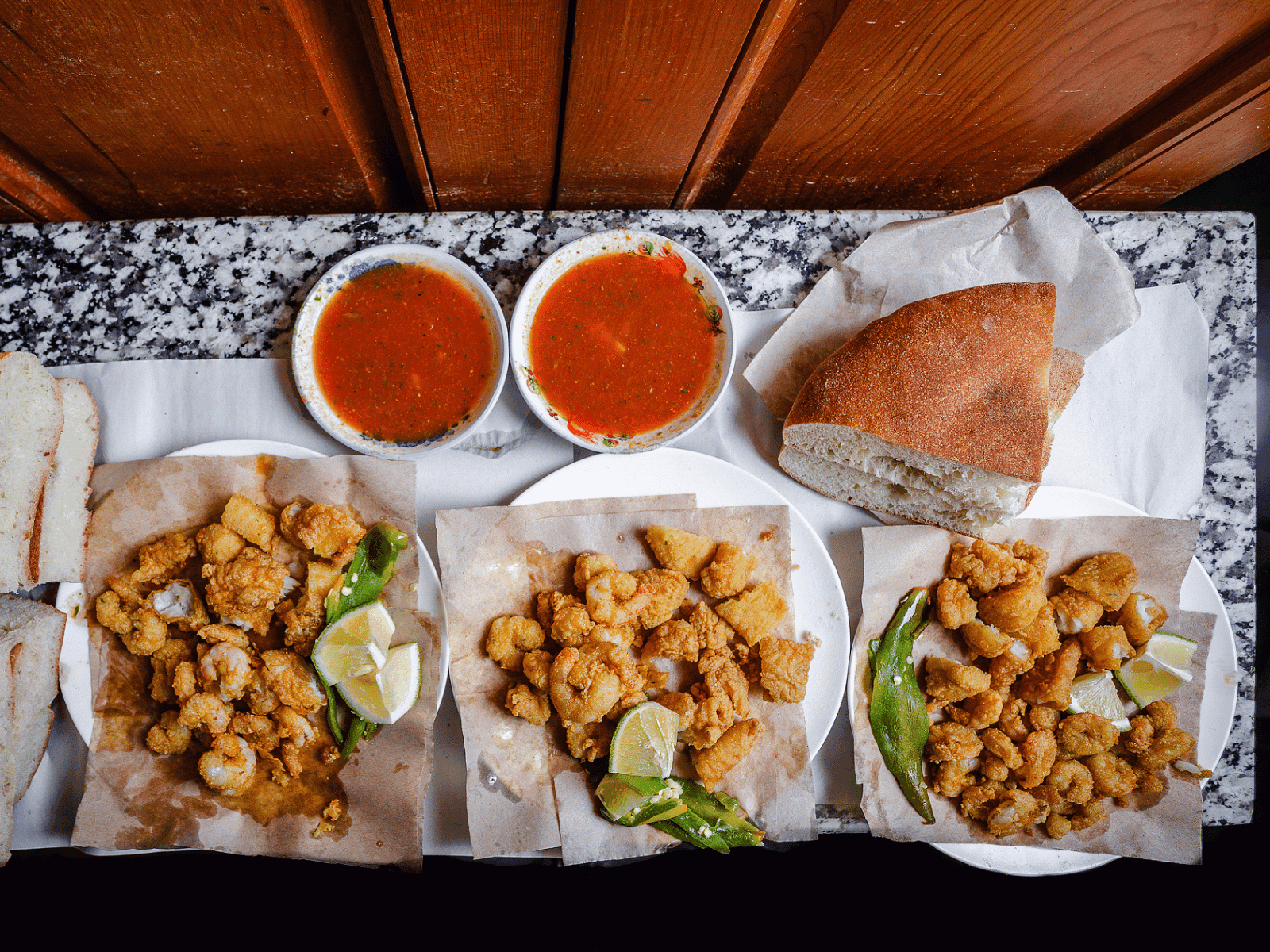
Hout maqli — literally "fried fish" — is Morocco's coastal midday snack: small whole fish (sardines, anchovies, red mullet, whiting) or fish fillets marinated briefly in chermoula, dredged in seasoned flour, and shallow-fried in a wide pan until deeply golden and crackly. Sold from paper cones at every Moroccan fish souk in Casablanca, Essaouira, El Jadida and Agadir, hout maqli is eaten with lemon wedges, a spoon of tomato-based sauce on the side, and a stack of khobz for building small fish sandwiches. It's a lunch, a snack, a beach food, and the most common way Moroccans eat fresh fish.
Method
Combine all chermoula ingredients in a bowl. Stir into a wet green paste.
Rub the fish (whole or fillets) all over with the chermoula. If using whole fish, work it into the cavity. Marinate 20 to 30 minutes in the fridge — no longer, or the lemon starts to cook the flesh.
Whisk together the flour, salt, paprika, cumin and pepper on a wide plate.
Warm the oil in a wide heavy pan over medium-high heat until it reaches 180C. A small piece of fish should sizzle vigorously on contact.
Working one at a time: lift a fish from the marinade (let excess drip off but do not wipe off), then coat all over in the seasoned flour. Shake off excess.
Lay the fish in the hot oil, no more than 4 at a time. Fry 90 seconds per side for whole small fish; 2 minutes per side for thicker fillets. The outside should be deep golden and crisp.
Lift onto a wire rack (not paper). Scatter immediately with sea salt while glistening.
Pile on a big platter or in paper cones (the Casablanca street way). Serve with plenty of lemon wedges, fresh khobz for building sandwiches, and a small bowl of tomato salsa on the side. Eat with hands.
Tips
- Fresh fish only. This dish exposes fish quality — off-the-boat morning fish is markedly better than freezer fish. Ask for the catch of the day.
- Short marinade. Twenty to thirty minutes is the target. Longer and the lemon in the chermoula starts to cure the flesh (like ceviche), and the fried texture goes chalky.
- 180C oil. A thermometer is worth using. Cooler oil produces greasy, pale fish; hotter oil burns the flour coating.
- Rack, not paper. Draining on a wire rack keeps the bottom crisp. Draining on paper towel steams the bottom and gives you a soggy underside.
- Salt hot from the pan. A pinch of sea salt scattered on the fish while it's still glistening from the oil is what seasons the outside. Salting later doesn't stick.
More recipes
View all
Whole fish or fillets baked in a shallow clay tagra with chermoula, tomato, potato and olives. Tangier's oven-baked answer to the tagine.

Small triangular or cigar-shaped pastries stuffed with spiced meat, cheese or almond paste, fried crisp. Morocco's cocktail-party appetiser, sold at every souk stand.
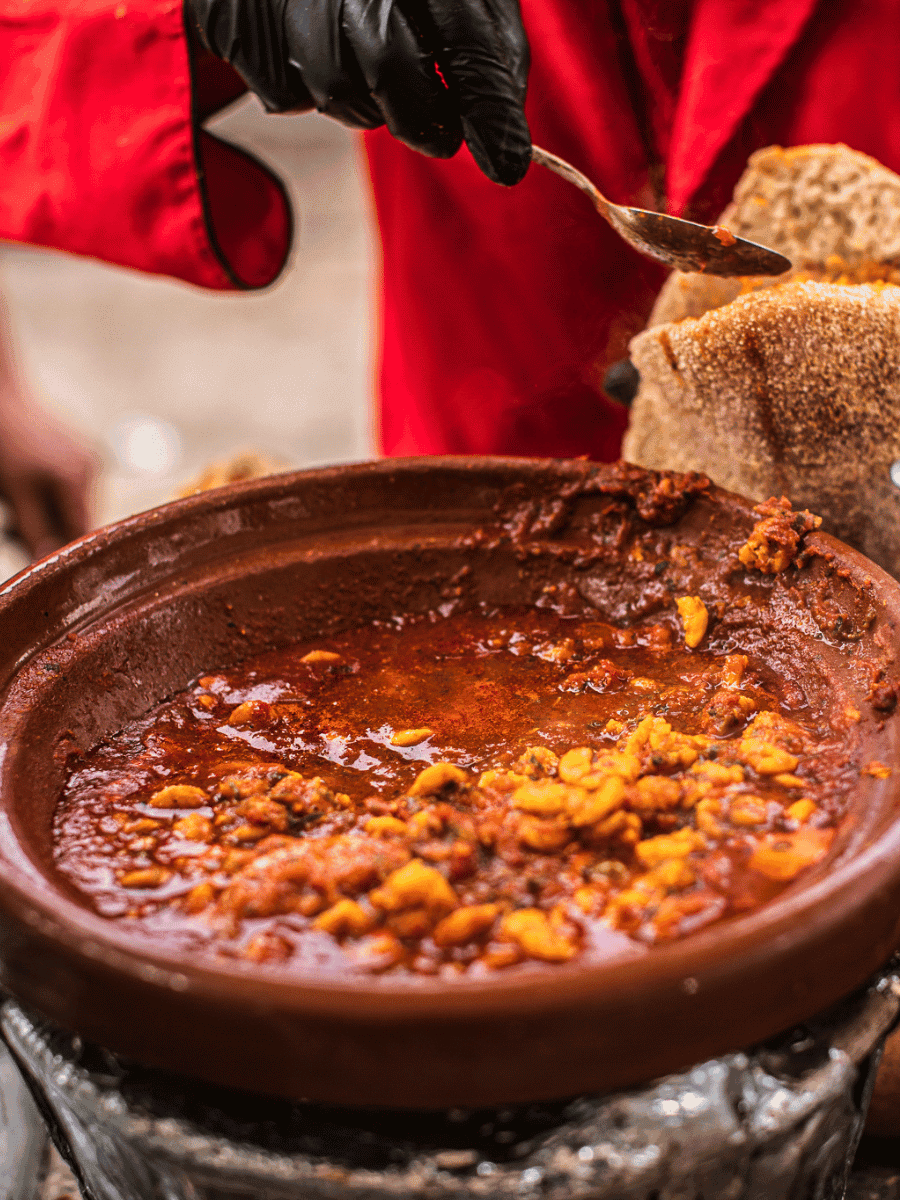
Baby octopus slow-braised in a chermoula tomato sauce with olives and preserved lemon. Essaouira and Safi's port-side tagine, eaten with lots of khobz.

Fresh sardines butterflied and sandwiched around a chermoula stuffing, then grilled hard. Al Hoceima's twist on the classical grilled sardine.
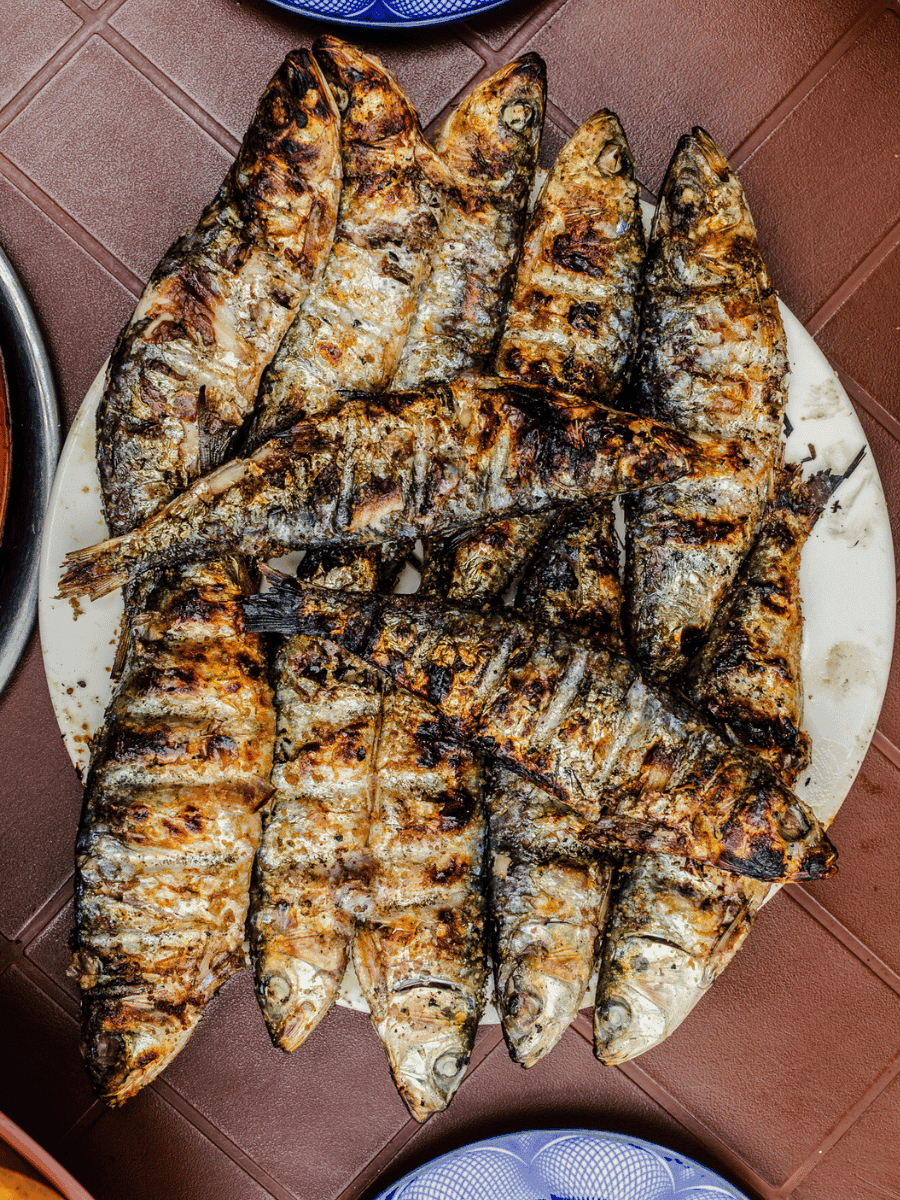
Whole sardines painted with chermoula and grilled over hot coals until the skin blisters and the flesh stays juicy. Morocco's beach-and-market classic.

Cannellini or white beans simmered in tomato, garlic, cumin and paprika until soupy-tender. The Moroccan winter one-pot, eaten with khobz.