
Destination
Tangier
The story
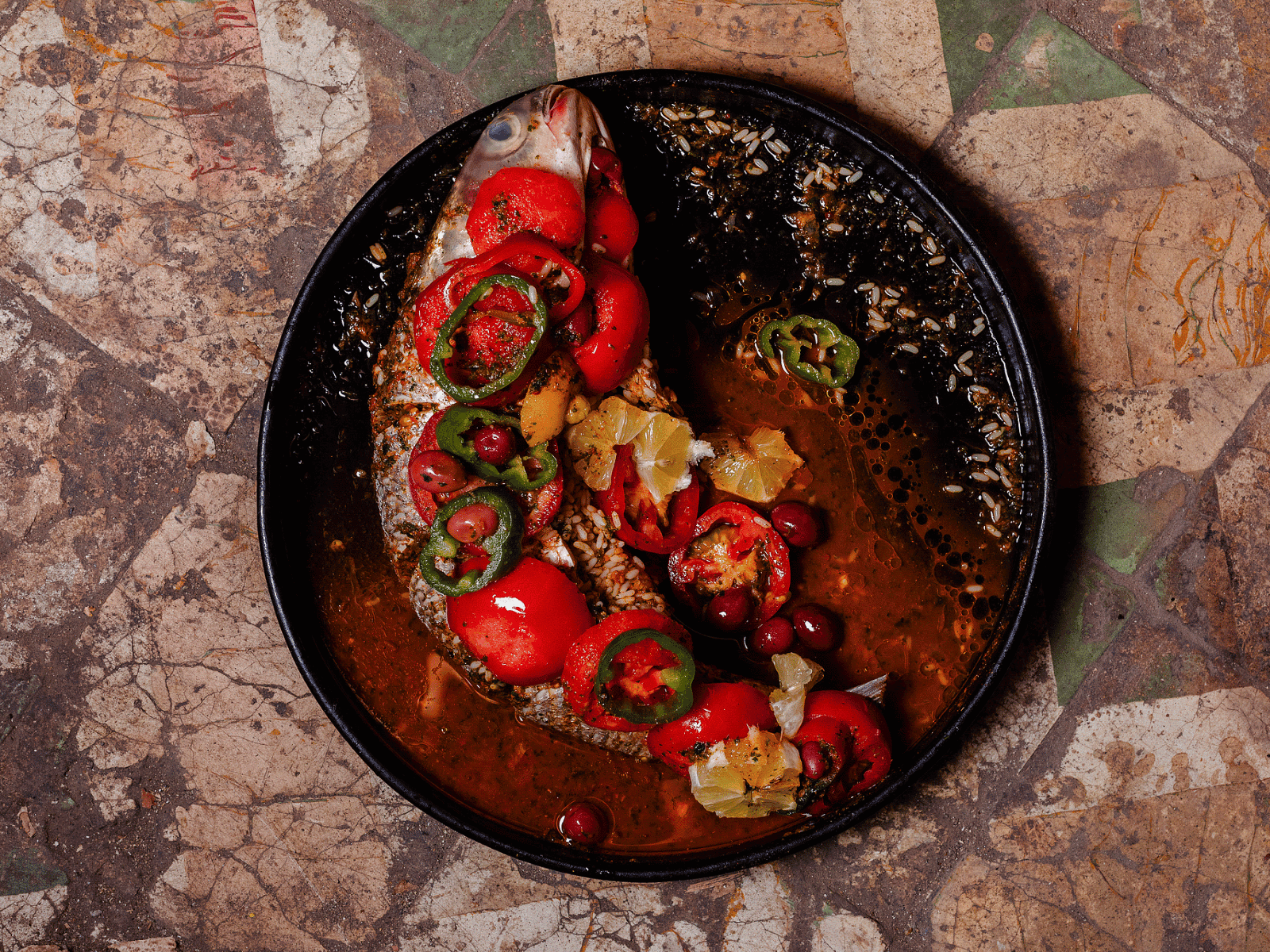
Tagra de poisson is Tangier's answer to the classical tagine: instead of a conical-lidded tajine, the dish is baked in a shallow round clay dish called a tagra — think a Moroccan-flat-bottomed paella pan or a cazuela — layered with sliced potato, tomatoes, sweet peppers and preserved lemon, topped with chermoula-marinated fish fillets or a whole small fish, and finished with cracked green olives, chopped coriander and a light chermoula sauce over the top. Baked in a hot oven for 30 minutes until the fish is just cooked and the sauce has bubbled through the vegetables. Sold at every Tangier and coastal-north seafood restaurant and made in every coastal Moroccan household.
Method
Combine all chermoula ingredients in a bowl and stir. It should be a wet, deep green paste.
Rub the fish with about a third of the chermoula, making sure to work it into any slashes on a whole fish. Marinate 30 to 60 minutes in the fridge.
Preheat oven to 200C. Oil a shallow round tagra, cazuela, or ceramic baking dish (about 28cm across).
Lay the potato slices overlapping in the base of the dish. Season with salt and pepper. Drizzle with 1 tbsp of the remaining chermoula.
Top with the sliced tomatoes, peppers, preserved lemon and half the olives. Drizzle with another 2 tbsp chermoula.
Arrange the marinated fish on top of the vegetables, in a single layer. Scatter the remaining olives over the fish. Spoon the remaining chermoula generously across.
Pour 100ml water carefully around the edges (not over the fish). Bake 30 to 35 minutes until the potatoes are fork-tender and the fish is just opaque and flakes easily.
Scatter with fresh coriander. Bring the whole tagra to the table with lemon wedges and warm khobz. Serve with rice on the side or eat directly with bread scooping up the sauce.
Tips
- Chermoula is the marker. Every ingredient in the chermoula is essential — no substitutes for the coriander, cumin, paprika, garlic or lemon. This paste is what makes the dish taste Moroccan.
- Slice potatoes thin (5mm). Thicker slices don't cook through in the 30-minute bake and leave you with raw potato under cooked fish.
- Shallow dish. A deep dish traps steam and turns the fish into a stew. A shallow, wide dish gives you the tagra character — some caramelisation on top, tender vegetables underneath.
- Skin-on fish. The skin protects the flesh from drying during the bake. Ask the fishmonger to leave the skin on and score any thick fillets to help the marinade penetrate.
- Do not overcook. Fish is done at 55C internal — check after 25 minutes. Overcooked fish is chalky. The potatoes need the full 30 to soften, so slice them thin enough that they're done when the fish is.
More recipes
View all
Small fish marinated in chermoula, dredged in flour, and shallow-fried until crisp. The Casablanca fish-souk lunch, eaten straight from paper.
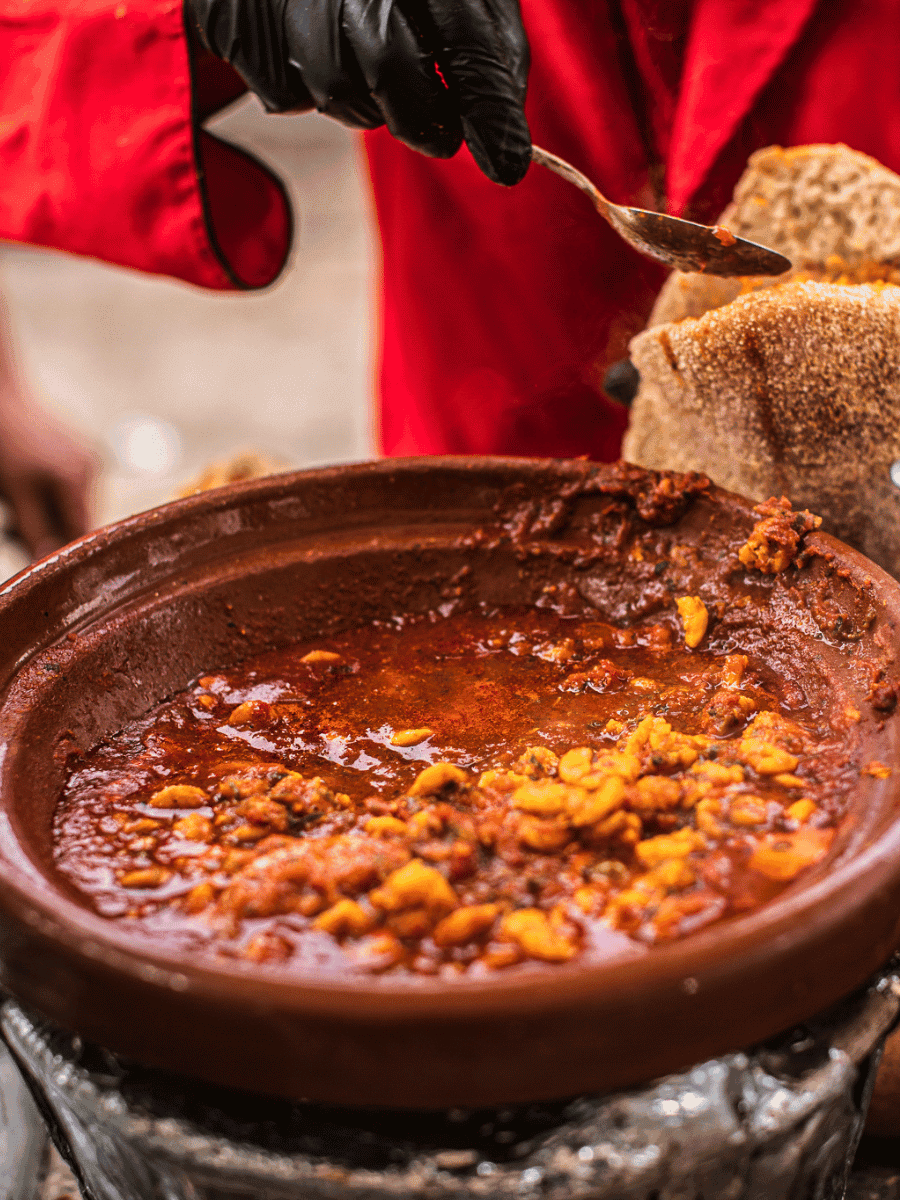
Baby octopus slow-braised in a chermoula tomato sauce with olives and preserved lemon. Essaouira and Safi's port-side tagine, eaten with lots of khobz.

Fresh sardines butterflied and sandwiched around a chermoula stuffing, then grilled hard. Al Hoceima's twist on the classical grilled sardine.
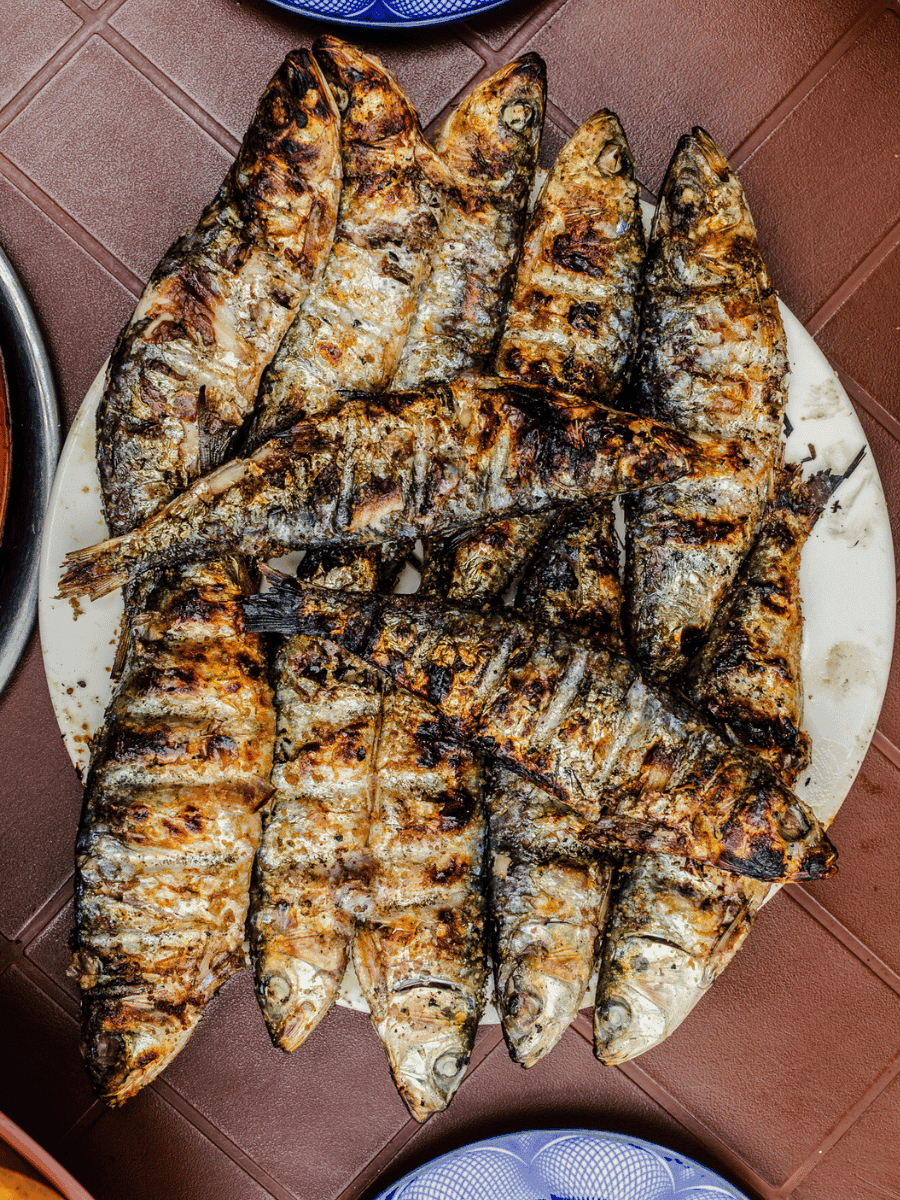
Whole sardines painted with chermoula and grilled over hot coals until the skin blisters and the flesh stays juicy. Morocco's beach-and-market classic.
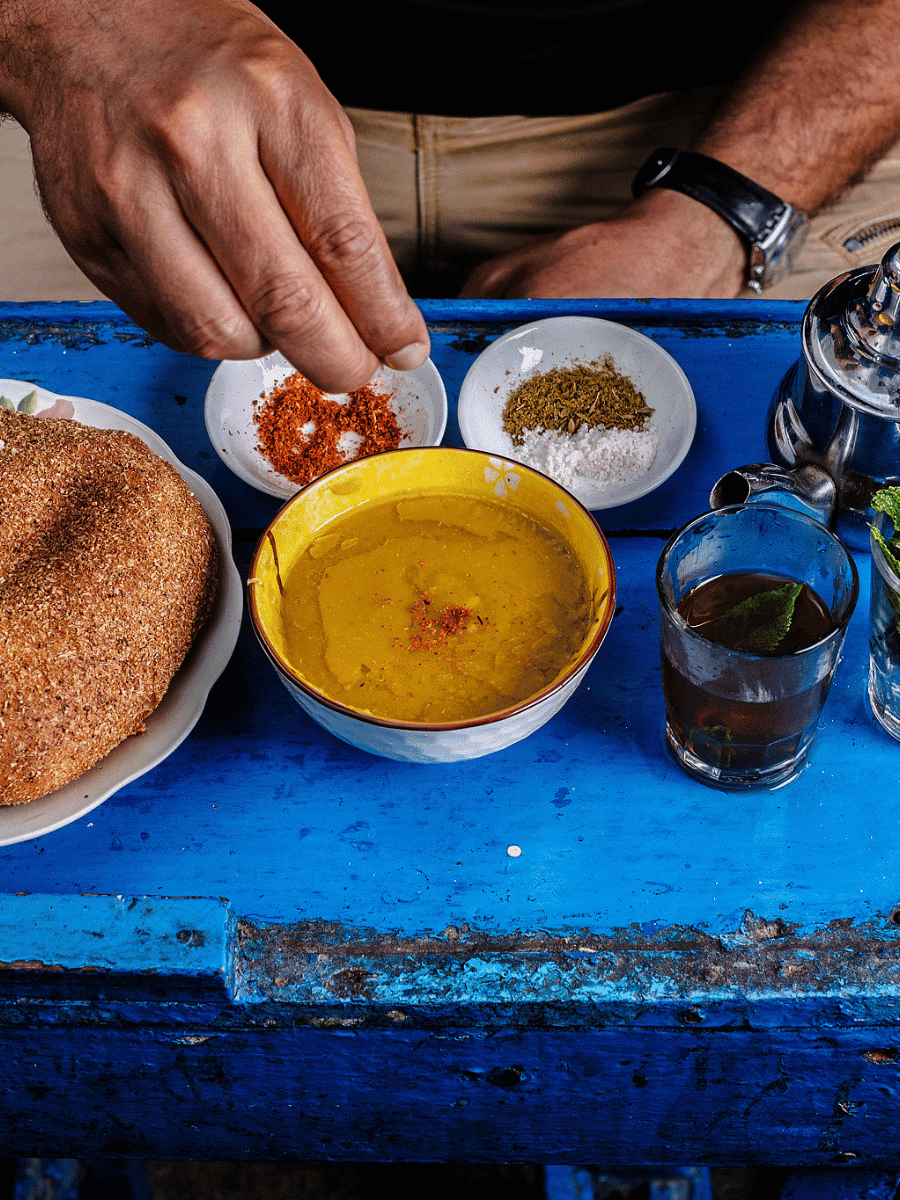
Silky split fava bean soup, drizzled with olive oil and dusted with cumin and paprika. Chefchaouen's winter breakfast, eaten with khobz.

Small spiced meatballs simmered in a garlicky tomato-cumin sauce with eggs cracked over the top. Morocco's most-shared tagine, eaten with khobz.