

Destination
Tangier
The story
Raib is Morocco's oldest set-yogurt dessert and the direct ancestor of the modern Moroccan-brand yogurts you now see in every corner shop. Whole milk is warmed with sugar and orange blossom water, cooled, mixed with a small pinch of vegetable rennet (traditionally the pistil of a wild artichoke, now supermarket rennet), poured into small clay or glass pots, and left overnight to set into a thick, silky, softly-set yogurt-like cream. The finished raib is very mildly tangy — much less sour than modern yogurt — with a specific orange-blossom perfume and a slight sweetness that separates it from every yogurt-like preparation in the region.
Method
Pour the milk into a heavy saucepan. Warm gently over medium heat, stirring, until the sugar dissolves. Bring to just before boiling (steam rising but no bubbles), then remove from heat.
Stir in the orange blossom water and salt. Let the milk cool to body temperature (37-38C) — warm to the touch, not hot. This is essential: hot milk kills the rennet; cold milk doesn't activate it.
Stir the rennet into the milk with 5 gentle swirls of a spoon. Do not whisk vigorously — rennet works on undisturbed milk.
Immediately divide the milk between the pots or cups. Work fast — rennet starts setting within 60 seconds, and a stirred pot won't set properly.
Cover each pot loosely with a piece of plastic wrap or a small saucer. Leave undisturbed at cool room temperature (around 20C) for 4 to 6 hours. Do not move them; do not tilt them. The raib is ready when the surface no longer wobbles like liquid but holds when you gently tap the side of the pot.
Once set, transfer the pots to the fridge and chill at least 4 hours (overnight is ideal). Cold-set raib holds its shape better and the flavours settle.
Just before serving: dust each pot with a tiny pinch of cinnamon, scatter with crushed pistachios, and drizzle with a whisper of honey and a tiny drop of extra orange blossom water. Some prefer it plain — no toppings, just the pure milk-rennet base.
Serve straight from the pot with a small spoon. Diners eat from the pot. Never re-serve leftover raib in a stirred bowl — stirred, it collapses into a liquid mess.
Tips
- Blood temperature. This is the critical rennet-setting temperature. Too hot, the rennet enzymes denature and won't work; too cool, they don't activate. A quick finger-dip test: warm but comfortable is right.
- Don't stir after adding rennet. One gentle swirl to distribute, and that's it. Any further stirring breaks the setting structure.
- Small pots, big pots don't work. Raib sets by surface tension and gravity in small vessels; large bowls set unevenly and the top separates.
- Vegetable rennet, not animal. Traditional Moroccan raib uses vegetable rennet from wild artichoke or thistle. Any health-food shop or online cheesemaker's supplier stocks vegetable rennet.
- Do not skimp on orange blossom water. This is the flavour marker. Two tablespoons per litre of milk is the Moroccan standard; less and you have plain yogurt.
More recipes
View all
Layered filo pastry crisps sandwiched with almond-milk custard, dusted with icing sugar and cinnamon. Fes's most elegant dessert.

Ring-shaped semi-hard biscuits scented with fennel, aniseed and sesame, twice-baked until golden. Morocco's tea-dunking staple, sold by weight at every pastry souk.

Almond and raisin twice-baked biscuits, sliced from a loaf and dried until crisp. Morocco's biscotti-like tea companion.
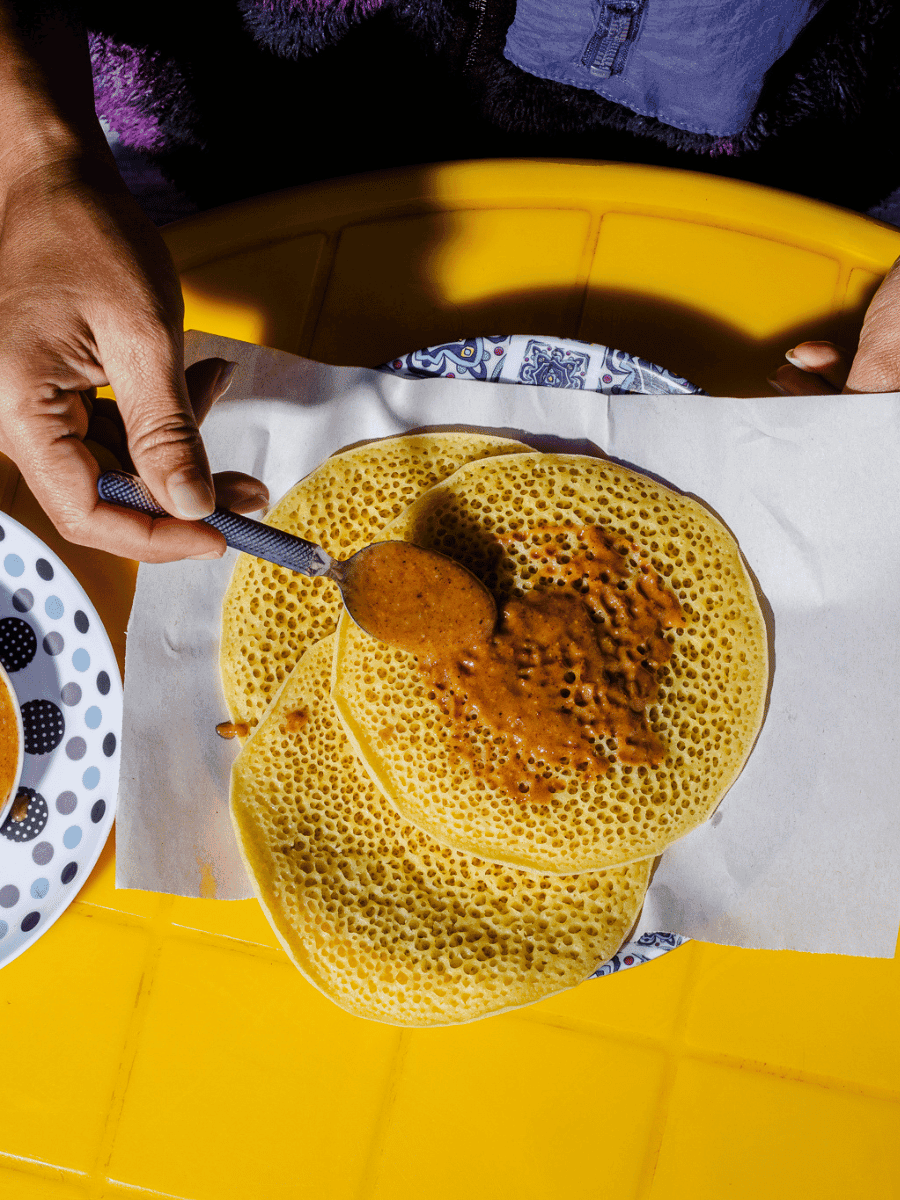
Soft yeasted semolina pancakes covered in a thousand tiny bubbles, cooked on a hot skillet on one side only. Morocco's spongy honey-soaked breakfast.

Crumbly semolina pan breads cooked on a hot skillet until the outside is golden and the inside is buttery-soft. Morocco's breakfast bread, served with honey and cheese.

Paper-thin dough folded into a flaky square, cooked on a hot skillet until golden and buttery. Morocco's laminated breakfast pastry, eaten with honey.