

Destination
Addis Ababa
The story
Ergo is Ethiopia's traditional soured milk, closer to a thick set yogurt than to a drinking one: whole milk warmed gently, cultured with a spoon of previous ergo (or a scoop of live-culture yogurt), and left to sit in a warm spot for 8 to 24 hours until it thickens and turns tangy. Served in a wooden bowl with a drizzle of honey for breakfast, alongside kitfo to cool the spicy raw beef, or spooned onto fitfit (spicy bread hash) to break the heat. A staple across every Ethiopian region, and the base for most dairy-heavy dishes.
Method
Pour the milk into a heavy saucepan. Warm gently over low heat, stirring occasionally, until it reaches 40°C (about the temperature of a warm bath — comfortable but not hot to the touch). Don't let it boil.
Take the pan off the heat. Whisk in the yogurt until fully dissolved into the warm milk.
Pour into a wide bowl (or divide between small jars). Cover loosely with a clean cloth or a plate.
Place in a warm spot at around 30 to 40°C for 8 to 24 hours. An oven with the light on (no heat), a proofing box, or wrapped in a heavy towel on top of a warm appliance all work. The ergo is ready when it has visibly thickened to a set-yogurt consistency and tastes tangy.
Once set, transfer to the fridge and chill at least 4 hours (or overnight). Chilling firms the texture and sharpens the flavour.
Spoon into a wooden bowl and serve with a drizzle of honey for breakfast; or spoon into a small bowl to serve alongside kitfo, fitfit or any spicy Ethiopian stew as a cooling counterpoint.
Tips
- Warm milk, not hot. The starter yogurt contains live cultures that die above 45°C. If the milk feels more than comfortably warm to the finger, let it cool before adding the yogurt.
- Live-culture starter is essential. Read the yogurt tub label; you want "live cultures" or "active cultures" mentioned. Long-life or shelf-stable yogurts have no active cultures and will not ferment your milk.
- Warm spot for the ferment. Cold kitchens slow the ferment to a stop. An oven with just the light on (about 30°C in most ovens) is the classic hack; a proofing box or a heavy towel wrap on top of a warm appliance also works.
- Save a spoon to start the next batch. The traditional method is to keep a spoonful of each batch back to culture the next one. Each generation strengthens the ferment.
- Store 5 to 7 days in the fridge. Ergo keeps well but becomes progressively more sour. Use within a week; after that, use it as a starter for a new batch rather than serving as-is.
More recipes
View all
Stewed fava beans mashed hot with tomato, chilli, egg and a slick of niter kibbeh, spooned onto bread. Ethiopia's café breakfast, half-Sudanese, half-Habesha.

Torn flatbread pan-fried in niter kibbeh and berbere until glossy and spiced. Ethiopia's Oromo breakfast, sold from morning cafés across Addis Ababa.
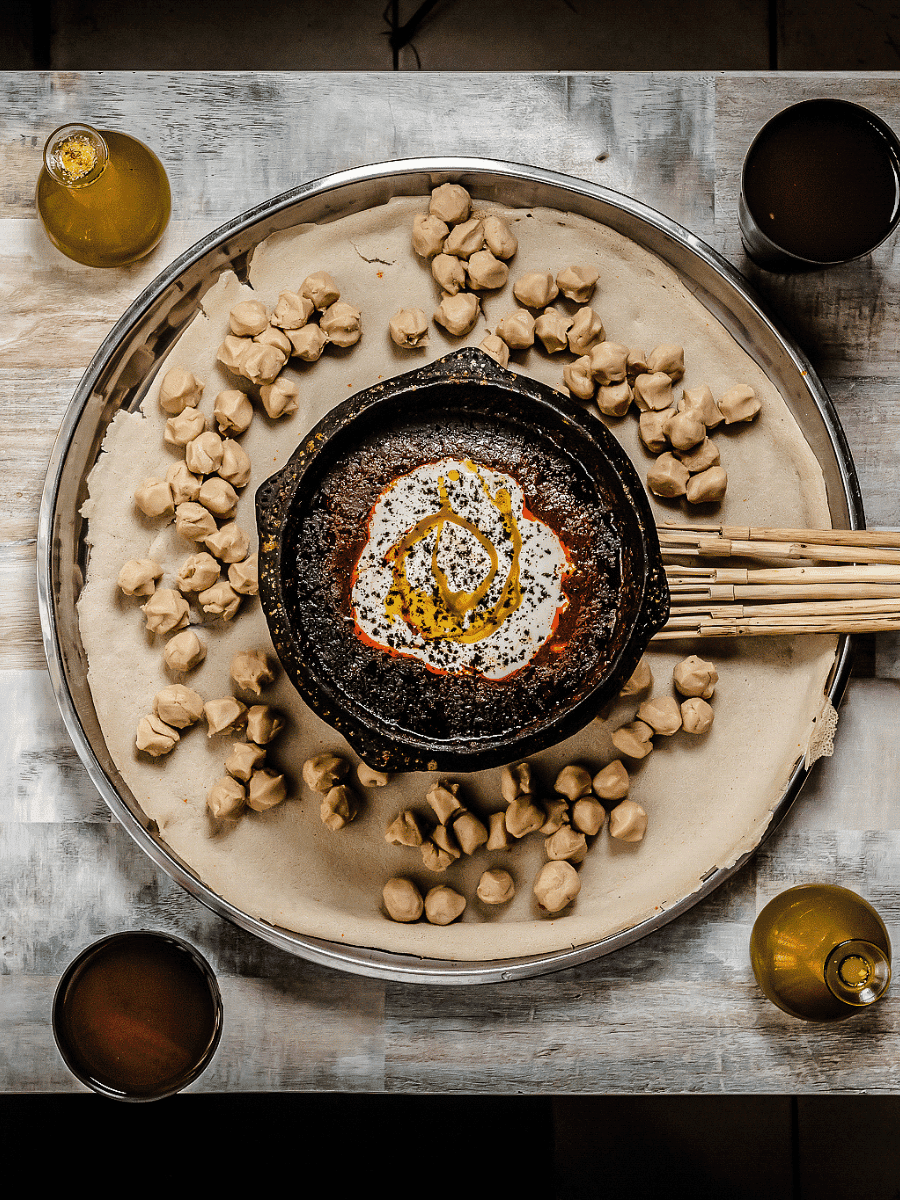
Roasted chickpea-flour dough pinched into small balls and dipped in a bowl of spiced niter kibbeh. Tigray's communal snack, eaten by hand from the shared platter.
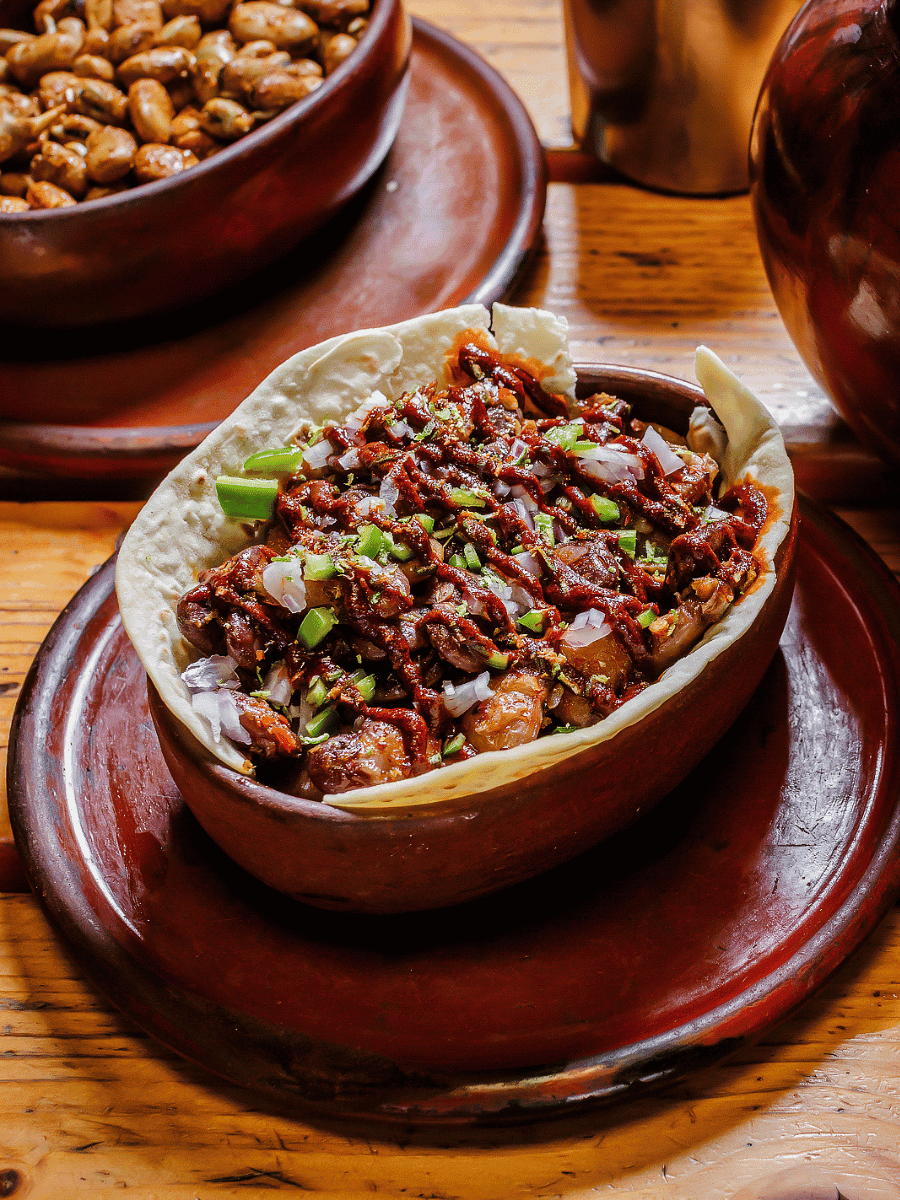
Roasted barley, chickpeas, peanuts and sunflower seeds tossed with a little salt. Ethiopia's coffee-ceremony snack, portable, endlessly refillable.

Berbere blended with tej or red wine and a splash of oil into a fiery, glossy red paste. Ethiopia's essential condiment, on every table.

Spaghetti tossed with berbere-spiced tomato sauce, awaze and a spoon of niter kibbeh. Ethiopia's café pasta, born of the Italian occupation and made unmistakably Addis.