
Destination
Addis Ababa
The story
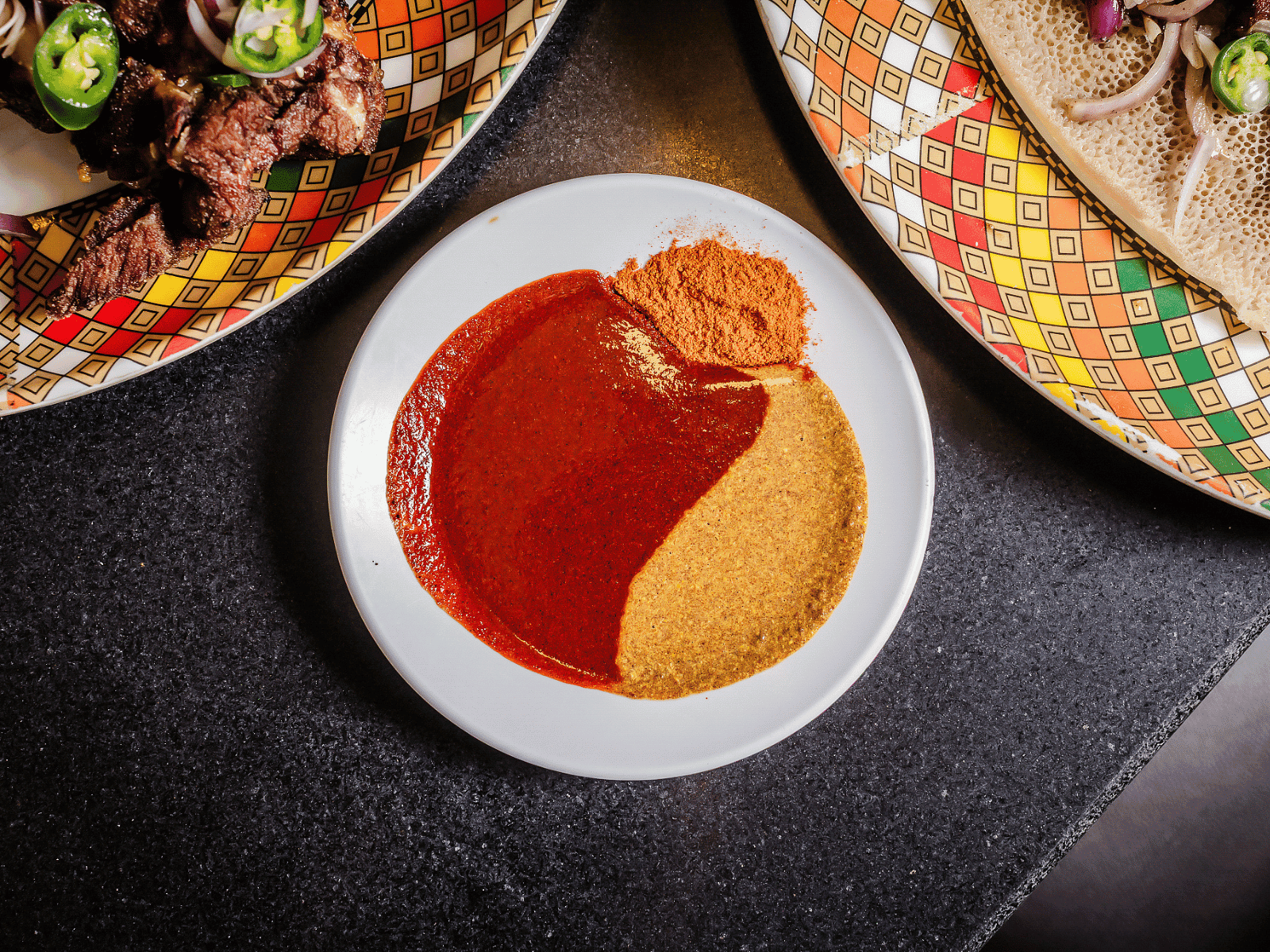
Awaze is Ethiopia's answer to a table sauce: berbere (the fundamental Ethiopian chilli-spice blend) whisked into tej (honey wine) or red wine with a spoon of oil until it turns into a smooth, thick, deep-red paste that sits somewhere between a wet marinade and a dipping sauce. Served in a small dish alongside kitfo, tere sega (raw beef strips), boiled eggs, injera or grilled meats. Fiery on first touch, mellow after a beat, always assertive.
Method
In a small saucepan, combine the berbere, red wine and 4 tbsp water. Whisk to a smooth paste. Warm over low heat for 3 to 4 minutes, stirring, until the spices have bloomed and the mixture is glossy. Don't boil.
Off the heat, whisk in the oil, grated garlic, grated ginger, salt, sugar and lemon juice.
Transfer to a small jar and cool to room temperature. Rest at least 30 minutes before serving (the flavours mellow and integrate).
Spoon into a small dish and serve at room temperature alongside kitfo, grilled meats, boiled eggs or bread. Store leftovers in the fridge for up to 2 weeks.
Tips
- Berbere quality varies wildly. A well-made berbere (deeply spiced, subtly fenugreek-forward) makes a superb awaze; a bland supermarket berbere gives you a flat sauce. Buy from a specialist Ethiopian or East African grocer if possible.
- Warm briefly, don't boil. Warming the mixture blooms the berbere spices and softens the raw edges. Boiling drives off the alcohol too fast and can turn the awaze bitter.
- Traditional awaze uses tej (Ethiopian honey wine). If you can find tej, use it in place of the red wine for the classic floral note. A dry mead is a passable substitute.
- Rest before serving. Freshly whisked awaze tastes raw and separates. 30 minutes at room temperature (or overnight in the fridge) lets the paste tighten and mellow.
- Two-week shelf life. Awaze keeps well in a sealed jar in the fridge for up to 14 days. The colour dulls slightly but the flavour improves for the first few days.
More recipes
View all
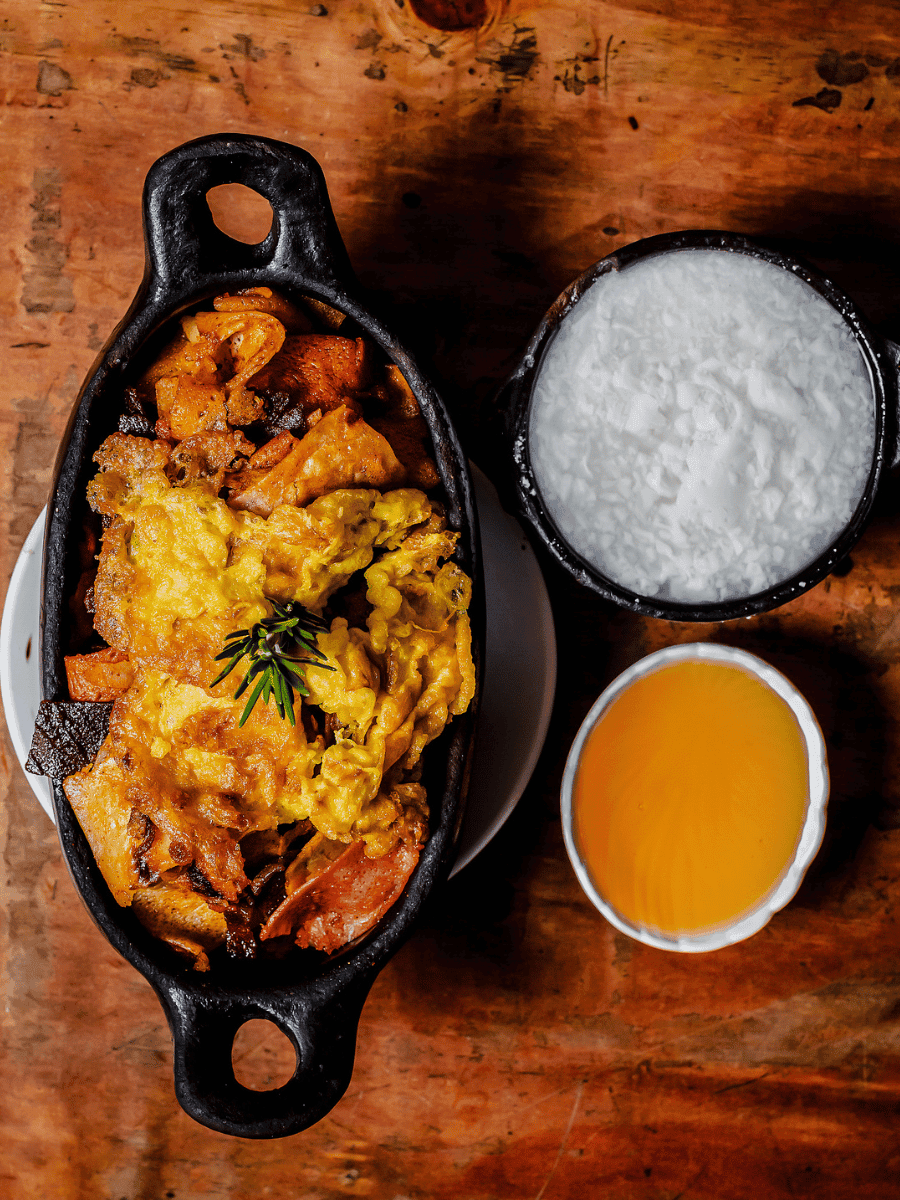
Torn flatbread pan-fried in niter kibbeh and berbere until glossy and spiced. Ethiopia's Oromo breakfast, sold from morning cafés across Addis Ababa.
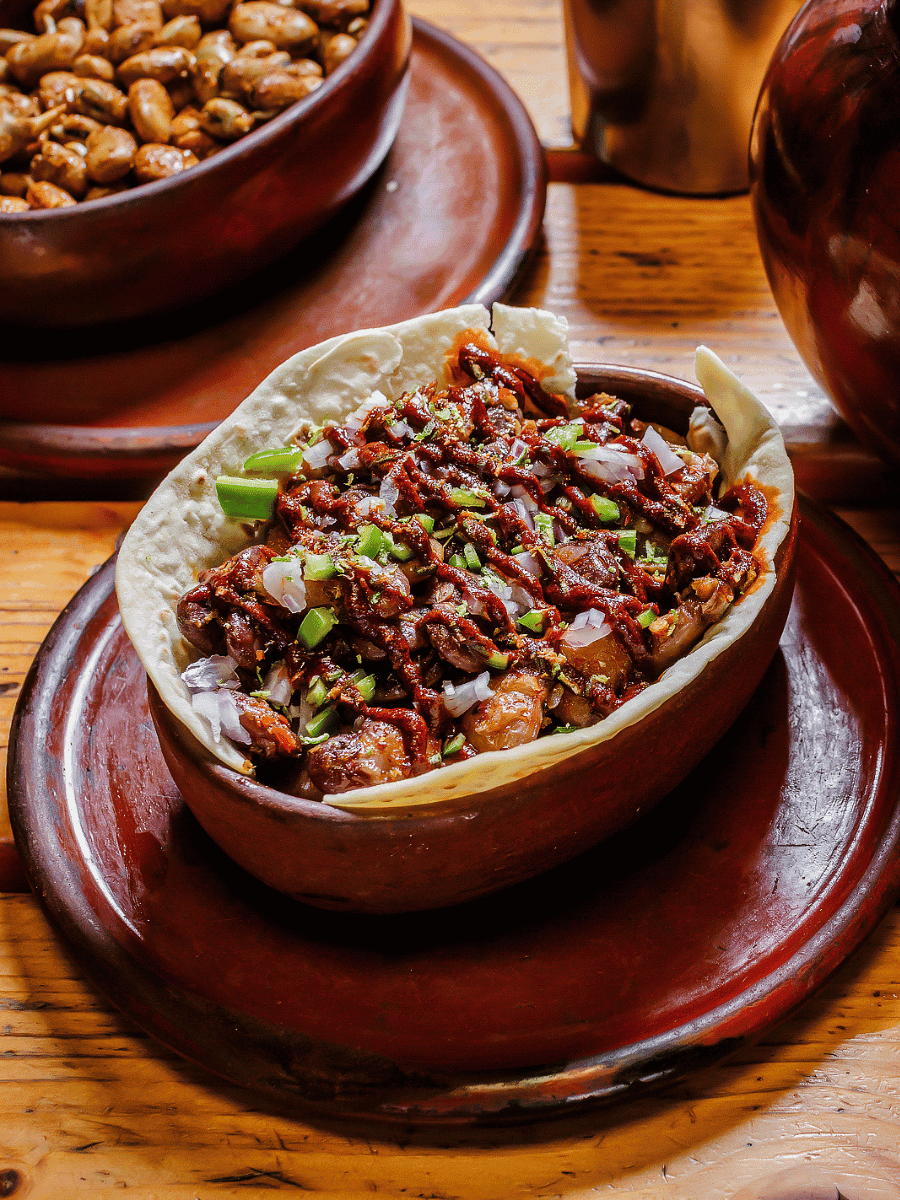
Stewed fava beans mashed hot with tomato, chilli, egg and a slick of niter kibbeh, spooned onto bread. Ethiopia's café breakfast, half-Sudanese, half-Habesha.
Roasted barley, chickpeas, peanuts and sunflower seeds tossed with a little salt. Ethiopia's coffee-ceremony snack, portable, endlessly refillable.
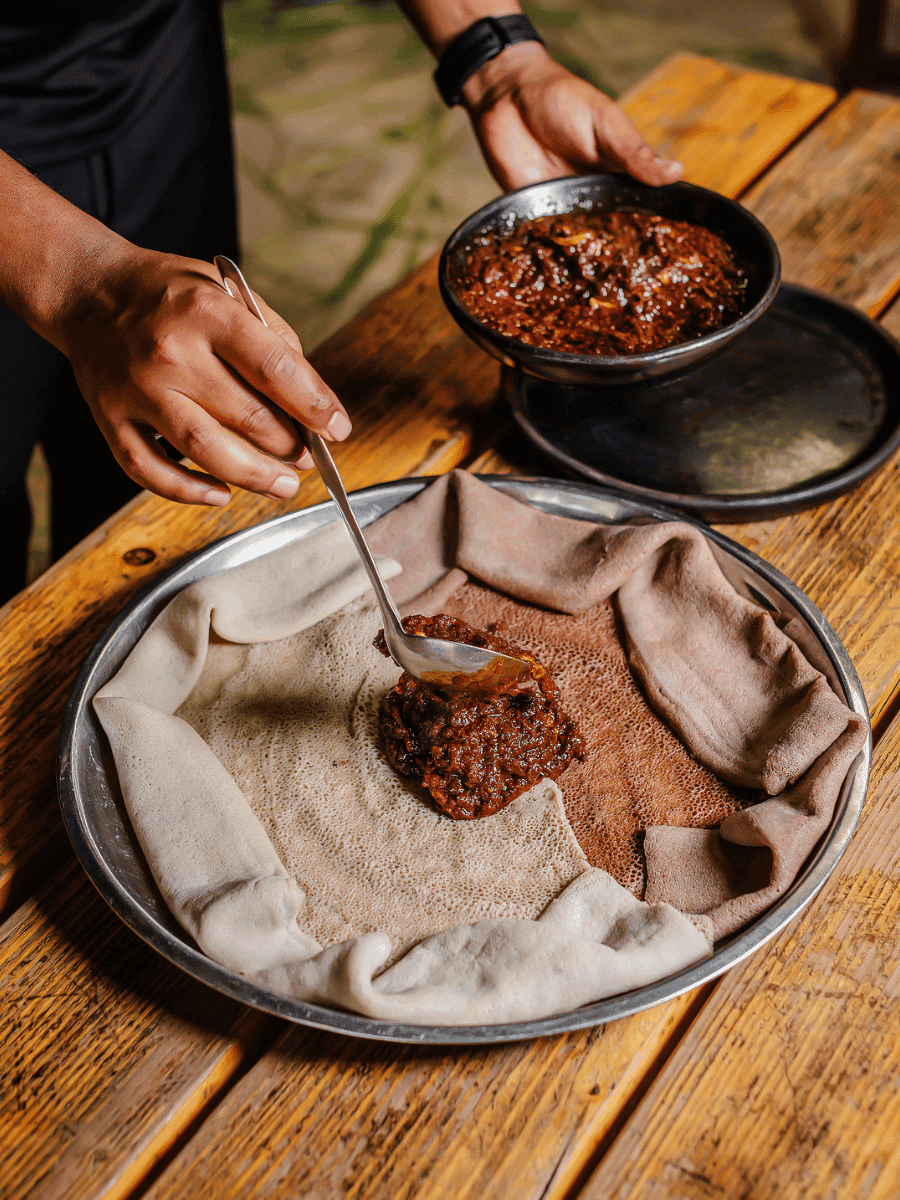
Roast pumpkin simmered slowly with pieces of dried spiced beef and berbere. Ethiopia's autumn-into-winter stew, richer than it looks.

Spaghetti tossed with berbere-spiced tomato sauce, awaze and a spoon of niter kibbeh. Ethiopia's café pasta, born of the Italian occupation and made unmistakably Addis.

Very finely chopped raw beef seasoned with mitmita and warmed briefly in niter kibbeh. Ethiopia's Gurage-invented national dish, served with ayib and gomen.