
Destination
Hong Kong
The story
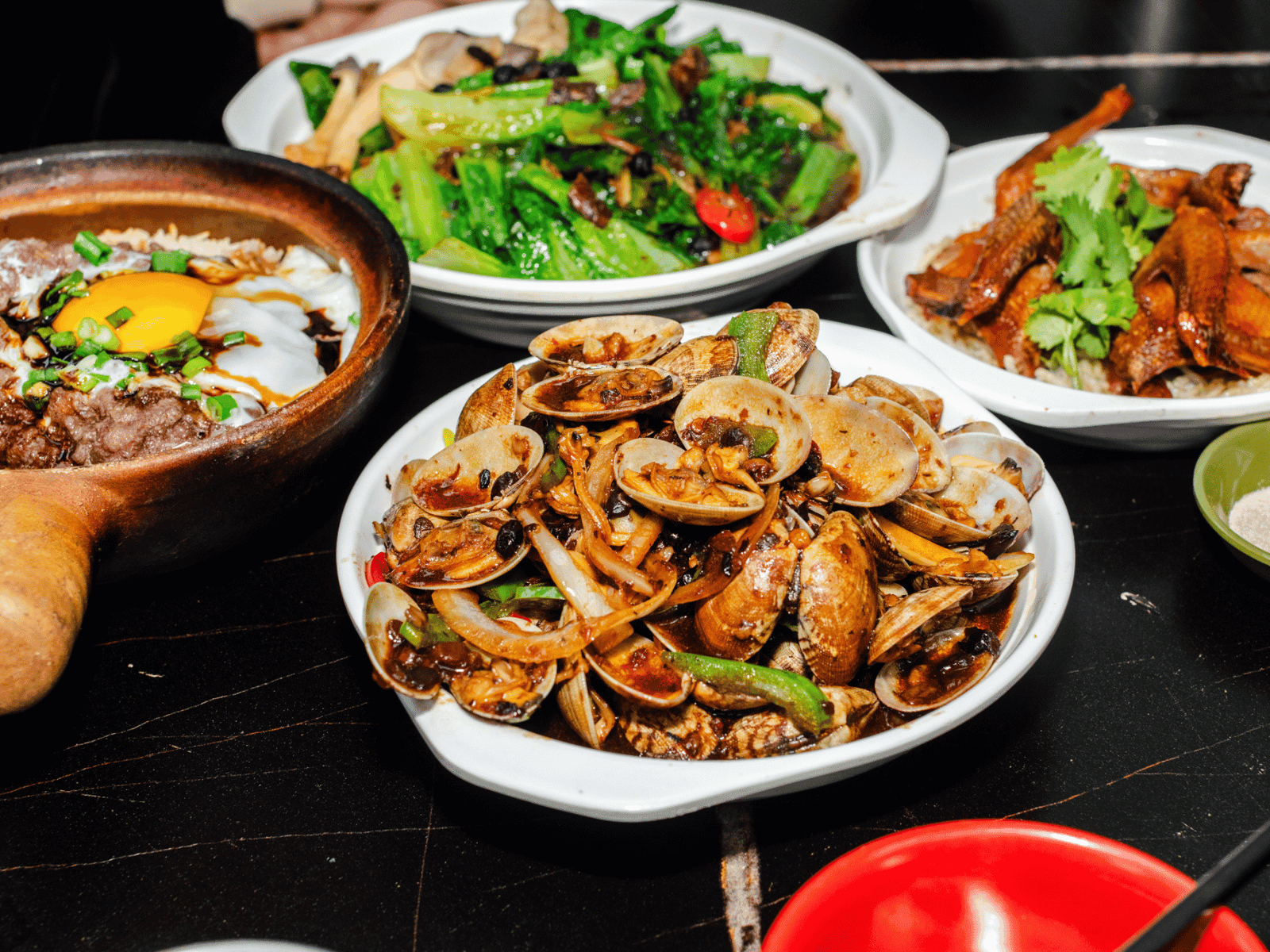
Si jiuh caau hin is one of the great Hong Kong dai pai dong dishes: fresh clams stir-fried in a screaming hot wok with fermented black beans (dau si), garlic, ginger, chilli, spring onion, a splash of Shaoxing wine and a drop of oyster sauce, all cooked at speed until the shells just open and the sauce clings to the meat. Served straight from the wok onto a plate, ordered with a bowl of white rice and a cold Tsingtao. Standard midweek dinner across working-class Kowloon and Hong Kong Island alike.
Method
Place the clams in a large bowl of cold salted water (1 tbsp salt per 2 litres of water). Leave 30 minutes so they spit out any grit. Rinse and drain well; discard any clams with cracked shells or that don't close when tapped.
Have all the aromatics chopped, the sauce ingredients pre-mixed in a small bowl, and the cornstarch slurry ready. This is a fast stir-fry; there's no time to prep once cooking starts.
Heat a large wok (or heavy pan) over the highest possible heat until smoking. Add the oil and swirl to coat.
Add the ginger, garlic, chilli, spring onion whites and rinsed black beans. Stir-fry hard for 30 seconds until fragrant, but don't let the garlic burn.
Add the clams to the wok in one go. Toss vigorously with the aromatics. Pour in the Shaoxing wine (it will hiss) and immediately cover with a lid.
Cook covered for 3 to 4 minutes, shaking the wok occasionally, until the clams open. Discard any that stay closed.
Uncover. Pour in the oyster sauce, soy sauce, sugar and a splash of water if the wok is dry. Toss well to coat the clams.
Give the cornstarch slurry a quick whisk (it settles). Pour into the wok and toss for another 30 to 60 seconds until the sauce clings to the clams glossy and thick. Stir in the spring onion greens.
Tip straight from the wok onto a large plate. Serve immediately with white rice and a cold beer.
Tips
- Purge the clams properly. 30 minutes in salted water is the minimum. Under-purged clams grit up the whole dish; over-purged is impossible (they can sit for hours).
- Fermented black beans, rinsed. Dau si (sold in small plastic packets at Chinese grocers) is what gives the dish its salty-funky depth. Rinse briefly under cold water first to reduce the salt; don't skip the rinse or the finished dish is too salty.
- Highest possible heat. Wok hei (the smoky-charred flavour) requires a screaming hot wok. Preheat the empty wok until it smokes before adding oil; add ingredients fast and toss constantly.
- Have everything prepped before cooking. This is a 5-minute stir-fry from start to serve. There's no time to chop or measure once the wok is going.
- Discard clams that don't open. Any clam still closed after 4 minutes of covered cooking is dead and shouldn't be eaten. Discard without ceremony.
More recipes
View all
Diced beef fillet and potato cubes stir-fried hard in a black-pepper-heavy sauce, served on rice. Hong Kong cha chaan teng lunchtime standard.

Chopped crispy pork belly stir-fried hard with garlic, bird's-eye chili, fish sauce and holy basil. Served over rice with a fried egg — Thailand's fastest lunch.

Silky sheets of steamed rice noodle rolled loose and drenched in sweet soy, sesame paste and hoisin. Dim sum trolleys' most-loved dish, and Hong Kong's cheapest breakfast.
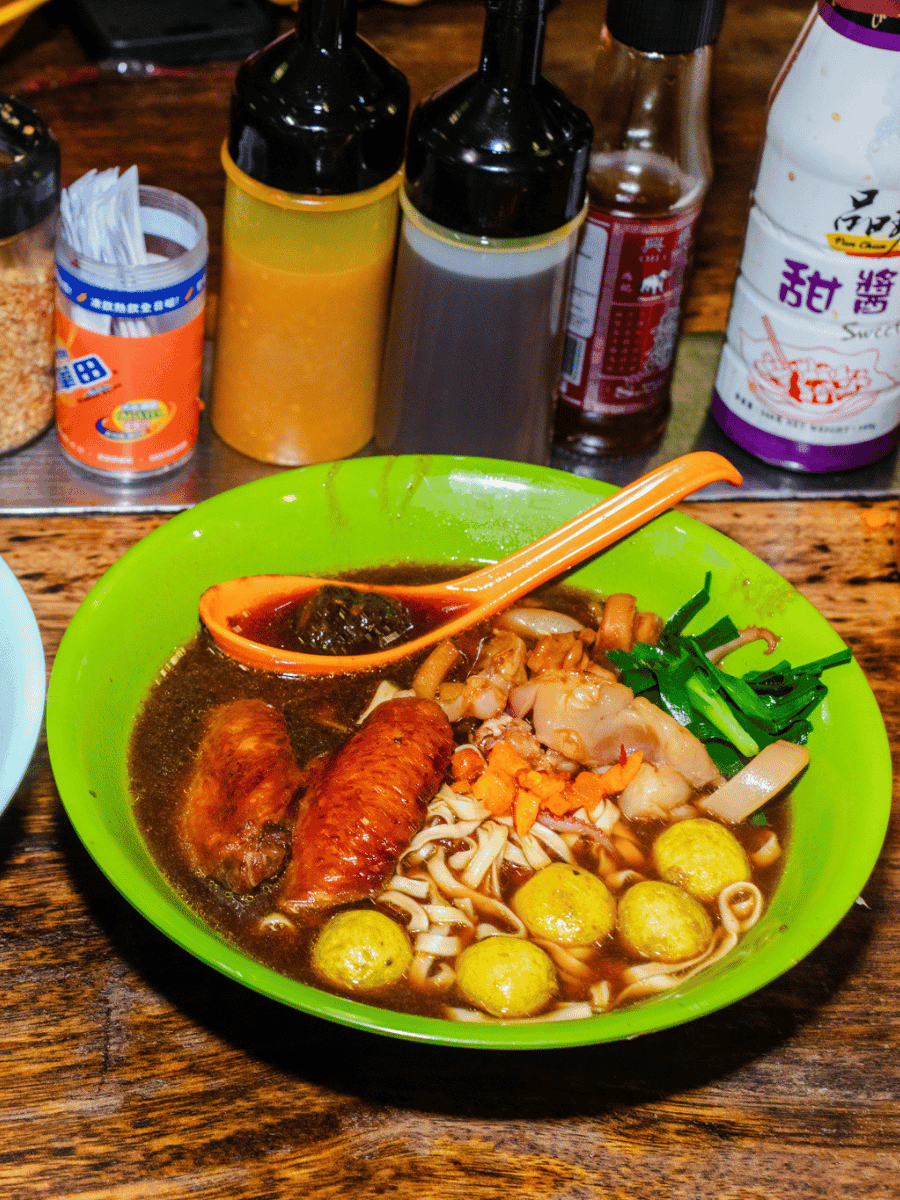
Choose-your-own noodle bowl: springy noodles in a light broth topped with fish balls, radish, beef brisket or whatever else the cart is running today. Hong Kong's original street food.
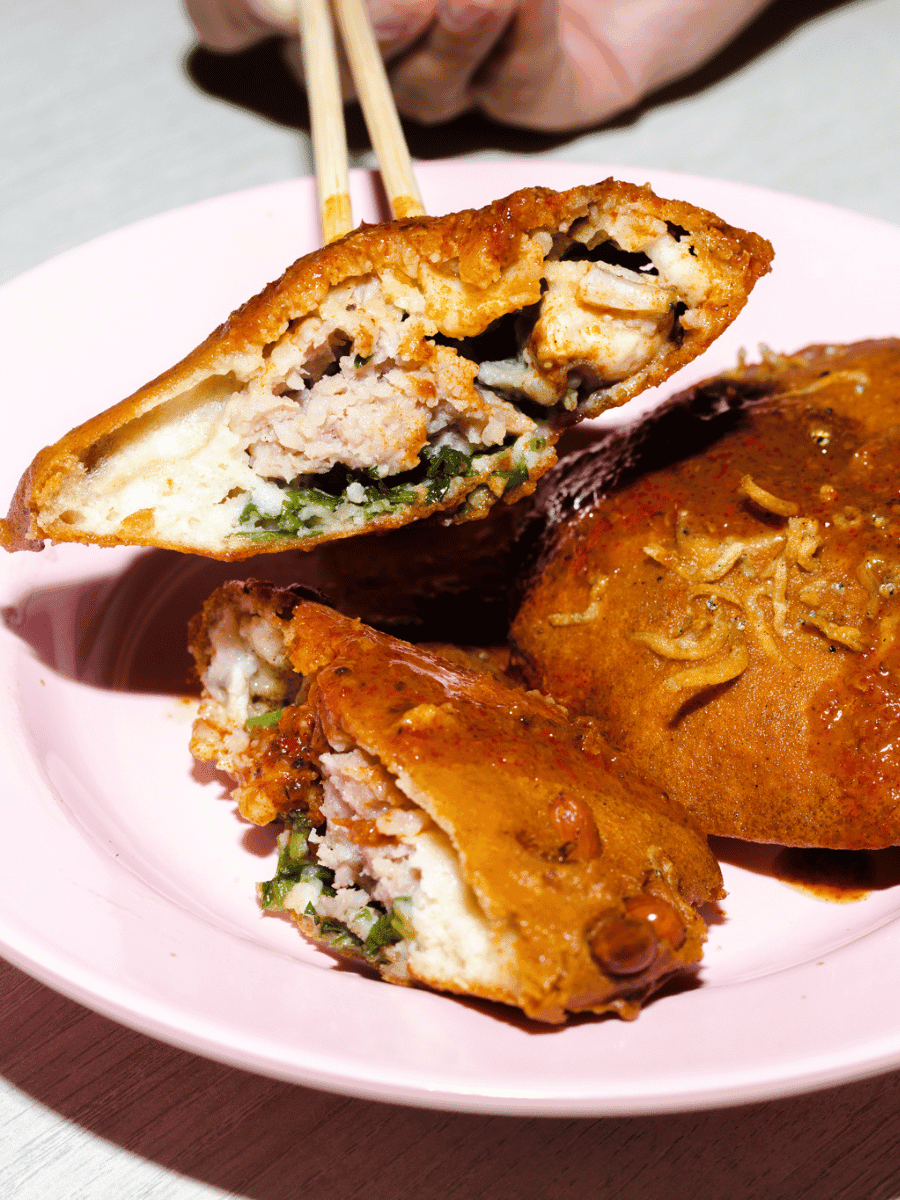
Deep-fried disc of rice-flour batter studded with whole oysters, minced pork and dried shrimp, served with a squeeze of chili sauce. Old Chinatown Singapore's snack.

Nepali-style stir-fried noodles with spiced minced buff, onion, capsicum and cabbage in a soy-Timur sauce. Kathmandu's after-school street food.