
Destination
Hong Kong
The story
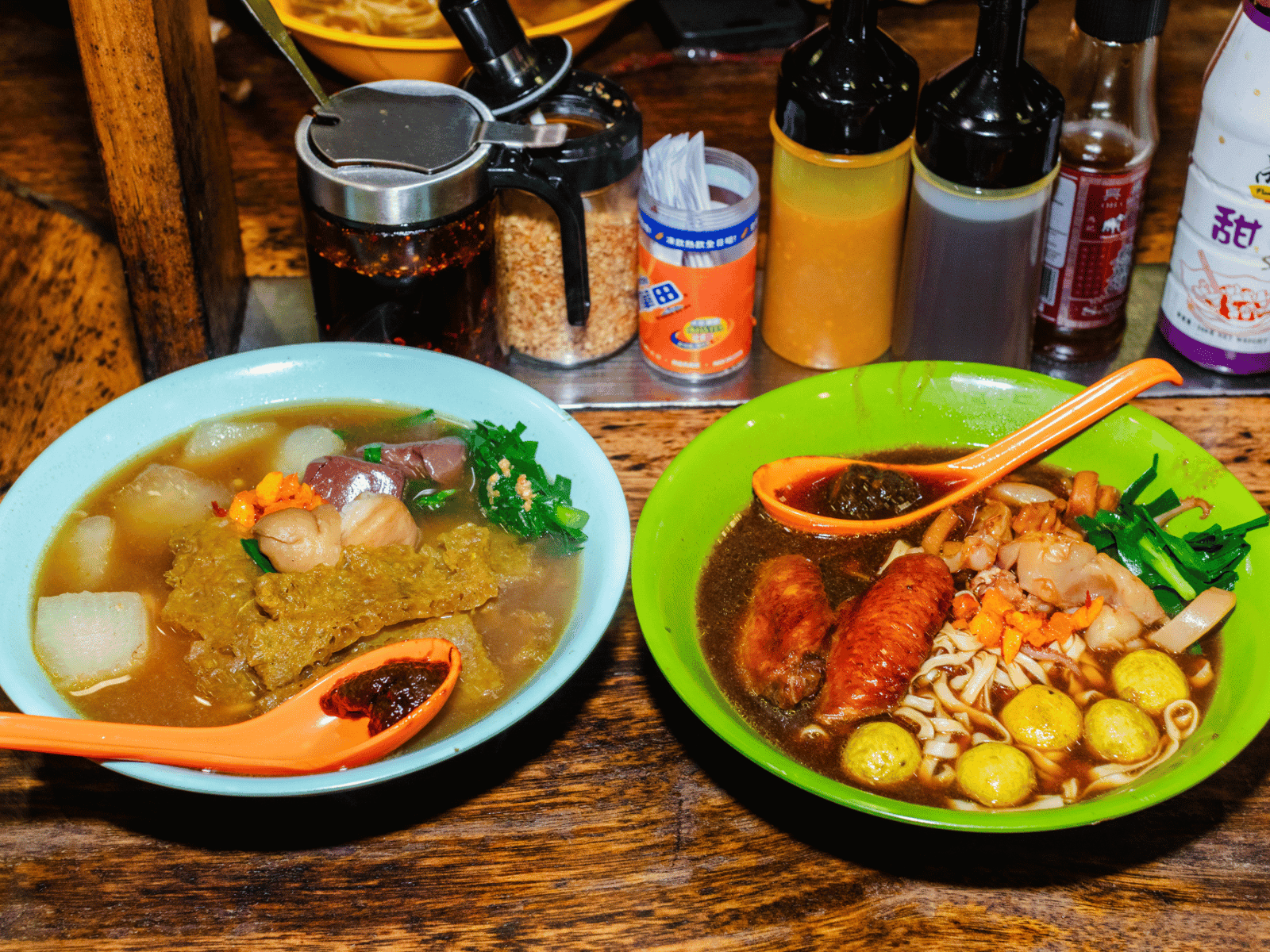
Che jai mihn (cart noodles) is Hong Kong's original street food and one of its most democratic meals. Started in the 1950s from mobile food carts (che jai literally means "little cart") in Sham Shui Po and Mong Kok, the format is dead simple: pick your noodles (thick rice noodles, thin egg noodles, instant, macaroni or ho fun), pick your broth (curry, satay, tomato, plain clear), pick your toppings (fish balls, beef brisket, pig's blood, radish, tofu skin, luncheon meat, choy sum, dumplings — the list can run to 30 items at a proper cart-noodle shop). Watch it assembled in front of you. Pay a few dollars. Eat standing up or on a plastic stool.
Method
In a large pot, combine the stock with the ginger, spring onions, soy sauce, Shaoxing wine, salt and white pepper. Bring to a simmer and cook 15 minutes to develop flavour. Strain into a clean pot and keep warm.
In the strained broth, warm the fish balls, fish cakes, tofu skin knots and pig's blood (if using) for 3 to 4 minutes until heated through. Warm the braised brisket separately in a small pan.
In a separate pot of boiling water, cook the noodles to package directions (about 2 minutes for fresh, 4 minutes for dried). Drain.
Drop the choy sum or lettuce into the boiling water for 30 seconds, drain.
Place a nest of noodles in each bowl. Ladle over hot broth to submerge. Add a scatter of toppings: fish balls, brisket, pickled radish, tofu skin, greens, luncheon meat.
Top with chopped spring onion, a drizzle of chilli oil, a splash of soy sauce and a good grind of white pepper. Serve immediately.
Tips
- Cart noodles is a framework, not a recipe. Every Hong Kong cart shop has 20 or more toppings, and every eater picks their own combination. The point of the dish is variability; use this as a starting template and swap toppings freely.
- Pickled Chinese radish is essential. The sour-crunchy pickled turnip is the specifically Hong Kong topping that ties every cart noodle bowl together. Sold in bags at Chinese grocers; keep a jar in the fridge if you make this often.
- Beef brisket is the premium topping. Slow-braised beef brisket in a soy-ginger-star-anise braise is the classic. Make a batch on the weekend and use it across several bowls through the week.
- Chilli oil at the table. Every cart noodle shop has a jar of homemade chilli oil on each table. Add liberally. This is where the dish tips from pleasant to memorable.
- White pepper, not black. Hong Kong noodle traditions lean on white pepper for a specific floral, hot note. A good grind at the end changes the finished bowl.
More recipes
View all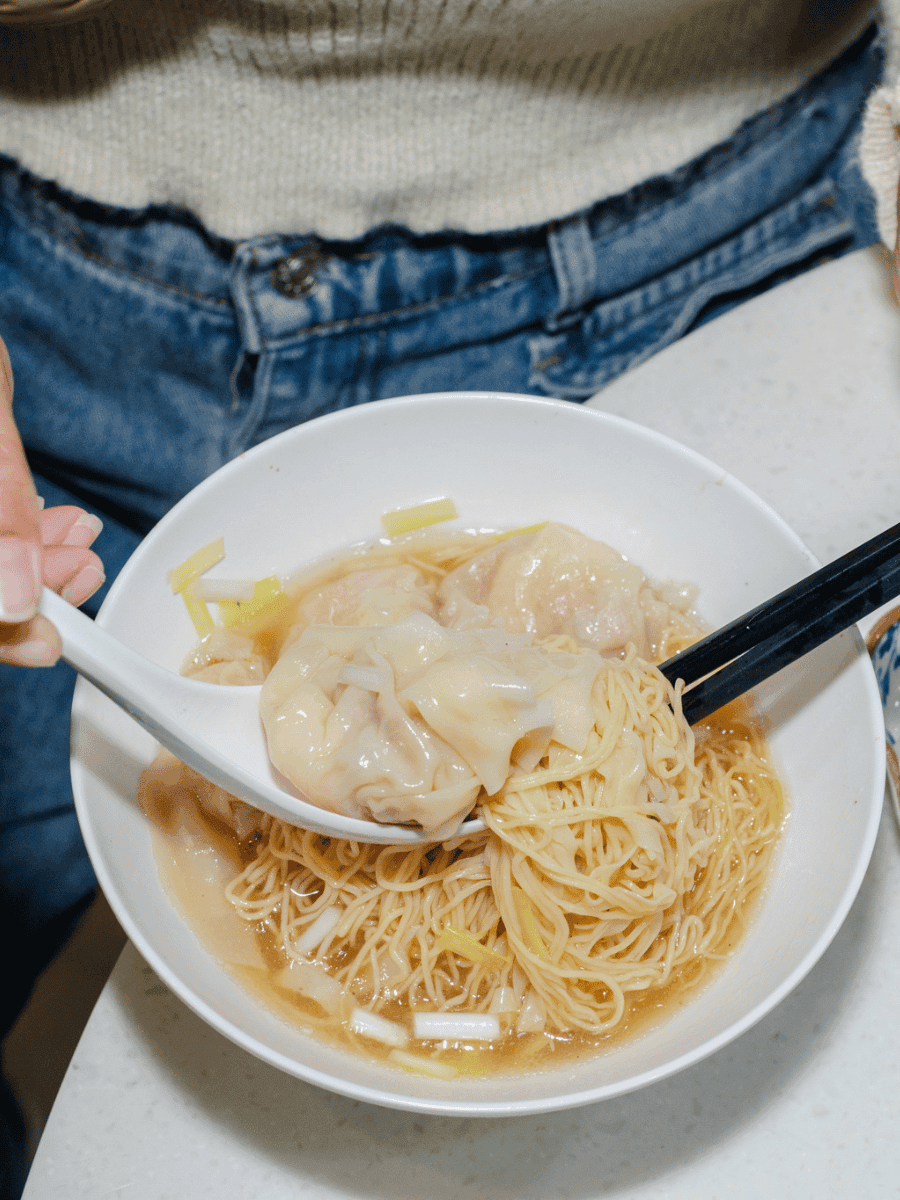
Handful of springy egg noodles under a small mound of prawn wontons, ladled with clear broth. Hong Kong noodle-house lunchtime perfected.

Silky sheets of steamed rice noodle rolled loose and drenched in sweet soy, sesame paste and hoisin. Dim sum trolleys' most-loved dish, and Hong Kong's cheapest breakfast.

Egg noodles and rice vermicelli in a deep, orange prawn-shell broth topped with poached prawns, hard-boiled egg, water spinach and fried shallots. Penang's most-loved noodle soup.

Translucent wheat-starch wrappers pleated 12 times around a whole-shrimp filling, steamed until the wrappers turn see-through. The dim sum benchmark.

Open-topped dumplings of pork and shrimp wrapped in yellow wonton skins, steamed to order at every dim sum trolley. The most-ordered dim sum in Hong Kong.

Fresh clams stir-fried hard with fermented black beans, garlic, ginger and chilli. Hong Kong's dai pai dong classic, always with cold beer.