

Destination
Singapore
The story
Fuzhou oyster cake (also called "o kah" in Hokkien or "orh chien" for the egg-based cousin) is one of Singapore's oldest and rarest hawker snacks: a thin disc of batter (rice flour, plain flour, garlic, eggs) is spooned into a metal ladle-shaped mould, topped with a small pile of minced pork, dried shrimp, chives and spring onion, then two or three whole oysters, capped with more batter, and deep-fried in hot oil until the batter sets into a crisp golden shell around the seafood-and-pork filling. Sold at only a few Singapore hawker stalls now (Maxwell Fuzhou Oyster Cake at Maxwell Food Centre, and a handful of stalls near the People's Park Complex), the dish is a specifically Fuzhou-Chinese preparation that arrived in Singapore in the early 20th century.
Method
Whisk rice flour and plain flour in a large bowl. Add eggs, garlic, salt, pepper, five-spice and water. Whisk to a smooth thin batter. Rest 30 minutes.
Combine minced pork, dried shrimp, chives, spring onions, ginger, minced garlic, oyster sauce, soy sauce, Shaoxing wine, salt, pepper and sesame oil in a bowl. Mix well. Reserve.
Warm the oil in a deep heavy pot to 175C. If using the ladle mould: submerge the mould in the oil for 30 seconds so it's screaming hot.
Lift the hot mould out. Pour 3 tbsp of batter into the mould so the base is coated. Add 1 heaped tbsp of the pork-shrimp mixture, then 3 raw oysters. Top with another 3 tbsp of batter to cover.
Lower the filled mould gently into the hot oil. Fry 90 seconds — the cake should firm up and start to release from the mould. Give the mould a gentle shake — the cake should slide free into the oil. Continue frying the free cake another 3 to 4 minutes, flipping halfway, until deep golden all over.
Skip the mould. Instead, spoon 3 tbsp of batter directly into the hot oil, dropping in a rough 8cm disc. Immediately top with a small pile of filling and 2 oysters. Spoon another 2 tbsp of batter over the top. Fry 3 minutes per side, flipping carefully with tongs, until deep golden.
Lift onto a wire rack (not paper). Continue with the other cakes.
Set each hot oyster cake on a plate. Serve immediately with sweet-and-hot chili sauce, lime wedges, sliced chili and coriander. Best eaten within 5 minutes — the crispy batter softens.
Tips
- Ladle mould is worth the buy. Available at Chinese cookware shops and Amazon. About S$15. It's what makes classical Fuzhou oyster cake shape work. Free-form works fine as a substitute.
- Hot oil (175C) and hot mould. Both must be at temperature before you assemble. Cold mould means the cake sticks; cold oil means greasy batter.
- Fresh oysters. Small oysters are the classical filling. Large oysters shrink and get chewy. Any fishmonger sells fresh half-shell oysters — drain them well on paper before assembly.
- Serve immediately. The crispy batter softens within 10 minutes. Fry to order for a small dinner.
- Traditional versus modern. Some Fuzhou-Singapore stalls skip the oysters and serve a simpler pork-and-shrimp version (called just "kueh chap"). Both are acceptable in the Fuzhou-Singapore tradition.
More recipes
View all
Rugby-ball dumplings of mashed taro wrapped around a spiced pork filling, deep-fried into lacy golden shells. A dim sum classic and Singapore's fanciest fried snack.

Flat rice noodles wok-fried hard with beef slices, kai lan and dark sweet soy — the Teochew-Chinese Singapore hawker classic.
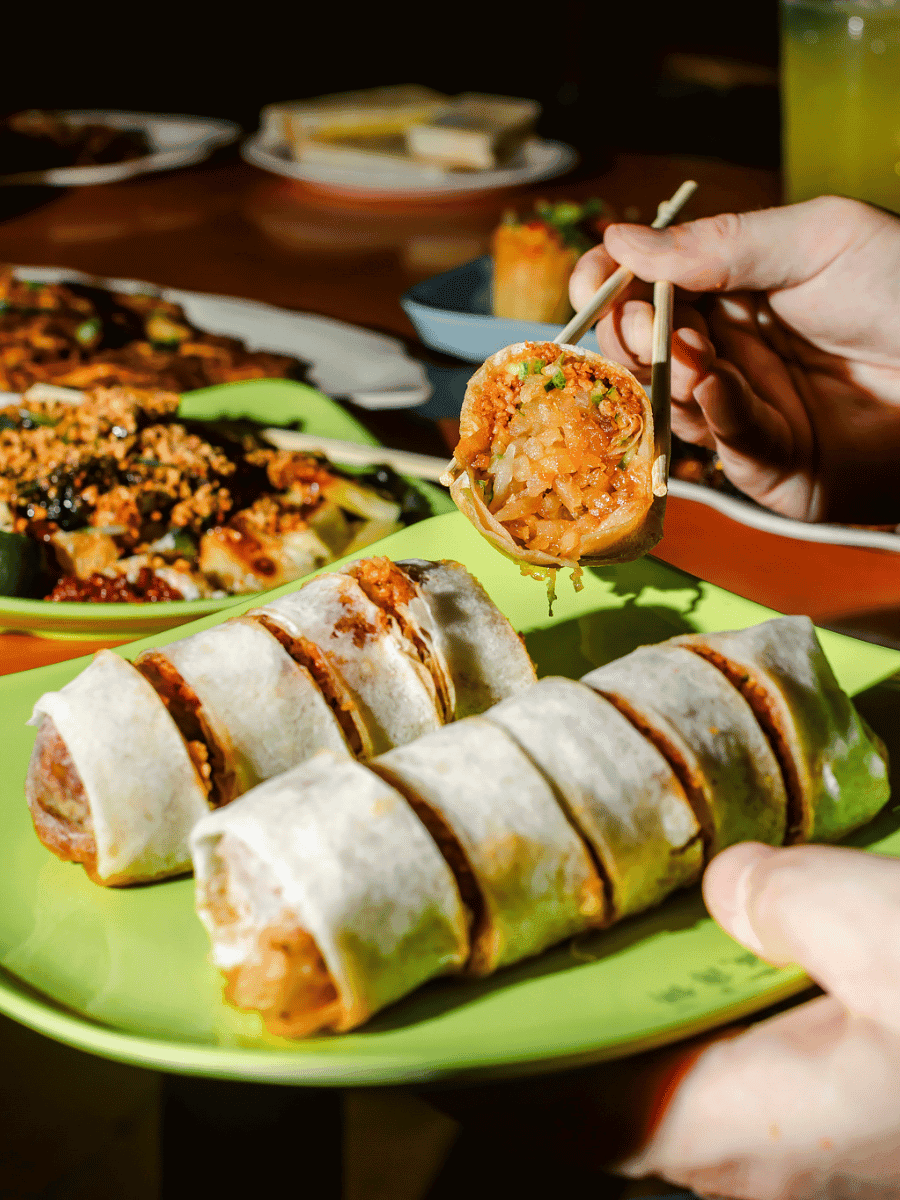
Fresh crepe wrappers filled with braised turnip, lettuce, prawn, sweet Chinese sausage and a slick of sweet-hot sauce. Peranakan Singapore's party-food centrepiece.

Long-simmered white rice porridge, silky as cream, topped with poached chicken, thousand-year egg, soy-fried peanuts, spring onion and a drizzle of sesame oil.

Yellow noodles and rice vermicelli in a rich coconut-curry broth with prawn, cockles, tau pok, fish cake and bean sprouts, topped with laksa leaf and sambal.

A plate of rice topped with breaded pork chop, chap chye cabbage, ngoh hiang and a ladle of dark yellow Hainanese curry gravy. Singapore's Chinese-Hainanese hawker specialty.