
Destination
Hong Kong
The story
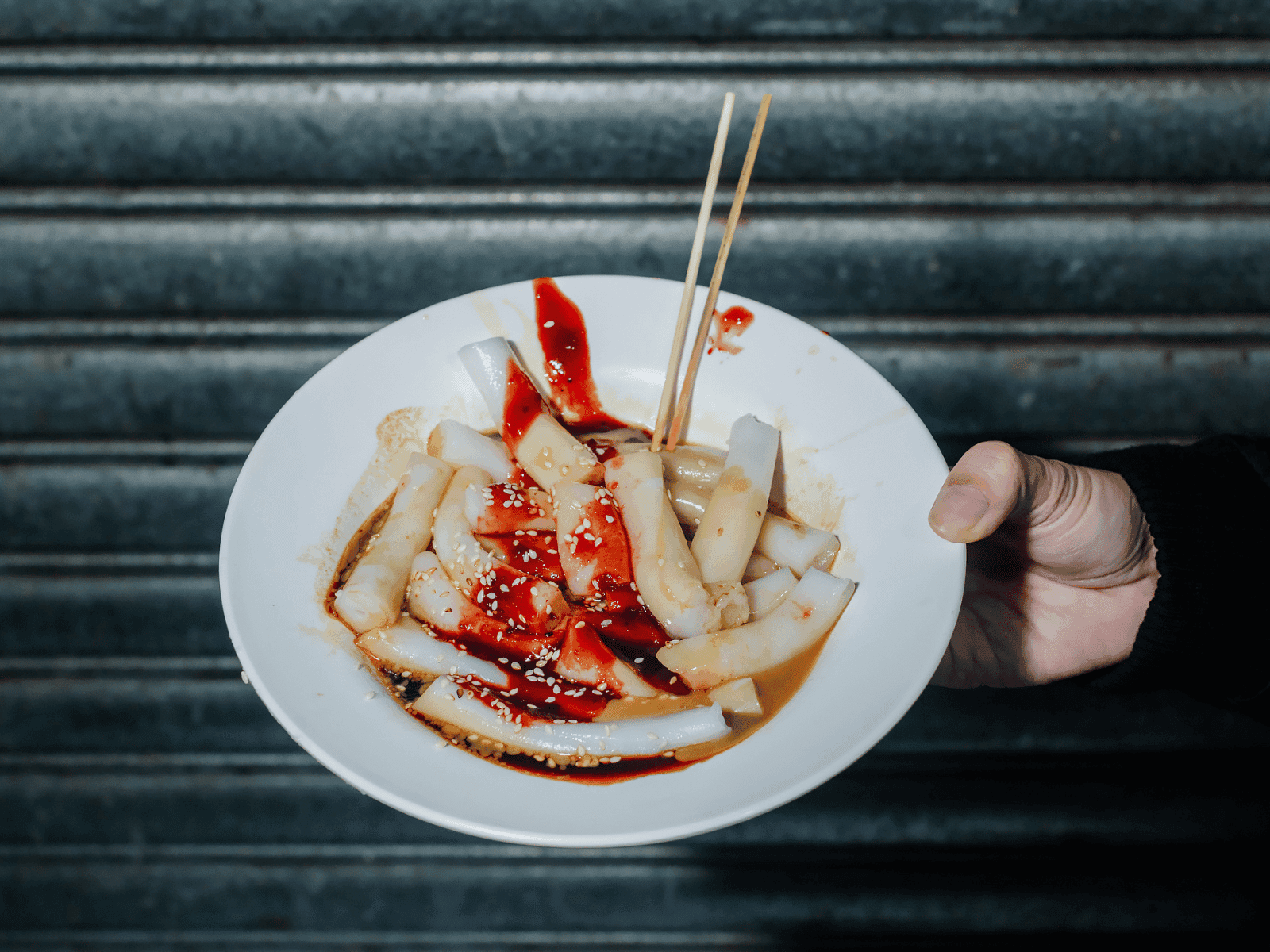
Cheung fun ("intestine noodles", from the visual similarity of the rolled tube) is one of dim sum's most fundamental preparations and one of Hong Kong's most beloved breakfast street foods: a very thin sheet of steamed rice noodle, folded loose into a soft roll and drenched in a specific trio of sauces — sweet soy (tim jaap), toasted sesame paste (jhi ma jeung) and hoisin (hai sin jeung) — with a scatter of toasted sesame seeds on top. Sold at every dim sum trolley, every street-corner stall (where they're often stuffed with dried shrimp or spring onion), and every 24-hour cha chaan teng.
Method
Combine the dark and light soy sauces, sugars and water in a small pan. Simmer 3 minutes until the sugars dissolve. Set aside.
In a large bowl, whisk together the rice flour, tapioca starch, cornstarch and salt. Slowly whisk in the cold water until smooth and lump-free. Whisk in the oil.
Set up a large pot with a wide steamer basket or rack (wide enough to hold a flat tray). Add water and bring to a rolling boil.
Brush a wide flat metal tray (about 25cm x 20cm, or use a wide shallow cake tin) generously with oil.
Whisk the batter briefly (it settles). Pour about a ladleful onto the oiled tray, tilting to coat the base in a very thin layer (about 2mm thick). If using fillings (dried shrimp or spring onion), scatter over the wet batter now.
Place the tray in the steamer, cover tightly and steam over high heat for 2 to 3 minutes, until the sheet has set into a smooth, translucent noodle and starts to bubble at the edges.
Lift the tray out. Working quickly with a wet spatula, loosen the edges of the noodle sheet, then roll it up from one side into a loose cylinder. Slide onto a plate and cut into 3 to 4 pieces.
Re-oil the tray and repeat with the remaining batter. You should get 4 to 5 rolls per batch.
Arrange the rolls on plates. Drizzle generously with the sweet soy sauce, then with the sesame paste and hoisin. Scatter with toasted sesame seeds. Add chilli oil if using. Serve immediately, warm.
Tips
- Rice flour is not glutinous rice flour. This is the single most common home-cook mistake. Rice flour (from Chinese grocers, labelled "rice flour" or "nien mai fen") gives you the correct silky texture. Glutinous rice flour makes something completely different (mochi-adjacent).
- The tray must be wide and flat. A shallow rectangular metal tray about 25 x 20cm is ideal. Cake tins work; small pans do not (the sheet needs to be very thin and wide).
- Steam over high heat. The batter needs a burst of steam to set into the correct silky texture. Low heat gives you a rubbery, undercooked sheet.
- Roll while warm, not hot or cold. Just after removing from the steamer is the sweet spot. Too hot and the noodle tears; too cool and it sticks to the tray.
- Sesame paste needs thinning if using tahini. Chinese sesame paste is thinner than tahini. If substituting, whisk the tahini with a spoon of hot water to loosen before drizzling.
More recipes
View all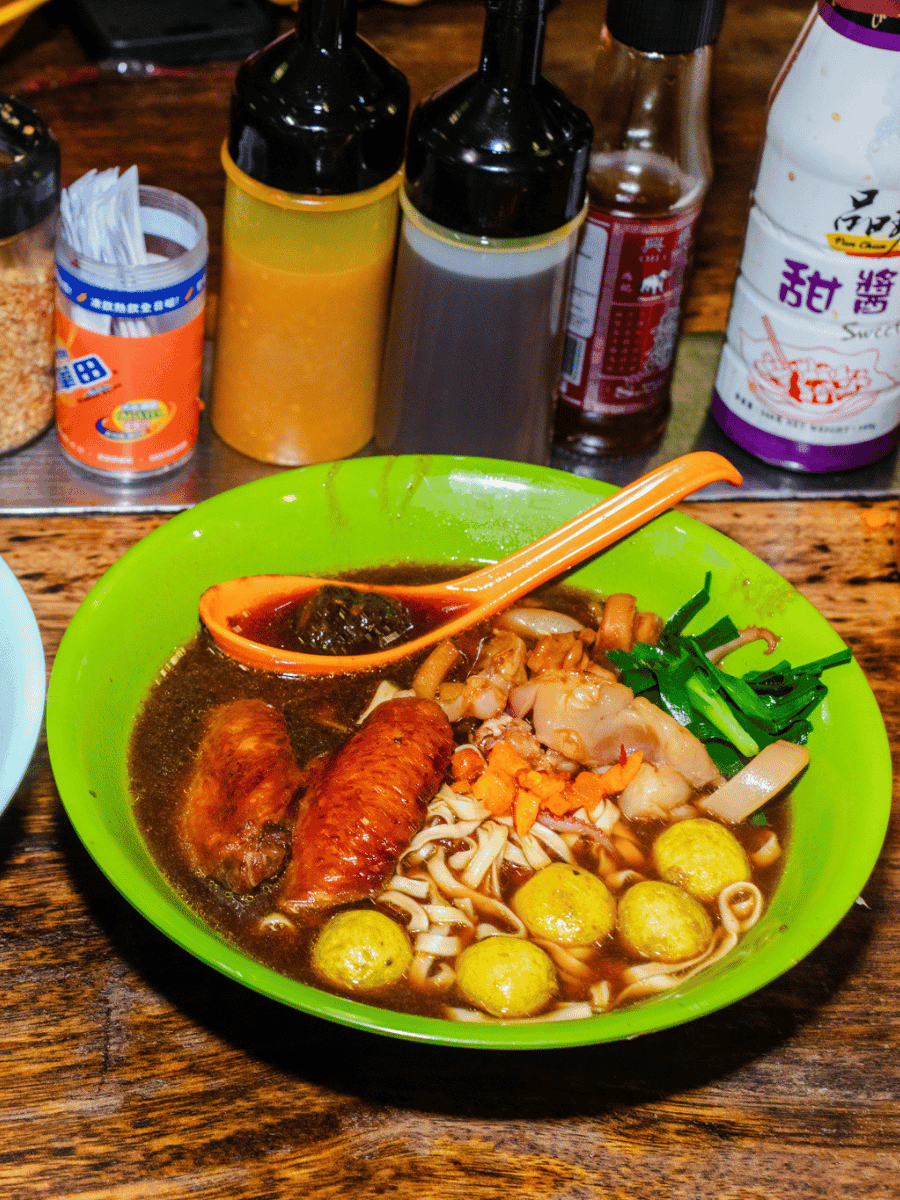
Choose-your-own noodle bowl: springy noodles in a light broth topped with fish balls, radish, beef brisket or whatever else the cart is running today. Hong Kong's original street food.

Open-topped dumplings of pork and shrimp wrapped in yellow wonton skins, steamed to order at every dim sum trolley. The most-ordered dim sum in Hong Kong.
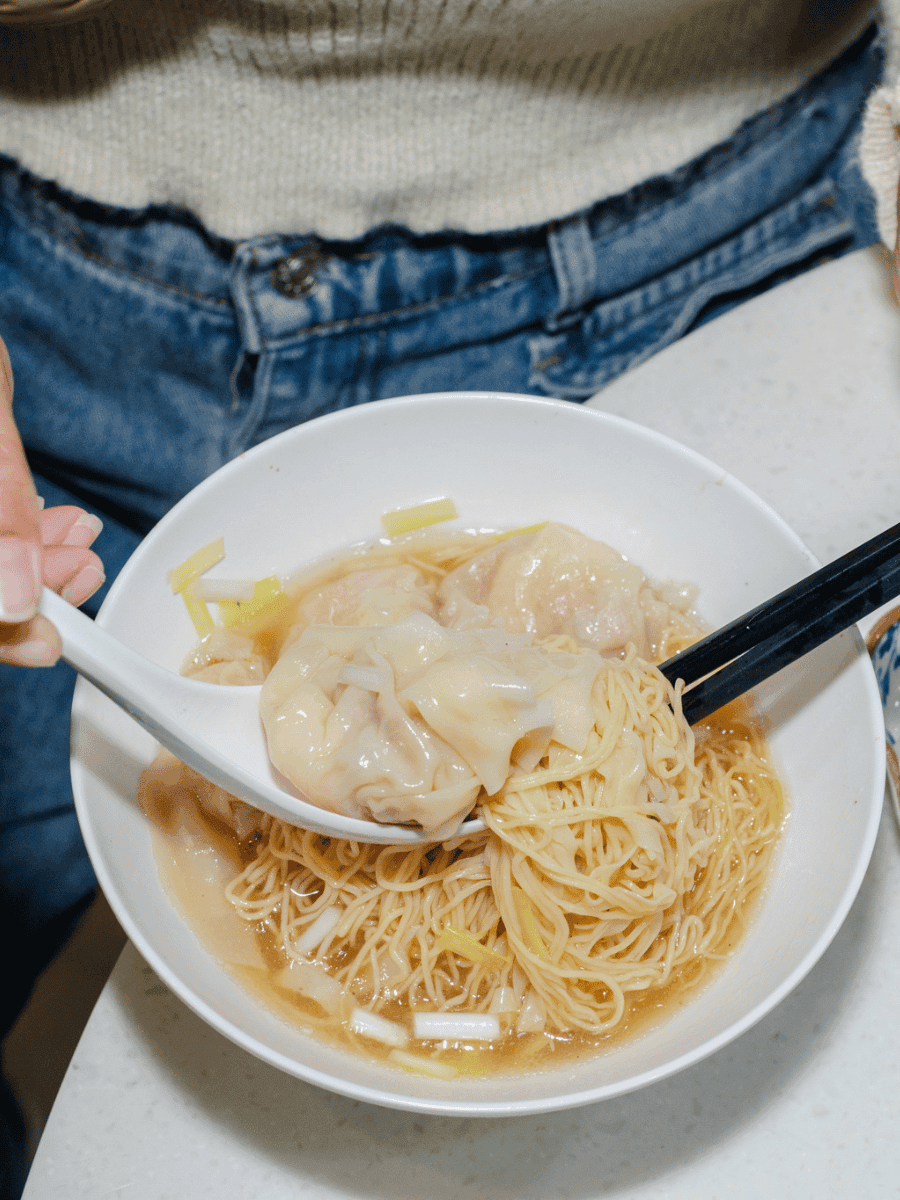
Handful of springy egg noodles under a small mound of prawn wontons, ladled with clear broth. Hong Kong noodle-house lunchtime perfected.

Translucent wheat-starch wrappers pleated 12 times around a whole-shrimp filling, steamed until the wrappers turn see-through. The dim sum benchmark.

Fresh clams stir-fried hard with fermented black beans, garlic, ginger and chilli. Hong Kong's dai pai dong classic, always with cold beer.

Pillowy white steamed buns stuffed with a sweet-savoury pork or a sweet mung-bean paste. Bangkok's Chinese-Thai breakfast and afternoon-snack staple.