
Destination
Ipoh
The story
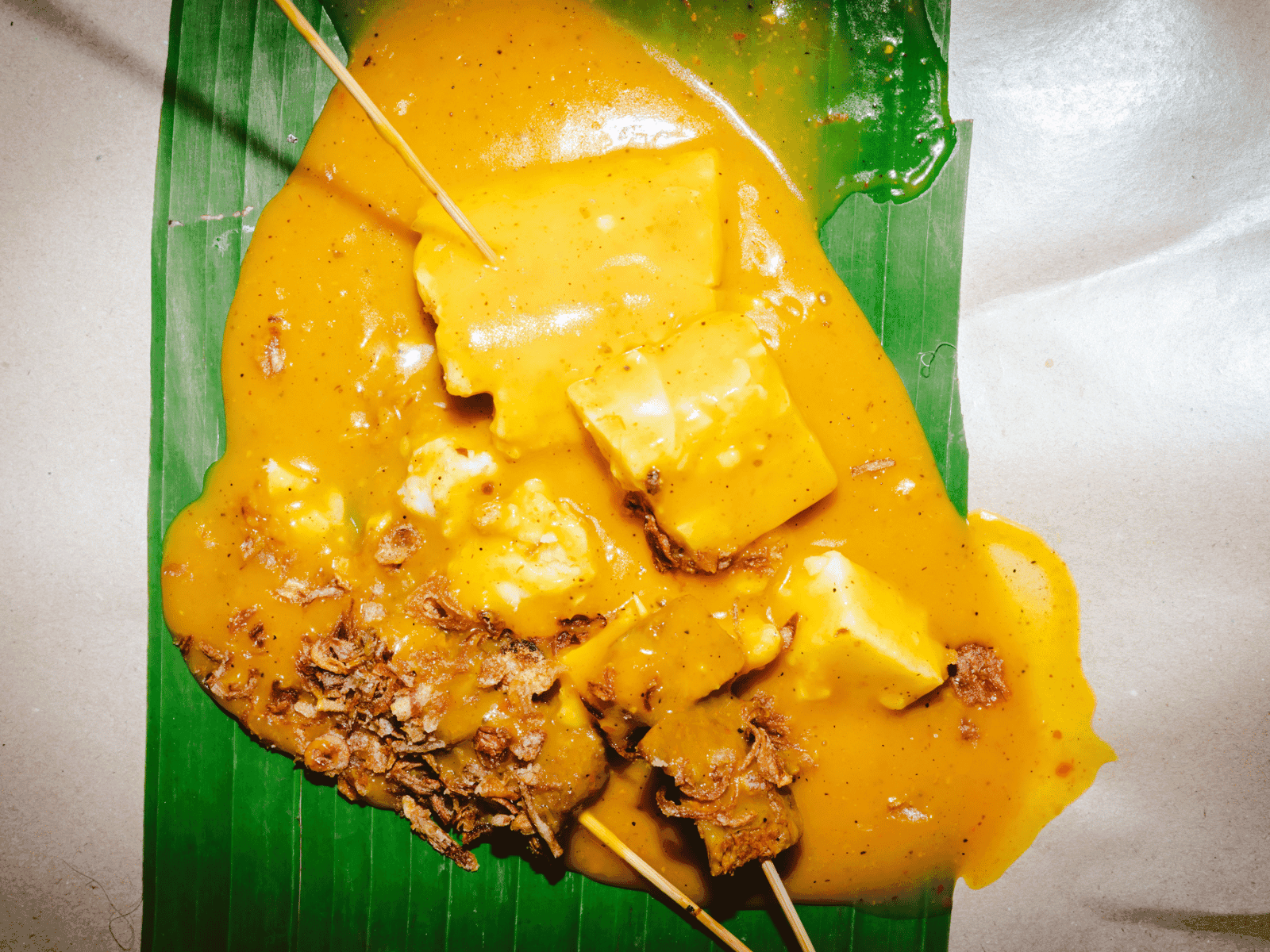
Sate padang is the West Sumatran cousin of the peanut-sauced satay most Malaysians know from Kajang. Where satay kajang leans on ground peanuts and kecap manis, sate padang comes out under a thick, mustard-yellow gravy built from beef broth, ground rice flour and a rempah of turmeric, galangal, ginger, lemongrass, chilli and coriander. The skewers themselves are beef — traditionally cuts like tongue, heart and tripe alongside prime — simmered in the broth first, then grilled hard over coconut-shell charcoal, then drenched in the same broth-thickened sauce and finished with a scatter of fried shallots and a wedge of ketupat (compressed rice cake) on the side.
Method
In a large heavy pot, combine the beef, tongue if using, water, lemongrass, lime leaves, cinnamon, star anise, cloves and salt. Bring to a simmer, skim the foam, then cook gently uncovered for 1 hour 15 minutes until the beef is just tender when pierced with a knife. Do not boil hard — a lazy simmer keeps the cubes intact.
Drain the soaked chillies. Combine all rempah ingredients in a food processor and blend to a smooth paste (2 to 3 minutes), scraping down as needed. Add a splash more oil if it seizes.
Warm the oil in a wide saucepan over medium heat. Add the rempah paste and cook 10 to 12 minutes, stirring often, until the paste has darkened and the oil starts to separate at the edges. This is the Malaysian visual cue that the paste is properly cooked.
Lift the meat from the broth and reserve. Strain the broth through a sieve into a jug — you want about 1.2 litres. Pour the strained broth into the pan with the rempah and bring to a simmer. Whisk the rice flour into the cold water in a separate bowl until smooth (no lumps), then whisk this slurry into the simmering broth. Cook 8 to 10 minutes, stirring constantly, until the sauce coats the back of a spoon and is the colour of turmeric mustard. Season with the salt and sugar.
Cut the reserved beef into 2cm cubes if the pieces are large. Thread 3 to 4 pieces onto each soaked bamboo skewer, packing them tightly so no gaps show. You should get 30 to 40 skewers.
Heat a charcoal grill, gas grill or heavy ridged pan until screaming hot. Brush the skewers lightly with oil. Grill 2 minutes per side, turning once, until charred at the edges but still juicy inside. Work in batches; don't crowd the pan.
Lay 4 to 5 skewers on each plate with a mound of sliced ketupat (or a scoop of rice) beside them. Ladle a generous puddle of the yellow sauce directly over the skewers and rice so everything is coated.
Scatter with fried shallots. Serve with prawn crackers on the side, sliced red chillies for the brave, and cold drinks — this is a hot, heavy plate.
Tips
- Simmer, don't boil, the beef. A hard boil turns the cubes stringy. A lazy 90-degree simmer for 75 minutes keeps them tender and intact.
- Reserve the poaching broth. This is your sauce base — never throw it out. Strain it well and taste before thickening; if it's too salty, dilute with water before adding the rice flour slurry.
- Whisk the slurry cold. Cold water plus rice flour blended smooth before hitting the hot pan avoids lumps. Never sprinkle dry rice flour into hot broth.
- Coconut-shell charcoal is authentic. If you have access to a charcoal grill, coconut-shell briquettes give the sauce a smoky edge that a gas hob can't match. Otherwise a cast-iron ridged griddle over the highest heat is the practical substitute.
- Serve immediately. Sate padang is not a dish that waits. Once the sauce is on the meat, plate it and eat it. Leftover sauce reheats well but the grilled skewers lose their edge after 20 minutes.
More recipes
View all
Slices of crackling-skin roast pork belly served on a bed of steamed rice with dark soy and a scoop of pickled greens. Penang's coffee-shop lunchtime plate.

Whole fish smothered in a scarlet chilli-belacan rempah, wrapped in banana leaf and grilled over coconut charcoal until the sambal caramelises into a black-and-red crust.

Malaysia's iconic street burger — a griddled patty wrapped in an egg-omelette blanket, mayonnaise, chilli sauce and Worcestershire, all crammed into a soft toasted bun.

Egg noodles and rice vermicelli in a deep, orange prawn-shell broth topped with poached prawns, hard-boiled egg, water spinach and fried shallots. Penang's most-loved noodle soup.
Pork ribs slow-simmered with four Chinese medicinal herbs (fu ling, huai shan, lian zi, qian shi) into a clear, mildly tonic soup. Malaysia's Chinese-Malaysian family Sunday tonic.

Soft white steamed buns filled with slow-braised char siu pork, chicken curry or red bean. Malaysia's dim-sum-and-kopitiam staple.