
Destination
Ipoh
The story
Hor ka sai is one of Penang's coffee-shop lunchtime staples: thick slices of siew yoke (Cantonese roast pork belly) with a shatter-crisp skin, lean meat and a thin layer of rendered fat, laid on top of a mound of steamed jasmine rice with a slick of dark soy sauce and a scoop of pickled mustard greens (choi sum) on the side. Served with a small dish of ginger-and-spring-onion sauce for dipping and a bowl of clear pork broth on the side. A specifically Chinese-Malaysian dish, especially popular at old kopitiams in George Town's inner city.
Method
Pat the pork belly dry. With a very sharp knife, score the skin in a tight crosshatch pattern about 5mm apart, cutting through the skin but not into the flesh below.
Rub the meat side (not the skin) with the five-spice powder, sugar, white pepper, Shaoxing wine and salt for the meat. Rub the skin generously with salt and vinegar. Place the pork skin-side up on a rack over a tray. Refrigerate uncovered for at least 12 hours, ideally 24, so the skin dries completely.
Heat to 180°C (355°F). Bring the pork out of the fridge 30 minutes before roasting.
Wipe off any excess salt from the skin. Place the pork on a rack in a roasting tin. Roast for 60 to 75 minutes, until the meat is cooked through (internal temperature 70°C).
Increase the oven temperature to 240°C (465°F). Return the pork to the oven for another 15 to 20 minutes, until the skin has puffed dramatically and turned deep bronze with visible bubbles. Watch closely; the skin can go from perfect to burnt in a few minutes.
Move the pork to a warm plate. Rest at least 10 minutes.
Combine the minced ginger, spring onions, salt and sugar in a small heatproof bowl. Heat the oil in a small pan until it smokes. Pour the smoking oil directly over the ginger mixture; it will sizzle. Stir to combine.
Using a very sharp cleaver, cut the pork into 1cm-thick slices, cutting through the crackling with quick decisive strokes to keep it intact.
Plate a mound of jasmine rice in a shallow bowl. Arrange 4 to 5 slices of pork belly on top. Drizzle a little dark sweet soy sauce over the rice around the meat. Add a scoop of chopped pickled mustard greens alongside. Serve the ginger-spring onion sauce in a small dish for dipping, plus a small bowl of clear pork broth on the side. Chilli sauce for those who want it.
Tips
- Overnight drying is the whole crackling trick. The skin must be completely dry when it hits the oven, or it steams instead of crackling. 24 hours uncovered in the fridge is the professional target.
- Score the skin, not the flesh. Shallow crosshatch cuts through the skin only (5mm apart) help the skin puff into the classic bubbled crackling. Cutting into the flesh lets the fat escape and gives you leathery skin.
- Two-stage roasting is essential. The lower-temperature first roast cooks the meat through; the high-heat blast at the end crackles the skin. Doing everything at high heat burns the outside before the middle cooks; doing everything at low heat gives you soft skin.
- Sharp cleaver for slicing. A blunt knife squashes the crackling and shatters it messily. A sharp Chinese cleaver in one confident stroke gives you clean rectangular slices with intact skin.
- Ginger-spring onion sauce is essential. The smoking oil poured over raw ginger and spring onion is a classic Cantonese sauce that cuts the richness of the pork. Don't skip.
More recipes
View all
Egg noodles and rice vermicelli in a deep, orange prawn-shell broth topped with poached prawns, hard-boiled egg, water spinach and fried shallots. Penang's most-loved noodle soup.
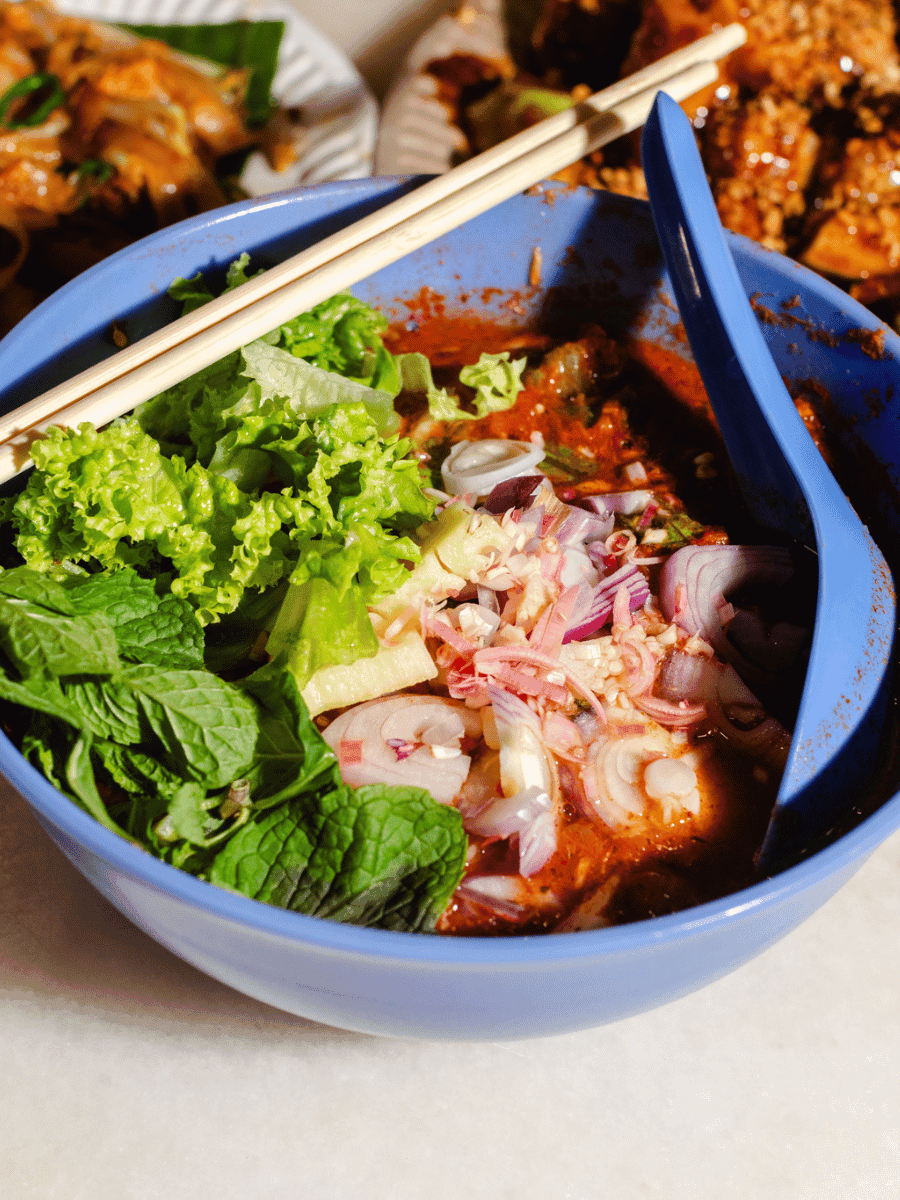
Thick rice noodles in a tart, spicy mackerel-and-tamarind broth topped with pineapple, mint, ginger flower and a spoon of black shrimp paste. Penang's most distinctive noodle soup.

Soft white steamed buns filled with slow-braised char siu pork, chicken curry or red bean. Malaysia's dim-sum-and-kopitiam staple.
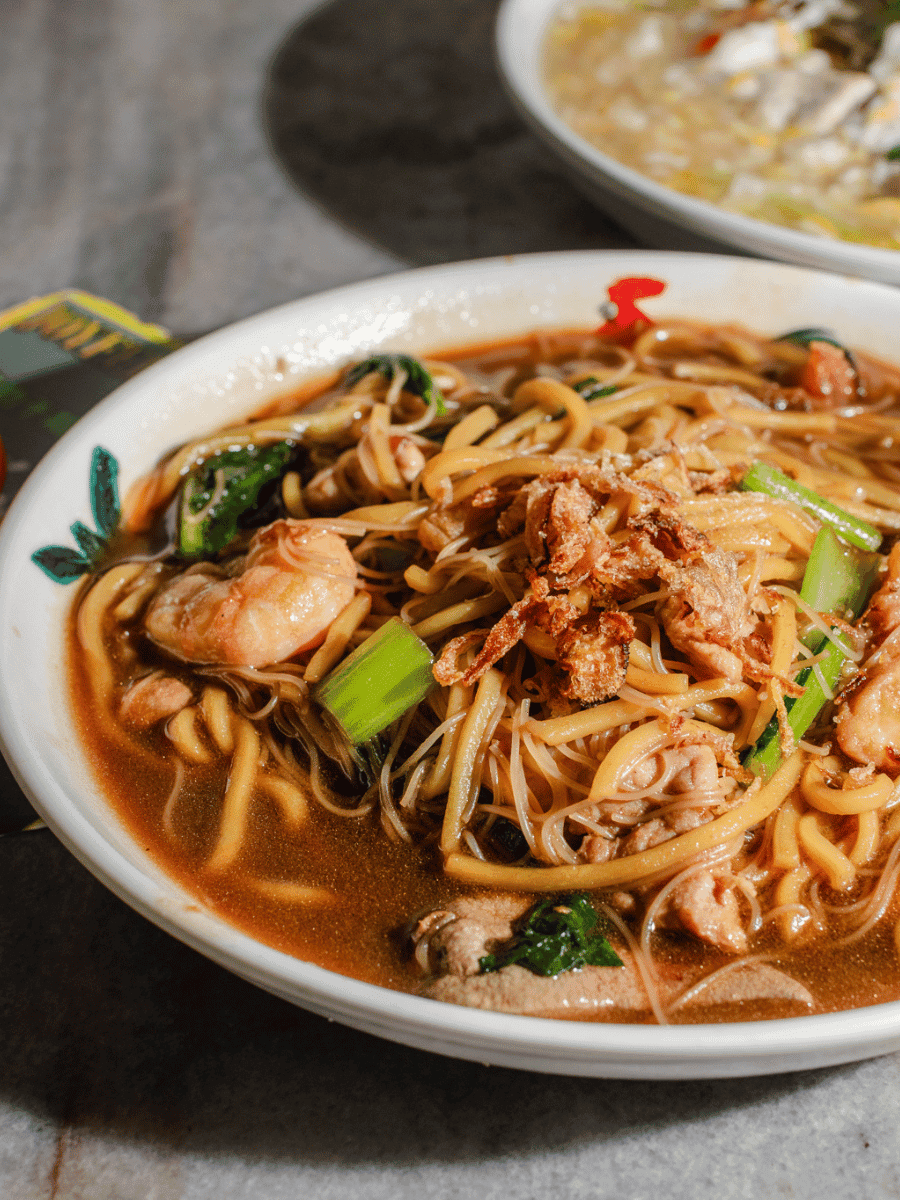
Thick yellow noodles stir-fried hard in a dark sweet soy glaze with prawns, squid, cabbage and slices of pork. KL's late-night black-noodle classic.
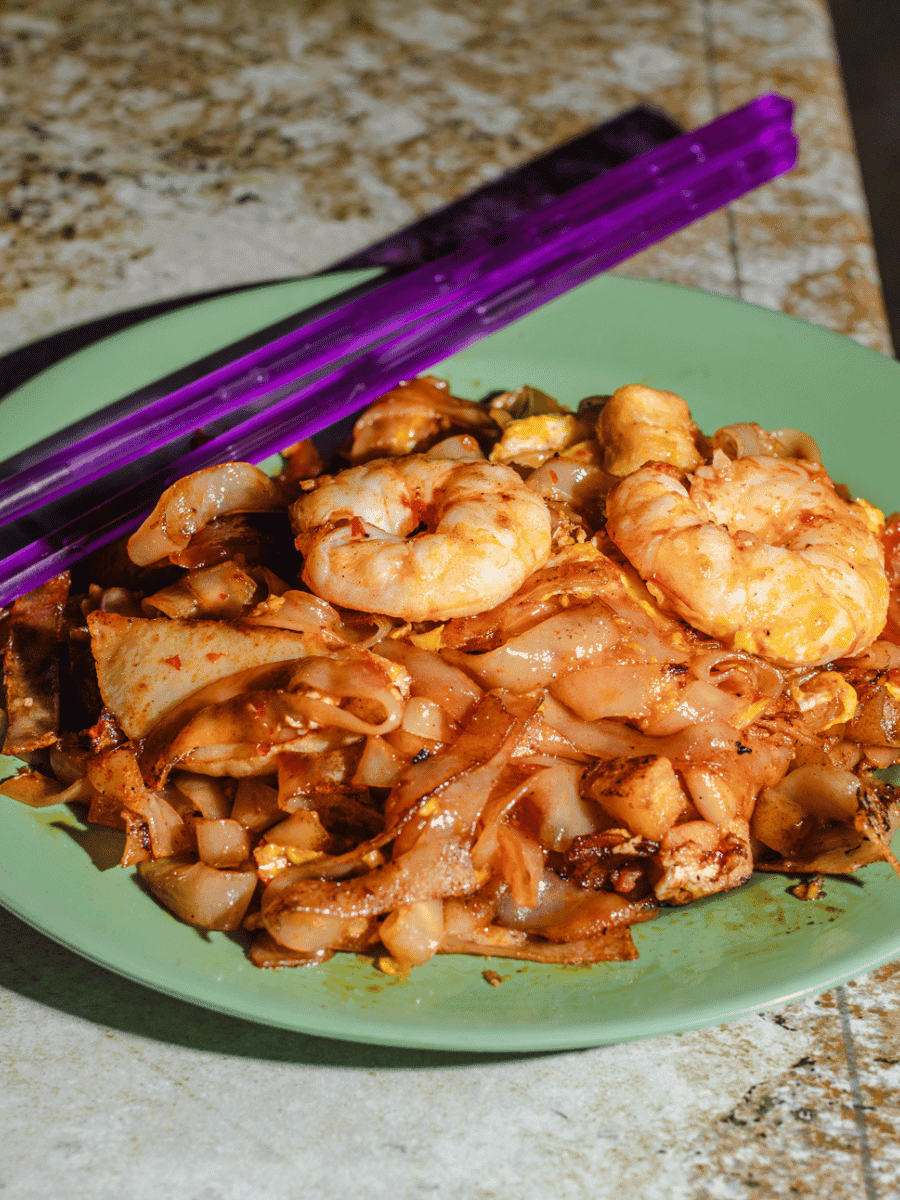
Flat rice noodles stir-fried hard in a wok with prawns, cockles, Chinese sausage, chives, bean sprouts and dark sweet soy. Penang's most famous hawker dish.

Steamed savoury rice cakes topped with fried preserved radish, oil and sesame. Malaysia and Singapore's soft breakfast, eaten with a small spoon.