
Destination
Ipoh
The story
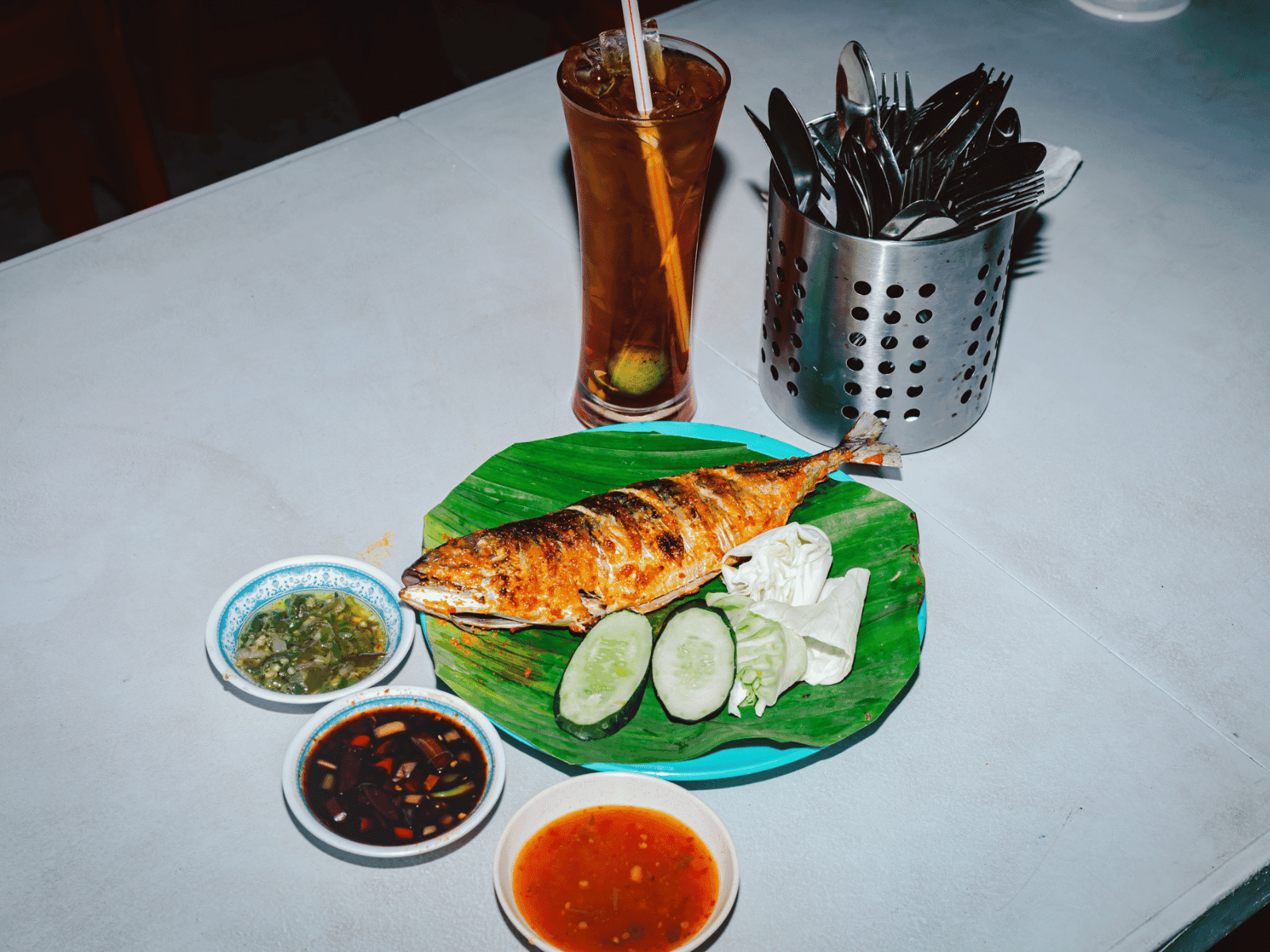
Ikan bakar ("grilled fish") is the ubiquitous Malaysian beach-and-market dinner: a whole pomfret, mackerel or stingray, slashed to the bone, painted with a heavy paste of pounded chilli, shallot, lemongrass, turmeric and belacan, wrapped in a banana leaf and grilled hard over coconut-shell charcoal until the leaf blackens and the sambal underneath caramelises into a sticky, spicy crust. It's the signature dish of coastal Malaysia, from Kuala Terengganu's night market to the seafood shacks of Portuguese Settlement Melaka, and one of the country's clearest examples of how banana leaf turns an outdoor grill into a de facto oven.
Method
Scrub the fish inside and out with coarse salt and rinse under cold water — this cleans the surface and removes any remaining scales or slime. Pat dry. Cut 3 deep diagonal slashes on each side, right down to the bone. Rub the tamarind water all over the fish, including inside the cavity, and leave 15 minutes. This tightens the flesh and neutralises any muddy notes.
Wrap the belacan in foil and toast in a dry pan 3 to 4 minutes each side until fragrant. Drain the soaked chillies. Combine all rempah ingredients in a food processor and blend to a coarse-smooth paste — you want some texture, not a purée. Scrape into a bowl.
Warm the oil in a wide pan over medium heat. Add the rempah paste and cook 10 to 12 minutes, stirring often, until it has darkened significantly, thickened, and the oil has separated at the edges. Taste — it should be sharp, salty, aromatic and mildly sweet. Cool to warm.
Rinse the banana leaves and pass them briefly over an open flame or hot pan (2 to 3 seconds per side) to soften and make them pliable. Wipe with a damp cloth. Brush each leaf lightly with oil.
Rub 3 tbsp of the sambal into the cavity of the fish. Smear the rest thickly over both sides, working it into the slashes so the paste reaches the bone. Reserve about 2 tbsp of sambal for finishing.
Lay the fish diagonally on a banana leaf. Fold the long sides over the fish so it's parcelled — the head and tail can peek out. Tie with kitchen twine or secure with toothpicks. The parcel should be snug but not tight.
Heat a charcoal grill to medium-hot (coals white-ashy, not flaming) or a heavy cast-iron ridged pan on the highest heat. Lay the parcel on the grill and cook 8 to 10 minutes per side, until the banana leaf is charred black in patches and the fish inside is opaque at the thickest part. The parcel should smell insistently of caramelised belacan.
Whisk together all sambal kicap ingredients in a small bowl. Cut the twine on the fish parcel at the table, peel back the leaf, and paint the reserved warm sambal over the top for a final sticky finish. Serve on the leaf with rice, ulam, sambal kicap and calamansi wedges. Eat with hands.
Tips
- Fresh fish only. This dish exposes everything about the fish — a whole grilled fish has nowhere to hide. Pomfret, sea bass and mackerel work best; stingray if you can find it. Ask the fishmonger to scale and gut but leave the head and tail on.
- Toast the belacan. Untoasted belacan tastes raw. Wrap in foil, dry-pan toast three minutes a side, then crumble. This step is not optional.
- Char the leaf. The banana leaf should go black on the outside — that char is your cue that the sambal underneath has caramelised. Don't rescue the parcel early; the leaf protects the fish from burning.
- Cook the rempah until oil separates. Under-cooked rempah tastes raw and dusty; properly cooked rempah is deep, glossy, integrated. Twelve minutes minimum over medium heat.
- Eat with your hands. Ikan bakar is a hands-on Malaysian dish. Peel the fish flesh off the bones with your fingers, wrap in a lettuce leaf with rice and a dab of sambal kicap, and eat in a single bite.
More recipes
View all
A pyramid of banana-leaf-wrapped coconut rice with sambal, fried anchovies, peanuts, hard-boiled egg and cucumber. Malaysia's national breakfast, sold from every roadside stall before dawn.

Silky rice noodle rolls in a dark sweet-shrimp sauce with a scatter of toasted sesame seeds. Penang's morning-market breakfast, cousin to Hong Kong's cheung fun.
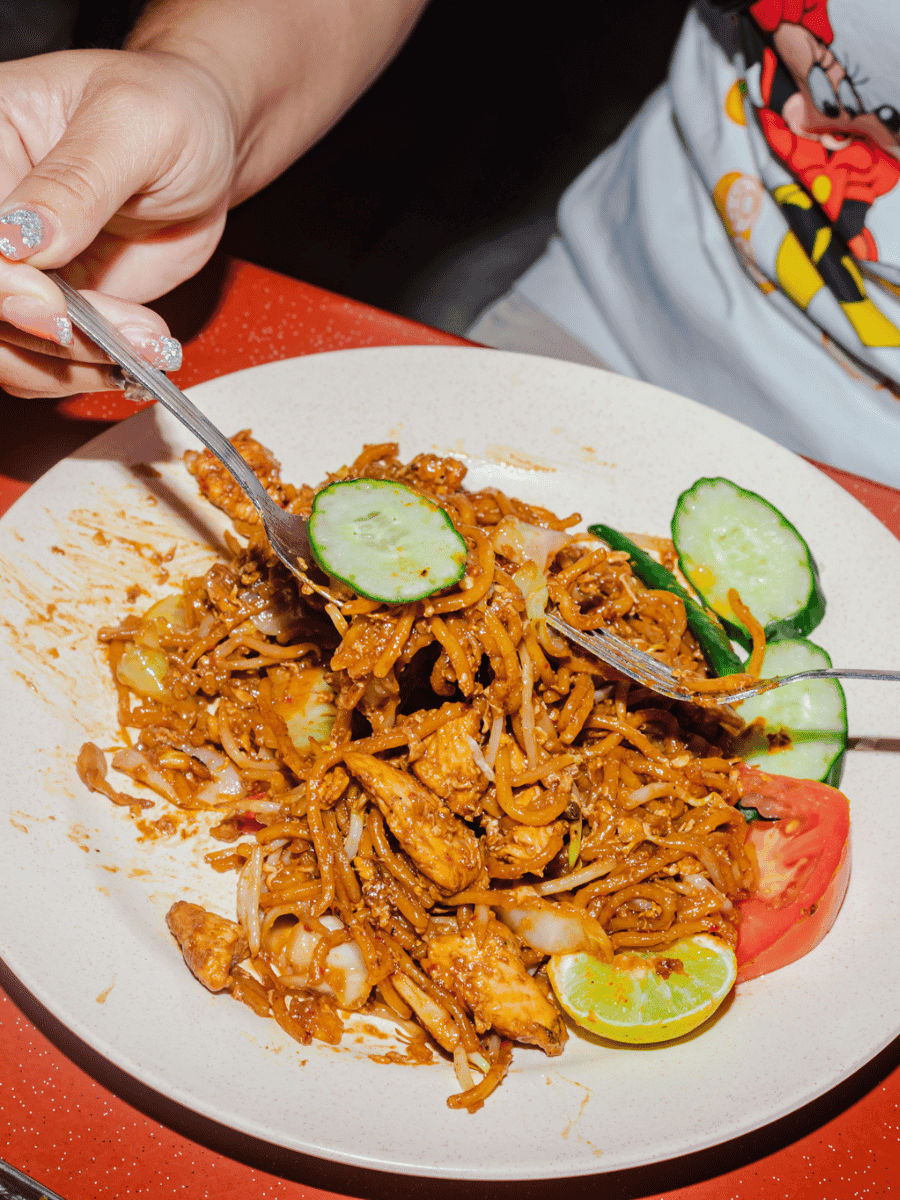
Yellow noodles fired in a screaming-hot wok with sambal, ketchup, egg, potato cubes and tofu puffs. Malaysia's signature mamak-stall plate, ready in six minutes.
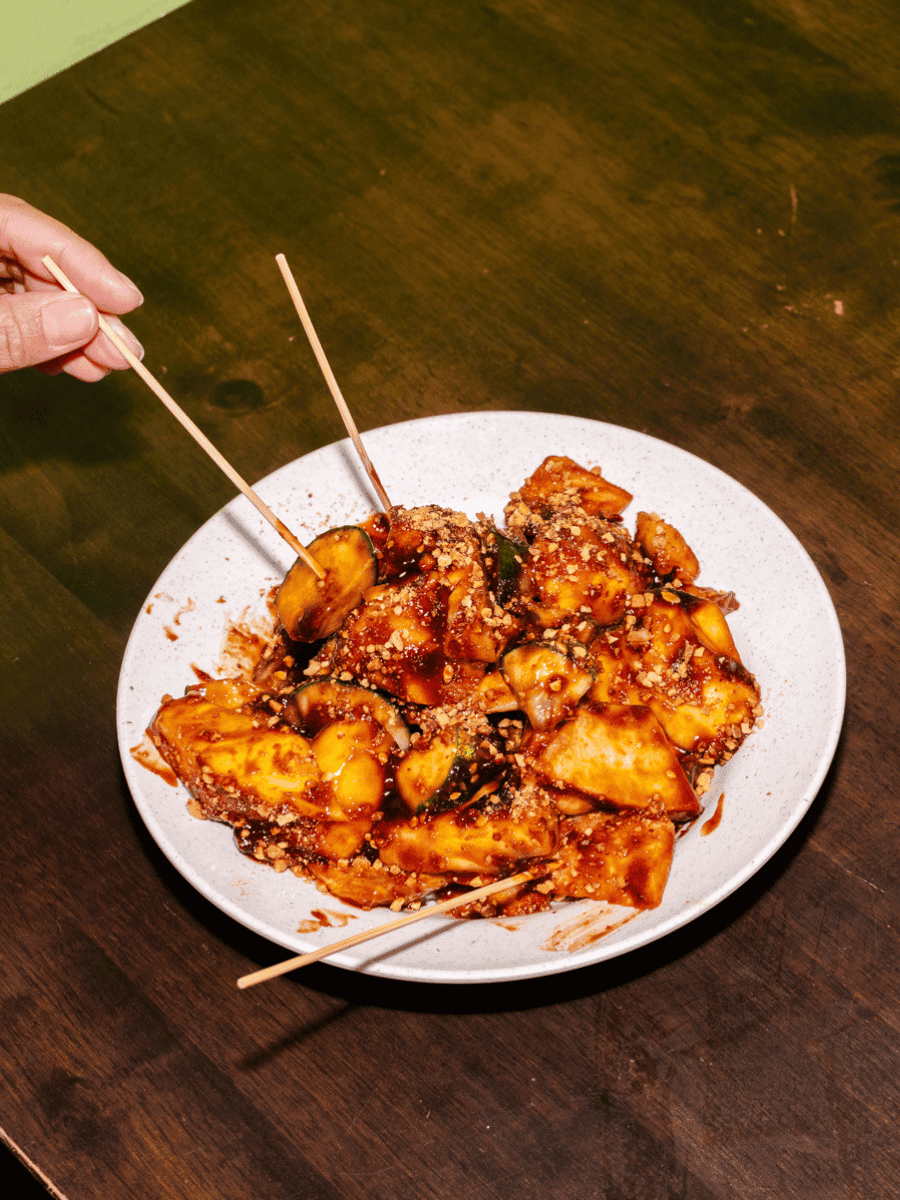
Chopped tropical fruit and vegetables tossed with a thick sweet-savoury prawn paste sauce, crushed peanuts and sesame seeds. Malaysia's national fruit salad, sold from carts.
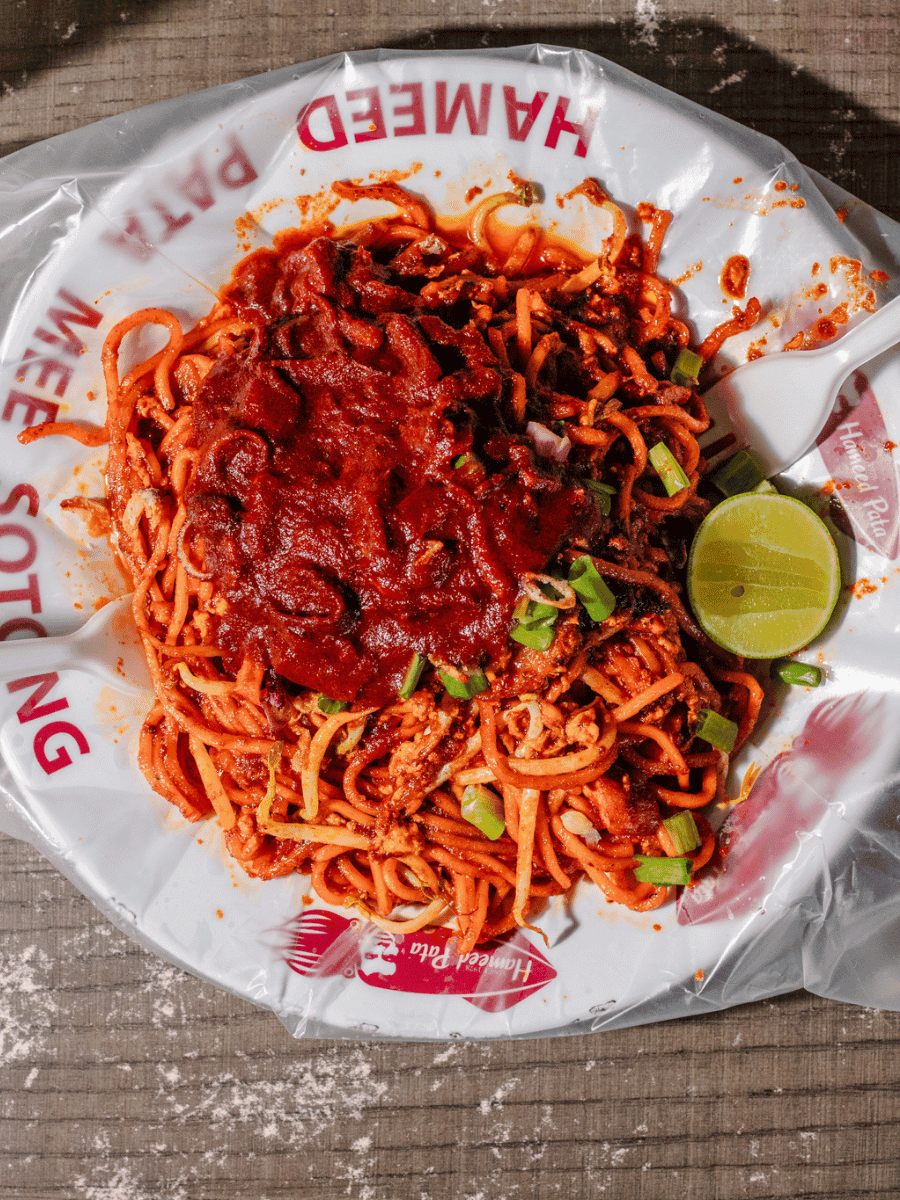
Yellow noodles tossed with squid braised in a dark, sweet, chilli-laced sauce. Penang's Padang Kota street noodle, distinctly its own thing.

Egg noodles and rice vermicelli in a deep, orange prawn-shell broth topped with poached prawns, hard-boiled egg, water spinach and fried shallots. Penang's most-loved noodle soup.