
Destination
Tangier
The story
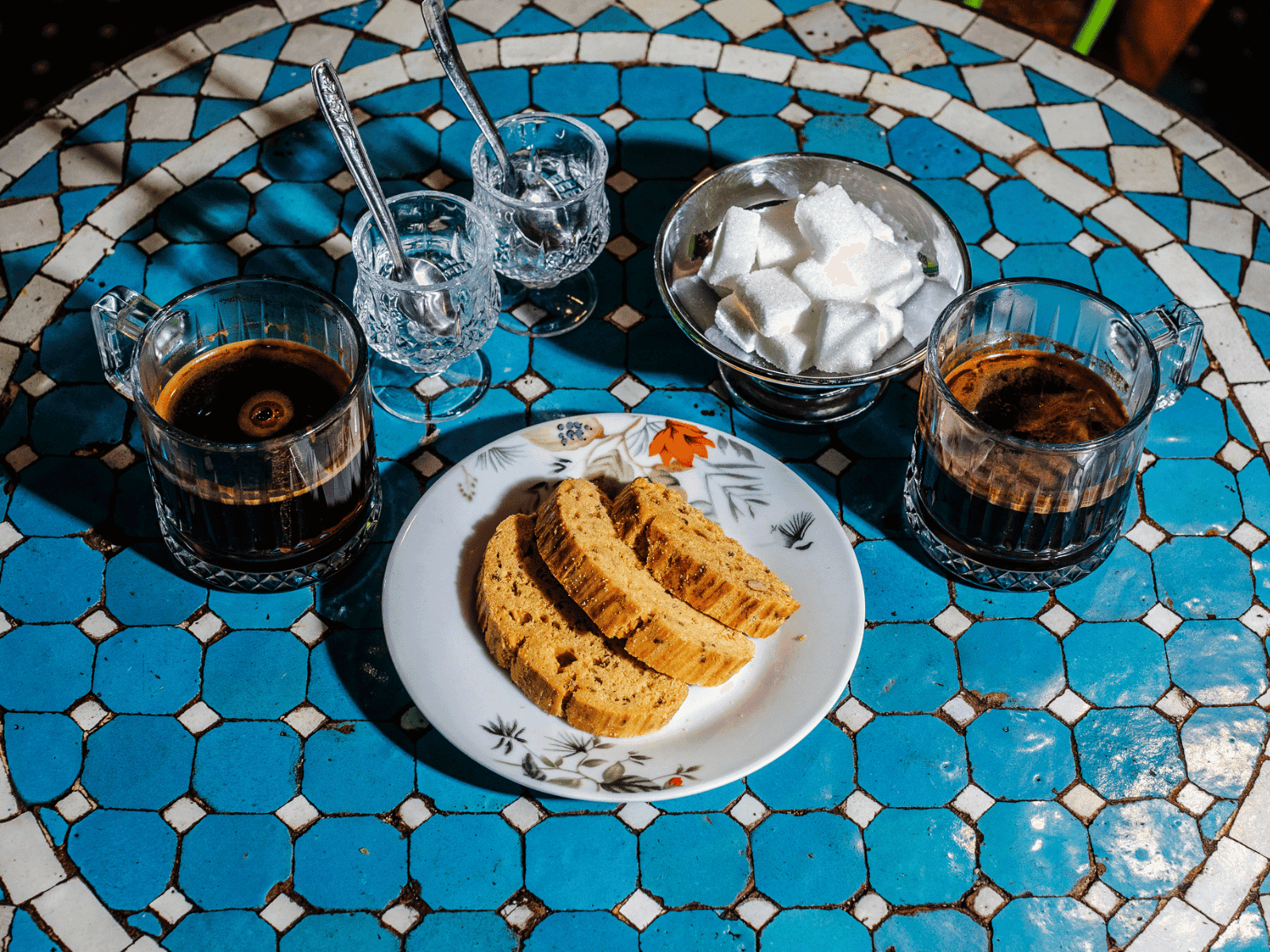
Fekka is Morocco's twice-baked keeping biscuit and the Moroccan counterpart to Italian biscotti: a slightly-sweet loaf of dough enriched with whole almonds, raisins, sesame seeds and aniseed is baked once as a log, cooled, sliced thin, and baked again on a low heat until dry and crisp. Served with a small glass of mint tea, kept in a glass jar for weeks, and given as gifts at Eid, fekka is the Moroccan biscuit that every household keeps in reserve for unexpected visitors. Every Moroccan region has its version; the Fez fekka is more heavily almond-forward; the Rabat fekka leans on raisins; the Casablanca commercial version is the middle-of-the-road city interpretation.
Method
If not pre-toasted: toast the almonds in a 150C oven 10 minutes until pale gold. Cool.
In a large bowl, whisk together the flour, sugar, salt, baking powder, aniseed and 3 tbsp sesame seeds.
In a separate bowl, whisk the eggs, oil, water, orange blossom water and vanilla.
Pour the wet into the dry. Mix with a wooden spoon or your hand until you have a firm, slightly sticky dough. Fold in the toasted almonds, raisins and (if using) apricots.
Preheat oven to 180C. Line a baking sheet. Divide the dough into 2 equal portions. Shape each into a long log about 30cm long and 6cm wide. Place both logs on the sheet, spaced 5cm apart.
Brush the tops with beaten egg. Scatter with extra sesame seeds. Bake 25 to 30 minutes until pale golden and firm to the touch.
Cool on the sheet 15 minutes — you want the logs firm but still slightly warm. Using a sharp serrated knife, slice each log diagonally into 1cm-thick pieces. You should get 24 to 30 biscuits total.
Reduce oven to 120C. Lay the slices flat on the baking sheet (they can touch). Bake 30 to 40 minutes, flipping once halfway, until dry, faintly golden and crisp to the tap. Cool completely on a rack. Store in a sealed tin at room temperature up to 3 weeks. Serve with mint tea, dipping briefly to soften.
Tips
- Two-stage bake. This is the whole trick. First bake sets the shape; second bake dries the biscuit to a keeping crisp. Single-baked fekka is soft in the middle and stales in 4 days.
- Toast the almonds first. Untoasted almonds add bulk but not much flavour. Toasted almonds add richness and marry with the aniseed.
- Slice diagonally. This is the classical Moroccan (and Italian) cut. Straight-across slices give you smaller, thicker biscuits; diagonal slices give you the long-cross-section fekka shape everyone knows.
- Cool the log before slicing. A hot log crushes under the knife. Fifteen minutes is the sweet spot — firm enough to slice, warm enough to cut cleanly.
- Store in a tin. Airtight glass or metal is essential. A paper bag lets moisture in and turns fekka soft in a day.
More recipes
View all
Ring-shaped semi-hard biscuits scented with fennel, aniseed and sesame, twice-baked until golden. Morocco's tea-dunking staple, sold by weight at every pastry souk.

Layered filo pastry crisps sandwiched with almond-milk custard, dusted with icing sugar and cinnamon. Fes's most elegant dessert.
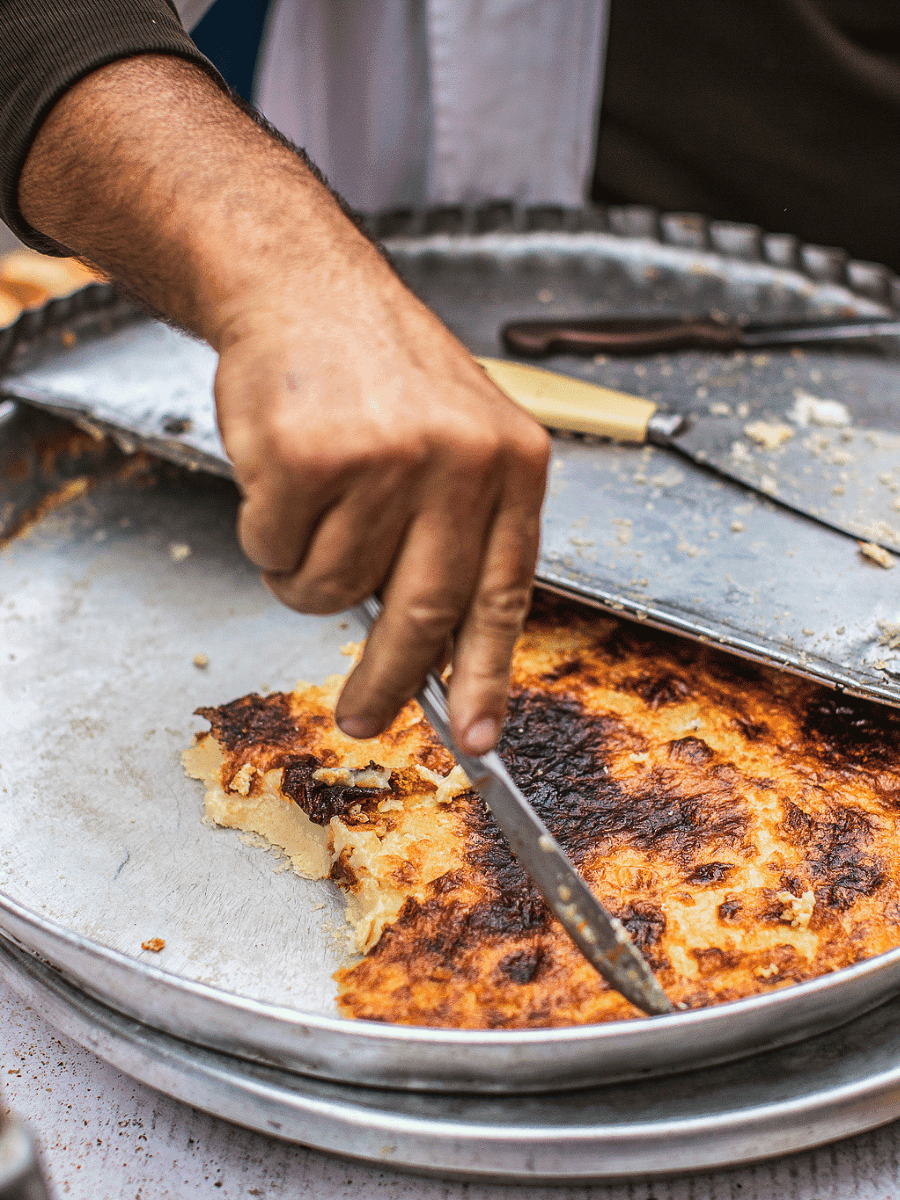
A dense, savoury chickpea-flour cake baked in a wood oven, sold sliced from paper on street corners. Tangier's Andalusi-Sephardic morning snack.

Sweet, thick set yogurt made from whole milk and rennet, scented with orange blossom. Morocco's oldest dessert, spooned from small clay jars.

Paper-thin dough folded into a flaky square, cooked on a hot skillet until golden and buttery. Morocco's laminated breakfast pastry, eaten with honey.
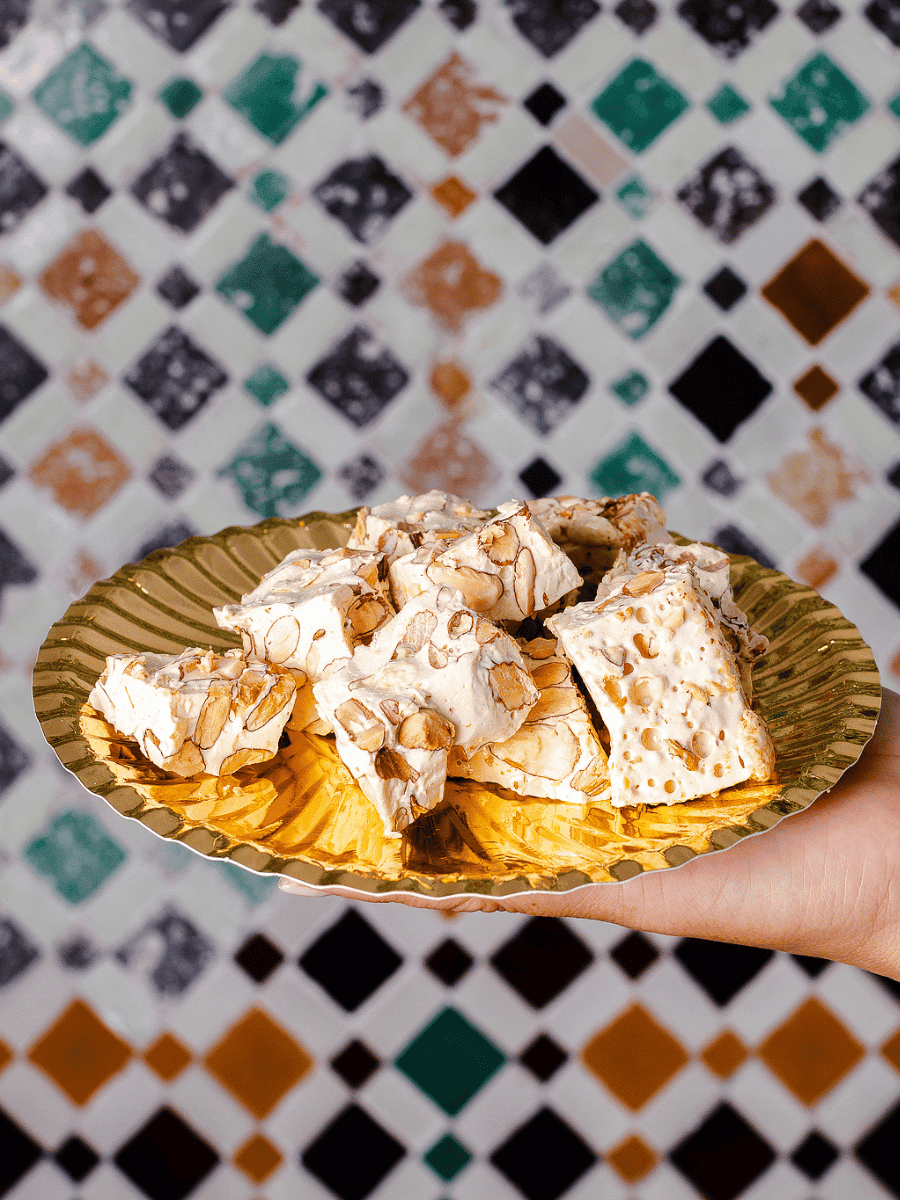
Chewy honey-and-egg-white nougat studded with toasted almonds and pistachios, cut into small squares. Morocco's most-shared Eid confection.