

Destination
Bogota
The story
Mondongo is the Paisa (Antioquia region) Sunday soup: honeycomb tripe simmered slowly for hours in a broth with pork ribs, Colombian chorizo, potato, sweet plantain, cassava, corn on the cob and a slick of hogao (Colombian sofrito) whisked in at the end. Ladled into big bowls with a scoop of white rice on the side, a slice of ripe avocado and a wedge of lime. A specific Colombian mountain-village dish and one of the country's great comfort foods.
Method
Place the tripe in a large pot with the lemon juice, vinegar, salt and cold water to cover. Bring to a boil and cook 15 minutes. Drain, rinse well under cold water. This removes any lingering smell and starts to soften the tripe.
Return the tripe to the cleaned pot with the pork ribs, quartered onions, spring onions, garlic, cumin, achiote, bay leaf and 3 litres cold water. Bring to a simmer, skim any foam, and cook 2 hours at a lazy bubble until the tripe is fork-tender.
Add the chorizo, potatoes and cassava. Simmer another 25 minutes.
Add the plantain, corn and red pepper. Simmer another 15 minutes until everything is tender.
While the vegetables cook, warm the oil in a wide pan over medium heat. Add the tomato, red onion and spring onion. Cook 8 to 10 minutes until softened and slightly jammy. Stir in most of the coriander.
Stir the hogao into the mondongo pot. Simmer 3 minutes to blend. Taste for salt.
Ladle into wide bowls making sure everyone gets a share of tripe, ribs, chorizo and vegetables. Scatter with fresh coriander. Serve with white rice on the side, slices of ripe avocado, lime wedges and ají picante.
Tips
- Pre-cleaned tripe is essential. Ask your butcher for honeycomb tripe (panza) already blanched and cleaned. Frozen pre-treated tripe from a Latin grocer is also fine. Cleaning from scratch is a serious kitchen project not worth the effort at home.
- The lemon-and-vinegar first boil is non-negotiable. This is the step that removes any strong odour from the tripe. Fifteen minutes in acidic water, then rinse hard.
- Simmer the tripe for two hours before adding anything else. Under-cooked tripe is chewy in the wrong way; two hours of gentle simmering gives you silky, delicate tripe that everyone at the table will eat.
- Sweet plantain, not green. Ripe (spotted, yellow-black) plantains add sweetness that balances the savoury broth. Green plantains are for patacones, not mondongo.
- Rice on the side, not in the bowl. This is Paisa convention: white rice on a small plate next to the soup bowl, added to the spoon a scoop at a time.
More recipes
View all
A slow-cooked Andean feast of beef, chicken, ribs and the strange, wonderful native tubers of Colombia's mountain heartland: cubios, ibias, hibias and papa criolla, in one pot.
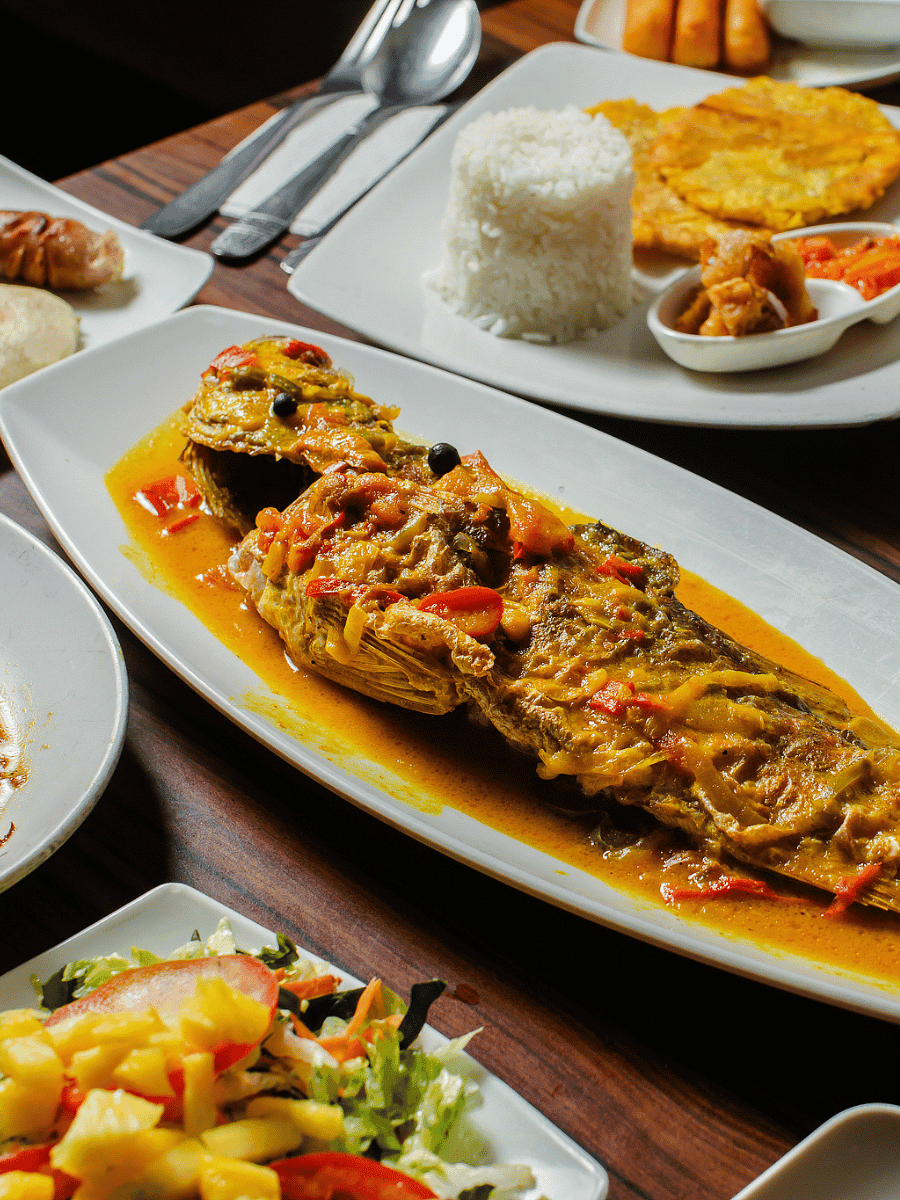
Whole fish poached in a thick coconut milk sauce with tomato, onion and achiote, served over white rice. Cartagena's Sunday-lunch classic, richer and thicker than a soup.
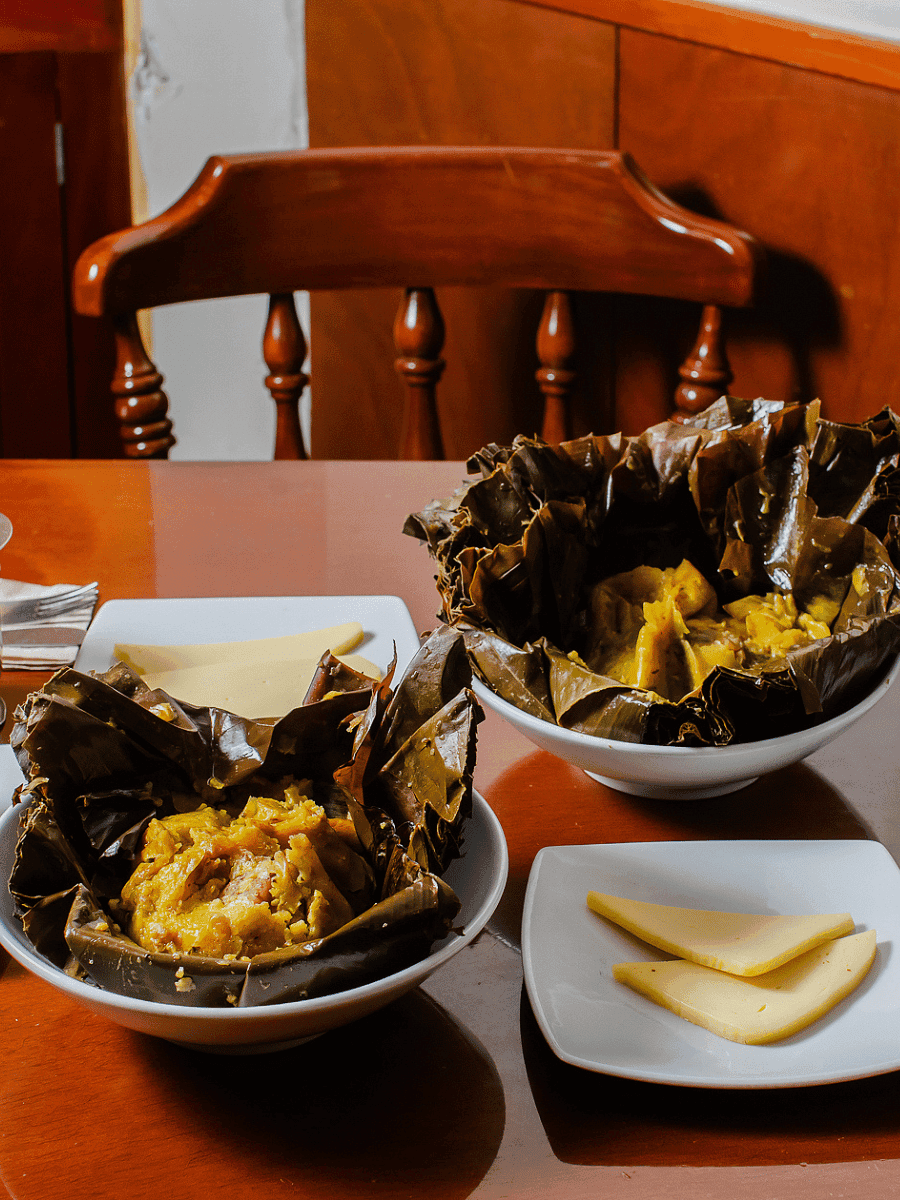
Corn masa wrapped around pork, chicken, egg, potato and rice, tied inside banana leaves and steamed for hours. Bogotá's Sunday-morning tamal, and a full day's project in the kitchen.
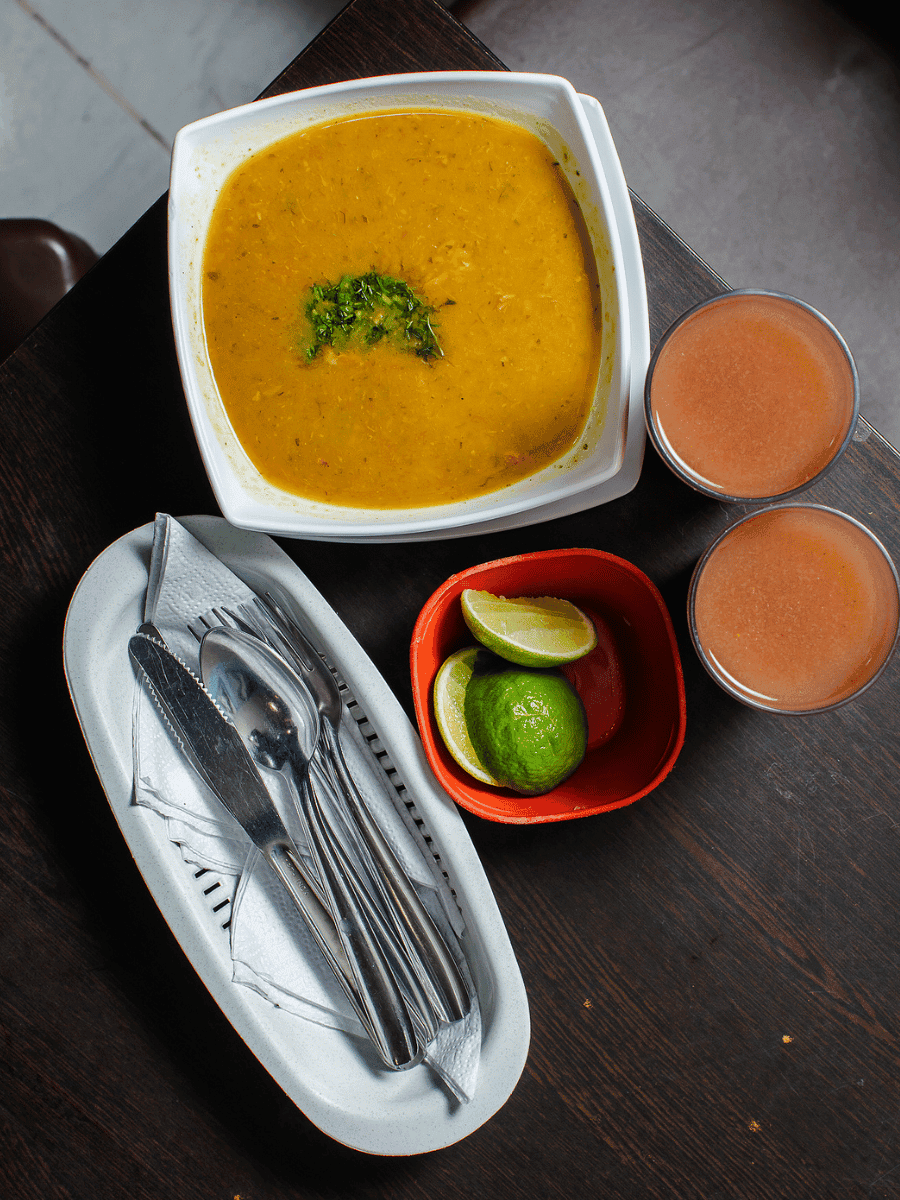
Cartagena's Caribbean fish soup: chunks of white fish poached in coconut milk with achiote, garlic and fresh coriander. Bright orange, deeply savoury, always eaten with rice.

A packed banana-leaf parcel of grilled meats, potato, cassava, rice and hard-boiled egg. The Colombian Andes' portable feast, made to travel on horseback into the mountains.

Cured raw fish or shrimp in lime and coconut leche de tigre, topped at the last minute with crackling shards of pork chicharrón. A modern Colombian invention that plays crunch against acid.