

Destination
Bogota
The story
Cocido boyacense is the great cold-weather dish of Colombia's Andean interior. A shared pot from the Boyacá department, four hours in the making, containing three cuts of meat (beef, chicken, pork ribs, sometimes a length of longaniza sausage) and a whole zoo of native highland tubers: papa sabanera, papa criolla, cubios, ibias, hibias, arracacha, cassava. Green cabbage on top. Fresh corn on the cob. Guascas at the end. Ladled into big bowls with a scoop of white rice, an ear of corn per person and a small plate of ají picante on the side.
Method
In a very large heavy pot, heat 2 tbsp oil over medium-high. Sear the beef and pork ribs in batches, 3 to 4 minutes per side, until deep brown. Lift out and reserve.
Return the seared meats to the pot with the chicken, quartered onion, halved garlic, spring onions, bay leaves, salt, cumin and the cold water. Bring to a simmer, skim any foam, and cook 90 minutes at a lazy bubble.
Add the papa sabanera, cassava and arracacha (the tubers that need the longest cooking). Simmer another 25 minutes.
Add the cubios and ibias if using, plus the sausage if using. Simmer another 15 minutes.
Add the corn rounds, cabbage wedges, papa criolla and hibias (if using). Simmer 15 minutes more, until everything is tender.
Stir in the guascas. Simmer 3 minutes to bloom. Taste for salt; adjust as needed. Fish out the bay leaves and spring onions.
Ladle into wide bowls, making sure each person gets a mix of meats, tubers, an ear of corn and a wedge of cabbage. Serve rice on the side, plus ají, chopped coriander and sliced avocado at the table.
Tips
- Search out the tubers if you can. The whole point of cocido boyacense is the variety of Andean roots. If you're near a Colombian, Ecuadorian or Peruvian grocer, look specifically for cubios, hibias (ulluco) and arracacha in the fridge or frozen sections. Even just adding cassava and papa criolla is a meaningful upgrade over generic potatoes.
- Guascas at the end, not the beginning. Added at the start, guascas loses its bright note in the long cook. Stir in for the final 3 minutes so the herb blooms in the hot broth.
- Sear the meat first. The brown fond at the base of the pot after searing is what gives the finished stock its deep colour and savoury depth. Skipping this step gives you a pale, thin cocido.
- Skim carefully in the first 30 minutes. As the meat simmers, foam and impurities rise to the surface. Skim them off with a spoon; a clean broth reflects a well-made cocido.
- Best on day two. The tubers absorb more of the stock overnight and the meats become deeply tender. Make on Saturday, reheat gently for Sunday lunch.
More recipes
View all
Bijao-leaf-wrapped parcels of yellow corn masa, pork, chicken, chorizo, chickpea, potato, egg and hogao, steamed for hours over an open pot. Paisa Sunday breakfast at its most generous.

Pork belly slow-cooked in its own fat until the meat is tender and the skin has puffed to a crackling. The centrepiece of the Paisa bandeja and Medellín's proudest export.
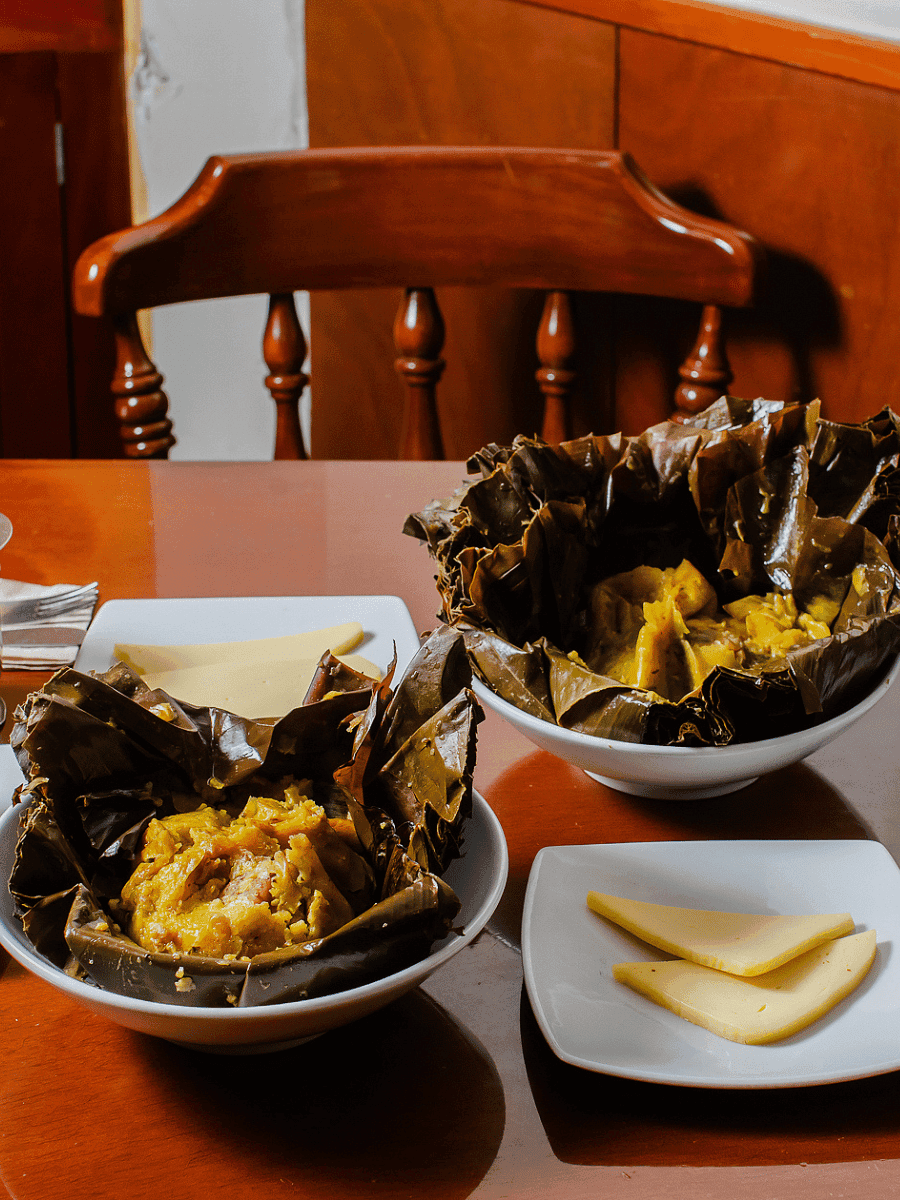
Corn masa wrapped around pork, chicken, egg, potato and rice, tied inside banana leaves and steamed for hours. Bogotá's Sunday-morning tamal, and a full day's project in the kitchen.

Beef tripe slow-cooked with pork ribs, chorizo, potato, plantain and corn in a spiced broth. The Paisa Sunday soup, always eaten with rice and a slice of avocado.

Yellow corn dough wrapped around a filling of shredded chicken, potato and hogao, deep-fried until deep gold and crackly. Colombia's small crunchy street empanada.

A packed banana-leaf parcel of grilled meats, potato, cassava, rice and hard-boiled egg. The Colombian Andes' portable feast, made to travel on horseback into the mountains.