
Destination
Bogota
The story
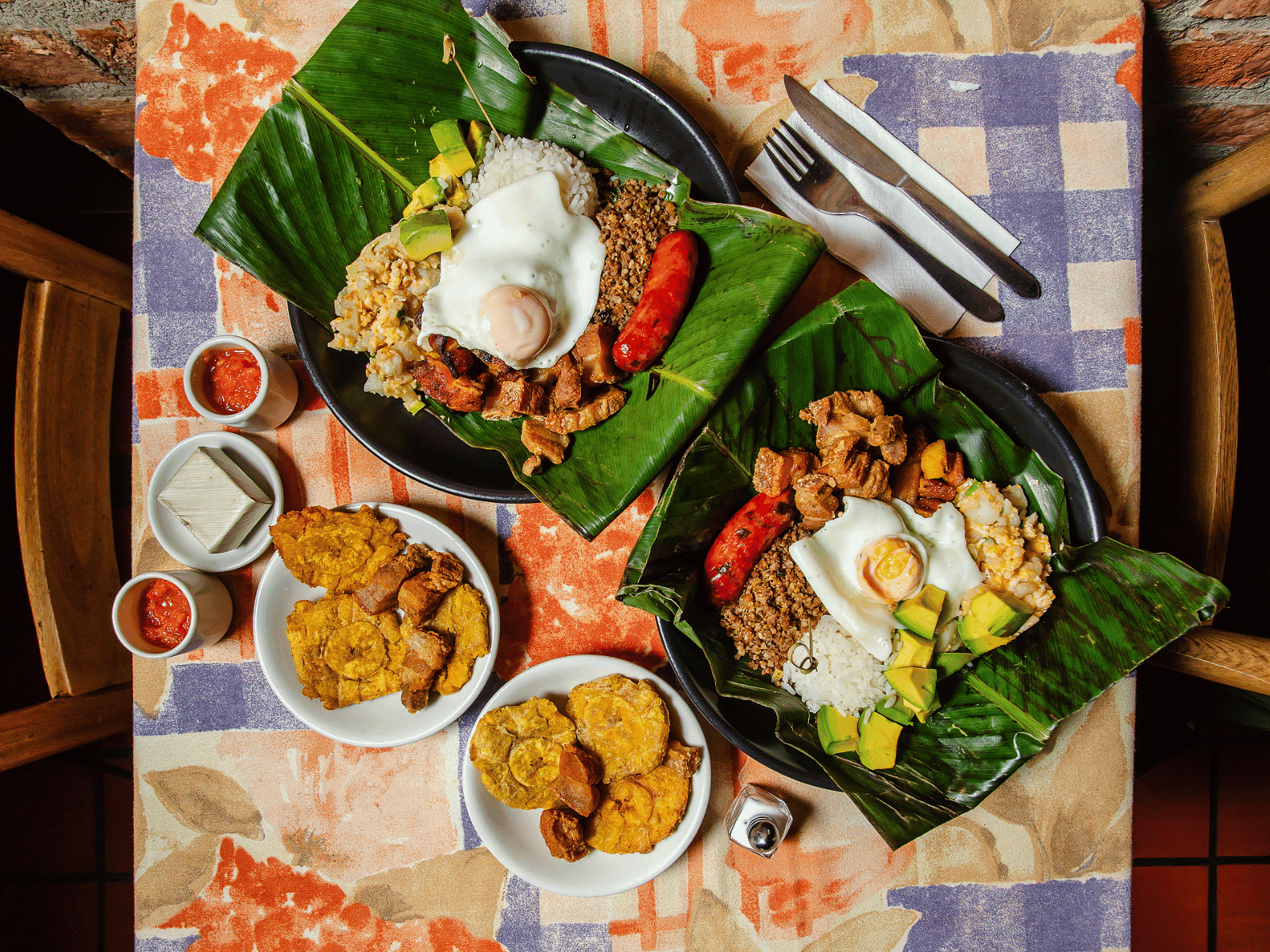
Fiambre is the Colombian countryside's answer to a packed lunch: a large banana-leaf parcel wrapped around a mixed plate of grilled or fried meats (beef, pork, chicken, chorizo), cooked cassava, boiled potato, a scoop of rice, a slice of hard-boiled egg, sometimes a piece of arepa. Tied with twine, carried in a saddlebag or a backpack, unwrapped several hours later on a rock beside a river or a fence post beside a mountain trail. Rural, portable, unfussy and completely satisfying.
Method
Season the beef, pork and chicken with salt, pepper, cumin, achiote and crushed garlic. Grill over a hot fire or heavy pan 3 to 4 minutes per side (longer for chicken), until each is cooked through. Rest, then slice each into 2cm strips. Grill the chorizos alongside.
Boil the cassava chunks in salted water for 20 minutes until fork-tender. Boil the whole potatoes in their skins for 25 to 30 minutes. Cook the rice separately. Hard-boil the eggs, cool and halve. Warm the arepas on the grill.
Pass each banana leaf briefly over a low gas flame (or into a hot dry pan) until it turns glossy and pliable. Untreated leaves crack when folded.
Lay a leaf square (about 40cm x 40cm) shiny-side down. In the centre, place a scoop of rice, a piece of cassava, a whole potato (peeled or unpeeled, as you like), slices of the three meats, a piece of chorizo, half an egg, half an arepa. Spoon a generous ladle of hogao over the top.
Fold the sides of the leaf over the food, then fold the ends up and over to form a rectangular parcel about the size of a large book. Tie tightly with kitchen twine in both directions.
If serving immediately, warm the parcels in a 180°C oven for 10 minutes to bring everything to eating temperature and let the flavours marry. If preparing for a picnic, keep the parcels at room temperature and eat within 4 hours.
Bring the parcels to the table (or the riverbank) and let each person unwrap their own. Ají picante on the side.
Tips
- Banana leaves are essential. They wrap tightly, perfume the food, and hold everything neatly. Sold frozen at Latin, Asian and West African grocers. Baking paper is a functional substitute but doesn't add the same aroma.
- Grill the meats hard and season assertively. Fiambre is meant to be eaten at room temperature, and food eaten cool tastes blander than food eaten hot. Season more aggressively than you would for a hot plate.
- Waxy potatoes, not floury. Waxy potatoes hold shape after boiling and travel well. Floury potatoes turn to mash inside the parcel.
- Assemble everything cooked and warm, but eat at ambient temperature. A brief 10-minute warm in a low oven lets the flavours blend without overcooking anything. Cold-from-the-fridge is the wrong texture.
- Ají picante on the side, not inside. Chilli sauce inside the parcel makes everything hot regardless of preference. Bring a small jar to the table (or the riverbank) so each person can choose.
More recipes
View all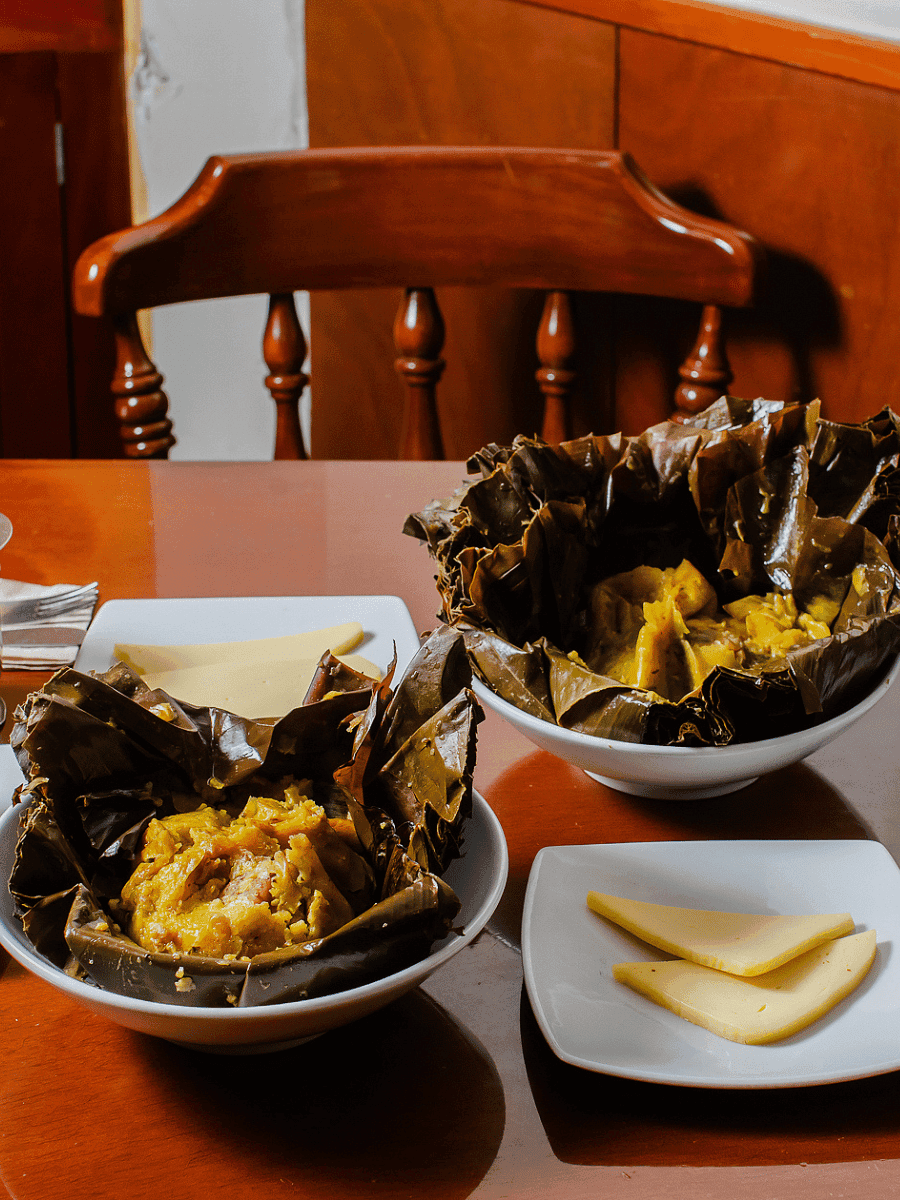
Corn masa wrapped around pork, chicken, egg, potato and rice, tied inside banana leaves and steamed for hours. Bogotá's Sunday-morning tamal, and a full day's project in the kitchen.

Bijao-leaf-wrapped parcels of yellow corn masa, pork, chicken, chorizo, chickpea, potato, egg and hogao, steamed for hours over an open pot. Paisa Sunday breakfast at its most generous.

A slow-cooked Andean feast of beef, chicken, ribs and the strange, wonderful native tubers of Colombia's mountain heartland: cubios, ibias, hibias and papa criolla, in one pot.

Beef tripe slow-cooked with pork ribs, chorizo, potato, plantain and corn in a spiced broth. The Paisa Sunday soup, always eaten with rice and a slice of avocado.
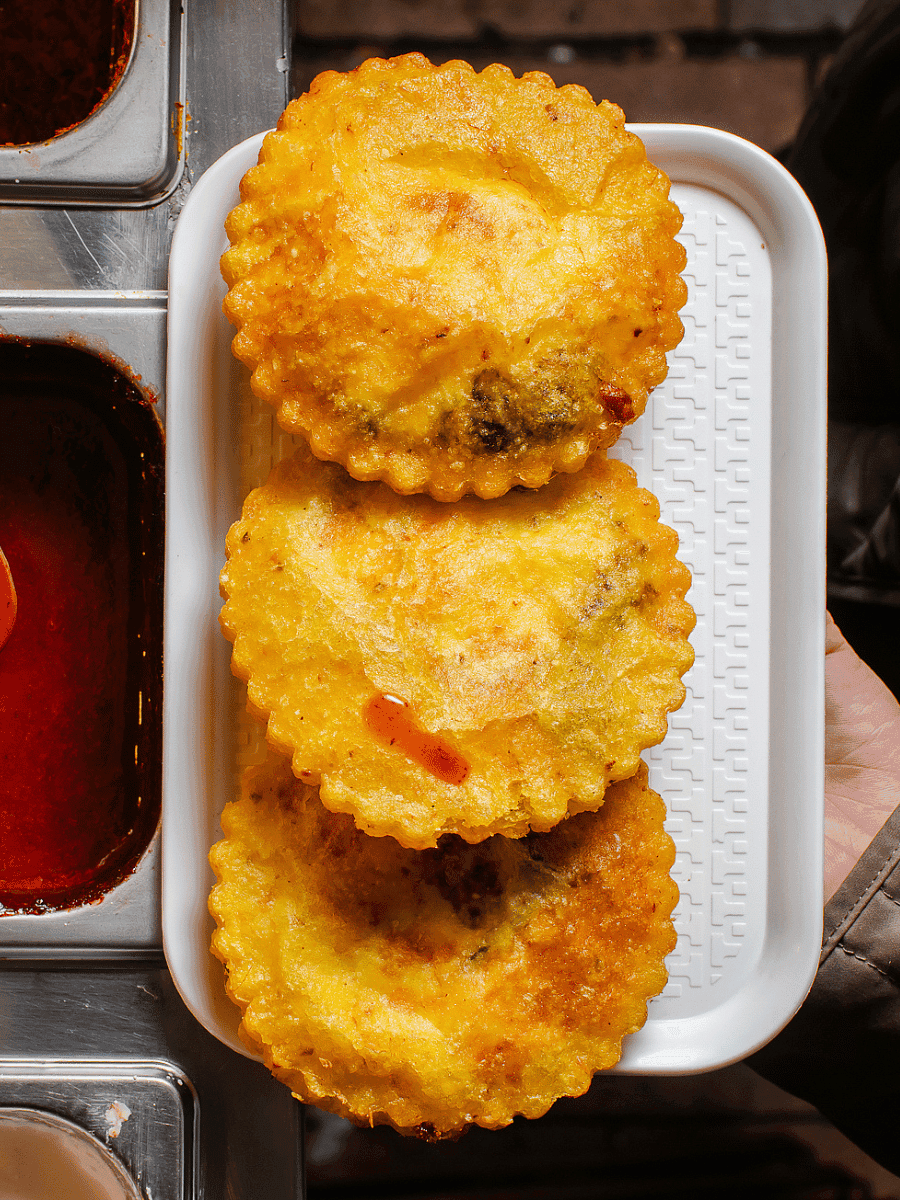
Caribbean-style yellow corn arepa fried once, split open, filled with a whole raw egg and seasoned beef, sealed and fried again until golden. Cartagena's morning market classic.

Bogotá's signature soup: three kinds of potato, poached chicken, sweet corn and the wild herb guascas, finished at the table with capers, cream and avocado.