
Destination
Bogota
The story
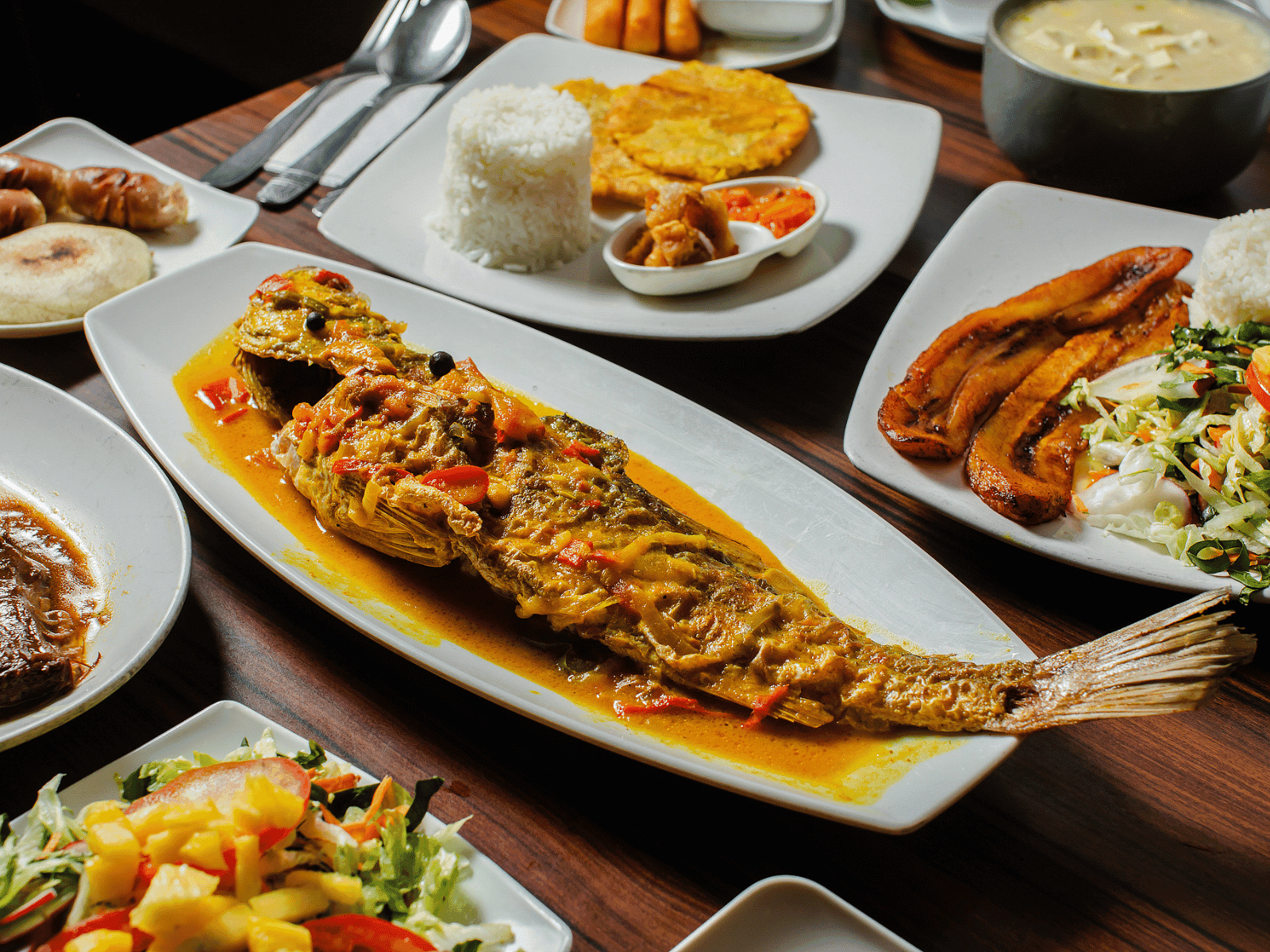
Pescado en zumo (sometimes called pescado en salsa de coco) is Cartagena's Sunday-lunch fish dish. A whole fish (or thick fillets) poached gently in a thick coconut milk sauce built from onion, tomato, garlic, red pepper, achiote and coriander, reduced until it clings to the fish. Served in a shallow bowl or plate over a mound of white rice or coconut rice, with a slice of ripe avocado, patacones on the side and a wedge of lime.
Method
Sprinkle the fish fillets with salt and squeeze over the lime juice. Set aside while you build the sauce.
Warm the oil in a wide, shallow pan (big enough to hold the fillets in a single layer) over medium heat. Sweat the onion, red pepper and spring onions 6 to 8 minutes until soft. Add the garlic and cook 1 minute more.
Add the tomatoes, achiote, cumin, salt and pepper. Cook 5 to 6 minutes, stirring, until the tomato breaks down and the mixture turns deep orange from the achiote.
Pour in the coconut milk and fish stock. Bring to a gentle simmer and cook 10 to 12 minutes, uncovered, until the sauce reduces and thickens enough to coat the back of a spoon. Squeeze in the lime juice.
Lay the fish fillets in the simmering sauce skin-side down. Spoon sauce over the tops. Cover with a lid and cook 6 to 8 minutes (depending on thickness), until the fish is just opaque in the middle. Don't stir; shake the pan gently once or twice to distribute the sauce.
Off the heat, scatter with most of the chopped coriander (save some for the plates). Taste the sauce for salt one more time.
Plate a mound of white or coconut rice, place a fish fillet on top and spoon over generous sauce. Add slices of avocado, a few patacones and lime wedges on the side. Scatter with remaining coriander.
Tips
- Firm, sweet-fleshed fish holds together in the sauce. Red snapper, sea bream, corvina and monkfish all work. Sole, plaice, cod and hake are too delicate.
- Full-fat coconut milk, not coconut cream and not low-fat. Full-fat from a good-quality tin gives the sauce its body and gloss. Cream is too rich; light is too thin.
- Don't stir once the fish is in the pan. Shake gently to distribute the sauce; anything more breaks the fillets into shreds. Half the pleasure is spooning up whole pieces.
- Coconut rice on the side is the Cartagena upgrade. Arroz con coco (rice cooked in coconut milk with a little sugar and salt) is what you'd get on a plate in Cartagena. Plain white rice is a fine substitute.
- Patacones (fried green plantain rounds) are the traditional scoop. Twice-fried green plantain crushed and refried gives you a flat, crispy round perfect for mopping the sauce.
More recipes
View all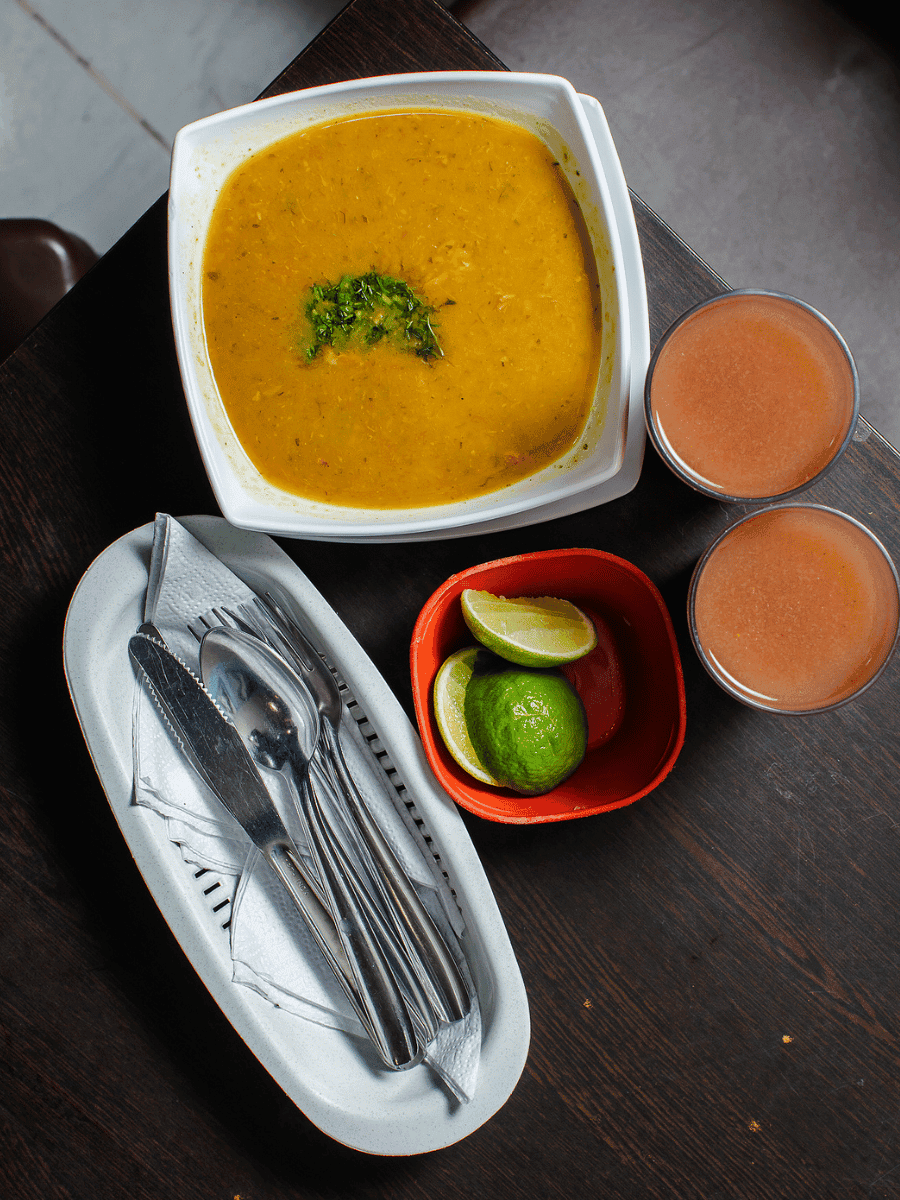
Cartagena's Caribbean fish soup: chunks of white fish poached in coconut milk with achiote, garlic and fresh coriander. Bright orange, deeply savoury, always eaten with rice.

Beef tripe slow-cooked with pork ribs, chorizo, potato, plantain and corn in a spiced broth. The Paisa Sunday soup, always eaten with rice and a slice of avocado.

Bogotá's signature soup: three kinds of potato, poached chicken, sweet corn and the wild herb guascas, finished at the table with capers, cream and avocado.
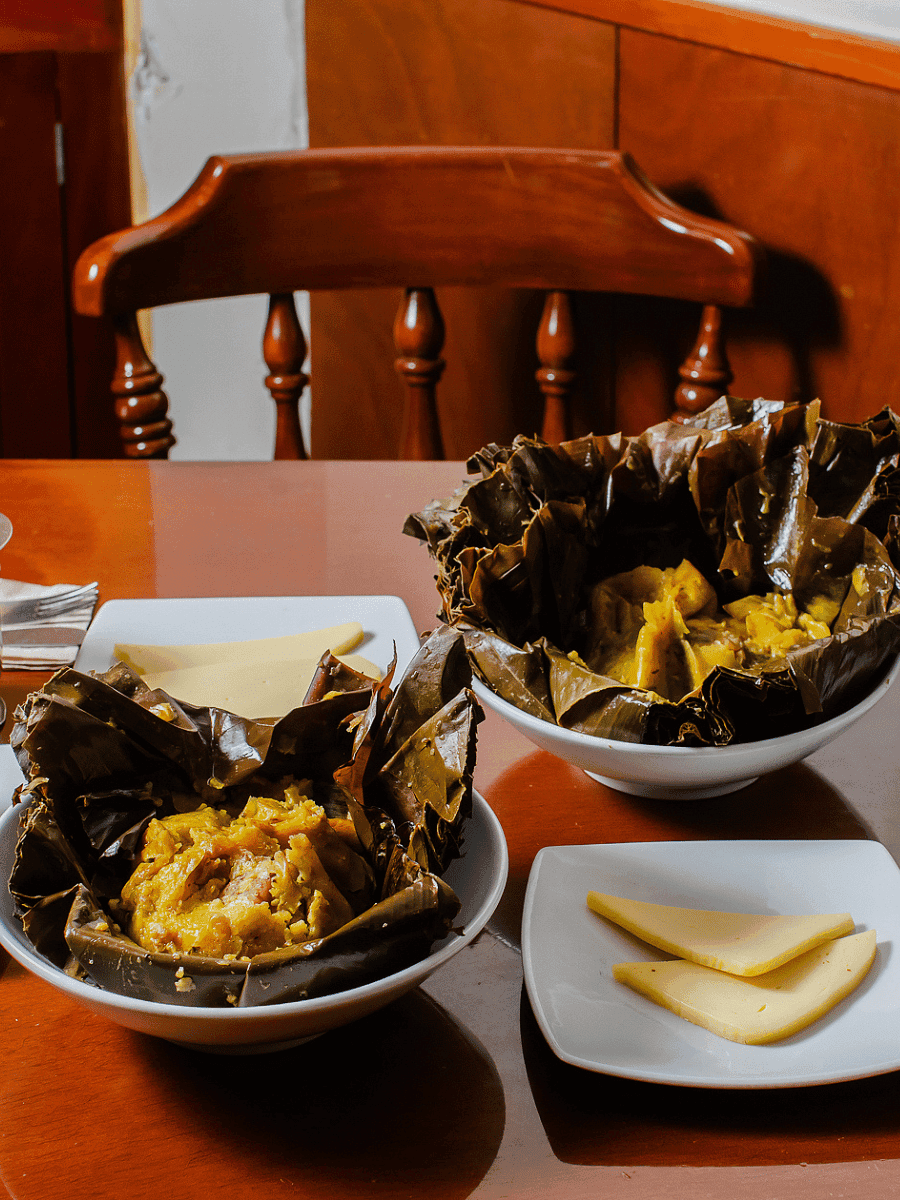
Corn masa wrapped around pork, chicken, egg, potato and rice, tied inside banana leaves and steamed for hours. Bogotá's Sunday-morning tamal, and a full day's project in the kitchen.

A hot broth of milk and water with poached eggs, chopped spring onion and coriander, poured over torn bread. Bogotá's Muisca-inherited breakfast (and hangover cure).

Cured raw fish or shrimp in lime and coconut leche de tigre, topped at the last minute with crackling shards of pork chicharrón. A modern Colombian invention that plays crunch against acid.