
Destination
Bogota
The story
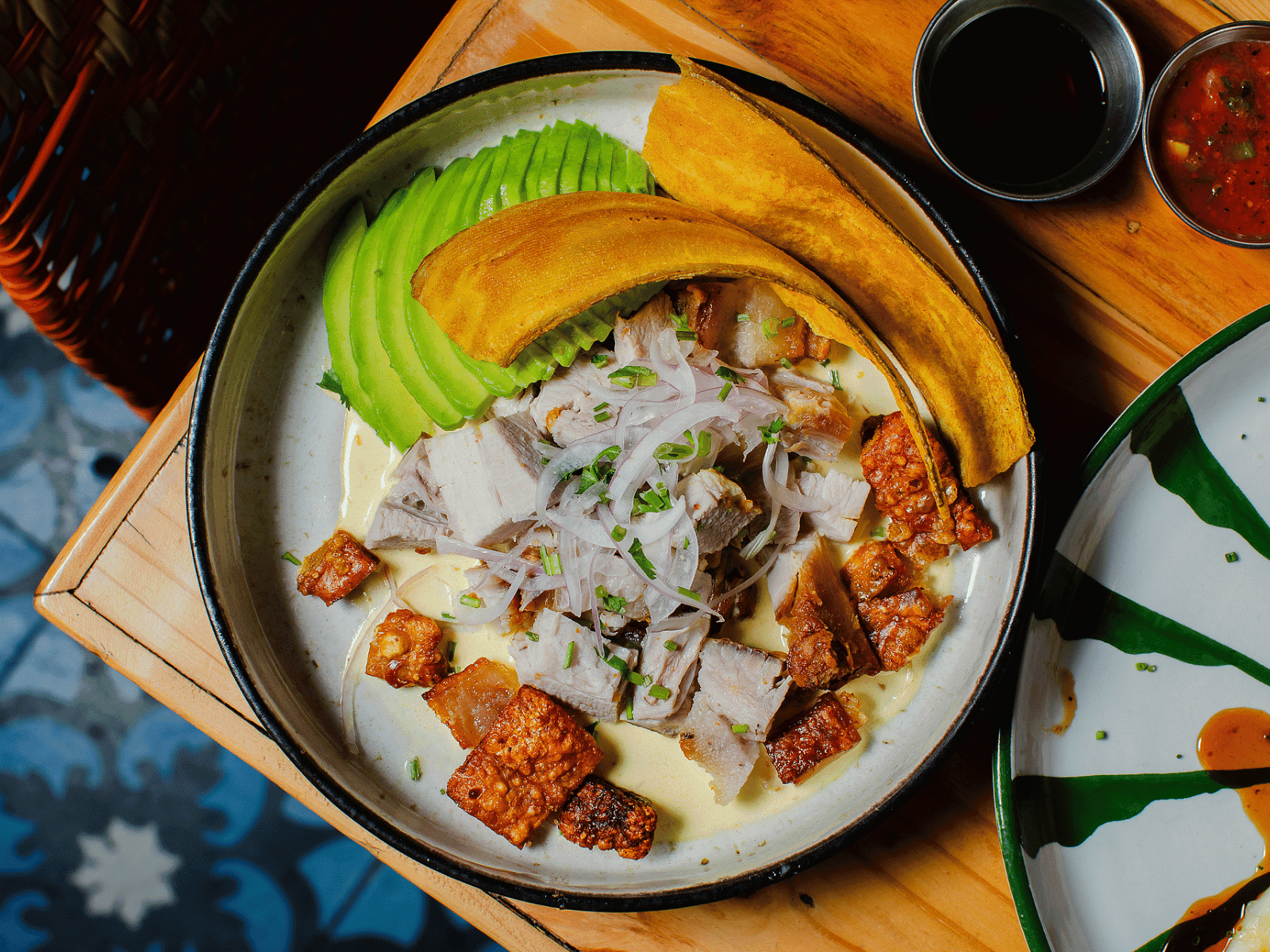
Ceviche de chicharrón is a modern Colombian invention: a bright citrus ceviche of white fish or shrimp, marinated in a coconut-tinged leche de tigre, topped at the last possible moment with shards of hot pork chicharrón broken over the top. The contrast is the point. Cold and crackling. Bright and salty. Coastal Colombia (fresh fish, coconut, lime, coriander) meeting Paisa Colombia (pork belly, deep-fried until it crackles) on the same plate.
Method
Place the pork belly cubes in a heavy pan with the salt, cumin, garlic and water. Bring to a simmer and cook, uncovered, for 45 minutes. The water will evaporate; when it does, the pork will start to fry in its own rendered fat. Cook another 15 to 20 minutes, turning often, until each cube is deep gold and the skin has puffed and crackled.
While the pork cooks, place the diced fish in a shallow bowl with the lime juice, salt and sugar. Stir gently to coat. Refrigerate 8 to 10 minutes only. The fish should turn opaque at the edges but stay slightly translucent in the middle. Longer and it overcooks (from acid).
In a small blender or with a stick blender, blitz the coconut milk, extra lime juice, garlic, ginger, coriander and salt until smooth and pale green. Chill.
Drain the cured fish of most of the lime juice (leaving a splash). Add the sliced onion, red pepper and chilli if using. Pour over the coconut leche de tigre and toss gently to coat.
Divide the ceviche between 4 shallow bowls. Scatter with cubed avocado.
Lift the hot pork out of the pan onto kitchen paper for 30 seconds. Break each cube in half with your hands (careful, hot). Scatter the crackling chicharrón over the top of the ceviche. Sprinkle with fresh coriander.
Serve with corn totopos, patacones or crusty bread on the side. Eat within 5 minutes: the chicharrón loses its crunch fast.
Tips
- Sashimi-grade fresh fish. This is a raw-fish dish. Use only very fresh fish from a fishmonger you trust, or previously frozen at -20°C for at least 24 hours (the standard sushi safety rule).
- 8 to 10 minutes of curing, not more. Longer than 10 minutes in lime juice and the fish cooks all the way through (into a stiff, chalky texture). Peruvian-style short cure is the way here: opaque at the edges, translucent in the middle.
- Assemble the chicharrón at the last moment. This is the whole reason the dish works. Chicharrón loses its crackle in about 3 minutes once it hits cold liquid. Plate the ceviche first, then break the chicharrón over it as it leaves the kitchen.
- The coconut leche de tigre is the Colombian move. Peruvian leche de tigre skips the coconut and leans on ají amarillo; Colombian versions add coconut milk for a softer, coastal note. Both are correct in their contexts; use coconut here.
- Patacones (fried plantain rounds) are the classic partner. Corn tortilla chips work; crusty bread also works; but flat crispy plantain rounds are the traditional scoop.
More recipes
View all
Poached shrimp tossed in ketchup, mayo, lime and finely diced onion, chilled and served in a cup with soda crackers. Cartagena's beachside cocktail, distinctly Colombian.

A slow-cooked Andean feast of beef, chicken, ribs and the strange, wonderful native tubers of Colombia's mountain heartland: cubios, ibias, hibias and papa criolla, in one pot.

Bijao-leaf-wrapped parcels of yellow corn masa, pork, chicken, chorizo, chickpea, potato, egg and hogao, steamed for hours over an open pot. Paisa Sunday breakfast at its most generous.

Rolled oats blended with cold milk, panela and cinnamon, served over ice. Colombia's midday refresher, sold in every panadería from a chilled glass jug.

Pork belly slow-cooked in its own fat until the meat is tender and the skin has puffed to a crackling. The centrepiece of the Paisa bandeja and Medellín's proudest export.
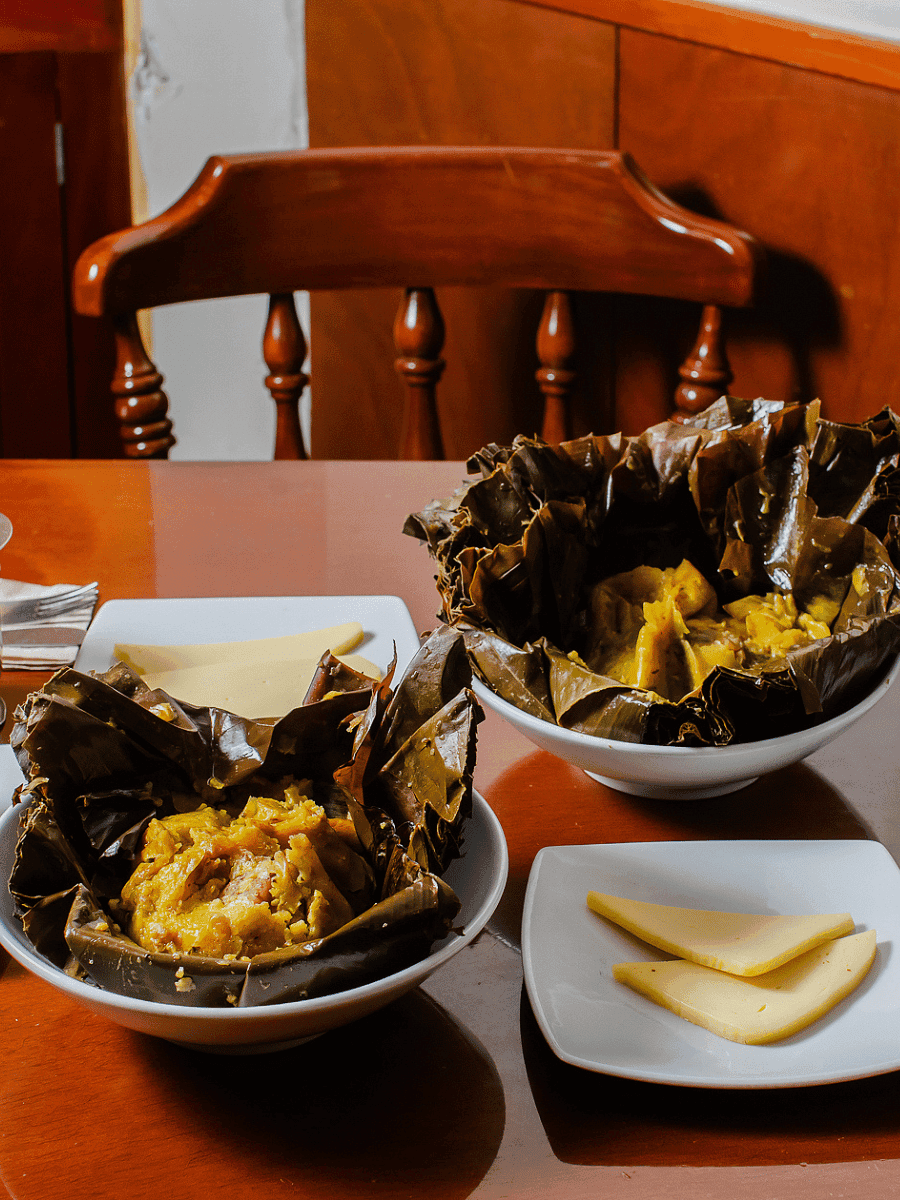
Corn masa wrapped around pork, chicken, egg, potato and rice, tied inside banana leaves and steamed for hours. Bogotá's Sunday-morning tamal, and a full day's project in the kitchen.