

Destination
Addis Ababa
The story
Kitfo is Ethiopia's most iconic raw-beef dish, originally from the Gurage people of the country's south, now served across the country and considered a national dish. Very finely chopped lean beef (traditionally hand-chopped, never processed) is seasoned with mitmita (a fiery chilli-cardamom spice mix), a good pinch of salt and warmed briefly with a spoon of niter kibbeh (Ethiopian spiced clarified butter). Served with a scoop of ayib (fresh Ethiopian cheese), a mound of gomen (spiced collard greens), and a stack of injera for wrapping. A dish that respects the meat above all.
Method
Trim the beef of any sinew or fat. Slice into thin strips, then into small dice, then chop the dice further with a very sharp knife until you have a fine, even texture (2 to 3mm pieces). Don't use a food processor; it turns the meat into a paste, which is a different (worse) dish. Keep the beef cold; work quickly.
Melt the niter kibbeh in a small pan over the lowest possible heat until fully melted but not hot. It should be warm to the touch, not scorching.
In a wide bowl, combine the chopped beef with the salt, pepper and mitmita. Toss gently to distribute evenly.
Pour the warm niter kibbeh over the beef. Fold gently with a spoon to coat every piece.
For leb leb (fully raw), stop here and serve. For kitfo proper (warmed), tip the mixture into a warm pan on the lowest heat and stir gently for 30 to 60 seconds, just until the beef edges pale slightly but the middle stays red and raw. For yebesele (fully cooked), cook 3 to 4 minutes until fully browned.
Spoon the kitfo into the centre of a large communal platter. Arrange a scoop of ayib on one side and a heap of gomen on the other. Serve with a stack of injera or with rounds of injera underneath the kitfo for scooping.
Tear pieces of injera. Use the injera to scoop up kitfo, cheese and greens in a small parcel. Eat with your hands.
Tips
- Hand-chopped, not processed. A food processor turns the meat into a paste, which is a completely different texture. Fine hand-chopping with a very sharp knife is what makes kitfo, kitfo.
- Use very fresh, very cold beef. This is a raw-beef dish. Buy from a butcher you trust, ideally on the day of eating, and keep the meat cold throughout the prep. If you're at all uncertain, cook the kitfo fully (yebesele version).
- Mitmita is essential. Its specific chilli-cardamom-clove-salt profile is what makes kitfo taste like kitfo. Cayenne alone is not the same. Buy from an Ethiopian grocer or blend your own.
- Warm the butter, don't boil it. Niter kibbeh should be liquid but not hot when it meets the beef. Hot butter starts cooking the meat instantly, which turns kitfo into tibs.
- The three accompaniments are non-negotiable. Kitfo without ayib, gomen and injera is just seasoned raw beef. The dairy cools, the greens balance, the bread scoops. All essential.
More recipes
View all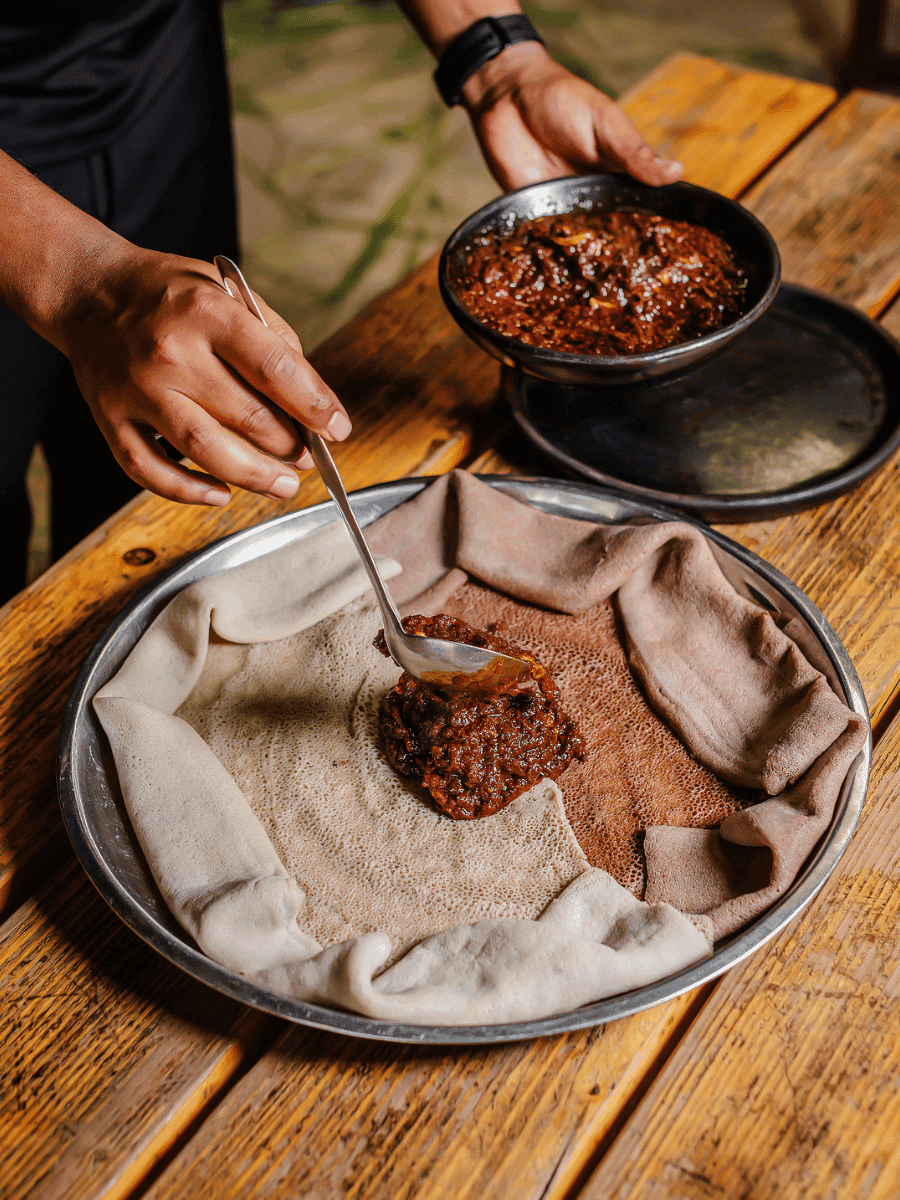
Roast pumpkin simmered slowly with pieces of dried spiced beef and berbere. Ethiopia's autumn-into-winter stew, richer than it looks.
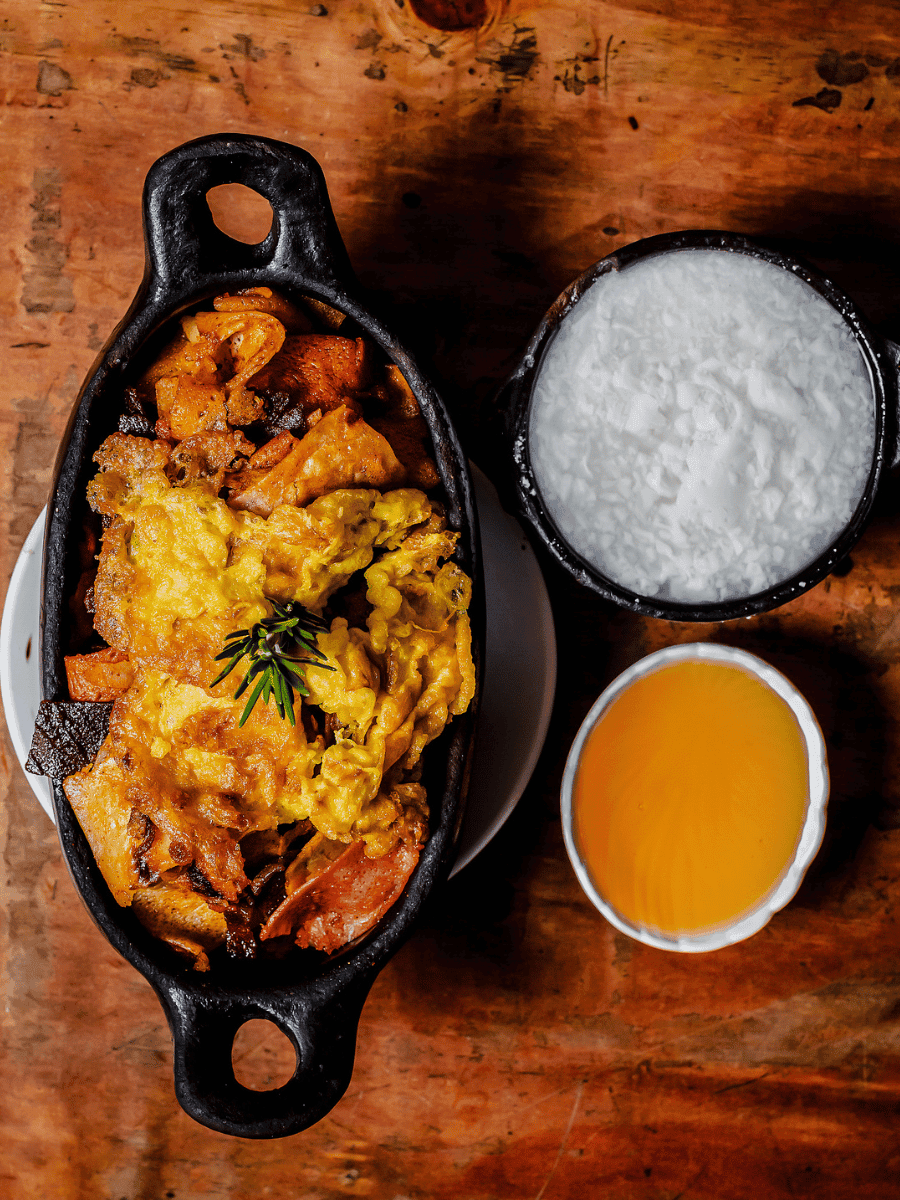
Stewed fava beans mashed hot with tomato, chilli, egg and a slick of niter kibbeh, spooned onto bread. Ethiopia's café breakfast, half-Sudanese, half-Habesha.
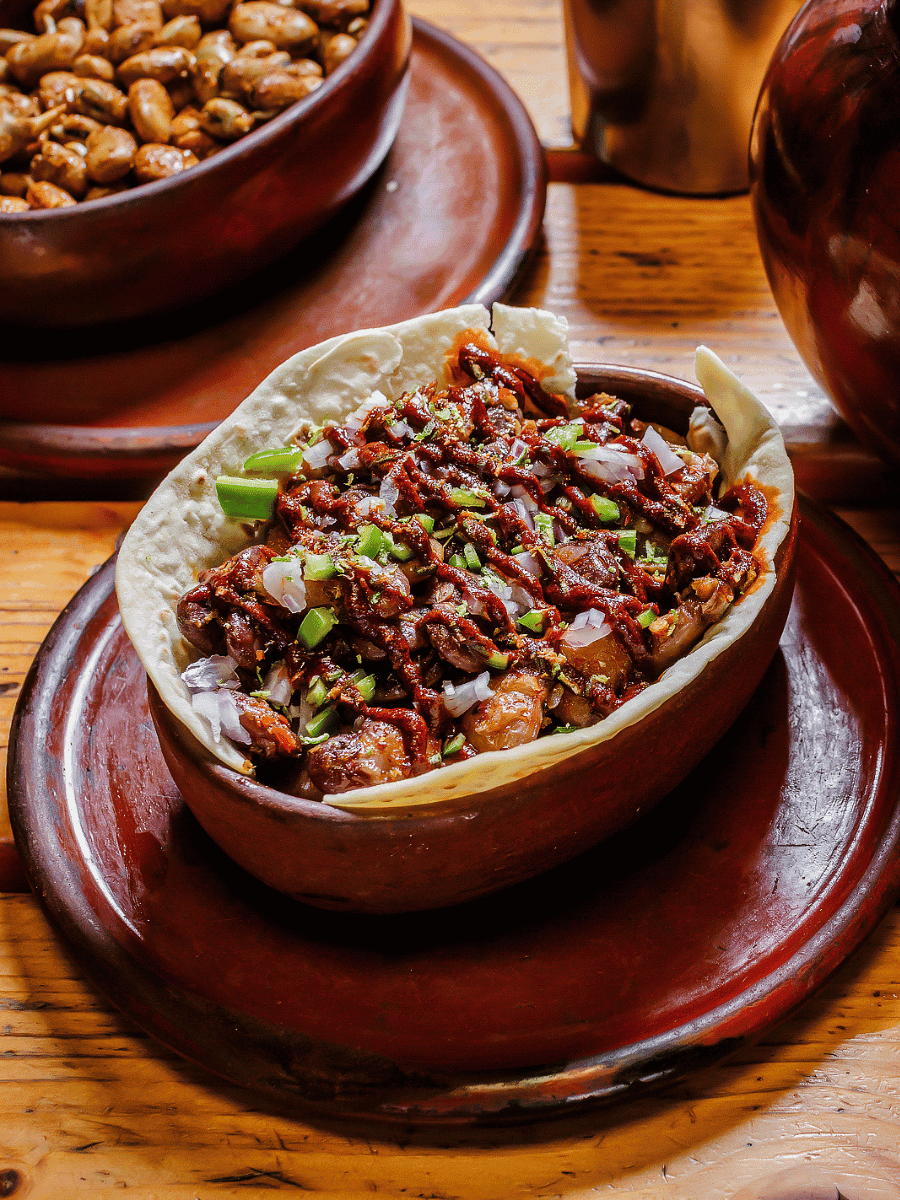
Roasted barley, chickpeas, peanuts and sunflower seeds tossed with a little salt. Ethiopia's coffee-ceremony snack, portable, endlessly refillable.

Spaghetti tossed with berbere-spiced tomato sauce, awaze and a spoon of niter kibbeh. Ethiopia's café pasta, born of the Italian occupation and made unmistakably Addis.

Torn flatbread pan-fried in niter kibbeh and berbere until glossy and spiced. Ethiopia's Oromo breakfast, sold from morning cafés across Addis Ababa.

Berbere blended with tej or red wine and a splash of oil into a fiery, glossy red paste. Ethiopia's essential condiment, on every table.