
Destination
Tangier
The story
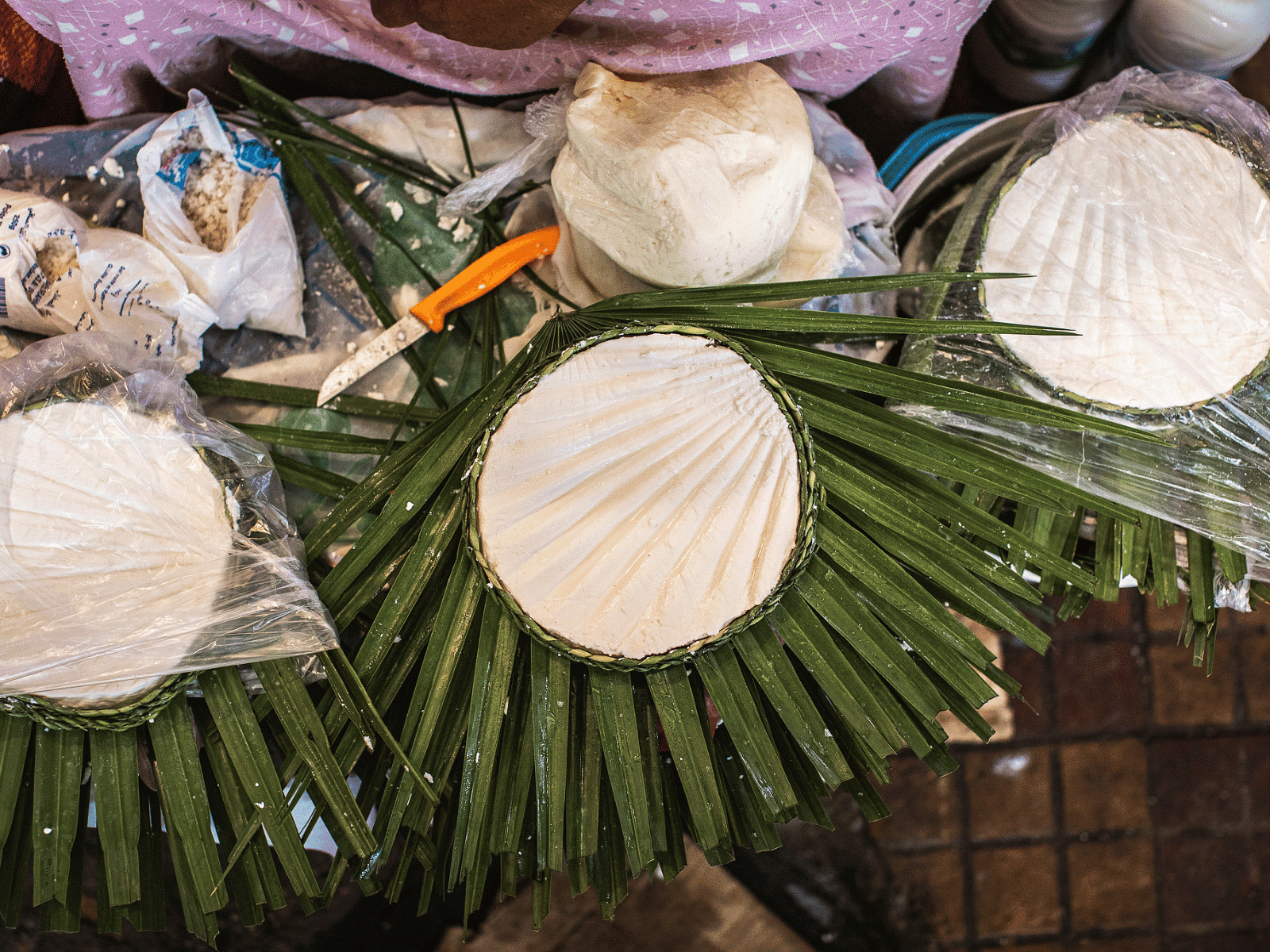
Jben is Morocco's fresh soft cheese — a very mild, lightly salted, farmer's-cheese-style cheese made from cow's or goat's milk curdled with lemon juice or vinegar, hung in muslin overnight to drain, and eaten fresh with harcha, msemmen, baghrir or khobz for breakfast. The traditional Moroccan version uses raw milk from the Middle Atlas mountains and small doses of natural rennet from wild artichoke; the modern home cook uses supermarket whole milk and a splash of lemon juice. The finished cheese has the texture of a soft ricotta and a very mild, clean flavour that pairs with anything — honey, olive oil and cumin, chopped herbs, olives, harissa.
Method
Pour the milk into a heavy saucepan. Warm gently over medium-low heat, stirring occasionally, until it reaches 40C (steaming, warm to the touch but not hot). Do not boil.
Off the heat, stir in the salt until dissolved.
Add the lemon juice (or vinegar). Stir once, gently. Within 30 to 60 seconds you'll see the milk curdle — small white curds separating from a pale, watery whey. If it doesn't curdle within 90 seconds, add another 1 tbsp lemon juice.
Cover the pan and let it sit undisturbed 10 minutes so the curds firm up.
Set a large sieve over a large bowl. Line the sieve with 3 layers of cheesecloth or 2 layers of a clean tea towel, letting the edges hang over.
Pour the curds and whey into the lined sieve. Let the whey drain into the bowl below — takes about 5 minutes for the initial drain.
Gather the corners of the cheesecloth and tie into a bundle with string. Hang the bundle from a cabinet knob, a wooden spoon across a bowl, or a hook — anywhere the whey can continue to drip out. Leave 8 to 12 hours (overnight) at cool room temperature. The finished cheese should be firm enough to hold its shape when spooned.
Unwrap the cheese into a bowl. If flavouring, fold in chopped herbs, cumin or preserved lemon. Serve in small dishes drizzled with olive oil and dusted with cumin, alongside warm breakfast breads and honey. Refrigerated jben keeps 4 days.
Tips
- Whole milk, always. Skim milk gives you a thin, chalky cheese with no texture. Full-fat 3.5% milk is the target. Goat's milk gives a slightly tangier version.
- 40C, not boiling. Hot milk gives rubbery curds; cool milk doesn't curdle. Warm just to steaming, then remove from heat before adding acid.
- Lemon juice or vinegar, not rennet. Rennet works but produces a firmer cheese closer to Italian ricotta. Lemon juice is the traditional Moroccan choice and gives a softer, milder result.
- Hang, don't press. Pressing the cheese under weight gives you a dry, firm cheese similar to feta. Hanging lets whey drip out naturally over 8 hours, giving you the classical Moroccan spreadable texture.
- Fresh only. Jben doesn't age. Make it today for tomorrow's breakfast; it holds 4 days in the fridge, no longer.
More recipes
View all
Small triangular or cigar-shaped pastries stuffed with spiced meat, cheese or almond paste, fried crisp. Morocco's cocktail-party appetiser, sold at every souk stand.

Cubes of khlii — Morocco's air-cured spiced beef — warmed in its own fat with eggs, coriander and onion. A Fes breakfast tradition.

The Ramadan iftar soup — tomato and lentil broth thickened with tadouira, brightened with saffron, and finished with a squeeze of lemon and a date on the side.
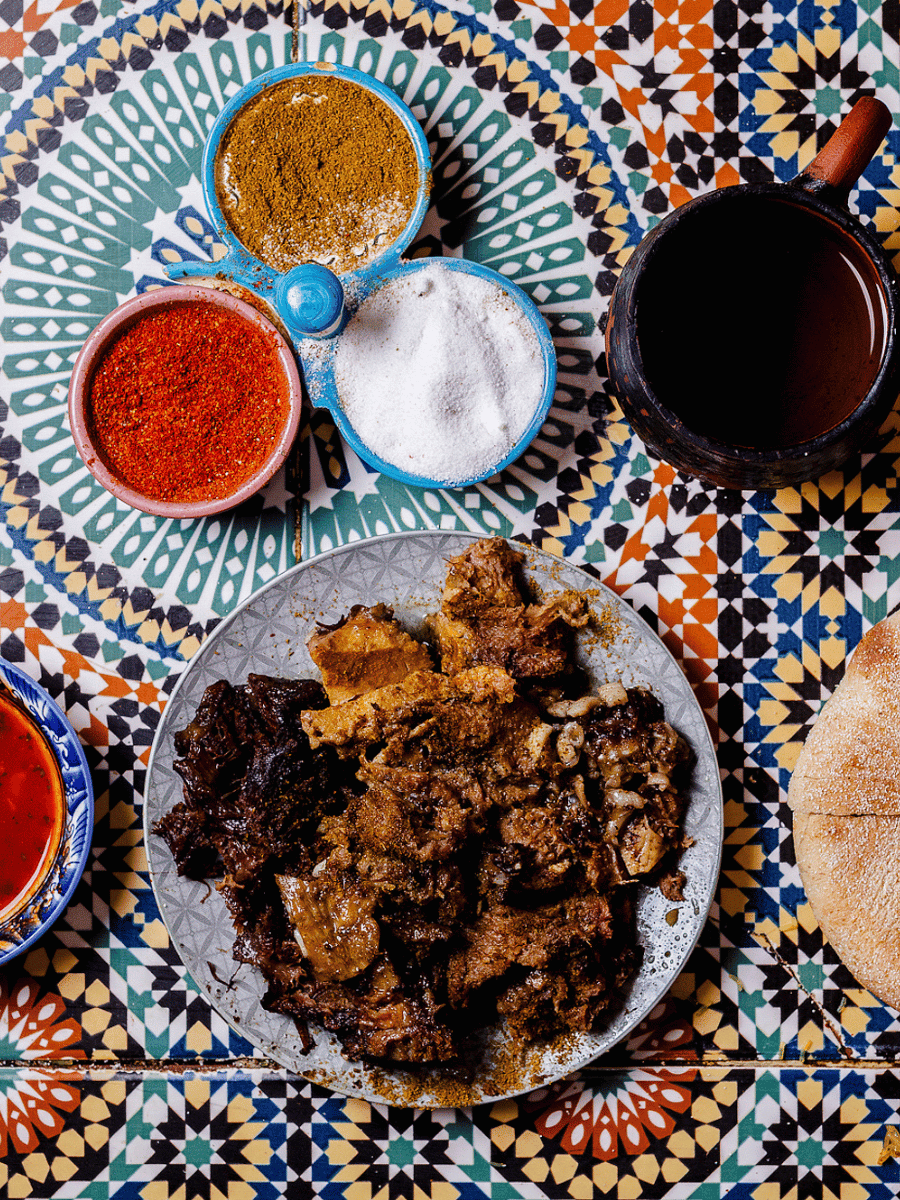
Lamb shoulder rubbed with cumin, saffron and garlic, then steamed for hours over spiced broth until fork-tender. Fes's Sunday-lunch centrepiece.
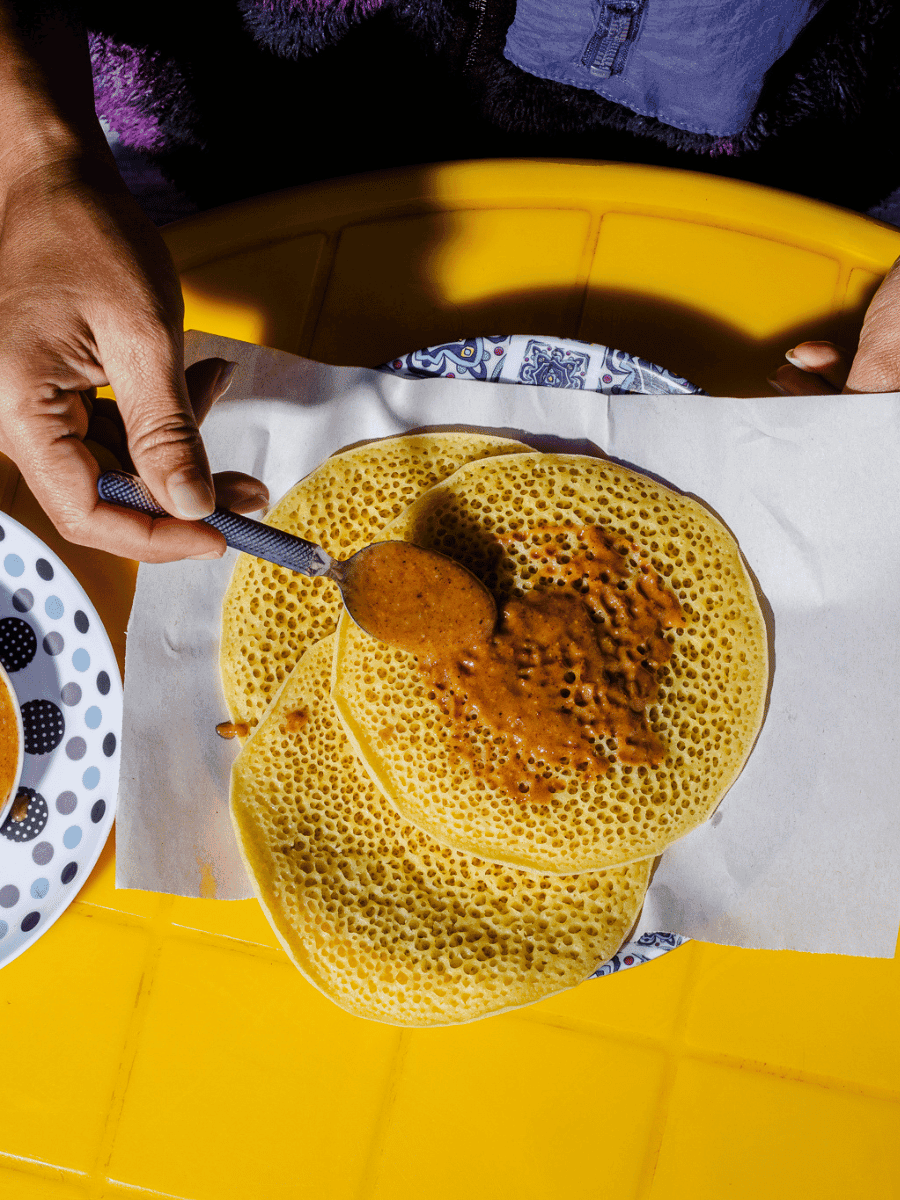
Soft yeasted semolina pancakes covered in a thousand tiny bubbles, cooked on a hot skillet on one side only. Morocco's spongy honey-soaked breakfast.

Crumbly semolina pan breads cooked on a hot skillet until the outside is golden and the inside is buttery-soft. Morocco's breakfast bread, served with honey and cheese.