

Destination
Tangier
The story
Lham mfowar — literally "steamed meat" — is Fes's signature Sunday-lunch preparation of lamb: a whole shoulder or leg is rubbed generously with cumin, saffron, garlic, olive oil and salt, then steamed for 3 to 4 hours over an aromatic water bath until the meat is falling-apart tender and infused with the spice-and-steam of the broth below. Traditionally served with a small dish of ground cumin mixed with sea salt for dipping, a stack of khobz, and a fresh salad on the side. The technique produces a completely different result from a Moroccan tagine or a roast — the meat is meltingly tender, faintly moist, deeply seasoned but not sauced.
Method
Combine all rub ingredients in a bowl. Stir into a thick paste.
Score the fatty side of the lamb shoulder in a diamond pattern with a sharp knife. Rub the paste all over the meat, working it into the scores. Marinate 30 minutes to 4 hours (or overnight in the fridge — bring to room temperature before steaming).
In the base of a large couscoussier or stockpot, combine the water, onions, garlic head, bay, cumin seeds, peppercorns, salt and coriander stems. Bring to a boil, then reduce to a hard simmer.
For the classical Fassi presentation: wrap the lamb loosely in a large piece of muslin, leaving both ends open. This keeps the meat clean but lets steam through. Alternatively, place the lamb directly in the steamer basket.
Place the lamb in the top basket of the couscoussier (or in a steamer basket over the stockpot). Cover with a very tight-fitting lid. If there's any gap between the base and the lid, wrap with a strip of dough or wet cloth to seal.
Steam over the lowest heat that maintains a steady simmer in the base pot for 3 to 4 hours. Check the water level every 45 minutes and top up with hot water as needed — the base must never run dry. The lamb is done when a fork slides in effortlessly and the meat falls off the bone.
Lift the lamb out (careful — it will be falling apart). Rest 10 minutes on a warm platter. Unwrap the muslin if using.
Mix the ground cumin and coarse sea salt in a small dish for dipping. Bring the lamb whole to the table with khobz, salad, and the cumin-salt dip. Diners tear pieces of meat with their hands, dip in the cumin-salt, and eat with bread. Scatter with reserved coriander leaves.
Tips
- A couscoussier is ideal. If you cook Moroccan food regularly, invest in one. Any stockpot with a steamer basket and tight lid works as a substitute.
- Seal the lid. Any steam escape at the join extends the cook time and dries the meat. A rope of wet cloth or dough sealed around the join is the classical trick.
- Top up the water. Steaming 3 to 4 hours evaporates 500ml of water. Check every 45 minutes and add hot water from a kettle — cold water drops the temperature and stalls the cook.
- Cumin-salt dip is essential. The dish is defined by this simple dip. Do not skip. Cumin should be freshly ground if possible.
- Rest before serving. Ten minutes off the heat lets the juices redistribute. Serve too fast and the meat is still tight.
More recipes
View all
Small triangular or cigar-shaped pastries stuffed with spiced meat, cheese or almond paste, fried crisp. Morocco's cocktail-party appetiser, sold at every souk stand.

A whole lamb rubbed with cumin butter and slow-roasted in a pit or oven until the outside is deep bronze and the meat falls off the bone. Morocco's grandest feast.
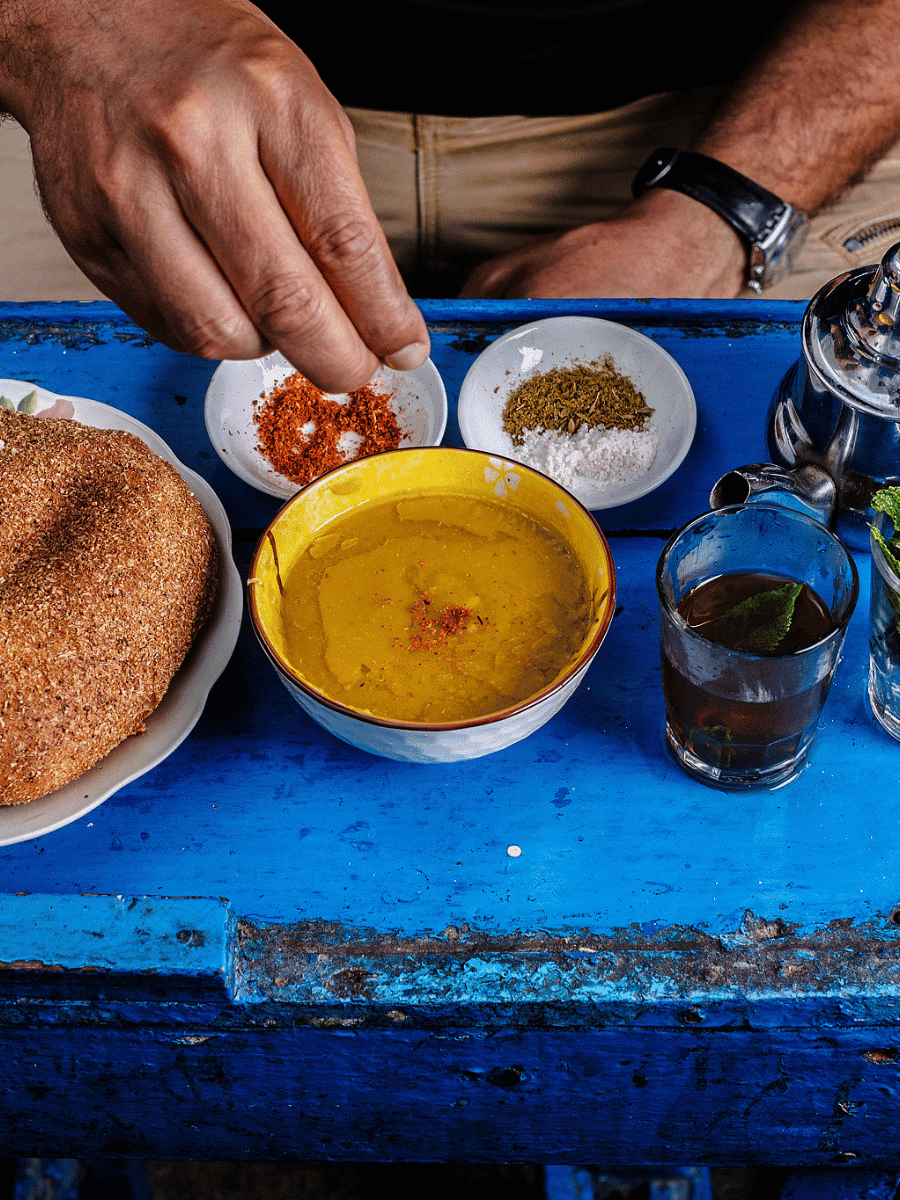
Silky split fava bean soup, drizzled with olive oil and dusted with cumin and paprika. Chefchaouen's winter breakfast, eaten with khobz.
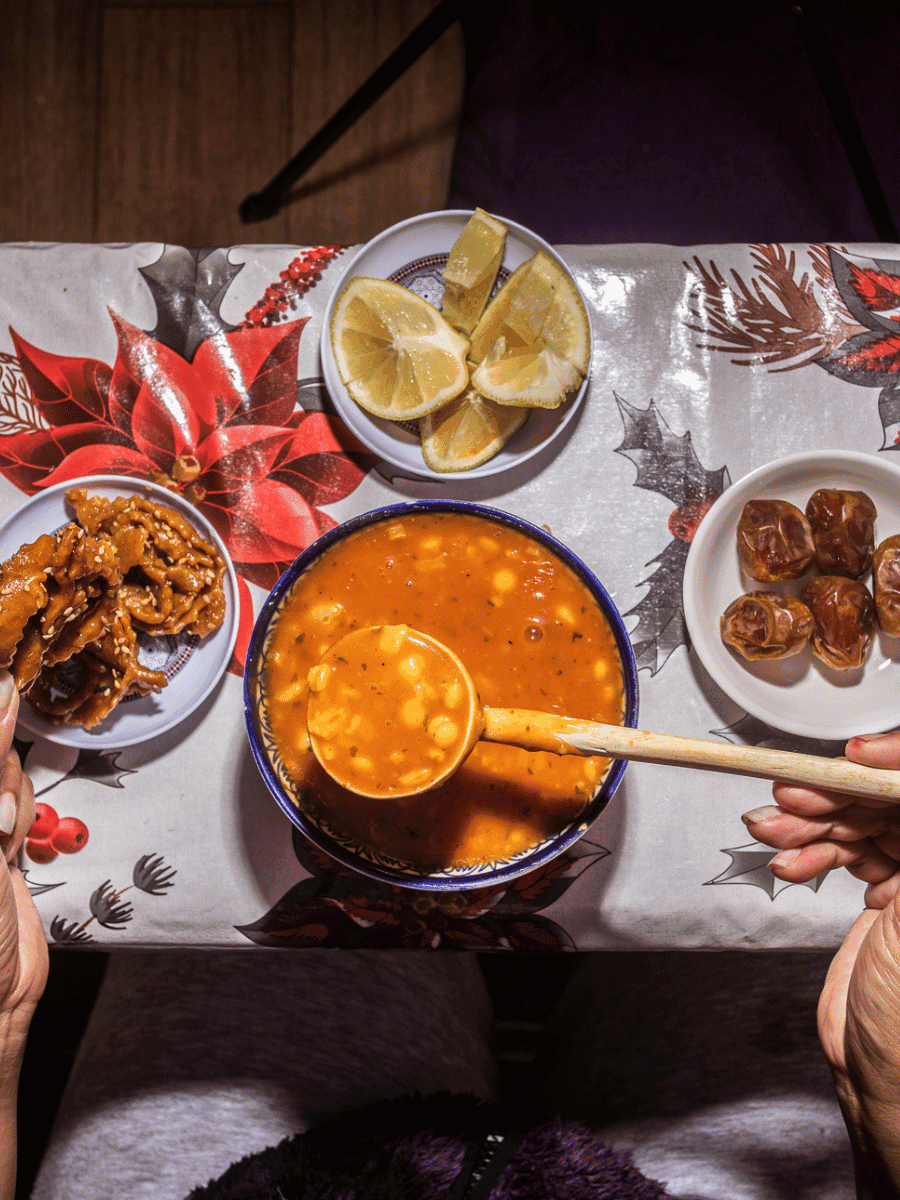
The Ramadan iftar soup — tomato and lentil broth thickened with tadouira, brightened with saffron, and finished with a squeeze of lemon and a date on the side.

Small spiced meatballs simmered in a garlicky tomato-cumin sauce with eggs cracked over the top. Morocco's most-shared tagine, eaten with khobz.

Spicy merguez lamb sausages grilled hard, tucked into a crusty baguette with sliced tomato, chili sauce and pickles. Tangier's Spanish-Moroccan street lunch.