
Destination
Tangier
The story
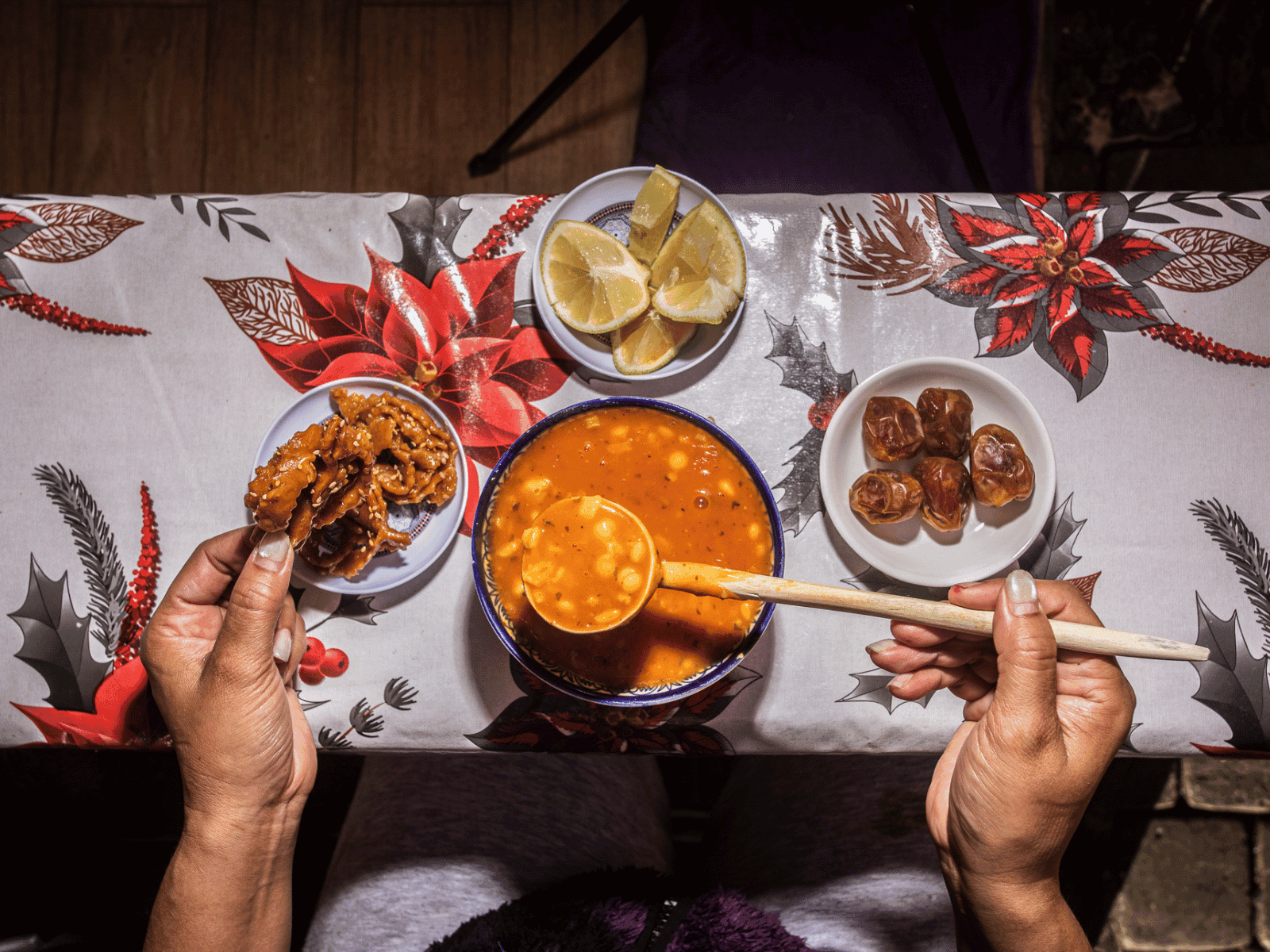
Harira is Morocco's most iconic soup and the dish every Moroccan cook makes at least once a week during Ramadan: a deep, ochre-coloured tomato broth thick with brown lentils, chickpeas and a snowfall of tiny cubed lamb or beef, spiked with saffron, ginger and a fistful of coriander and celery leaves, and finished with a flour-and-water slurry (tadouira) that ties the whole pot into a soft, velvety porridge-soup. The traditional Ramadan iftar is a bowl of steaming harira alongside three sweet dates, a small dish of chebakia (sesame-honey pastries) and a glass of milk — a combination that breaks the day's fast in the most photogenic way possible.
Method
Warm the olive oil in a large heavy pot over medium-high heat. Add the diced meat and brown 5 minutes. Add the chopped onion and celery stalks (not leaves), cook 5 minutes until soft.
Add the ginger, turmeric, pepper, cinnamon, ras el hanout, saffron and salt. Stir 60 seconds so the spices coat the meat and toast fragrantly.
Add the tomato purée and tomato paste. Cook 8 to 10 minutes, stirring often, until the tomato has darkened and the oil starts to separate at the edges — this is the marker that the base is properly cooked.
Tip in the drained chickpeas and lentils. Pour in the water. Bring to a gentle simmer, cover partially, and cook 90 minutes until the chickpeas are tender and the broth is deeply infused. Skim any foam that rises in the first 15 minutes.
Stir in the chopped coriander, celery leaves and broken vermicelli. Simmer another 8 minutes until the noodles are cooked and the herbs have wilted into the broth.
Whisk the flour into the cold water in a bowl until completely smooth — no lumps. Add lemon juice if using.
Slowly pour the tadouira into the simmering harira while stirring constantly. Cook 10 to 15 more minutes, stirring often, until the soup thickens to a velvety consistency and takes on a slight sheen. Taste and adjust salt.
Ladle into wide bowls. Serve piping hot with three dates on the side, a wedge of lemon, chebakia and warm khobz. A boiled egg is a common addition; some cooks add a spoon of harissa on the side for those who want heat.
Tips
- Soak chickpeas overnight. Skipping this step gives you chalky, undercooked chickpeas even after 90 minutes of simmering. If you forget, use 2 tins of cooked chickpeas and reduce the simmer time to 45 minutes.
- Cook the tomato base until oil separates. This is the Moroccan visual cue that the base is properly cooked and integrated. Ten minutes minimum. Under-cooked tomato tastes raw and sharp in the finished soup.
- Whisk the tadouira smooth. Any lumps in the slurry become lumps in the soup. Whisk in cold water until glass-clear, then add to the hot pot.
- Add the herbs generously. Moroccan harira is heavily herbed — a full bunch of coriander plus celery leaves per pot is not too much. Chop fine and add during the last 10 minutes.
- Better on day two. Like most Moroccan tagines and soups, harira improves overnight as the flavours integrate. Make Friday for Saturday's iftar; the finished soup freezes well.
More recipes
View all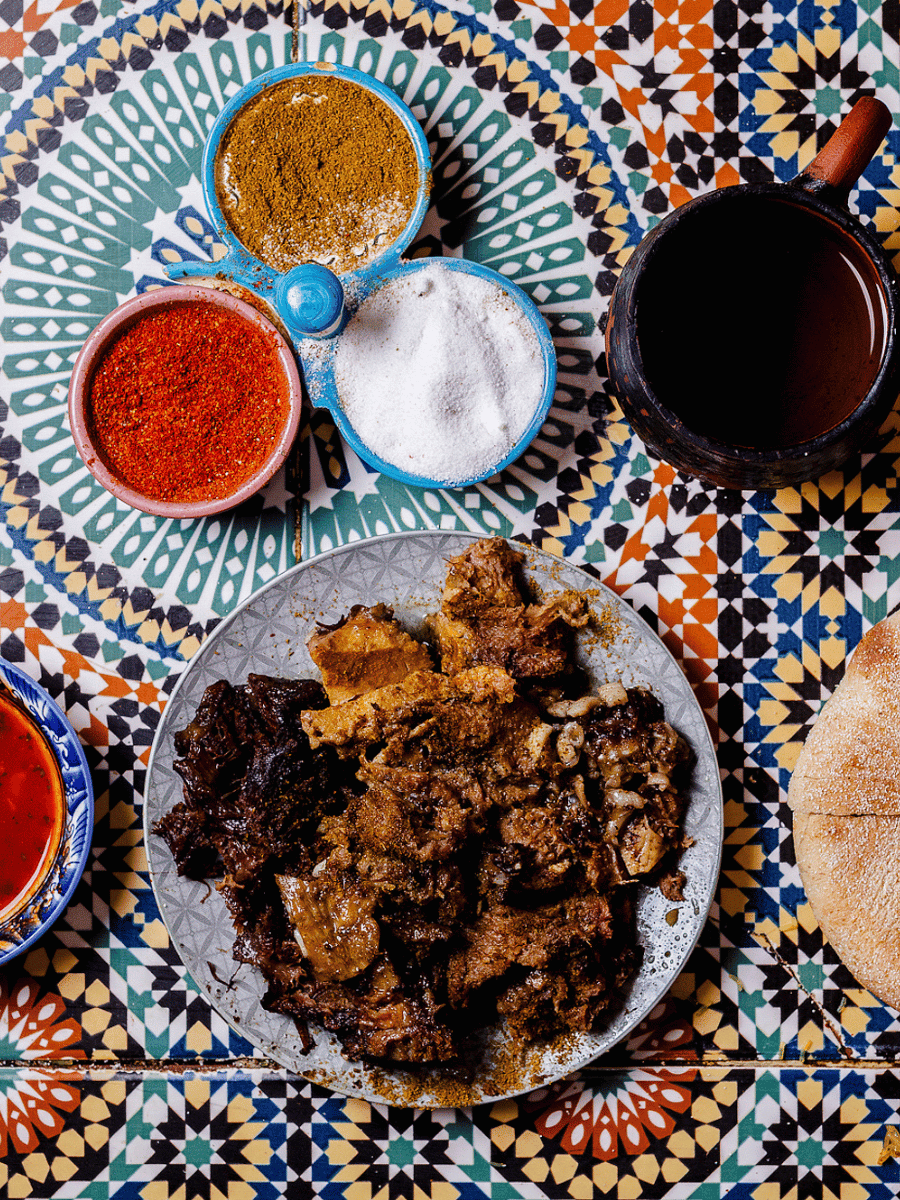
Lamb shoulder rubbed with cumin, saffron and garlic, then steamed for hours over spiced broth until fork-tender. Fes's Sunday-lunch centrepiece.

Small triangular or cigar-shaped pastries stuffed with spiced meat, cheese or almond paste, fried crisp. Morocco's cocktail-party appetiser, sold at every souk stand.

Cubes of khlii — Morocco's air-cured spiced beef — warmed in its own fat with eggs, coriander and onion. A Fes breakfast tradition.

Soft fresh cow's-milk cheese, made overnight with a splash of lemon juice, drained in muslin. Morocco's answer to a mild ricotta, spread on harcha with honey.

Small spiced meatballs simmered in a garlicky tomato-cumin sauce with eggs cracked over the top. Morocco's most-shared tagine, eaten with khobz.
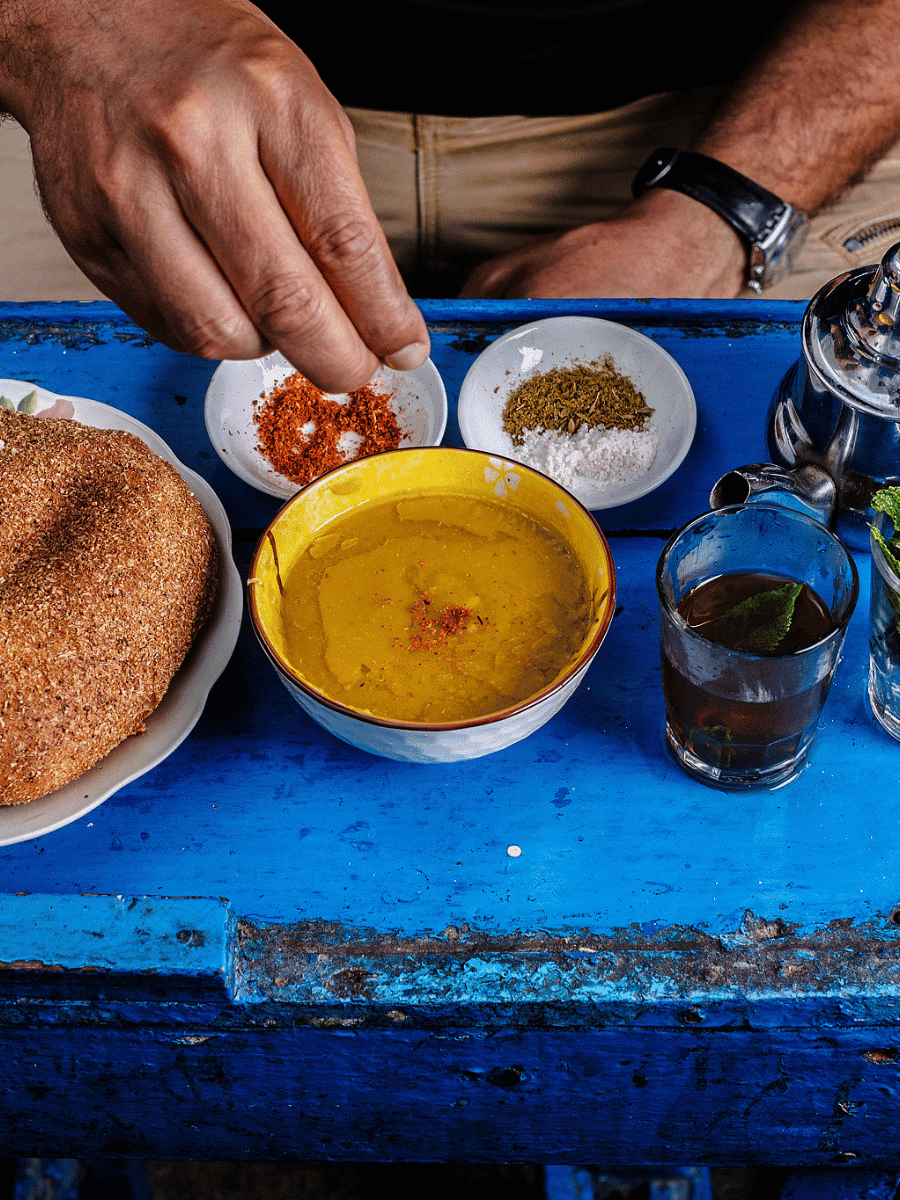
Silky split fava bean soup, drizzled with olive oil and dusted with cumin and paprika. Chefchaouen's winter breakfast, eaten with khobz.