
Destination
Ipoh
The story
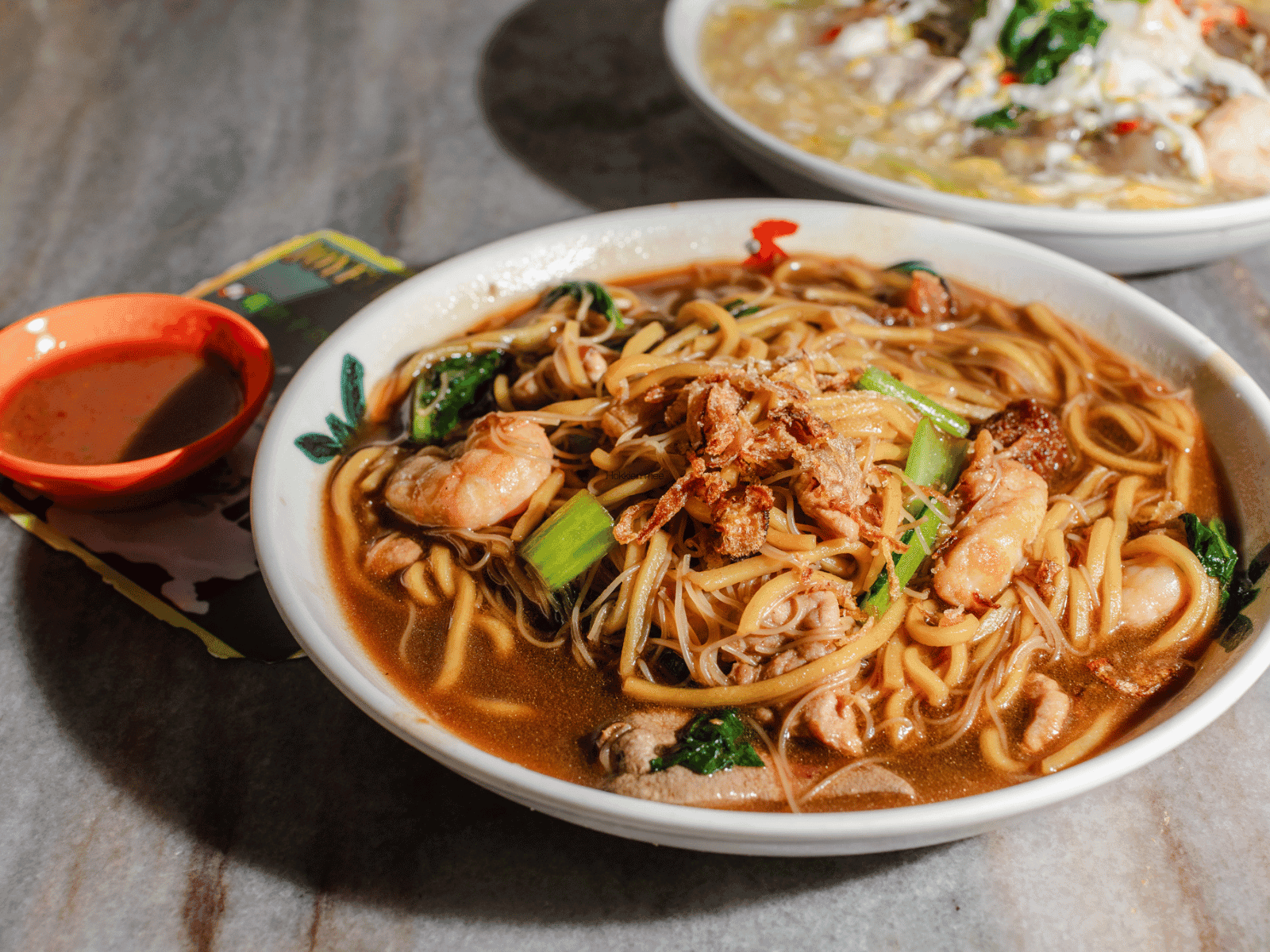
KL Hokkien mee is Kuala Lumpur's most iconic Chinese hawker noodle dish: thick yellow wheat noodles stir-fried in a screaming wok with prawns, squid, sliced pork, cabbage, chives and (crucially) a small amount of crispy pork lard (chu yau char), all coated in a dark, glossy sauce built from dark sweet soy sauce and just a splash of pork stock. The whole thing cooks in 90 seconds over ferocious heat, producing wok hei and a deep mahogany colour that makes the dish immediately recognisable. Sold from stalls at every KL Chinatown hawker centre from 6pm until well past midnight.
Method
Place the cubed pork fat in a small heavy pan with the water. Cook over low heat for 30 to 40 minutes, stirring occasionally, until the fat has fully rendered into oil and the leftover bits are deep gold and crispy. Strain the oil into a jar (this is your cooking fat; keeps 2 weeks in the fridge). Reserve the crispy bits.
Fresh Hokkien mee noodles are usually stuck together in a block. Rinse briefly under warm water and gently separate the strands with your fingers.
Whisk together the dark sweet soy, light soy, oyster sauce, sugar and stock in a small bowl. Have it right next to the wok.
Have all ingredients pre-chopped and ready. Hokkien mee cooks in about 2 minutes; there's no time to prep once it starts.
Heat a large wok (or heaviest pan you own) over the highest possible heat until smoking. Add the pork lard and swirl.
Add the garlic. Stir 15 seconds until fragrant. Add the sliced pork and cook 30 seconds until just browned.
Add the prawns, squid and cabbage. Toss for 60 seconds until the prawns are pink and the squid is opaque.
Add the noodles and the sauce all at once. Toss vigorously for 60 to 90 seconds, letting the sauce caramelise against the hot wok. The noodles should turn a deep mahogany colour.
Add the garlic chives and crispy pork lard bits. Toss for another 20 seconds.
Tip onto a plate straight from the wok. Serve immediately with sambal belacan and lime wedges on the side.
Tips
- Pork lard is the whole point. KL Hokkien mee without pork lard is a different dish. Render your own from pork back fat (widely available at butchers) or buy pre-rendered pork lard from Chinese grocers.
- One portion at a time. Same rule as char kway teow: doubling up in the same wok destroys the wok hei. Cook one portion, plate, cook the next.
- Highest possible heat. The dark mahogany colour and smoky char come from the sauce caramelising against a screaming-hot wok. Preheat until it smokes.
- Fresh thick yellow Hokkien mee noodles. Sold in the fridge section at Chinese and Southeast Asian grocers as Hokkien noodles or thick yellow noodles. Don't substitute thin egg noodles or dried noodles.
- Sambal belacan on the side. The specifically Malaysian shrimp-paste chilli sambal is the traditional partner. Buy pre-made from a Malaysian grocer if you don't want to make it.
More recipes
View all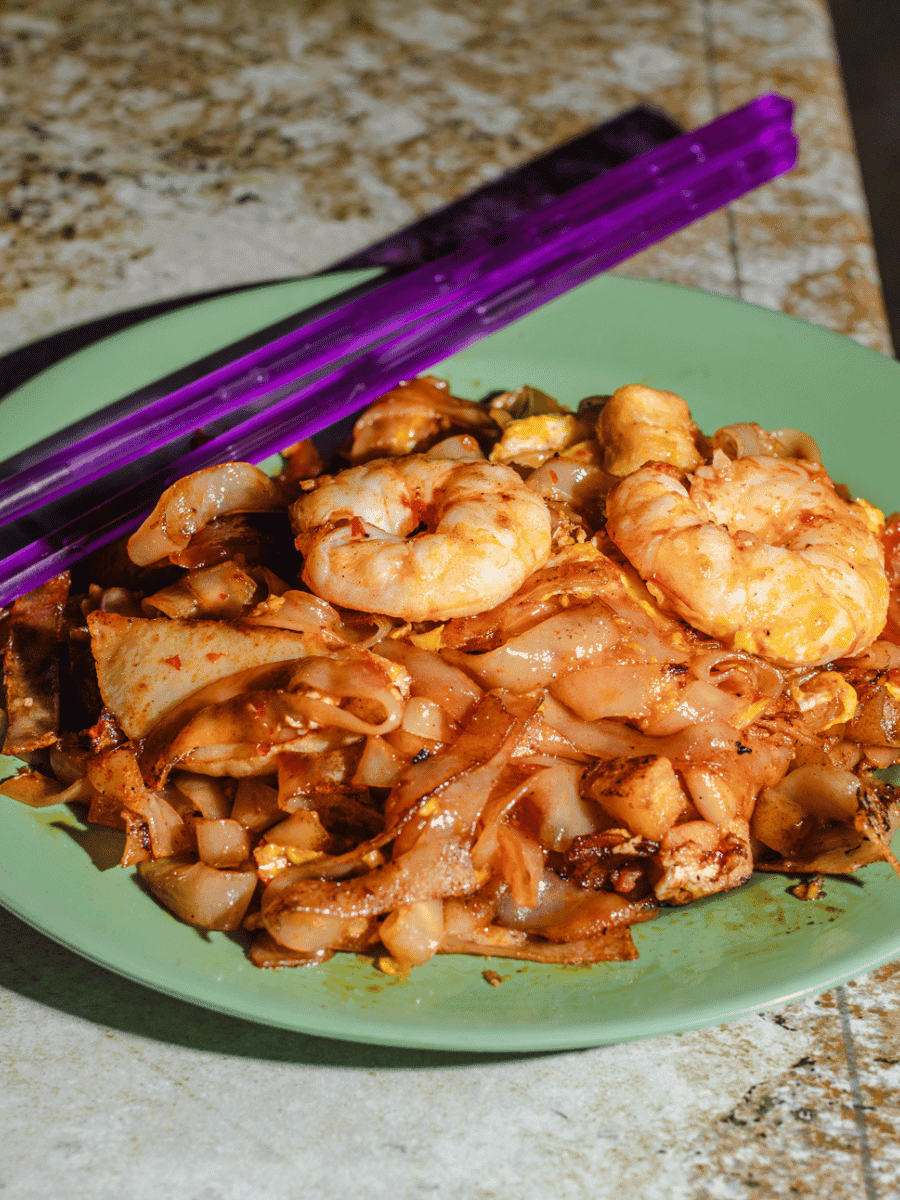
Flat rice noodles stir-fried hard in a wok with prawns, cockles, Chinese sausage, chives, bean sprouts and dark sweet soy. Penang's most famous hawker dish.

Egg noodles and rice vermicelli in a deep, orange prawn-shell broth topped with poached prawns, hard-boiled egg, water spinach and fried shallots. Penang's most-loved noodle soup.
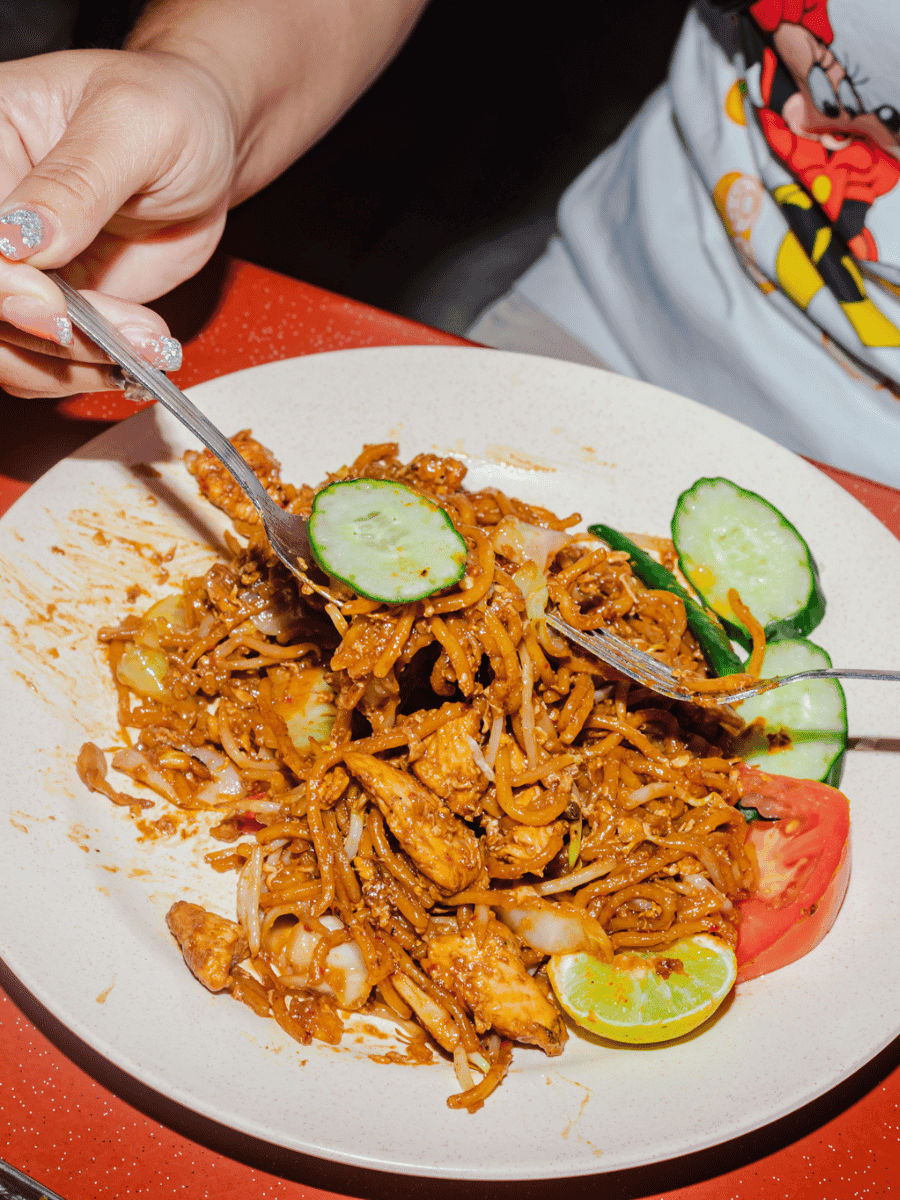
Yellow noodles fired in a screaming-hot wok with sambal, ketchup, egg, potato cubes and tofu puffs. Malaysia's signature mamak-stall plate, ready in six minutes.

Cubes of steamed rice cake stir-fried hard in a wok with dark soy, chilli paste, egg, bean sprouts and preserved radish. Penang's late-night hawker classic.
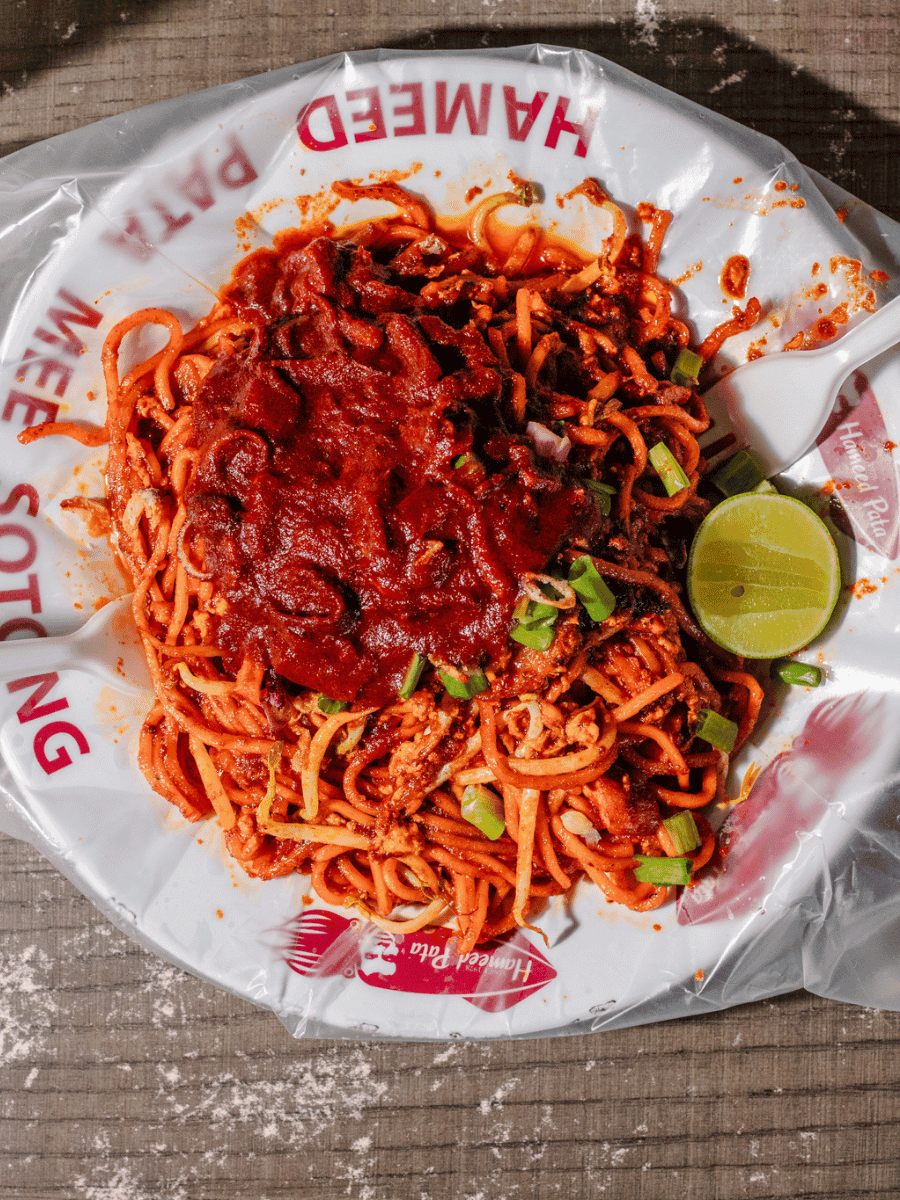
Yellow noodles tossed with squid braised in a dark, sweet, chilli-laced sauce. Penang's Padang Kota street noodle, distinctly its own thing.
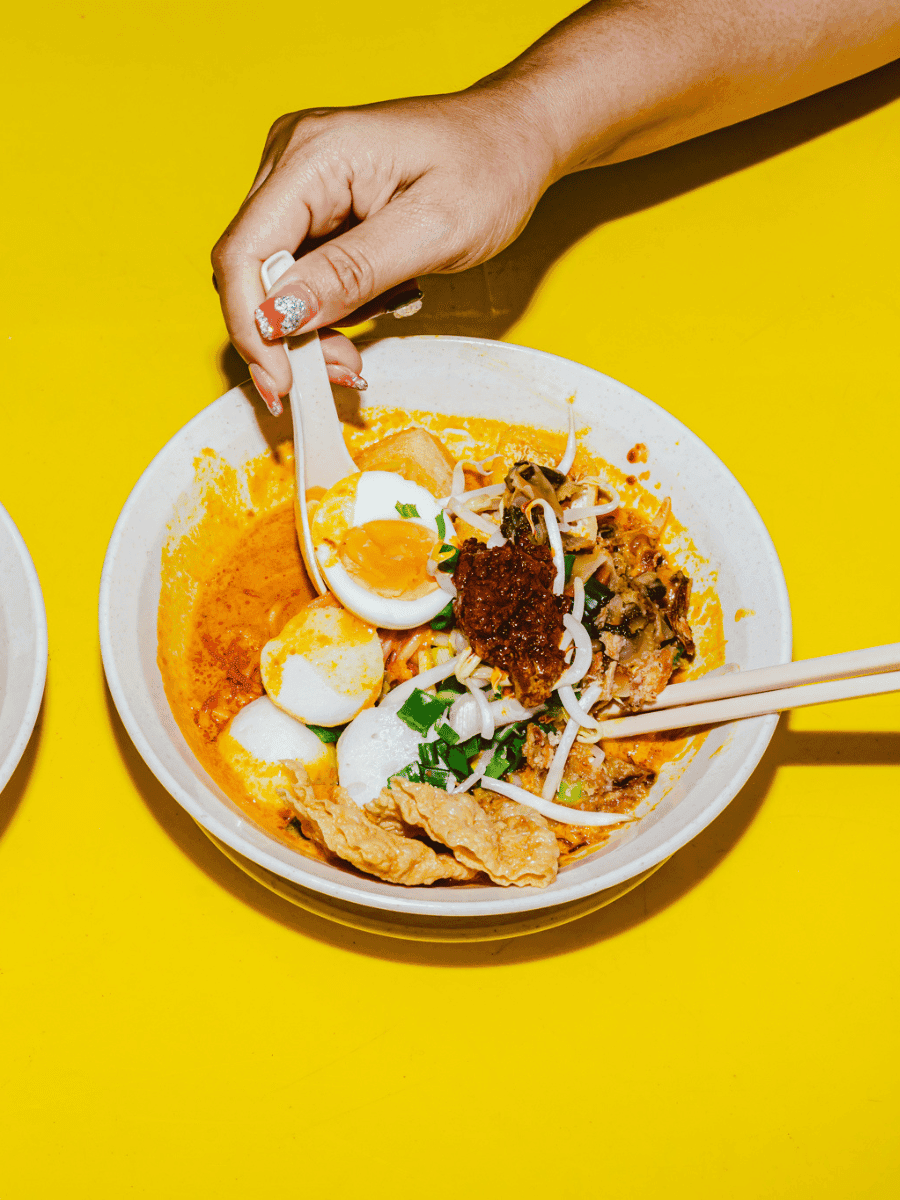
Coconut-based curry noodle soup with prawns, tofu puffs, cockles and a scarlet slick of chilli oil. Malaysia's default lunchtime laksa, richer and softer than its Penang cousin.