

Destination
Ipoh
The story
Chwee kueh ("water rice cake") is one of Malaysia and Singapore's beloved breakfast snacks: small round steamed rice cakes with a slight well in the top, topped with a spoonful of chai por (preserved salted radish) fried in oil with garlic and dried shrimp, and a drizzle of chilli sauce alongside. Soft, savoury, mildly sweet from the radish's caramelisation, unmistakably comforting. Sold at kopitiam breakfast stalls and hawker centres from 6am, typically served on a small saucer with 4 or 5 cakes.
Method
Warm the oil in a wide pan over medium heat. Add the garlic and dried shrimp. Cook 60 seconds until fragrant. Add the chopped chai por, sugar and white pepper. Fry, stirring often, for 6 to 8 minutes until the radish is deep golden and slightly caramelised. Set aside.
Whisk together the chilli paste, lime juice, sugar and warm water in a small bowl.
In a large bowl, whisk together the rice flour, wheat starch, cornstarch and salt. Slowly whisk in the 200ml cold water until smooth. In a separate saucepan, bring 300ml of water to a rolling boil. Pour the boiling water slowly into the batter, whisking continuously, until you have a thick, smooth batter. Whisk in the oil.
Bring a large steamer to a rolling boil. Lightly oil the small moulds and arrange in the steamer.
Working quickly (the batter thickens as it cools), divide the batter between the moulds (fill each about 3/4 full). Steam for 15 to 20 minutes, until the cakes are set and no longer sticky on top.
Cool the cakes in the moulds for 5 minutes, then run a small knife around the edge and unmould onto a plate. Each cake should have a slight well in the top.
Warm the radish topping briefly if it has cooled. Spoon a generous mound of topping onto each cake, filling the well. Serve immediately with the chilli sauce in a small dish on the side.
Tips
- Two-water method for the batter. Cold water first (to hydrate the starches without lumps), then boiling water whisked in slowly (to partially cook the starch and give the batter the correct thickness). Skipping the boiling water gives you a thin, watery cake.
- Preserved salted radish (chai por) is essential. Sold in small packets at Chinese grocers labelled as preserved salted radish or chai poh. Rinse briefly under cold water before using; the packets are very salty.
- Fry the topping properly. 6 to 8 minutes of frying in oil is what gives the chai por its caramelised depth. Under-cooked radish topping tastes raw and salty; properly fried is deep gold and slightly sweet.
- Small round moulds. Traditional chwee kueh is small (about 5cm across). Silicone dim sum cups or small ramekins work; large moulds change the eating experience.
- Best warm. Chwee kueh stiffens slightly as it cools. Serve within 30 minutes of steaming, or reheat briefly in the steamer.
More recipes
View all
Small oysters cooked briefly in a starchy egg batter with garlic and coriander, finished with a squeeze of lime. Penang's coastal Hokkien street snack.

Cubes of steamed rice cake stir-fried hard in a wok with dark soy, chilli paste, egg, bean sprouts and preserved radish. Penang's late-night hawker classic.

Egg noodles and rice vermicelli in a deep, orange prawn-shell broth topped with poached prawns, hard-boiled egg, water spinach and fried shallots. Penang's most-loved noodle soup.

A pyramid of banana-leaf-wrapped coconut rice with sambal, fried anchovies, peanuts, hard-boiled egg and cucumber. Malaysia's national breakfast, sold from every roadside stall before dawn.

Silky rice noodle rolls in a dark sweet-shrimp sauce with a scatter of toasted sesame seeds. Penang's morning-market breakfast, cousin to Hong Kong's cheung fun.
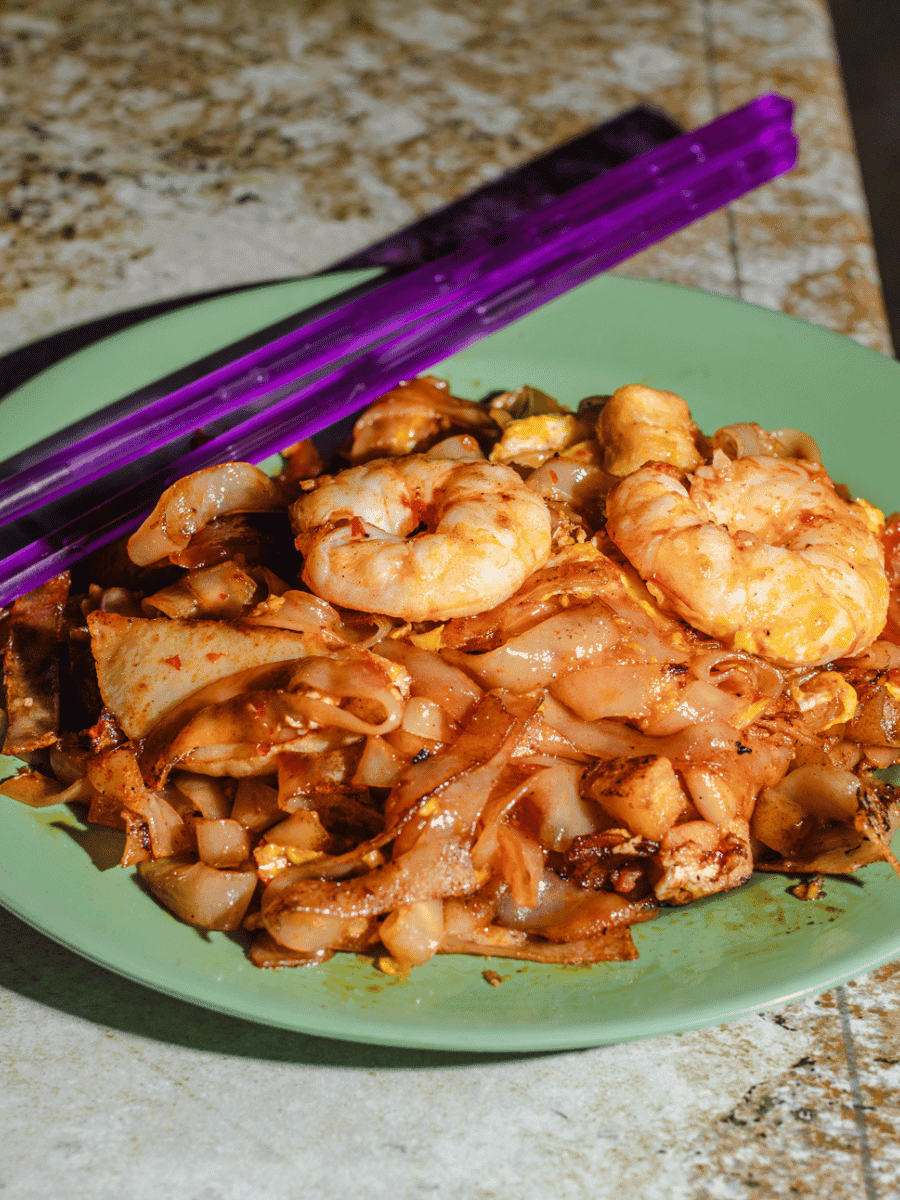
Flat rice noodles stir-fried hard in a wok with prawns, cockles, Chinese sausage, chives, bean sprouts and dark sweet soy. Penang's most famous hawker dish.