

Destination
Ipoh
The story
Penang asam laksa is Penang's most iconic noodle soup and one of the most distinctive dishes in Malaysian cooking: thick rice noodles submerged in a deeply sour, spicy, fishy broth built from flaked mackerel, tamarind, lemongrass, galangal, chilli, ginger flower (bunga kantan) and belacan, then topped with a rainbow of fresh garnishes — sliced pineapple, cucumber, red onion, mint, ginger flower petals, and a dark spoonful of hae ko (Penang prawn paste) that gets stirred in by the eater. Ranked #7 on CNN's list of the world's 50 best foods.
Method
Combine the water, galangal, lemongrass and salt in a large pot. Bring to a simmer. Add the mackerel and poach 15 to 20 minutes until cooked through. Lift the fish out, cool briefly. Reserve the poaching liquid.
Once the mackerel is cool enough to handle, remove all the flesh from the bones (discard skin). Return the bones to the poaching liquid and simmer another 30 minutes to make a deeper stock. Strain and reserve about 2.5 litres of stock. Flake the fish flesh into small pieces.
Blend all the rempah ingredients (except the oil) to a smooth paste in a food processor.
Warm the oil in a large heavy pot over medium heat. Add the rempah paste. Cook 10 to 12 minutes, stirring often, until the paste has darkened significantly and the oil separates around the edges.
Pour the reserved fish stock into the pot with the fried rempah. Add the tamarind paste, dried tamarind slices, Vietnamese mint, palm sugar and salt. Simmer 20 to 25 minutes to develop flavour.
Return the flaked mackerel to the broth. Simmer another 10 minutes so the fish takes on the broth flavour. Taste and adjust; the broth should be aggressively sour, mildly hot, savoury and slightly sweet.
Bring a separate pot of water to a boil. Cook the fresh rice noodles for 2 to 3 minutes until just tender. Drain.
Divide the noodles between 4 large deep bowls. Ladle over hot fish broth generously, making sure to include plenty of flaked fish.
On top of each bowl, add slices of pineapple, cucumber, red onion, fresh mint, ginger flower, chilli slices.
Serve each bowl with a small dish of warm hae ko on the side (one heaped teaspoon per person). Diners spoon their own hae ko into the broth and stir before eating. Add lime wedges to the table.
Tips
- Fresh mackerel is essential. The specific oily, savoury flavour of poached fresh mackerel is what carries the broth. Frozen or tinned mackerel is not the same. Sardines are a passable substitute in a pinch.
- Cook the rempah until the oil separates. This is the Malaysian visual cue for a properly cooked spice paste. Under-cooked rempah gives you a thin, muddy broth; properly cooked gives you the classic deep, red-orange integrated flavour.
- Ginger flower (bunga kantan) is the specific Penang marker. Sold at Malaysian grocers in the frozen section as bunga kantan or ginger flower. Genuinely irreplaceable; without it, the finished bowl loses its most distinctive floral aroma. If unavailable, add extra Vietnamese mint and a splash of lemongrass for approximation.
- Hae ko is added at the table, not the kitchen. This is essential Penang service: the dark prawn paste is warmed briefly, served in a small dish with each bowl, and each diner stirs their own into the broth just before eating. The specific texture of the sauce hitting the hot broth is part of the eating experience.
- Aggressively sour, that's the target. Asam laksa should hit you with the sourness of the tamarind before anything else. Home cooks often under-tamarind for fear of overwhelming; err on the side of more. The pineapple and cucumber toppings balance the sour.
More recipes
View all
Egg noodles and rice vermicelli in a deep, orange prawn-shell broth topped with poached prawns, hard-boiled egg, water spinach and fried shallots. Penang's most-loved noodle soup.
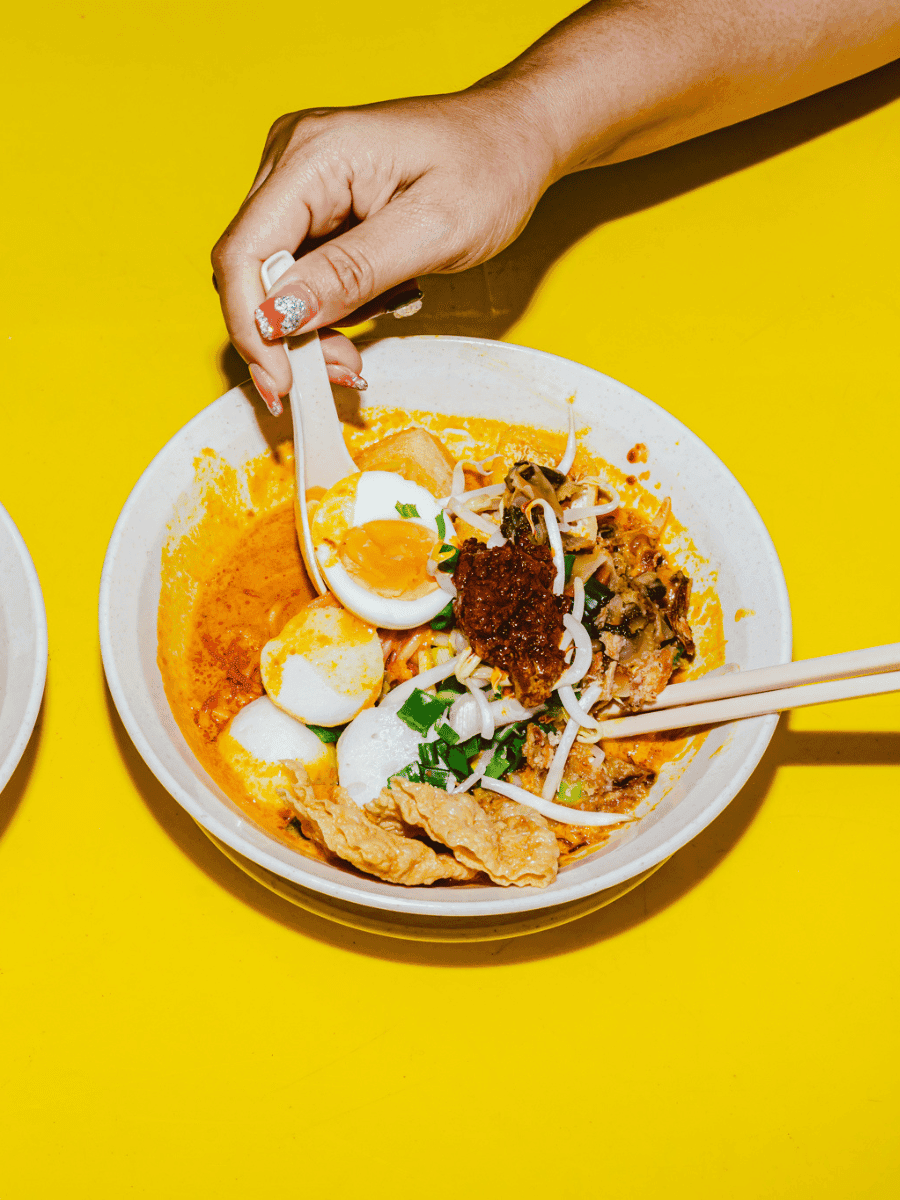
Coconut-based curry noodle soup with prawns, tofu puffs, cockles and a scarlet slick of chilli oil. Malaysia's default lunchtime laksa, richer and softer than its Penang cousin.
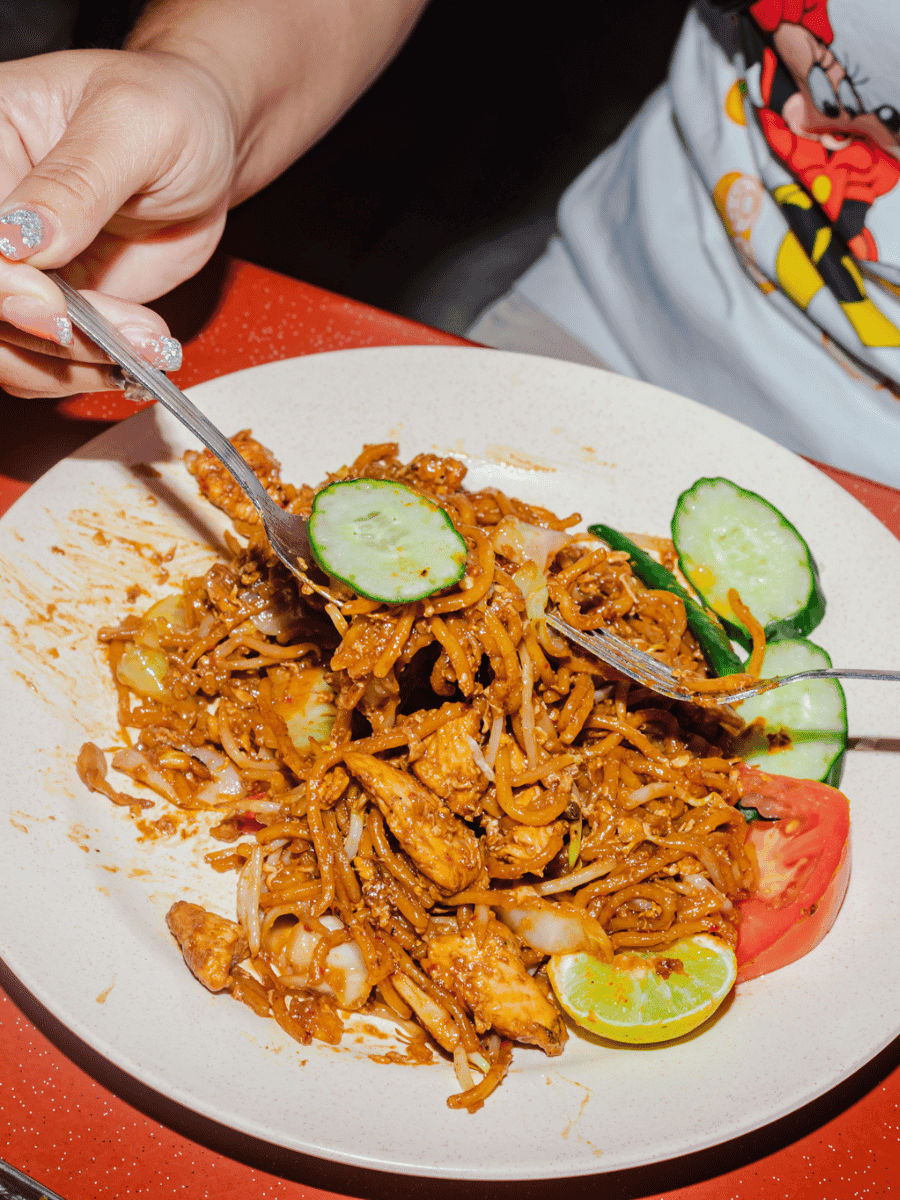
Yellow noodles fired in a screaming-hot wok with sambal, ketchup, egg, potato cubes and tofu puffs. Malaysia's signature mamak-stall plate, ready in six minutes.

Silky rice noodle rolls in a dark sweet-shrimp sauce with a scatter of toasted sesame seeds. Penang's morning-market breakfast, cousin to Hong Kong's cheung fun.
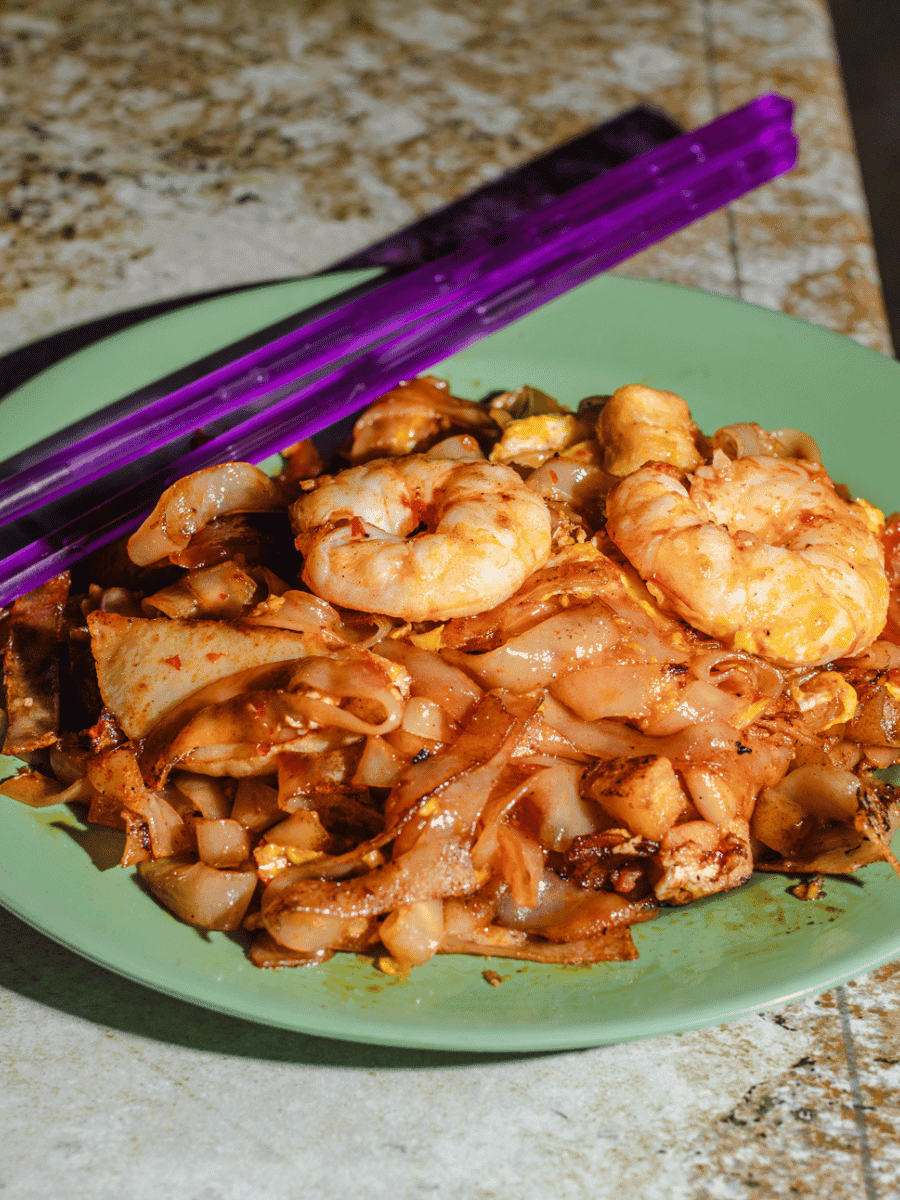
Flat rice noodles stir-fried hard in a wok with prawns, cockles, Chinese sausage, chives, bean sprouts and dark sweet soy. Penang's most famous hawker dish.
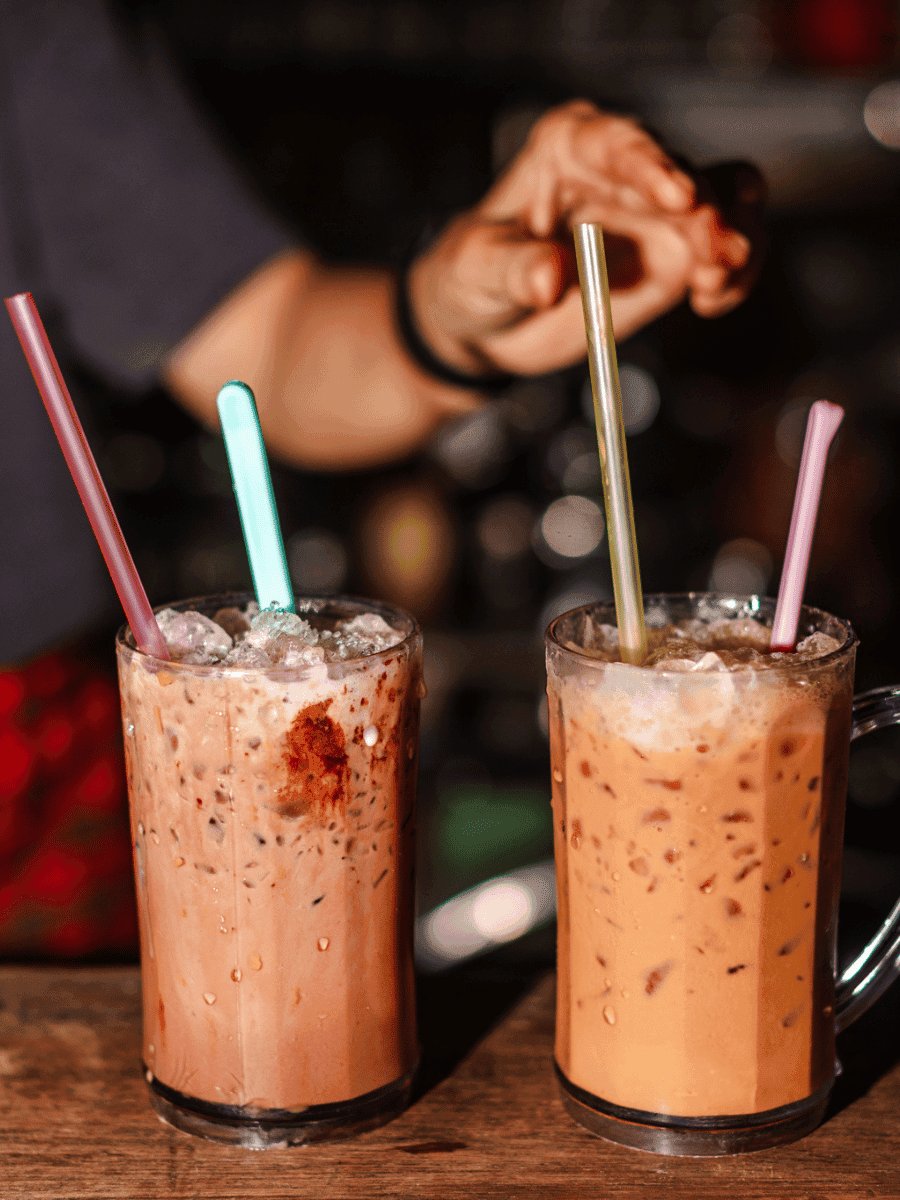
Slices of crackling-skin roast pork belly served on a bed of steamed rice with dark soy and a scoop of pickled greens. Penang's coffee-shop lunchtime plate.