

Destination
Buenos Aires
The story
Chimichurri is the green sauce that rides shotgun with every grilled meat in Argentina. A pungent slush of finely chopped parsley, garlic, dried oregano, chilli flakes, red wine vinegar and olive oil. Not a marinade: pour it on cooked meat, at the table, so the raw garlic and vinegar stay sharp. If you see chimichurri painted onto a raw steak, you're in the wrong country.
Method
This is the whole game. Chop it until it's almost a paste, knife work only, never a food processor (which bruises it into a puddle). You want tiny confetti-fine pieces, not a purée.
Garlic should almost dissolve into the mix. A microplane grater is the fast way; a knife with a pinch of salt to crush against also works.
In a bowl or a jar, combine the parsley, garlic, oregano, chilli flakes, salt and pepper. Toss to mix.
Pour in the vinegar and warm water. Stir well. The warm water softens the oregano and lets the flavours bloom.
Pour in the olive oil in a slow stream, stirring as you go. The mixture won't emulsify like mayonnaise, it stays loose. That's correct.
At least 30 minutes, ideally overnight in the fridge. Fresh chimichurri tastes raw and harsh; rested chimichurri tastes right as the garlic mellows, the oregano hydrates and the flavours marry.
Taste before serving. Add more vinegar for sharpness, more chilli for heat, more salt if flat. Spoon over grilled meat, sausages, provoleta, or into an empanada.
Tips
- Never use a food processor. Blitzing bruises the parsley and turns the sauce into a green sludge with no texture. Chimichurri should have visible flecks of leaf you can see and feel on the tongue.
- Rest is not optional. A minimum 30 minutes; overnight in the fridge is standard. Fresh chimichurri tastes like raw garlic dressing. Given time, the sharpness rounds out into something completely different.
- Ají molido gives the classic Argentine character. Standard chilli flakes work, but Argentine ají molido is smokier and rounder. Latin grocers stock it. Worth the trip if you make chimichurri weekly.
- Store it in oil. Chimichurri keeps 2 weeks in the fridge in a jar with a thin cap of olive oil over the top (which seals it from air). The flavour deepens over the first 3 days, then holds.
- Pour it on cooked meat, not raw. Chimichurri is a table condiment, not a marinade. The raw garlic and vinegar need to hit hot meat to bloom; painted on before cooking, the garlic burns and turns bitter.
More recipes
View all
Thick, spongy dough buried under a thick blanket of mozzarella, topped with oregano and a whole green olive. The Buenos Aires bar-counter pizza, not the Neapolitan kind.

Grass-fed beef cooked slow over hardwood embers, salted only at the last moment, rested properly and served with chimichurri. The parrilla way.

A slab of aged provolone melted over live coals, dressed with oregano, chilli and olive oil. The starter that opens every asado.
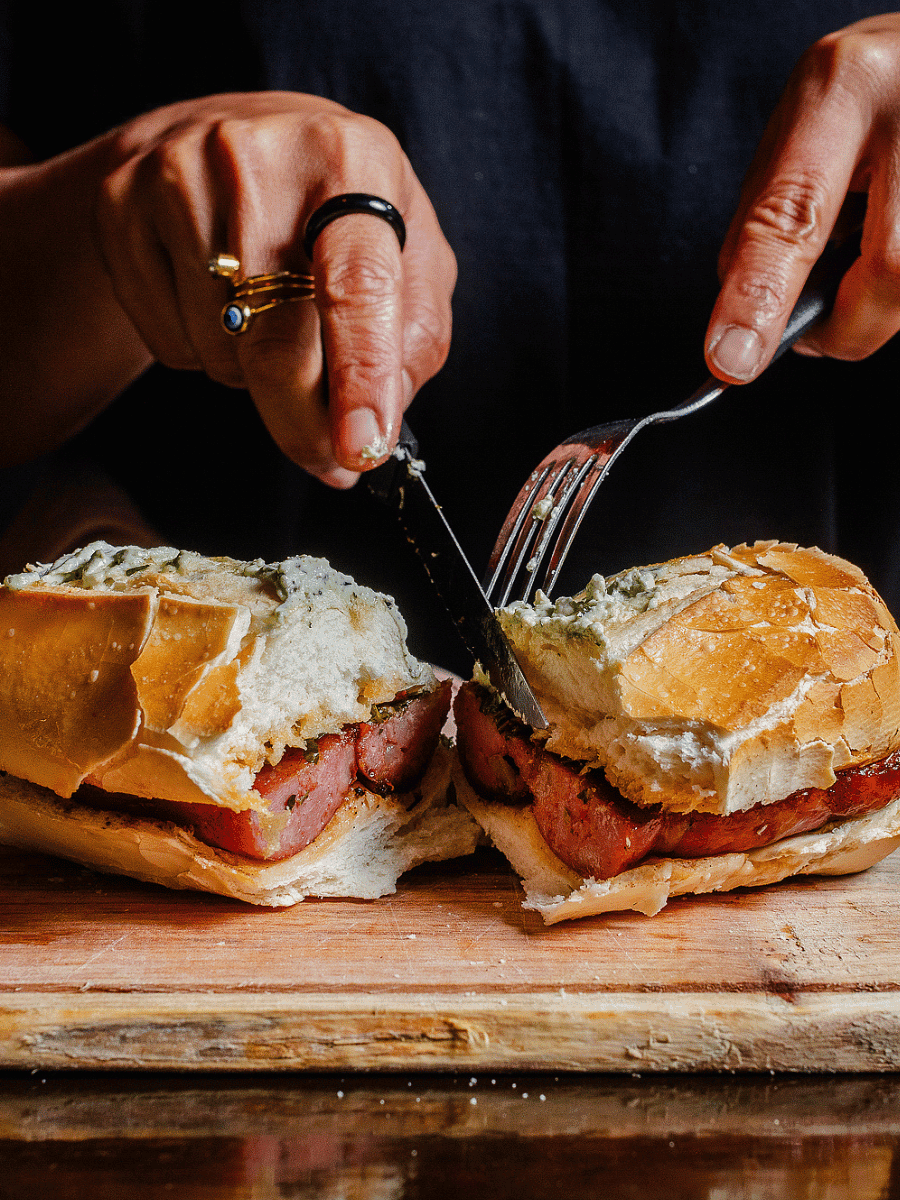
A grilled chorizo split down the middle, laid inside crusty bread, drenched in chimichurri. Argentina's national street sandwich.

A Genoese chickpea flatbread that made a home in Buenos Aires. Stacked on a slice of pizza (al caballo), or eaten alone with cracked black pepper.

Buenos Aires' Genoese-immigrant pizza. Thick, doughy base under a mountain of sweet onions, mozzarella and oregano.