
Destination
Buenos Aires
The story
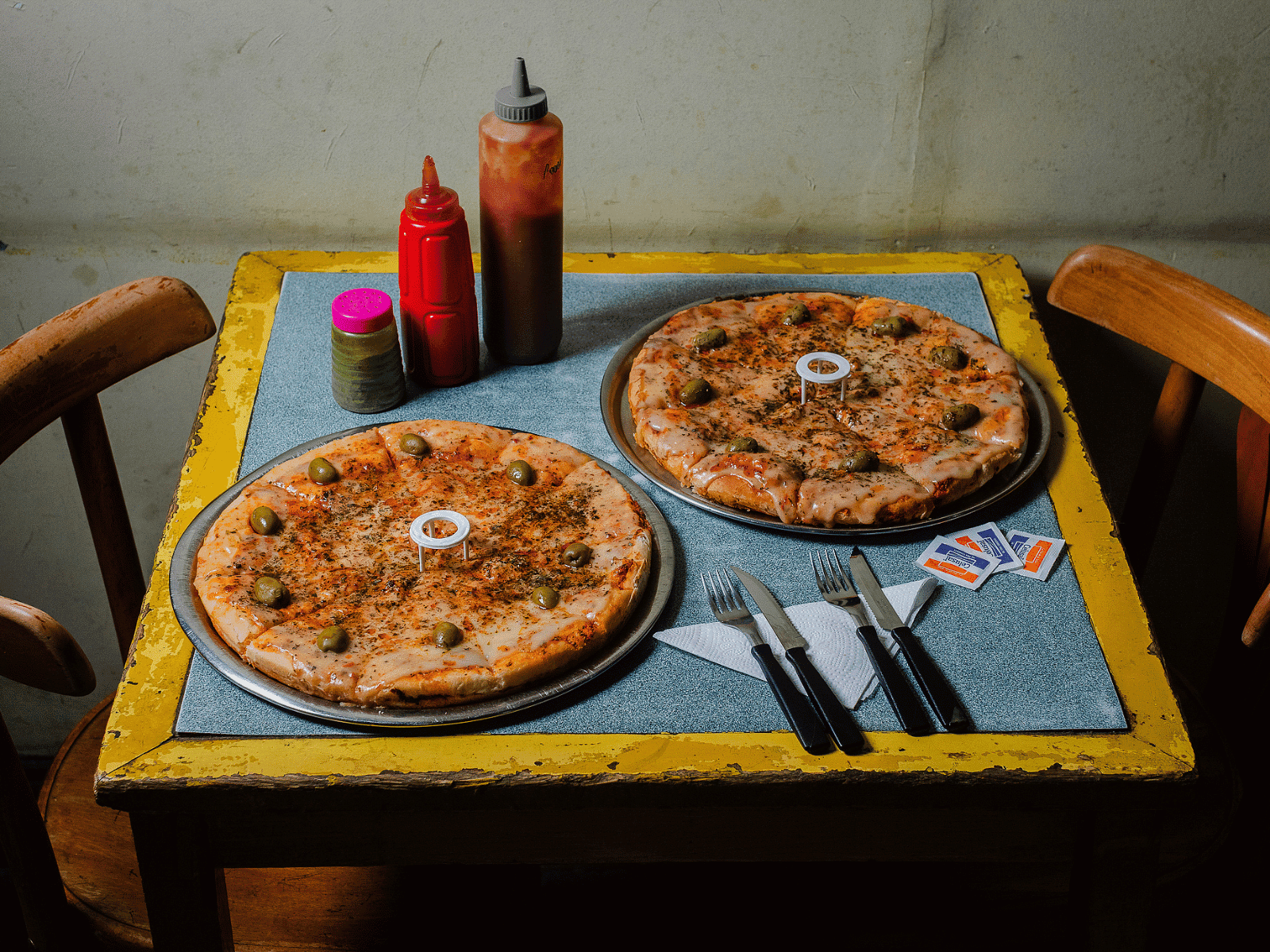
Argentine pizza is its own animal. Not Neapolitan (thin, floppy), not New York (thin, foldable), not Detroit (rectangular, cheese-crust). This is porteño pizza: a thick, spongy dough with a bready lift, topped with a light tomato smear and then buried under a thick blanket of mozzarella (called muzza in the vernacular), finished with dried oregano and one whole green olive. Served in individual squares or wedges. Eaten standing at a marble counter. Usually with a small dry moscato on the side.
Method
In a stand mixer with a dough hook, combine the flour, salt, yeast and sugar. Add the warm water and olive oil. Mix on low until it comes together, then knead 6 to 8 minutes on medium until smooth and elastic. Cover and rest 90 minutes in a warm spot until doubled.
While the dough rises, warm the olive oil in a small pan over medium heat. Add the garlic and cook 30 seconds until fragrant, don't let it brown. Add the crushed tomatoes, oregano, salt and pepper. Simmer 10 minutes until slightly thickened. Set aside to cool.
Heat to 250°C (485°F) with a heavy baking tray or pizza stone inside. The base must be blistering hot.
Oil a 30cm round pizza tin generously. Turn the dough out and press it into the tin with your fingertips, right to the edges. It should be roughly 1.5cm thick. Dimple the surface with your fingers so the oil pools in the pockets. Rest 20 minutes.
Spread a thin, even layer of tomato sauce over the dough. Leave a 1cm border. Don't overload: too much sauce steams the dough into soggy bread.
Slide the tin onto the hot tray or stone. Bake 8 minutes on its own, until the sauce is set and the dough starts to puff and colour underneath.
Pull the tin out. Cover with the mozzarella in a thick, generous layer. This is the Argentine muzza moment: be generous, more than feels reasonable.
Back in the oven for another 8 to 10 minutes, until the cheese is molten, bubbling, and just starting to brown in spots.
Scatter with dried oregano and dot with whole green olives. Drizzle with olive oil. Cut into big squares or wedges. Eat immediately, ideally standing up with a cold moscato dulce or a glass of Malbec.
Tips
- The blind bake is the secret. Baking the base briefly before adding cheese is what stops Argentine pizza going soggy. Skip this step and the bottom of your slice will droop when you pick it up.
- Fresh mozzarella only, not pre-shredded. Pre-shredded is coated in anti-caking starch that stops it melting cleanly and gives a floury edge. Fior di latte, sliced or torn, is standard.
- Be generous with the cheese. Argentine pizza is defined by the muzza blanket. If it looks like too much, add more. If you can see tomato sauce through the cheese, you're being stingy.
- Whole olives with the pit is the traditional presentation. Warn your guests. If you're worried, use pitted ones, but the classic bodegón version has the pit in.
- Try pizza al caballo. Bake a fainá alongside (see the fainá recipe). Cut wedges the same size as your pizza slices and stack one on top of a slice. That's pizza on horseback, the standard Buenos Aires bar order.
More recipes
View all
The green sauce that rides shotgun with every grilled meat in Argentina. Parsley, garlic, oregano, chilli, red wine vinegar and olive oil.

A Genoese chickpea flatbread that made a home in Buenos Aires. Stacked on a slice of pizza (al caballo), or eaten alone with cracked black pepper.

Buenos Aires' Genoese-immigrant pizza. Thick, doughy base under a mountain of sweet onions, mozzarella and oregano.

Two crumbly cornstarch shortbreads sandwiched with dulce de leche, edges rolled in coconut. Argentina's tea-time cookie: one in each hand, gone before you notice.

Yeast-raised dough deep-fried until it blooms, rolled hot in sugar, hollowed and filled with dulce de leche. The porteño merienda in three bites.

Half-moon pastries of knife-cut beef, sweet onion, cumin, hard-boiled egg and one green olive. The most portable meal in Argentina.