
Destination
Buenos Aires
The story
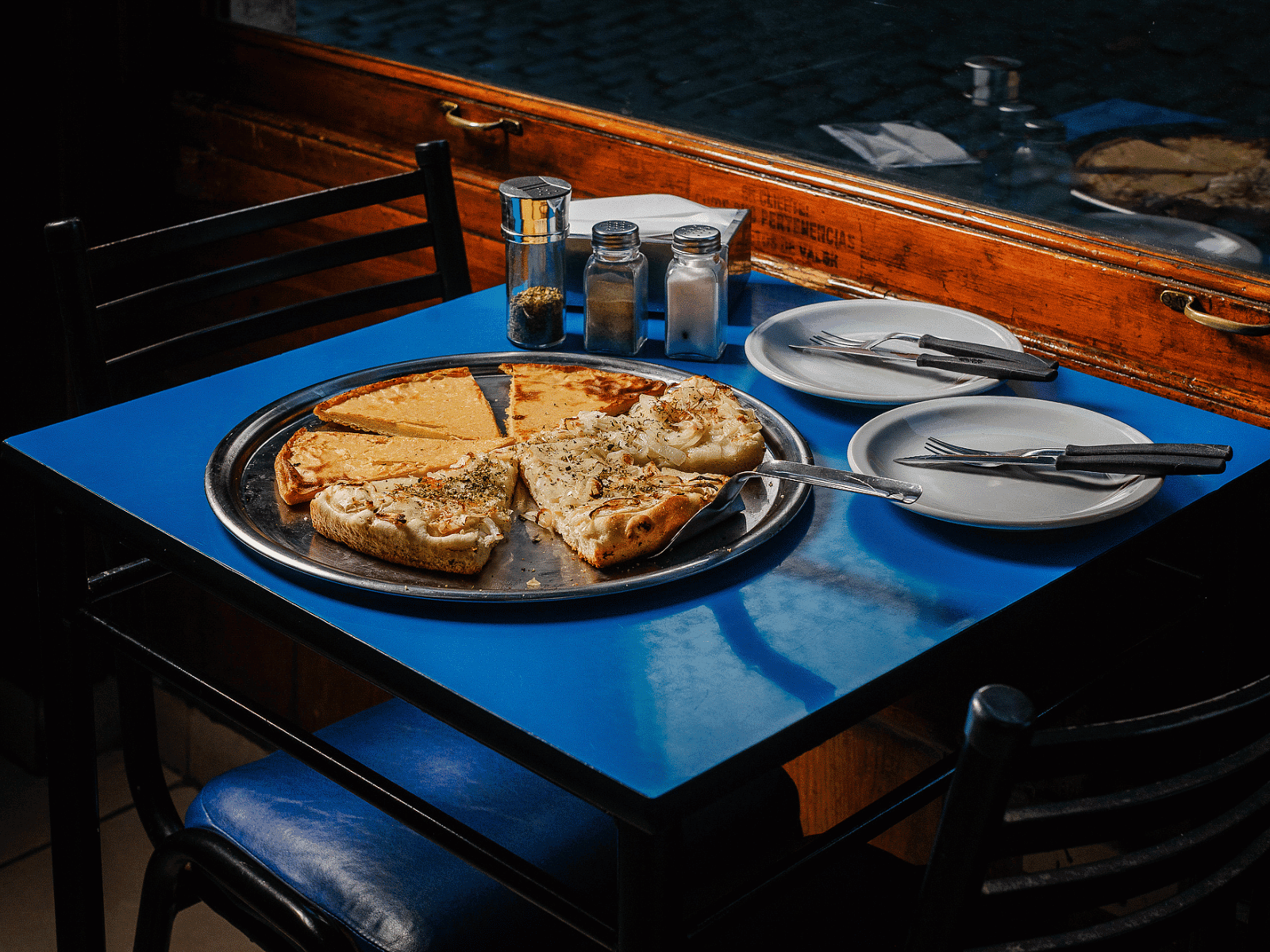
Fainá is a chickpea flour flatbread, thick as a small pancake, with crisp edges and a soft, almost pudding-like middle. In Buenos Aires it lives on top of a slice of pizza (that's pizza al caballo, on horseback), or on its own with generous cracked black pepper. In Genoa, where it originally came from, it's called farinata. In Nice, socca. Everywhere along the Ligurian coast someone claims a version.
Method
In a large bowl, whisk the chickpea flour, salt and warm water together until smooth and lump-free. Whisk in 3 tbsp of the olive oil.
Cover and leave at room temperature for at least 2 hours, ideally overnight in the fridge. Skim any foam that rises to the top and discard.
Heat the oven to 240°C (465°F). Place a 30cm round baking tin (or a rectangular tray) inside to preheat with it.
Pull the hot tin out. Pour in the remaining tablespoon of olive oil and swirl to coat the base. It should sizzle: the tin needs to be hot.
Give the batter a final whisk and pour into the hot tin. It should sit about 1cm thick. Slide back into the oven and bake 20 to 25 minutes, until the top is deep golden and the edges are bronzed and crisp.
Rest 2 minutes, then loosen the edges with a knife. Cut into big wedges or squares.
Crack generous black pepper over the top (and scatter torn rosemary if using). Serve hot, either on its own or stacked on a slice of Argentine pizza for the full pizza al caballo experience.
Tips
- Rest the batter or it will taste raw. Chickpea flour needs time to hydrate. Two hours is the minimum; overnight is standard. Skipping this step leaves an unpleasant chalky, slightly bitter finish.
- The tin has to be scorching hot. Preheating the empty tin in the oven means the batter sizzles the moment it hits, giving that fried, crisp underside. A cold tin gives you a limp cake.
- Black pepper is not optional. Fainá is under-seasoned on purpose so the cracked pepper at the end does the work. Grind it right at the table over the hot slices.
- Chickpea flour, not lentil flour. If you're shopping at a South Asian grocer, ask for gram flour (besan) specifically, not chana flour (which is roasted). The two look identical and behave differently: chana flour won't set.
- Leftover fainá reheats badly, it goes rubbery. Better to under-bake a batch and finish under the grill later. Cold fainá is fine as a snack but never as a substitute for hot.
More recipes
View all
Buenos Aires' Genoese-immigrant pizza. Thick, doughy base under a mountain of sweet onions, mozzarella and oregano.

Thick, spongy dough buried under a thick blanket of mozzarella, topped with oregano and a whole green olive. The Buenos Aires bar-counter pizza, not the Neapolitan kind.

The green sauce that rides shotgun with every grilled meat in Argentina. Parsley, garlic, oregano, chilli, red wine vinegar and olive oil.

Two crumbly cornstarch shortbreads sandwiched with dulce de leche, edges rolled in coconut. Argentina's tea-time cookie: one in each hand, gone before you notice.

Yeast-raised dough deep-fried until it blooms, rolled hot in sugar, hollowed and filled with dulce de leche. The porteño merienda in three bites.

A slab of aged provolone melted over live coals, dressed with oregano, chilli and olive oil. The starter that opens every asado.