
Destination
Buenos Aires
The story
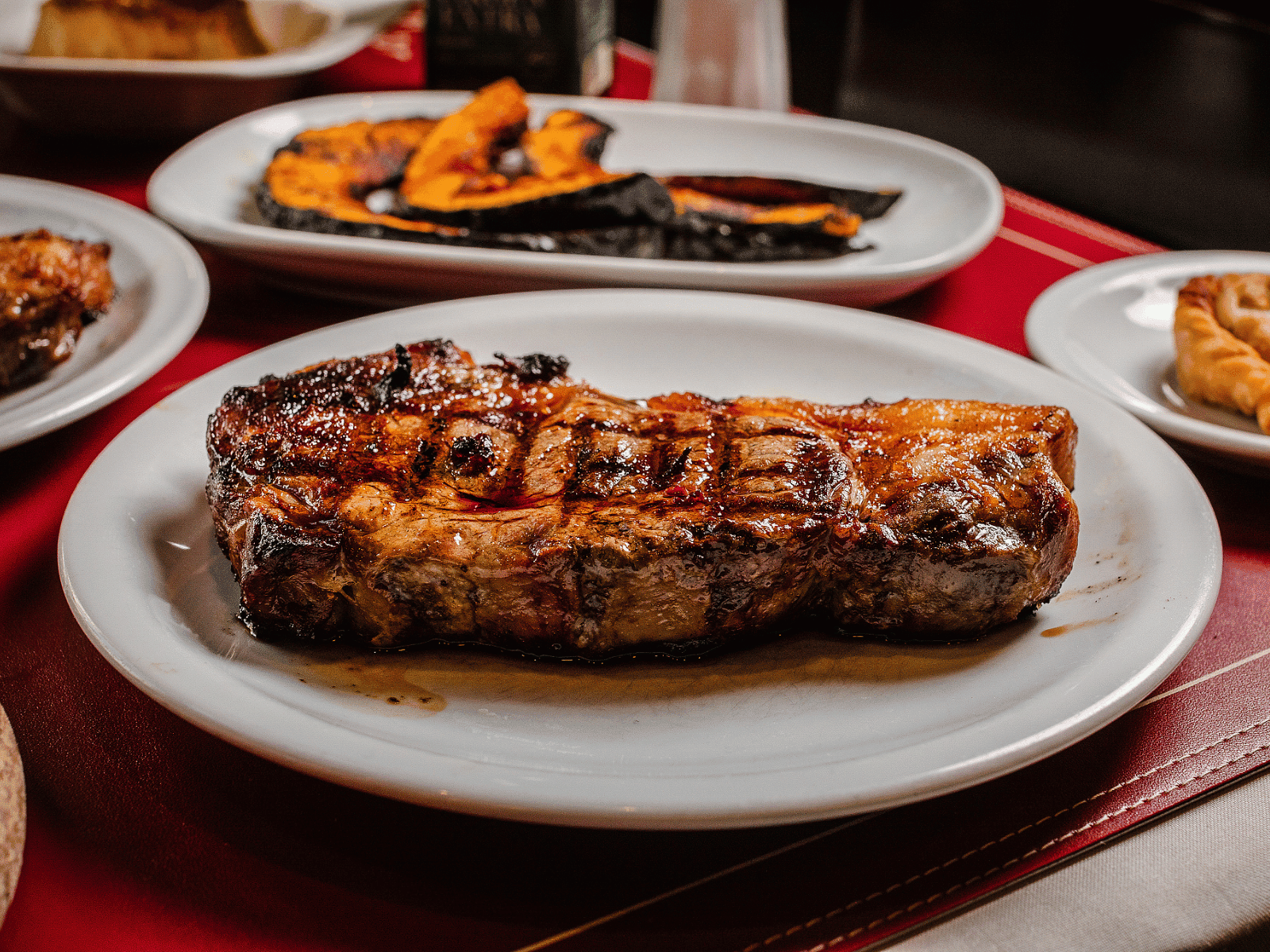
Argentine beef is famous for a reason. Grass-fed pampas cattle, a longer breeding cycle than most feedlot beef, and deeper natural flavour. But the meat is only half the story: the parrilla technique is the other half. Slow heat from hardwood embers (never gas), salt as the only seasoning, one flip at most, a proper rest, then chimichurri at the table. This isn't the fast-scorching method of an American steakhouse. It's slower, gentler, and gives you beef that tastes like beef.
Method
Take the steaks out of the fridge at least 45 minutes before cooking. Cold steak seizes on the grill and cooks unevenly. Pat dry with kitchen paper.
Light a chimney of hardwood lump charcoal (or hardwood logs, burnt down over 30 minutes). You want a hot bed of grey-ashed embers with no flames. On a home barbecue, spread the coals in a single layer under half the grate, leaving the other half cool as an escape zone. If pan-cooking instead, heat a heavy cast iron pan over high heat until it just starts to smoke.
Place the grate 10 to 15cm above the coals and let it heat 5 minutes until it's clean-hot. A drop of water flicked onto the bars should hiss and vanish immediately.
Salt each steak generously with coarse salt on both sides right before it hits the heat. Salting earlier draws moisture out; salting at the table is standard Argentine practice.
If the fat cap is thick, place fat-side down first for 60 seconds to render, then flip flat. Let them cook undisturbed on the first side. For 3cm-thick bife de chorizo, that's 4 to 5 minutes for medium-rare, 6 for medium.
Use tongs, not a fork (which pierces and drains the juice). The second side needs 3 to 4 minutes for medium-rare, 5 for medium. Press the surface with a finger: it should give like the pad below your thumb when the hand is relaxed for rare, and firm-with-give for medium.
Move the steaks to a warm plate. Rest 8 to 10 minutes, loosely tented with foil. The muscle fibres relax and the juices redistribute. Cut too early and everything you cooked ends up on the board.
Slice against the grain if you're plating (or serve whole for the table to cut). Spoon chimichurri over, a scatter of extra flake salt, and a piece of bread to catch the juices. Pour the Malbec.
Tips
- Grass-fed beef needs less heat and more patience than grain-fed. Argentine cows aren't finished on corn, so the fat renders slower. Cook it hotter and it seizes; cook it lower and slower and it stays tender.
- Salt at the last moment, not in advance. Home cooks trained on European butchery salt the night before. Argentine practice is to salt the steak just before it hits the heat, and often finish with more coarse salt at the table. Trust the process.
- Never marinate. Argentine steak is meat, fire, salt. That's it. A marinade covers the flavour of the beef, and the beef is what you're paying for. Save the sauces for the table (chimichurri, salsa criolla).
- Rest longer than you think. Ten minutes on a 3cm steak is the Argentine standard. Every home cook is tempted to cut too early. Don't. The rest is what separates a good steak from a great one.
- If you can't get bife de chorizo, ask a butcher for a thick-cut sirloin or New York strip, at least 3cm thick. Anything thinner than 2.5cm belongs in a pan, not on a fire. Thick cuts are what let you get a crust without overcooking the middle.
More recipes
View all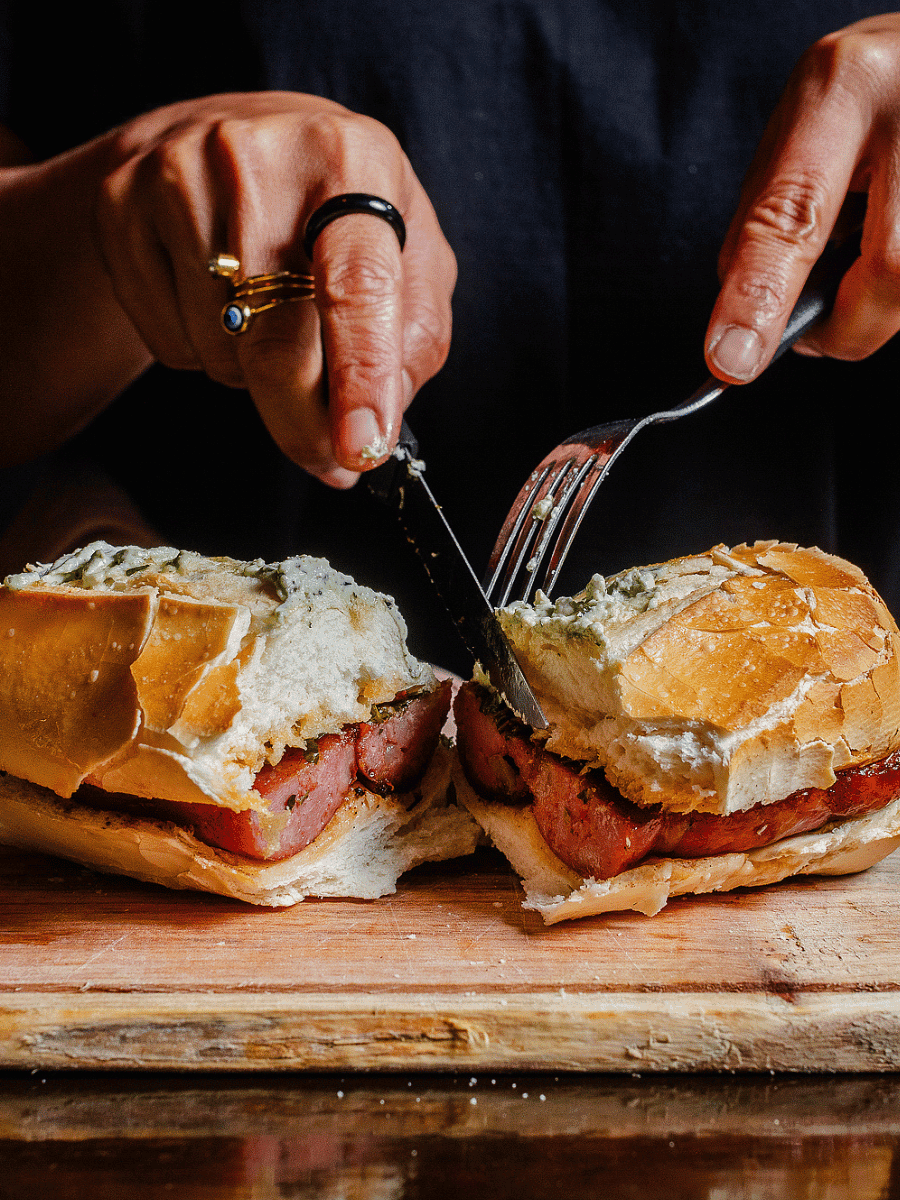
A grilled chorizo split down the middle, laid inside crusty bread, drenched in chimichurri. Argentina's national street sandwich.

The green sauce that rides shotgun with every grilled meat in Argentina. Parsley, garlic, oregano, chilli, red wine vinegar and olive oil.

A slab of aged provolone melted over live coals, dressed with oregano, chilli and olive oil. The starter that opens every asado.

Beef pounded thin, dipped in a garlicky egg, breaded and shallow-fried until amber. The dish every Argentine grandmother makes on a Sunday, eaten with a squeeze of lemon.

Half-moon pastries of knife-cut beef, sweet onion, cumin, hard-boiled egg and one green olive. The most portable meal in Argentina.

A Genoese chickpea flatbread that made a home in Buenos Aires. Stacked on a slice of pizza (al caballo), or eaten alone with cracked black pepper.