
Destination
Buenos Aires
The story
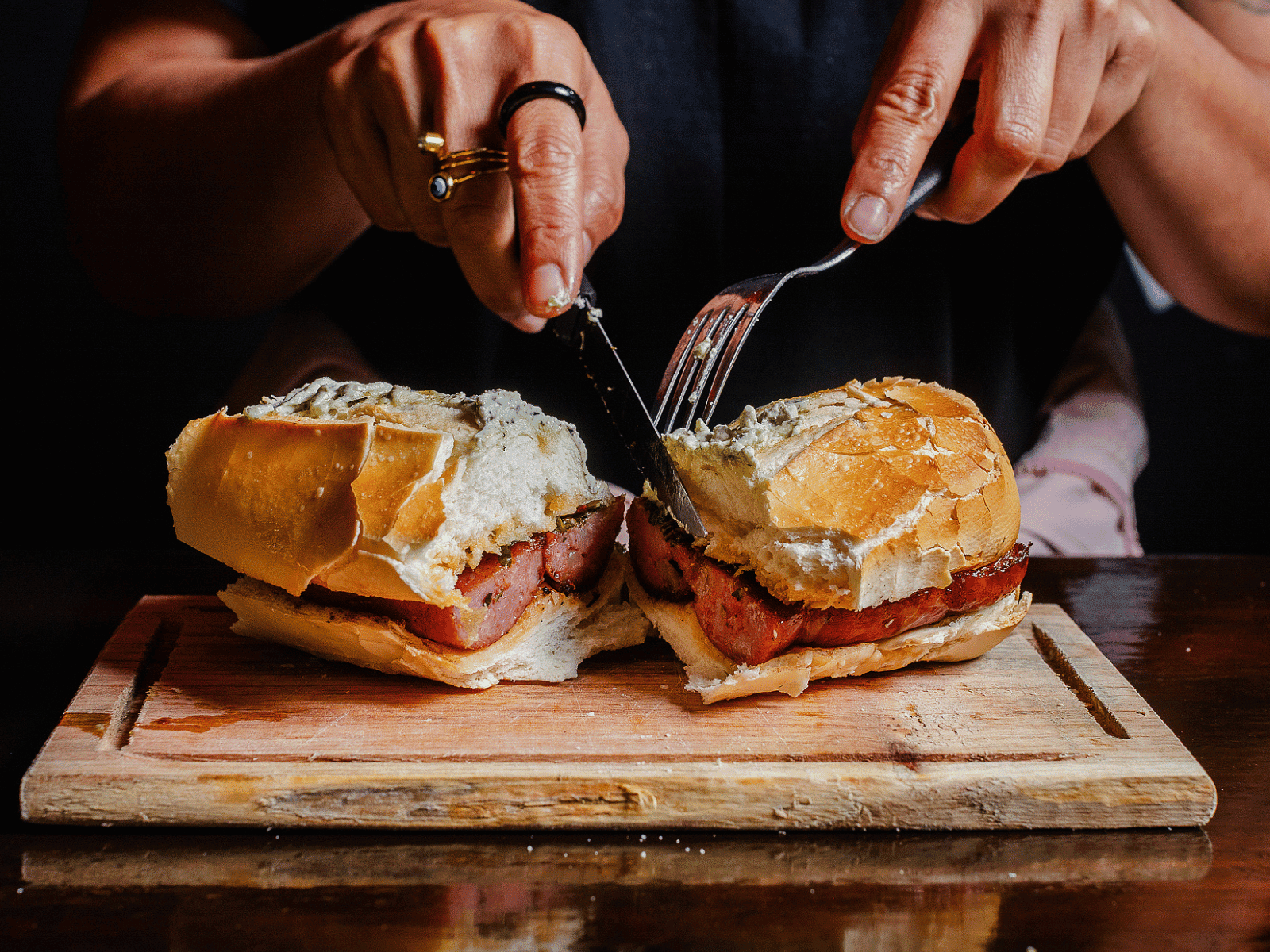
Choripán is Argentina's national street sandwich. Chori for chorizo, pán for the crusty French-style roll. A fresh Argentine chorizo (not the cured Spanish kind, this is a bratwurst-sized fresh sausage) grilled over embers, butterflied open for maximum char surface, tucked into split bread, and drowned in chimichurri. Sold at every football match, every roadside grill, and passed around at every asado before the beef is ready.
Method
In a bowl, combine parsley, garlic, oregano, chilli, salt, vinegar and warm water. Stir, then whisk in the olive oil. Set aside at least 30 minutes so the flavours marry. Overnight is better.
Combine tomato, red onion, red pepper, vinegar and olive oil in a small bowl. Season with salt and pepper and set aside.
Charcoal or hardwood coals, hot but not raging. You want the grate about 15cm above the embers, hot enough that a hand held 10cm above forces you to pull it away after 3 seconds.
On a chopping board, slice each sausage lengthways from end to end, almost cutting through but leaving the far side hinged. Open the sausage out like a book.
Brush the cut sides with a little oil. Place cut-side down on the grill. Leave 4 to 5 minutes until deep char lines appear. Flip and grill the skin side another 5 to 6 minutes, until the sausage feels firm and the juices run clear.
Split each roll in half and grill cut-side down over the coals for 30 seconds, just until warm and crisp.
Lay a grilled chorizo cut-side up in each roll. Spoon over a generous slick of chimichurri (don't be shy). Add a spoon of salsa criolla if using. Close and press gently. Eat immediately, standing up if possible.
Tips
- Never boil the sausage. Boiling is what most non-Argentine countries do to speed the cook, and it's the fastest way to ruin choripán. The skin needs dry heat from the moment it hits the grill to blister and crisp.
- Mariposa or nothing. Butterflying doubles the char surface and cuts the cook time in half. Grilled whole, the sausage takes forever and the outside overcooks before the middle is done.
- Chimichurri needs to rest. Fresh chimichurri tastes raw and harsh. Even 30 minutes of sitting mellows the garlic and lets the oregano bloom. Overnight in the fridge is the standard.
- Ají molido gives the classic Argentine bite. Standard chilli flakes work, but Argentine ají molido has a specific smoke-heat that you notice if you make choripán more than once. Latin grocers stock it.
- Bread matters more than you think. A soft roll turns to mush the moment chimichurri hits it. Use a proper crusty French-style bread or baguette; the crust is what holds everything together.
More recipes
View all
Grass-fed beef cooked slow over hardwood embers, salted only at the last moment, rested properly and served with chimichurri. The parrilla way.

The green sauce that rides shotgun with every grilled meat in Argentina. Parsley, garlic, oregano, chilli, red wine vinegar and olive oil.

A slab of aged provolone melted over live coals, dressed with oregano, chilli and olive oil. The starter that opens every asado.

Spicy merguez lamb sausages grilled hard, tucked into a crusty baguette with sliced tomato, chili sauce and pickles. Tangier's Spanish-Moroccan street lunch.

A Genoese chickpea flatbread that made a home in Buenos Aires. Stacked on a slice of pizza (al caballo), or eaten alone with cracked black pepper.

Half-moon pastries of knife-cut beef, sweet onion, cumin, hard-boiled egg and one green olive. The most portable meal in Argentina.