

Destination
Hue
The story
Chè thập cẩm (literally chè with ten different things) is Vietnam's classical multi-component dessert glass and one of the most-photographed sweets in the country. The name is fanciful; the actual glass usually has 5 to 8 different components layered vertically in a tall clear glass over crushed ice. The classical set includes cooked sweetened yellow mung bean, cooked sweetened red kidney bean, small tapioca pearls, cooked lotus seeds, pandan jelly cubes, and shredded coconut jelly, all crowned with a generous pour of sweetened salty coconut cream. Sold at every Vietnamese street chè vendor and at every Southeast Asian dessert café. Eaten with a long spoon that reaches to the bottom of the glass.
Method
Drain soaked yellow mung beans. Simmer in 500ml water with salt for 30 minutes until soft. Add sugar; cook 5 minutes. Cool.
Drain soaked red beans. Simmer in 800ml water with salt for 90 minutes until fork-tender but still holding shape. Add sugar; cook 5 minutes. Cool.
Drain lotus seeds. Simmer in 500ml water for 40 minutes until fork-tender. Add sugar; cook 5 minutes. Cool.
Simmer tapioca pearls in 500ml boiling water 12 to 15 minutes until almost translucent. Add sugar; cook 60 seconds. Drain and rinse under cold water. Cool.
Bring 500ml water and pandan leaves to a boil. Simmer 5 minutes for the flavour and green colour. Strain out the leaves. Whisk in agar agar and sugar. Simmer 3 minutes. Pour into a shallow tray; refrigerate 30 minutes until set. Cut into 1cm cubes.
Warm coconut milk with sugar and salt in a small saucepan. Whisk in cornstarch slurry. Simmer 90 seconds until thickened. Cool.
In each tall glass: layer 2 tbsp yellow mung bean at the bottom, 2 tbsp red bean, 2 tbsp lotus seed, 2 tbsp tapioca pearls, and 3 tbsp pandan jelly cubes. Top with crushed ice.
Drizzle 3 tbsp coconut cream generously over the ice. Sprinkle with crushed peanuts. Serve immediately with a long spoon.
Tips
- Cook each component separately. Do not combine at cooking time; the sugar and salt ratios are different for each component.
- Cool each component before assembling. Warm chè melts the ice too fast and dilutes the flavour.
- Assemble at the glass. Do not pre-mix; the layered visual is half the appeal.
- Serve immediately. Ice melts, jellies soften. Chè thập cẩm does not hold.
- Adjust sweetness. Vietnamese chè is typically very sweet; adjust to taste.
More recipes
View all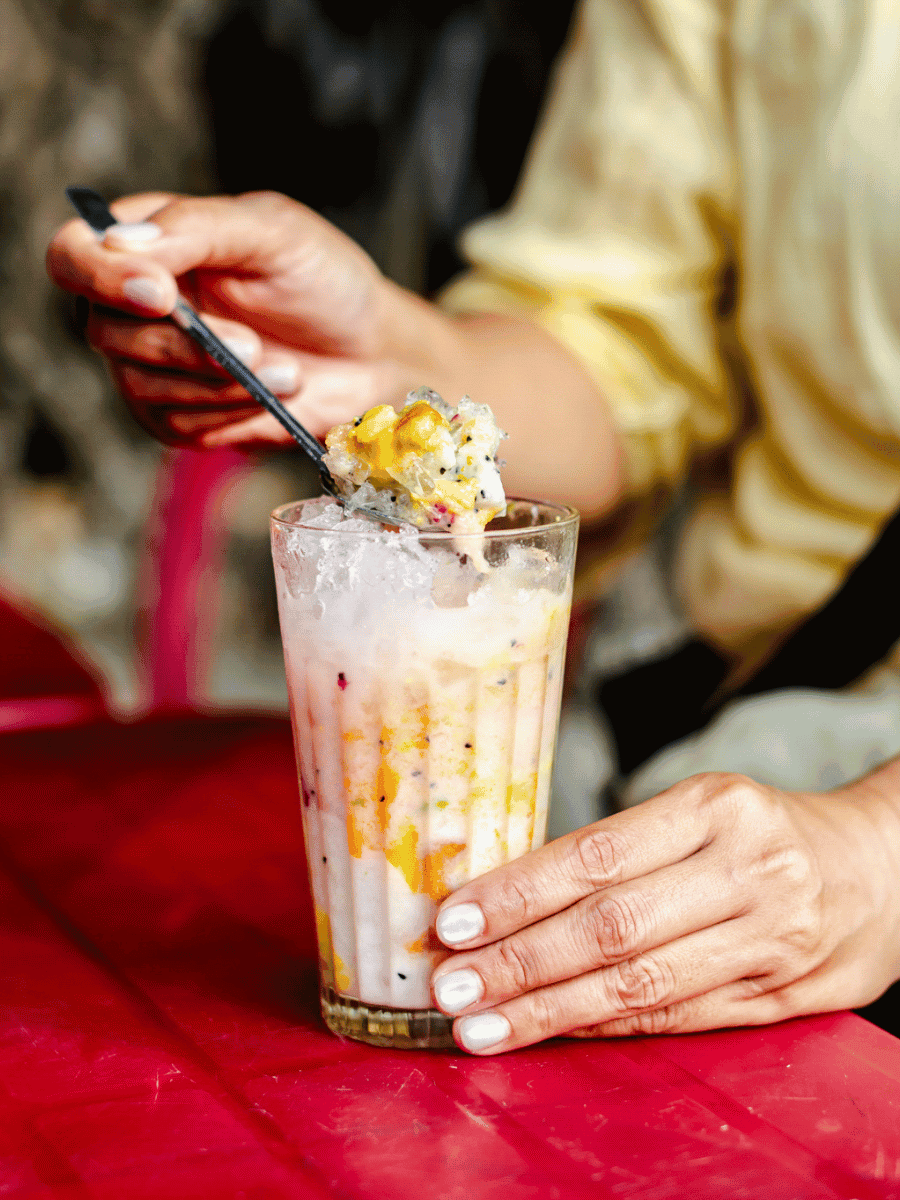
A single-pot dessert of mung bean, tapioca pearls and coconut milk, served warm or over ice. The Vietnamese answer to a sweet snack, available in dozens of variations.
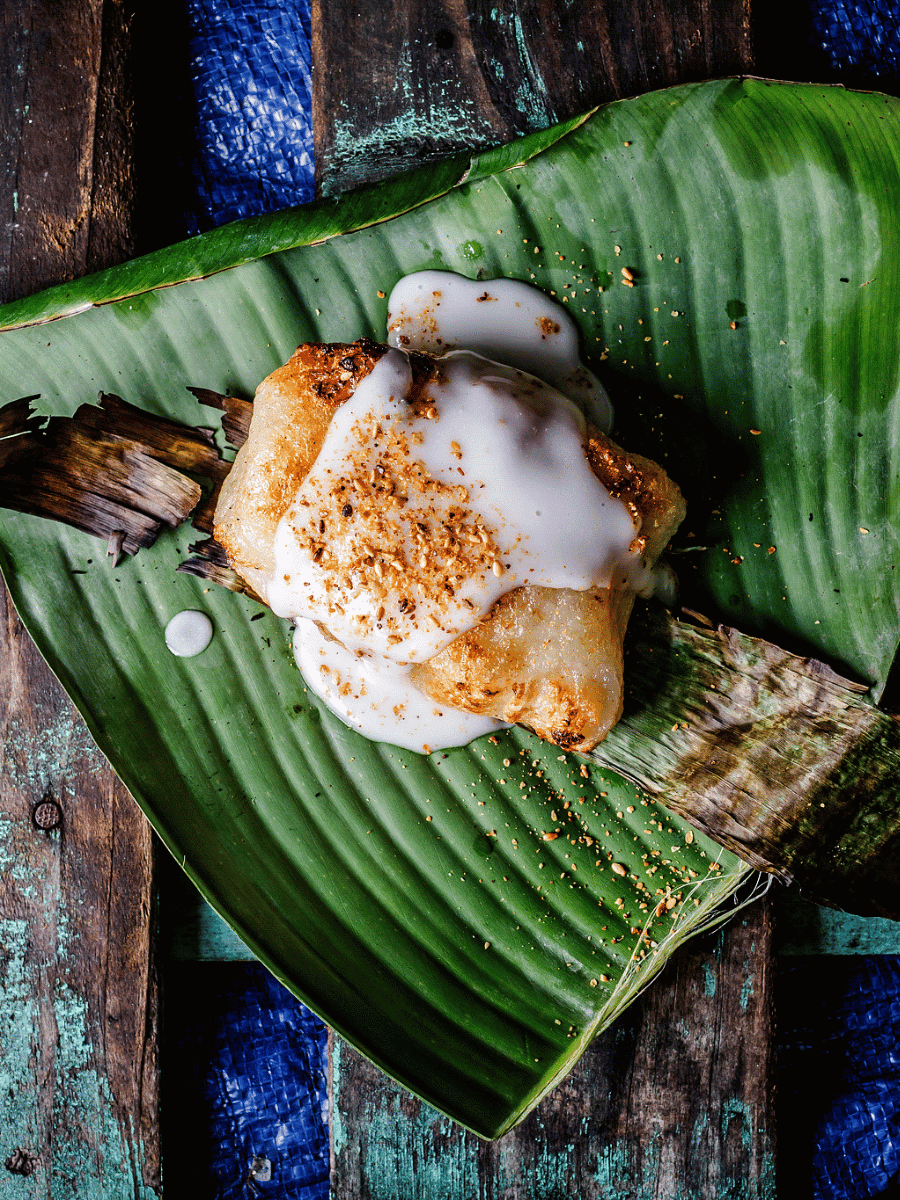
Whole bananas wrapped in coconut sticky rice and banana leaves, then grilled over charcoal until dark caramelised. Ho Chi Minh City's late-night street dessert, drenched in sweet coconut cream.

A silky egg-and-condensed-milk custard set over a pool of dark caramel, served cold with crushed ice and a splash of Vietnamese coffee. The colonial-era French dessert made unmistakably Vietnamese.

A tall glass of strong black coffee topped with a fluffy hot custard of egg yolk, condensed milk and vanilla. Hanoi's most-photographed coffee, invented in 1946 when milk was scarce.
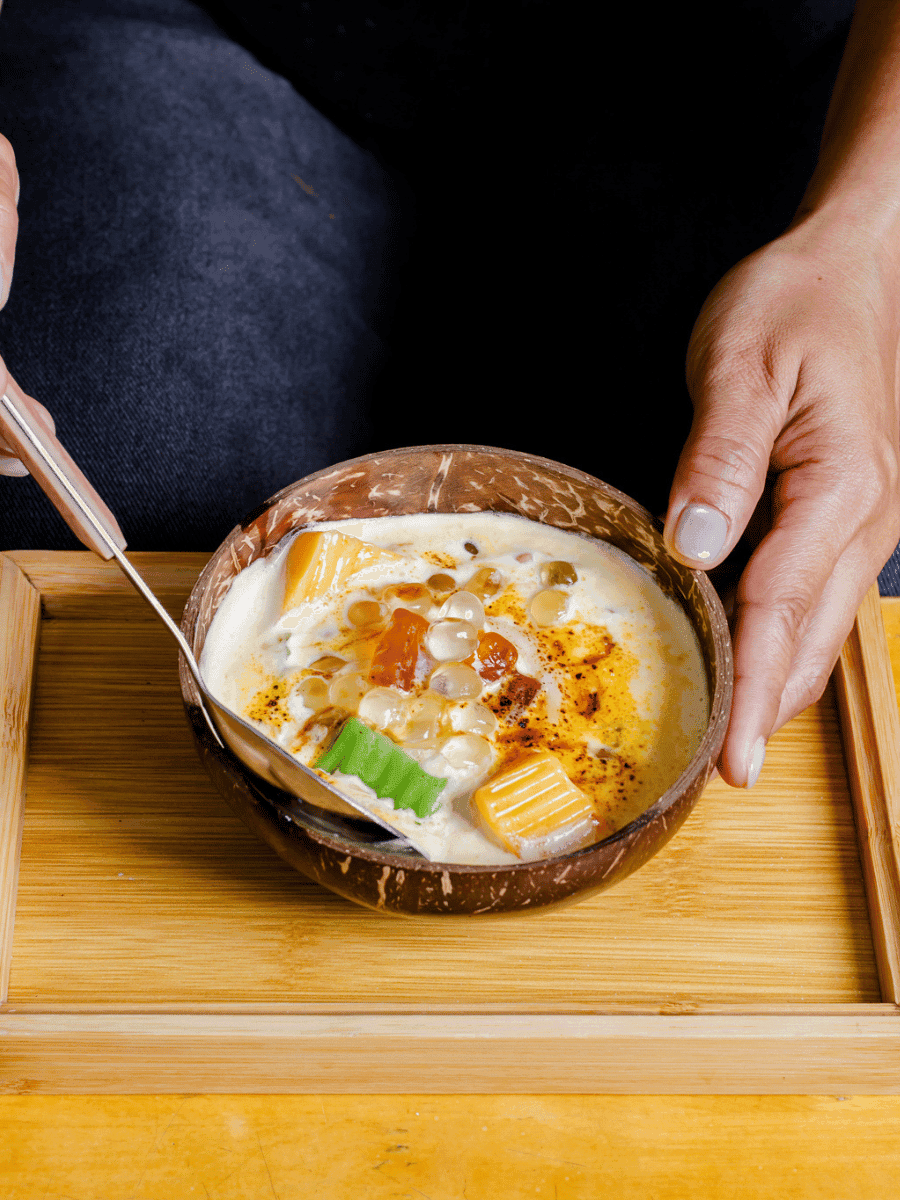
Cubes of soft white milk pudding, cool almond-scented syrup, poached longan and crushed almonds. Ho Chi Minh City's modern minimalist chè.

Fat tapioca noodles in a thick golden crab broth with prawn, quail egg, pork knuckle and a pat of annatto oil. Ho Chi Minh City's rich comfort noodle bowl.