

Destination
Hue
The story
Chuối nếp nướng is one of Ho Chi Minh City's most-loved street desserts, and a specifically southern Vietnamese sweet. A small banana (traditionally the Vietnamese chuối sứ, a short fat sweet variety) is peeled and wrapped in a layer of steamed coconut sticky rice, then wrapped again in a piece of fresh banana leaf, and grilled over glowing charcoal until the banana leaf blackens, the sticky rice caramelises, and the banana inside turns soft and jammy. Sliced diagonally and served in a shallow bowl with a generous pour of sweet-salty coconut cream, a scatter of toasted sesame seeds, and crushed roasted peanuts. Sold at Saigon night markets and street carts from about 6pm to 1am, especially popular after a night out.
Method
Drain soaked glutinous rice. Steam in a bamboo or metal steamer 20 to 25 minutes until tender.
While hot: transfer to a bowl. Fold in coconut milk, sugar, salt and pandan extract. Rest 15 minutes for the rice to absorb the seasoning.
Pass each banana leaf square briefly over a gas flame to soften and release aroma. Wipe with a damp cloth.
Peel bananas but leave whole.
Take about 4 tbsp of the seasoned sticky rice. Flatten in your palm into a rectangle slightly larger than the banana. Place the banana in the middle. Wrap the rice around the banana to fully enclose. Place on a banana leaf. Fold the leaf up around the sticky rice, then fold the ends over to make a neat parcel. Tie tightly with kitchen string or strips of banana leaf.
Fire a charcoal grill to medium-low heat. Grill the parcels 15 to 20 minutes, turning every 4 to 5 minutes, until the banana leaf is dark blackened and the rice inside is caramelised. Alternatively: bake at 200C for 25 minutes turning halfway.
Warm coconut milk with sugar and salt in a small saucepan. Whisk in cornstarch slurry. Simmer 90 seconds until thickened to a heavy pourable sauce.
Unwrap each parcel. Slice diagonally into 3 or 4 pieces. Place in a shallow bowl. Pour coconut sauce generously over. Scatter with toasted sesame seeds, crushed peanuts and toasted coconut flakes. Serve warm.
Tips
- Ripe bananas. The classical chuối sứ is quite sweet and slightly fibrous. If using Cavendish, choose fully ripe (yellow with brown spots).
- Fresh banana leaves. Passing over a flame is essential for softening and aroma. Foil is a poor substitute.
- Medium-low coals, not screaming hot. High heat burns the leaf before the rice caramelises.
- Coconut cream should be sweet-salty, not just sweet. Salt is essential for the classical Vietnamese balance.
- Serve warm. Cold chuối nếp nướng is a lesser dish.
More recipes
View all
A tall glass layered with mung bean, red bean, tapioca, lotus seed, pandan jelly and coconut cream over crushed ice. The classical Vietnamese "mixed everything" dessert.
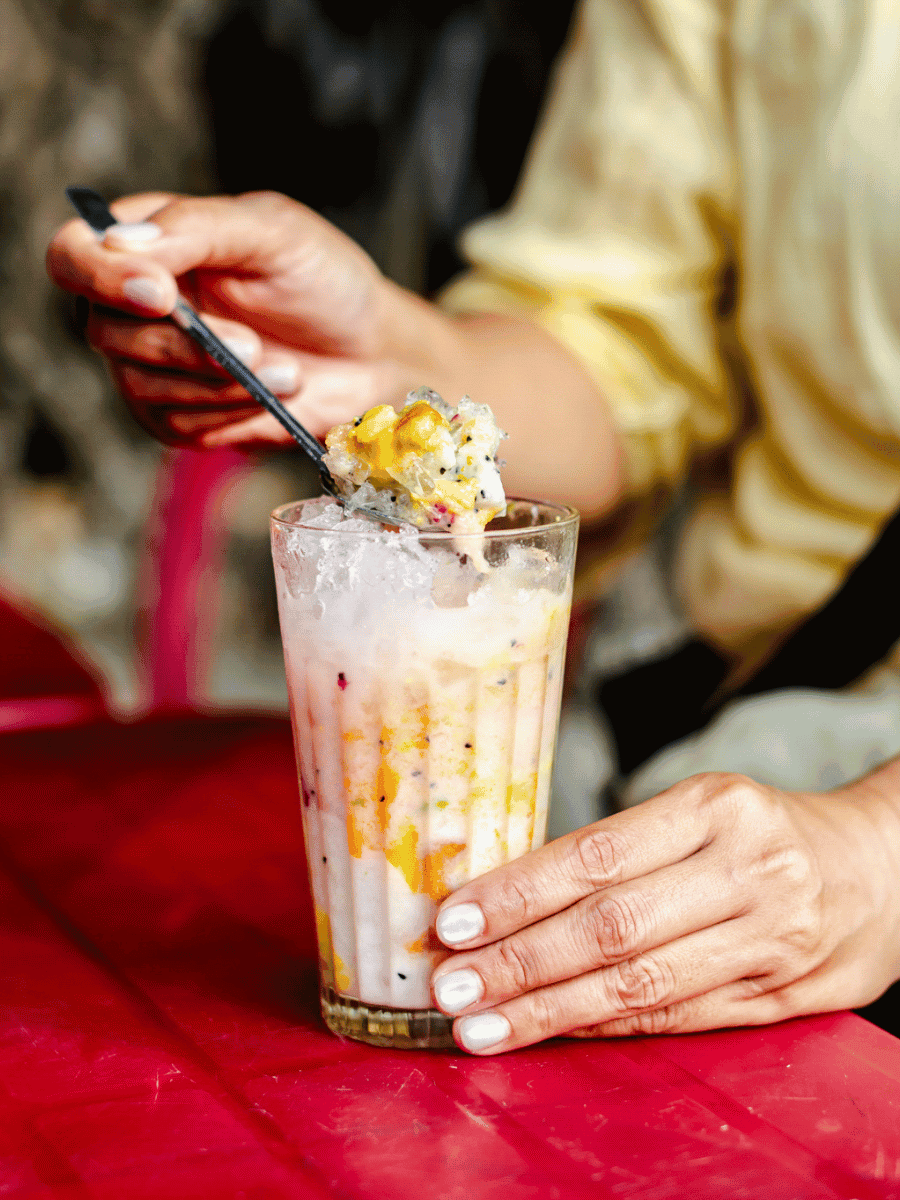
A single-pot dessert of mung bean, tapioca pearls and coconut milk, served warm or over ice. The Vietnamese answer to a sweet snack, available in dozens of variations.

A tall glass of strong black coffee topped with a fluffy hot custard of egg yolk, condensed milk and vanilla. Hanoi's most-photographed coffee, invented in 1946 when milk was scarce.

A silky egg-and-condensed-milk custard set over a pool of dark caramel, served cold with crushed ice and a splash of Vietnamese coffee. The colonial-era French dessert made unmistakably Vietnamese.

Pork mince pressed onto lemongrass stalks and grilled over charcoal, then rolled in rice paper with vegetables and dipped in a peanut liver sauce. Hue's tableside grill classic.
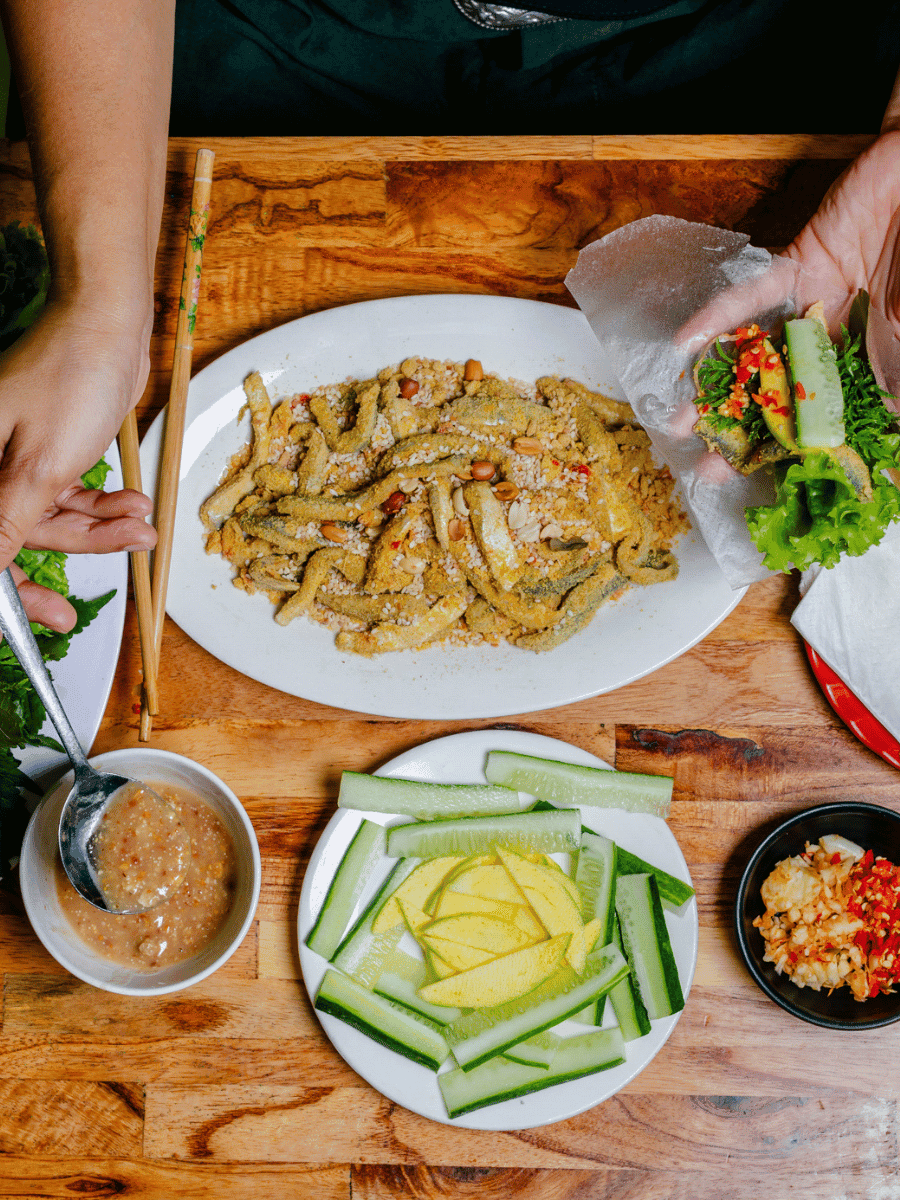
Thin slices of raw anchovy cured briefly in lime, tossed with rice powder, roasted peanuts and mixed herbs, then wrapped in rice paper with vegetables. Da Nang's coastal specialty.