
Destination
Hue
The story
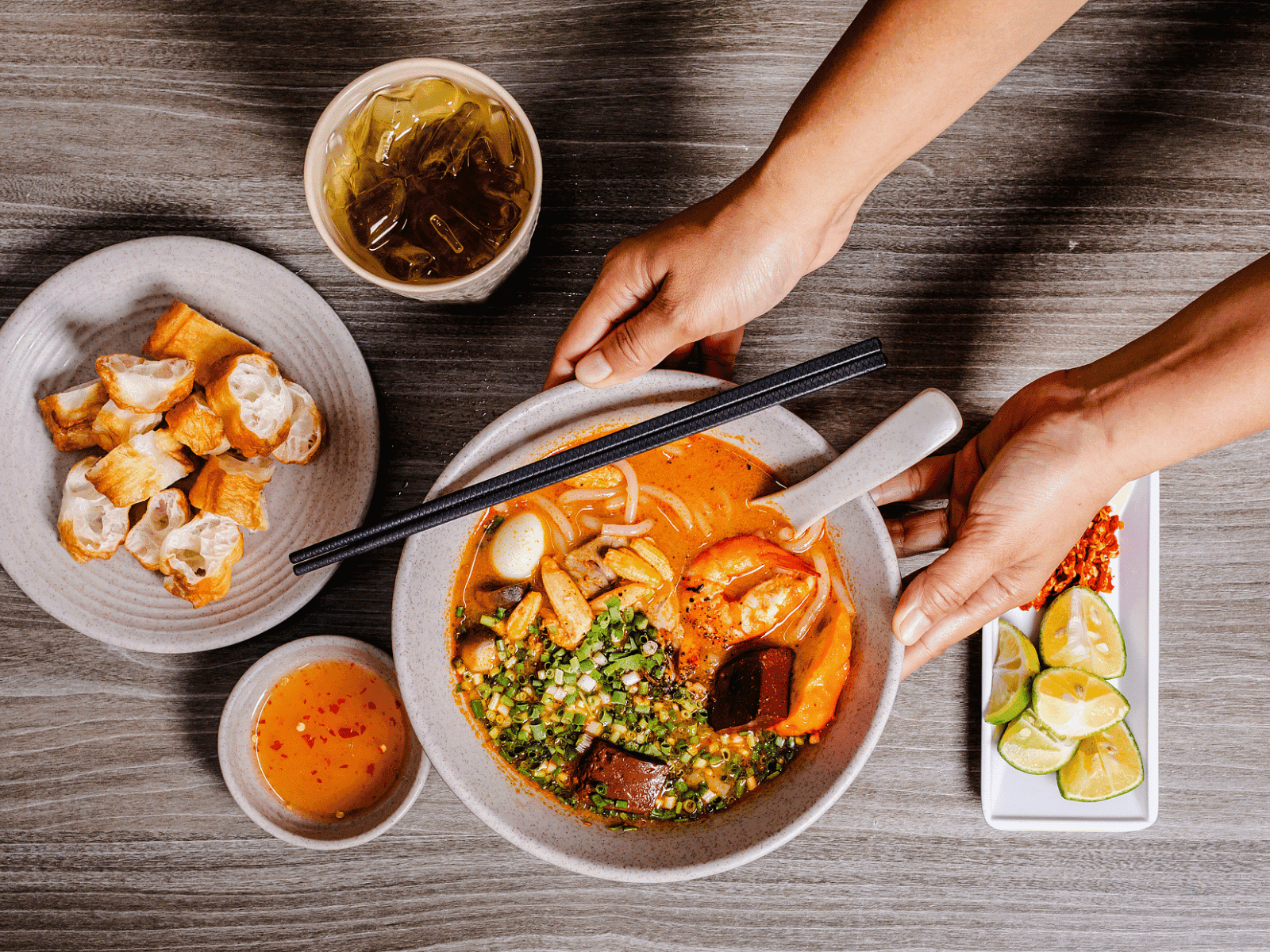
Bánh canh cua is Ho Chi Minh City's most-loved thick-noodle crab soup. Very thick chewy tapioca noodles (bánh canh) sit at the base of the bowl. The broth is a rich golden pork-and-crab stock thickened slightly with tapioca or cornstarch, tinted deep orange with annatto oil, and finished with generous chunks of fresh crab meat, whole prawns, halved quail eggs, sliced pork knuckle, sliced fish cake and green onion. Served with a plate of fresh herbs and lime for the eater to add at will. The dish is heavy, rich, deeply seafood-forward, and considered comfort food; bánh canh cua vendors open only for breakfast and lunch, and long queues form at the best of them.
Method
Blanch pork bones and hock in boiling water 5 minutes. Drain. Return to a clean pot with fresh water, halved onion, sliced ginger and salt. Simmer 2 hours over low heat. Skim foam during the first 15 minutes.
In a small pan, warm 3 tbsp oil over medium heat. Add annatto seeds and cook 90 seconds until the oil turns deep orange-red. Strain out the seeds; reserve the coloured oil.
Lift pork hock from the broth. Cool slightly and shred the meat off the bone. Reserve.
Strain broth into a clean pot. Bring back to a simmer. Add fish sauce, sugar, pepper and the annatto oil.
Whisk the cornstarch slurry. Slowly pour into the simmering broth while stirring. Cook 3 minutes until the broth has thickened to a heavy pourable consistency.
Add prawns; simmer 90 seconds until pink. Add quail eggs and simmer 60 seconds to heat through.
Add the crab meat and sliced pork sausage or fish cake. Simmer 60 more seconds; do not overcook the crab or it dissolves.
Boil the thick tapioca noodles per packet instructions (typically 3 to 5 minutes). Drain. Divide between 6 large deep bowls. Ladle the thick broth generously over, making sure each bowl has crab, prawns, quail eggs, pork sausage and shredded hock. Top with spring onion and a dust of pepper. Serve with the plate of herbs, lettuce, bean sprouts, lime and chili on the side.
Tips
- Thick tapioca noodles. Fresh bánh canh has a specific chewy bounce. Any Vietnamese grocer sells them fresh; udon is a workable substitute.
- Annatto oil for colour and flavour. This is what gives the classical deep-orange colour. Do not skip.
- Thicken with starch. The broth should be spoonable-thick, not soup-thin. Do not skip the slurry.
- Crab in last. Adding crab too early dissolves it into the broth. Sixty seconds at the end is enough.
- Fresh herbs at the table. Do not skip.
More recipes
View all
Rice vermicelli in a tangy tomato broth topped with clouds of crab meat, tofu, tomato and shrimp paste. Hanoi's Sunday-morning noodle soup, best with a plate of fresh herbs.
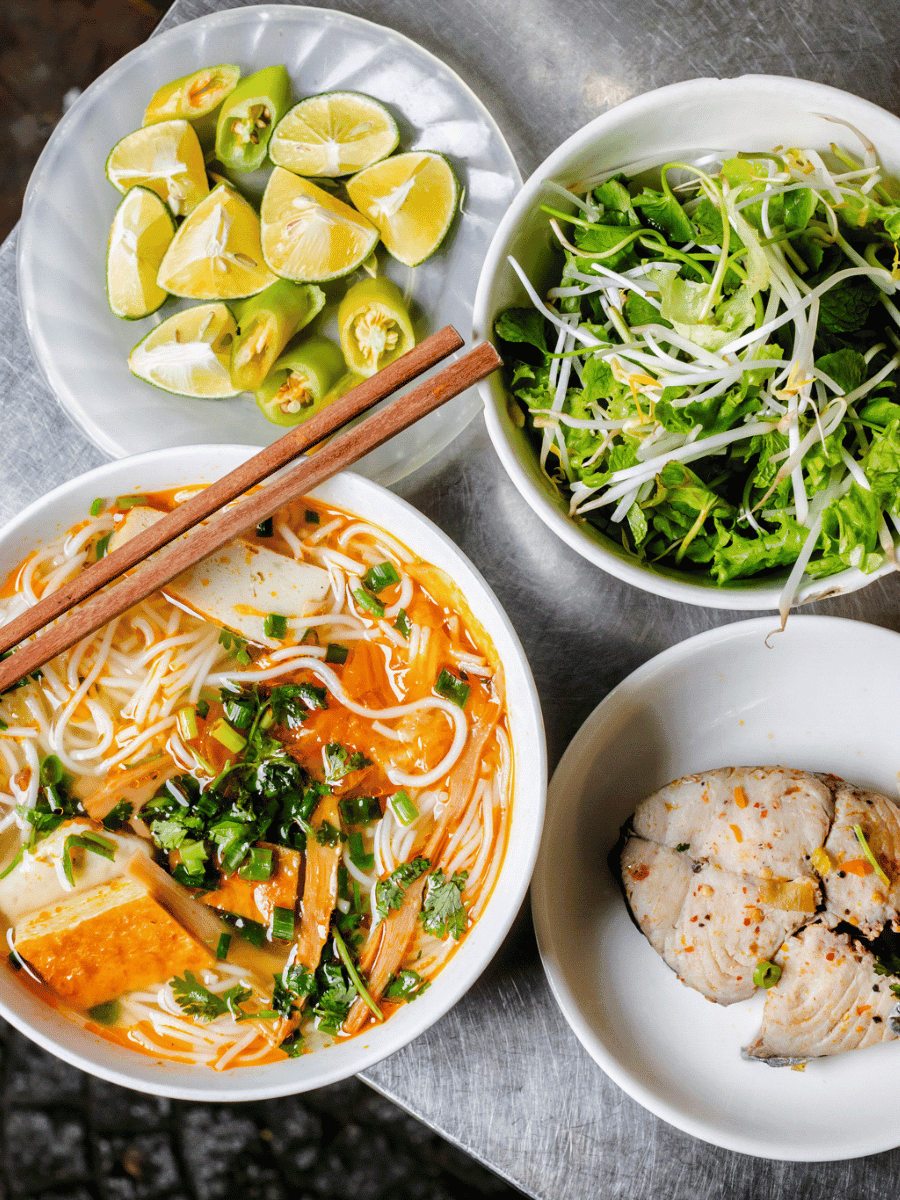
A clear golden broth of fish bones with tomato and pineapple, ladled over rice vermicelli and slices of fried fish cake. Da Nang and Nha Trang's coastal noodle bowl.

Rice vermicelli in a clear duck broth simmered with pickled bamboo shoots and blood cubes, topped with sliced duck meat, coriander and spring onion. A Hanoi cold-weather bowl.
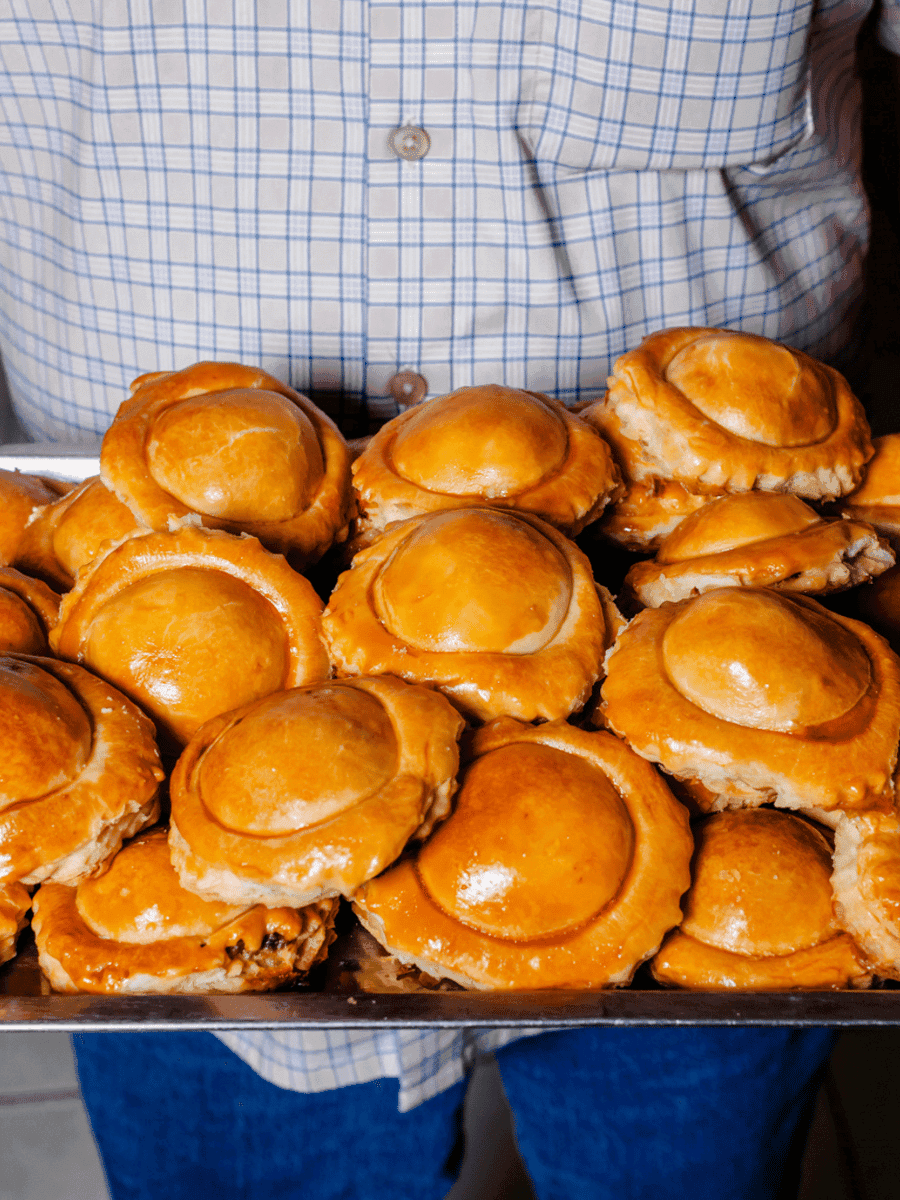
Flaky puff pastry pockets filled with spiced pork and mushroom, brushed with egg wash and baked golden. Hanoi's colonial French-Vietnamese bakery snack.

Rice noodles in a long-simmered beef bone broth scented with star anise, cinnamon and charred ginger, topped with rare beef slices and a plate of fresh herbs for finishing at the table.
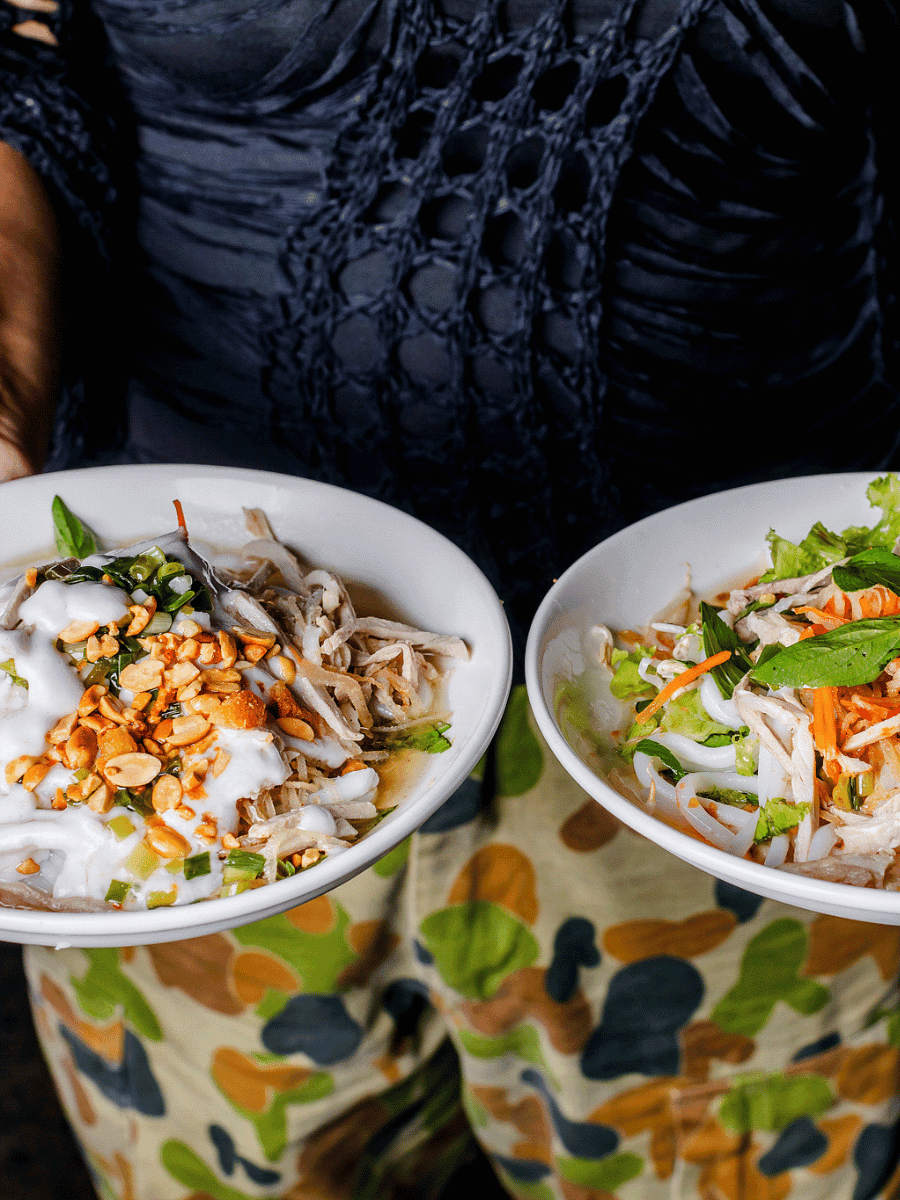
Thick chewy rice noodles served warm with shredded pork skin, coconut cream, crushed peanuts and a splash of sweet-sour fish sauce. Mekong Delta's home-style noodle bowl.