
Destination
Bogota
The story
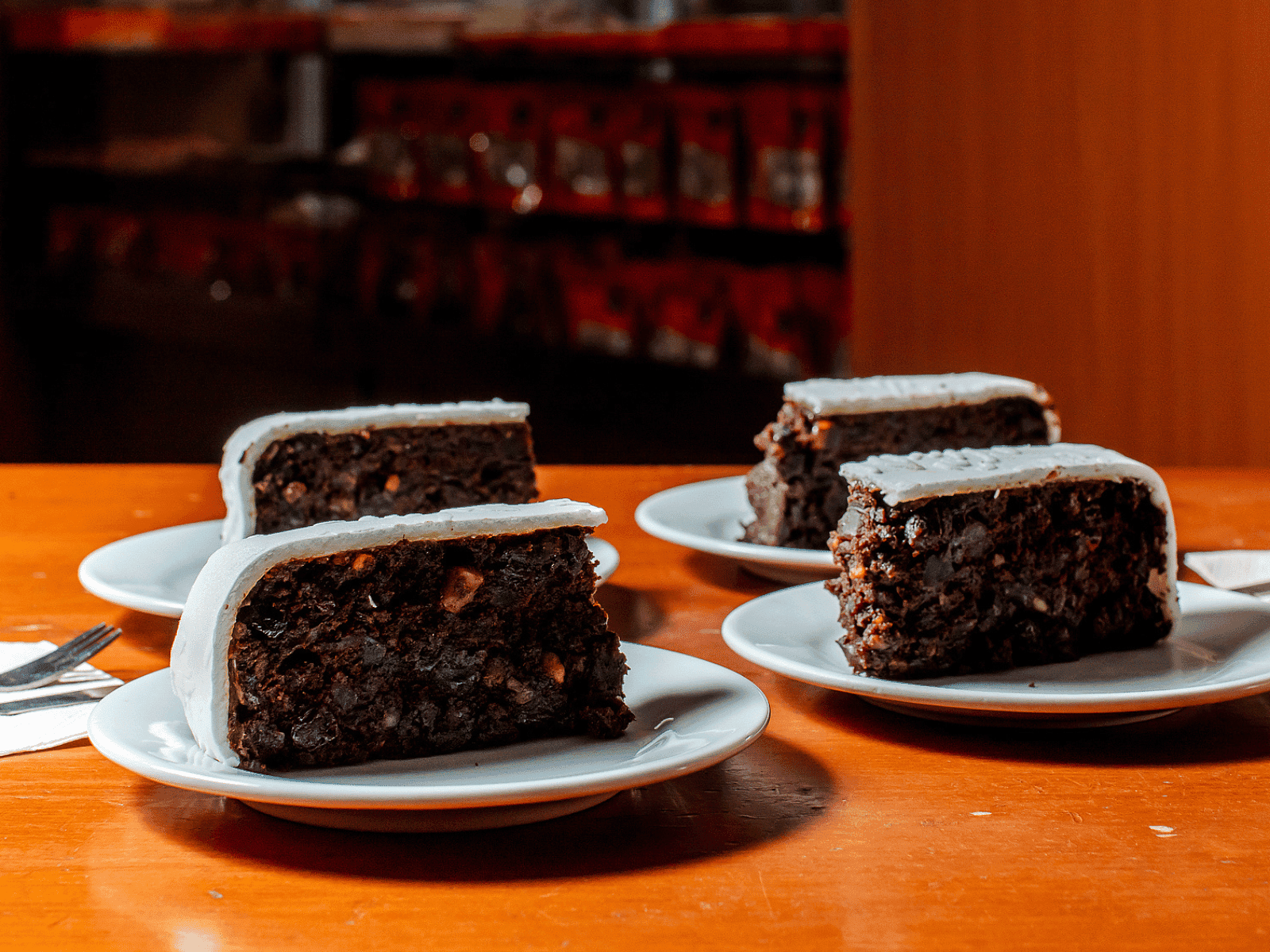
Torta negra is Colombia's Christmas cake and one of the country's most-loved sweets. Raisins, prunes, dates, dried figs and glacé cherries soaked in a mix of red wine and rum (traditionally aguardiente) for at least two weeks, then folded into a dark cake made with panela, spices, cocoa and burnt-sugar syrup. Baked slowly, doused with more rum while still warm, and (traditionally) aged for another week before slicing. Every Colombian family has a recipe passed down through mothers and grandmothers; every recipe is defended as the correct one.
Method
Combine all the dried and candied fruits in a large glass jar with the red wine, rum and citrus zests. Seal and leave at room temperature for at least 2 weeks, ideally longer. Stir or shake the jar every few days.
On the day of baking, place the panela and water in a small heavy saucepan. Heat over medium, stirring, until the panela dissolves. Turn heat up and cook 5 to 7 minutes until it darkens to a deep, almost-burnt caramel colour (careful not to fully burn). Off the heat, cool slightly.
Heat the oven to 150°C (300°F). Line a 24cm round cake tin with 2 layers of baking paper (or wrap the outside with newspaper or foil to insulate: this is a long, slow bake and you don't want the outside to over-brown).
In a stand mixer with the paddle, cream the butter and muscovado sugar 5 to 6 minutes until pale and fluffy.
Add the eggs one at a time, beating well between each. Add the vanilla extract with the last egg.
In a separate bowl, whisk together the flour, baking powder, bicarbonate, cocoa, cinnamon, cloves, nutmeg, allspice and salt.
Fold the dry ingredients into the butter mixture in two batches. Add the burnt-sugar syrup and the ground almonds and mix until just combined. Finally, drain the soaked fruits (reserve the liquid for later) and fold them through the batter. The mixture will be thick and dark.
Spoon into the prepared tin, smoothing the top. Bake 2.5 to 3 hours, until a skewer inserted into the middle comes out clean. Check at 2 hours; if the top is browning too fast, cover loosely with foil.
While the cake is still hot in the tin, pierce all over with a skewer. Slowly pour over the reserved soaking liquid and the extra 100ml of rum, letting it soak in. Cool completely in the tin. Once cold, wrap tightly in cling film and rest at least a week (or up to a month) before serving, brushing with a little more rum every 2 to 3 days if you like.
Tips
- Two weeks of soaking is the minimum. Two months is better. The longer the fruits sit in the rum and wine, the deeper the finished cake tastes. Every Colombian abuela starts her Christmas cake soak in October.
- The burnt-sugar syrup is what makes it black. Take the panela almost to burnt (deep dark caramel, verging on smoke). Under-cooked syrup gives you a brown fruit cake; over-cooked gives you bitterness. The sweet spot is dark amber with a slight edge.
- Low heat, long bake. 150°C for 2.5 to 3 hours is what gives you an even, moist cake with no burnt edges. Higher heat gives you a scorched crust and a raw middle.
- Douse while hot. The reserved soaking liquid and extra rum penetrate best when the cake is still warm and porous. As it cools it locks in the flavour.
- Age for a week before slicing. The cake tastes noticeably better after 7 to 10 days of rest, wrapped tightly. Colombian tradition is to bake in early December, age for two weeks, and slice on Christmas Eve.
More recipes
View all
Fresh sweet corn ground into a soft paste, formed into thick discs and cooked on a griddle until deep golden. Split open, buttered and stuffed with white cheese.

Very ripe plantains slowly braised in panela, cinnamon, cloves and red wine until they turn dark and glossy. The sweet Caribbean side that goes with everything savoury.
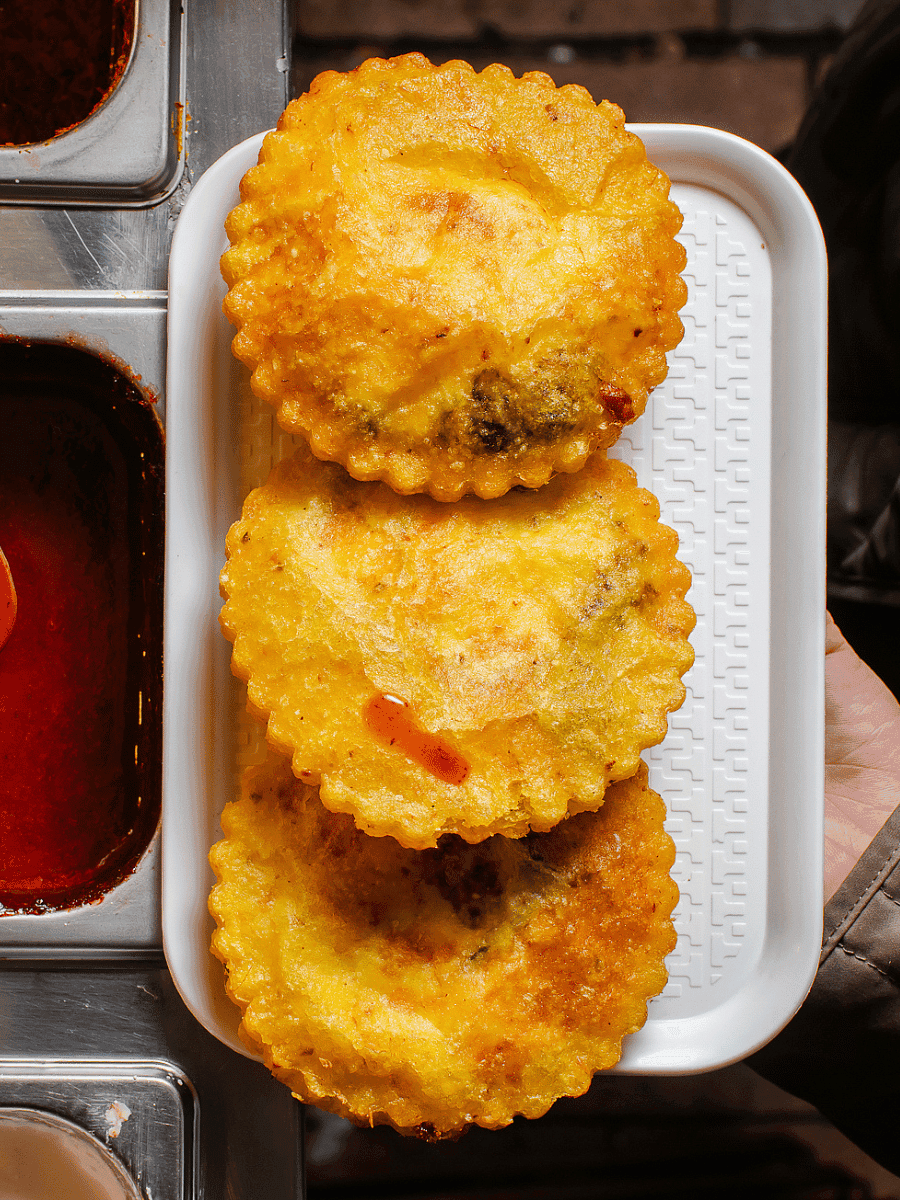
Caribbean-style yellow corn arepa fried once, split open, filled with a whole raw egg and seasoned beef, sealed and fried again until golden. Cartagena's morning market classic.

A pot of fresh herbs simmered with panela sugar. Colombia's after-dinner infusion, poured hot from a jug into a small cup at any Bogotá café.

Tiny yellow Colombian potatoes fried whole in their thin skins until golden and shrivelled, tossed with butter and salt. The Bogotá bar snack no one can stop eating.

Rolled oats blended with cold milk, panela and cinnamon, served over ice. Colombia's midday refresher, sold in every panadería from a chilled glass jug.