
Destination
Bogota
The story
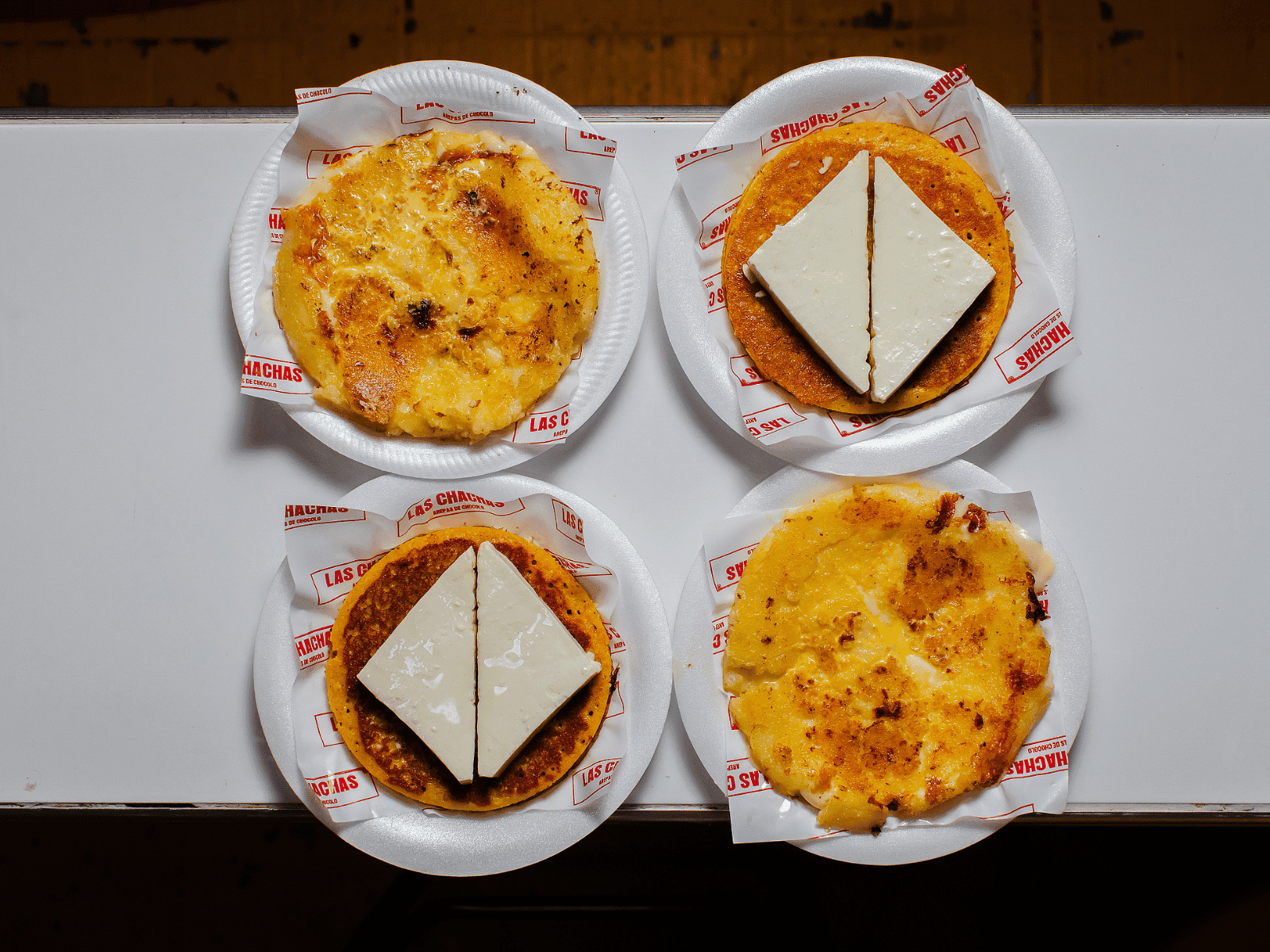
Arepa de chocolo is Colombia's summer arepa: fresh sweet corn (chocolo) blitzed into a soft, slightly chunky paste with a spoon of butter, salt and a little pre-cooked corn flour to bind, spread into thick discs, cooked slowly on a hot griddle until the outside caramelises to a deep gold and the inside stays sweet and pillowy. Split open with a knife, buttered generously, stuffed with a slice of queso blanco or crumbled queso campesino. Eaten with a small cup of hot chocolate for breakfast, or a strong tinto (Colombian espresso) at 4pm.
Method
Place the corn kernels in a food processor. Blitz for 20 to 30 seconds to a chunky paste (not smooth). You want visible pieces of kernel but the mixture should hold together when squeezed.
Transfer the corn paste to a large bowl. Stir in the masarepa, softened butter, sugar if using, salt and egg. Mix well until it comes together into a soft, thick batter that holds its shape when scooped. If too wet, add a tablespoon more masarepa; if too dry, a splash of milk.
Cover and rest 5 minutes so the masarepa hydrates.
Heat a heavy non-stick pan or comal over medium heat with a small knob of butter. Scoop a heaped 3 tablespoons of batter for each arepa, drop into the pan and press down with the back of a spoon to a disc about 10cm across and 1.5cm thick. Cook 4 to 5 minutes per side, until deep gold and slightly caramelised. Work in batches; add more butter to the pan between batches.
Split each hot arepa horizontally with a serrated knife, leaving a hinge. Butter generously inside. Stuff with a slice of queso blanco. Serve immediately with hot chocolate or coffee.
Tips
- Fresh corn is best but frozen works. Peak-season fresh corn on the cob is unbeatable; frozen sweetcorn kernels defrosted and drained are a solid year-round substitute.
- Blitz coarse, not smooth. Visible pieces of kernel give the arepa its characteristic texture. A smooth purée turns into corn pancake batter, which is a different dish.
- The egg is a small non-traditional addition that helps. Some Paisa recipes skip it; ours includes a single egg because it holds the arepa together and stops it collapsing on the griddle without changing the flavour.
- Medium heat, patient cooking. High heat scorches the outside before the inside sets. Medium heat and 4 to 5 minutes per side gives you the classic deep-gold caramelised exterior with a soft, sweet middle.
- Queso blanco is the classic filling. If you can't find fresh Colombian white cheese, a mild feta or a fresh mozzarella works. Anything sharp or aged is wrong: the cheese here is meant to be mild, salty and moist.
More recipes
View all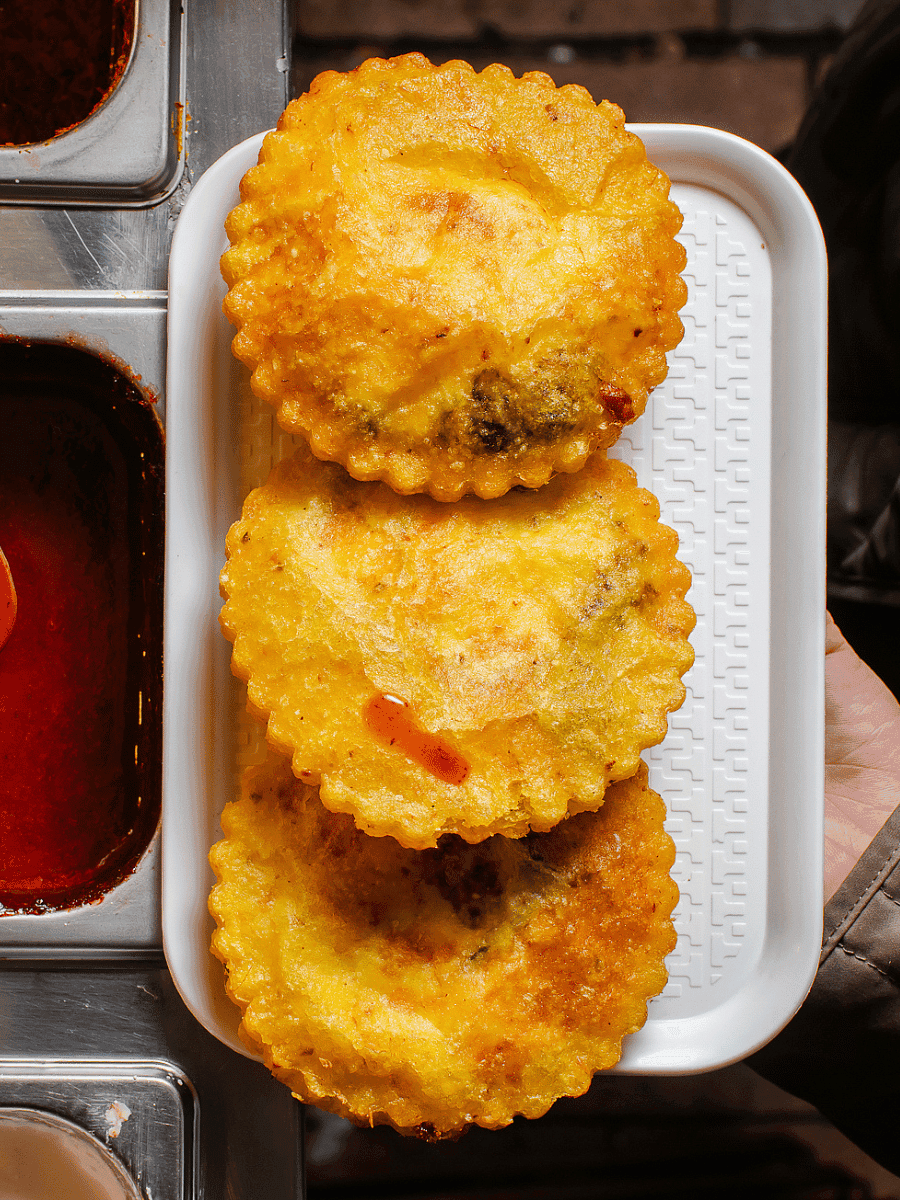
Caribbean-style yellow corn arepa fried once, split open, filled with a whole raw egg and seasoned beef, sealed and fried again until golden. Cartagena's morning market classic.

A hot broth of milk and water with poached eggs, chopped spring onion and coriander, poured over torn bread. Bogotá's Muisca-inherited breakfast (and hangover cure).

Dried fruits soaked in rum and wine for weeks, folded into a dark, spiced sponge and aged before slicing. Colombia's Christmas cake, richer and boozier than most.

Green plantain boiled and mashed with butter, hogao and crumbled cheese, topped with a fried egg. Santa Marta's Caribbean breakfast, cheap, filling and ancient.

Tiny yellow Colombian potatoes fried whole in their thin skins until golden and shrivelled, tossed with butter and salt. The Bogotá bar snack no one can stop eating.

Bijao-leaf-wrapped parcels of yellow corn masa, pork, chicken, chorizo, chickpea, potato, egg and hogao, steamed for hours over an open pot. Paisa Sunday breakfast at its most generous.