
Destination
Singapore
The story
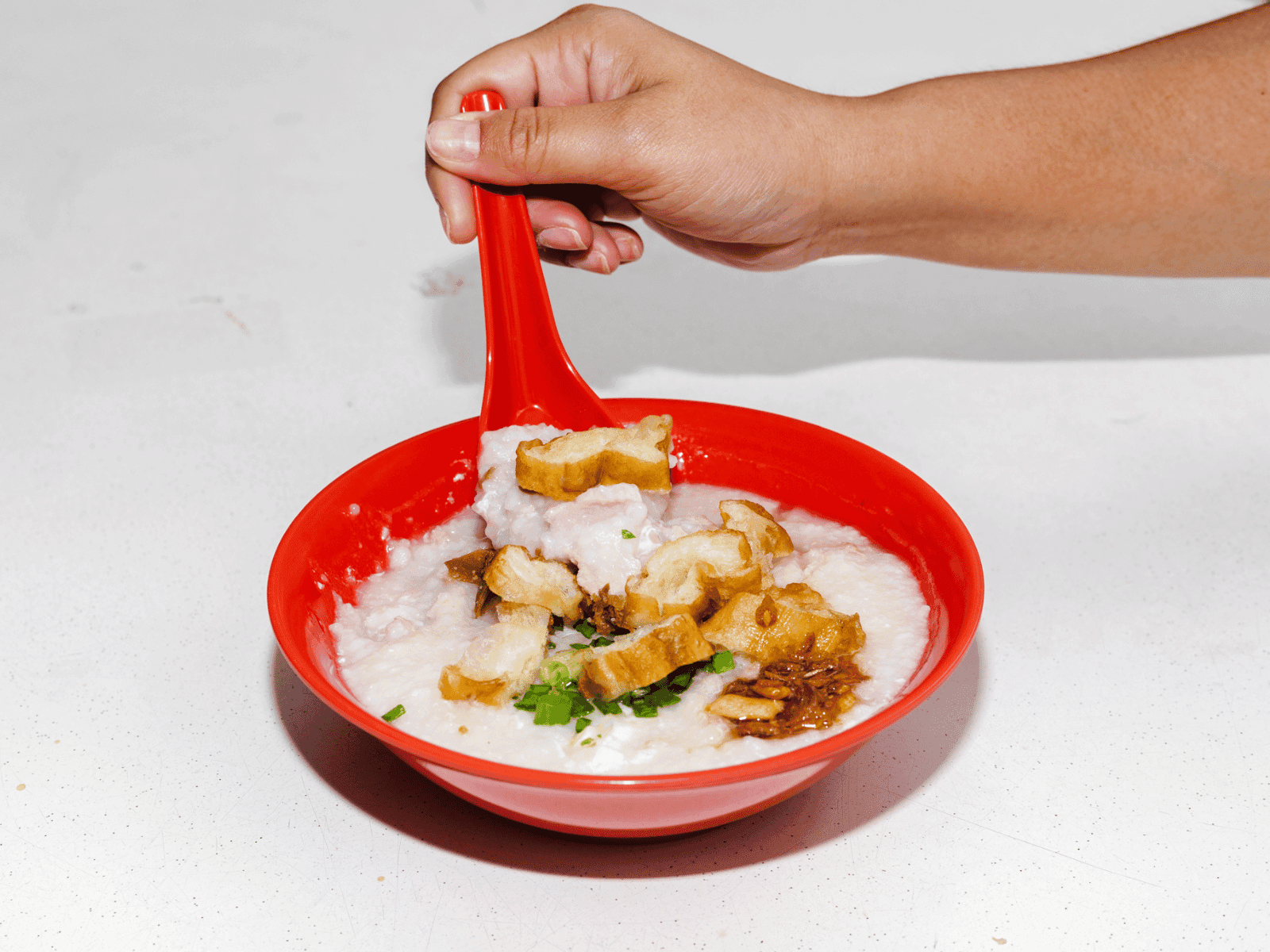
Chok is Singapore's most-loved comfort food and the country's default breakfast, hangover breakfast and sick-day meal: white rice cooked in a large amount of water or chicken stock for 90 minutes until every grain has burst and the whole becomes a silky, thick, cream-like porridge (congee). Served in wide bowls with a scatter of poached chicken, a piece of thousand-year egg (century egg), soy-fried salty peanuts, spring onion, coriander, ginger julienne and a drizzle of sesame oil. A splash of light soy and white pepper at the table. Sold at every Singapore hawker centre and coffee shop; the classical Teochew Singapore rice porridge stalls (Weng Kiang Kee at Maxwell Food Centre, Zhen Zhen at Maxwell) attract queues.
Method
Rinse the jasmine rice under cold running water until the water runs clear (about 3 changes). Drain.
In a large heavy pot, combine rinsed rice, chicken stock, ginger slices, salt and oil. Bring to a boil, then reduce to a low simmer.
Cook uncovered for 90 minutes, stirring every 10 minutes with a wooden spoon to prevent sticking. The rice will break down progressively — after 60 minutes the grains split open; after 90 minutes they merge into a silky cream.
Check the porridge texture. It should be thick but flowing — a spoonful should hold its shape briefly before slowly spreading. If too thick, whisk in extra hot stock. If too thin, simmer another 15 minutes uncovered.
If using chicken: poach 2 chicken thighs in 500ml water with a slice of ginger for 20 minutes. Cool briefly, shred with two forks.
If using pork: mix mince with soy, wine, sesame oil, cornstarch and pepper. Cook the minced pork mixture in a small pan 5 minutes until browned. Reserve.
Fry the raw peanuts in oil 3 minutes until pale gold; drain and toss with soy sauce and sugar while hot. Prep spring onion, ginger julienne, coriander, fried garlic, fried shallots and sesame seeds — arrange in small bowls.
Ladle hot porridge into 4 warm wide bowls. Top each with a generous scoop of chicken (or pork), a wedge of thousand-year egg, a scatter of fried peanuts, spring onion, ginger julienne, coriander, fried garlic, fried shallots and a sprinkle of sesame seeds. Serve immediately with soy sauce, sesame oil, white pepper, chili and (optional) you tiao slices on the side. Diners season to taste and eat with a spoon.
Tips
- Rinse the rice thoroughly. Excess starch makes the porridge gummy. Three changes of water is the minimum.
- Stir every 10 minutes. Prevents sticking on the base and helps the grains break down evenly.
- Thick but flowing. The classical Singaporean chok is thick enough to hold on a spoon briefly but pourable. Water-thin porridge is Cantonese-style; brick-thick is over-reduced.
- Thousand-year egg is the classical topping. Sold at any Chinese grocer as "century eggs" or "preserved duck eggs." Do not substitute regular hard-boiled eggs — the flavour is completely different.
- Serve piping hot. Chok cools fast and thickens as it cools. Warm the bowls, serve immediately, eat within 20 minutes.
More recipes
View all
Cantonese roast pork belly with shattering crackling skin, served on rice with a splash of dark soy, spring onion and chili sauce. Singapore's hawker essential.
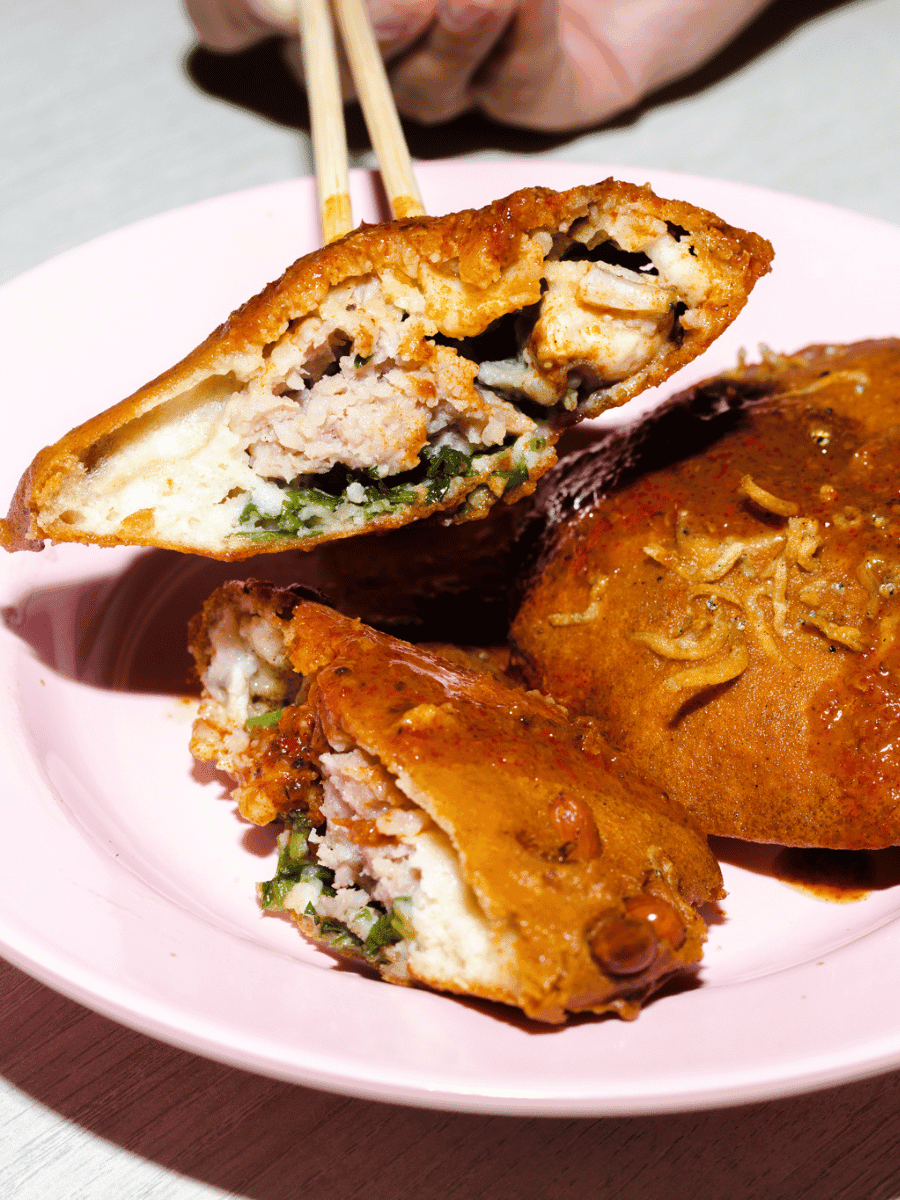
Deep-fried disc of rice-flour batter studded with whole oysters, minced pork and dried shrimp, served with a squeeze of chili sauce. Old Chinatown Singapore's snack.

Rugby-ball dumplings of mashed taro wrapped around a spiced pork filling, deep-fried into lacy golden shells. A dim sum classic and Singapore's fanciest fried snack.

Whole chicken slow-poached in dark soy master stock scented with star anise, cinnamon and rock sugar, chopped over rice with a spoon of ginger oil.

Silky poached chicken, chicken-fat rice cooked in the poaching broth, dark soy, ginger-scallion and chili sauces. Singapore's most-photographed hawker plate.
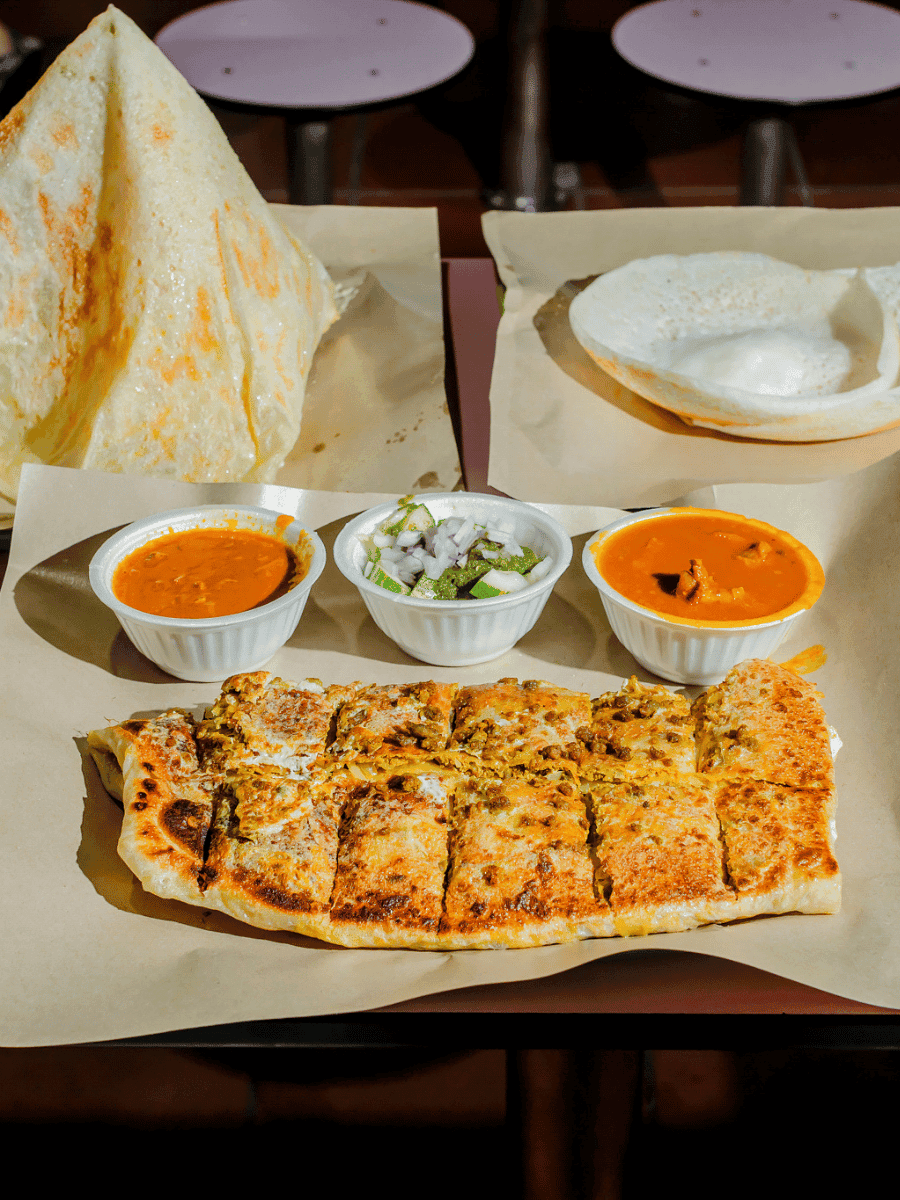
Thin roti prata dough stretched paper-thin and folded around a filling of minced mutton, onion and egg, pan-fried until crackly. Little India's late-night favourite.