

Destination
Singapore
The story
Siew yoke is Cantonese roast pork belly — the pale-glazed, crackling-skinned pork that hangs in the windows of every Singapore Chinatown roast shop and is chopped to order on wooden boards for chicken rice stalls, wonton mee counters and roast-meat rice plates. Skin is bubbled into a golden crackling that shatters with a knife; the meat below is layered fat and pink flesh, seasoned with five-spice, salt and white pepper. Served over jasmine rice with a splash of dark soy, a scatter of spring onion, a slice of cucumber, and a small dish of Chinese mustard for dipping. The classical Singapore siew yoke rice adds a few pieces of roast char siu or drunken chicken on the same plate.
Method
Lay the pork belly flesh-side up. Score the flesh in a diamond pattern with a sharp knife, cutting 5mm deep. Do not score the skin.
Mix all flesh-side seasoning ingredients into a paste. Rub the paste all over the flesh side (bottom and sides), pressing into the scores. Do not put any seasoning on the skin.
Flip the belly skin-side up. Wipe the skin with white vinegar (dries the surface). Pat completely dry with kitchen paper. Prick the skin all over with a sharp fork or a pork-crackling pricker — thousands of small holes, as many as you can. This is essential for the crackling.
Set the belly on a wire rack over a tray. Refrigerate uncovered overnight (12 to 24 hours). The skin must be bone-dry.
Preheat oven to 200C. Bring the belly to room temperature. Wrap the flesh sides (bottom and sides) tightly in foil so only the skin is exposed. Set on a rack in a roasting tin. Rub coarse sea salt heavily over the skin.
Roast at 200C for 30 minutes without opening the oven. The salt will crust and the skin will start to blister.
Remove from oven. Scrape off the salt crust (careful — hot). If the skin isn't fully blistered, return uncovered to a 220C oven for another 15 minutes. Then reduce to 160C and roast another 45 to 60 minutes until the meat is fork-tender and internal temperature is 75C.
Rest the belly 10 minutes on a board (never on a plate — the skin softens on liquid). Chop into 3cm cubes or slice into thick pieces with a heavy cleaver. Serve over jasmine rice with a splash of dark soy, cucumber, spring onion, coriander, chili sauce and mustard on the side.
Tips
- Overnight air-dry. Wet skin steams; dry skin crackles. Twelve hours uncovered in the fridge is not optional.
- Prick, prick, prick. Thousands of small holes in the skin let the fat below render out during roasting. Under-pricked skin gives you leathery, chewy crackling.
- Wrap the flesh sides in foil. This protects the seasoned flesh from over-drying while the skin blasts under high heat. Every roast pork stall in Singapore does this.
- Salt crust on the skin. The coarse salt draws moisture from the surface and helps the crackling puff. Scrape it off before the second stage.
- Rest on a board, not a plate. The skin softens on any wet surface. Rest on a dry chopping board only.
More recipes
View all
Long-simmered white rice porridge, silky as cream, topped with poached chicken, thousand-year egg, soy-fried peanuts, spring onion and a drizzle of sesame oil.

Whole chicken slow-poached in dark soy master stock scented with star anise, cinnamon and rock sugar, chopped over rice with a spoon of ginger oil.
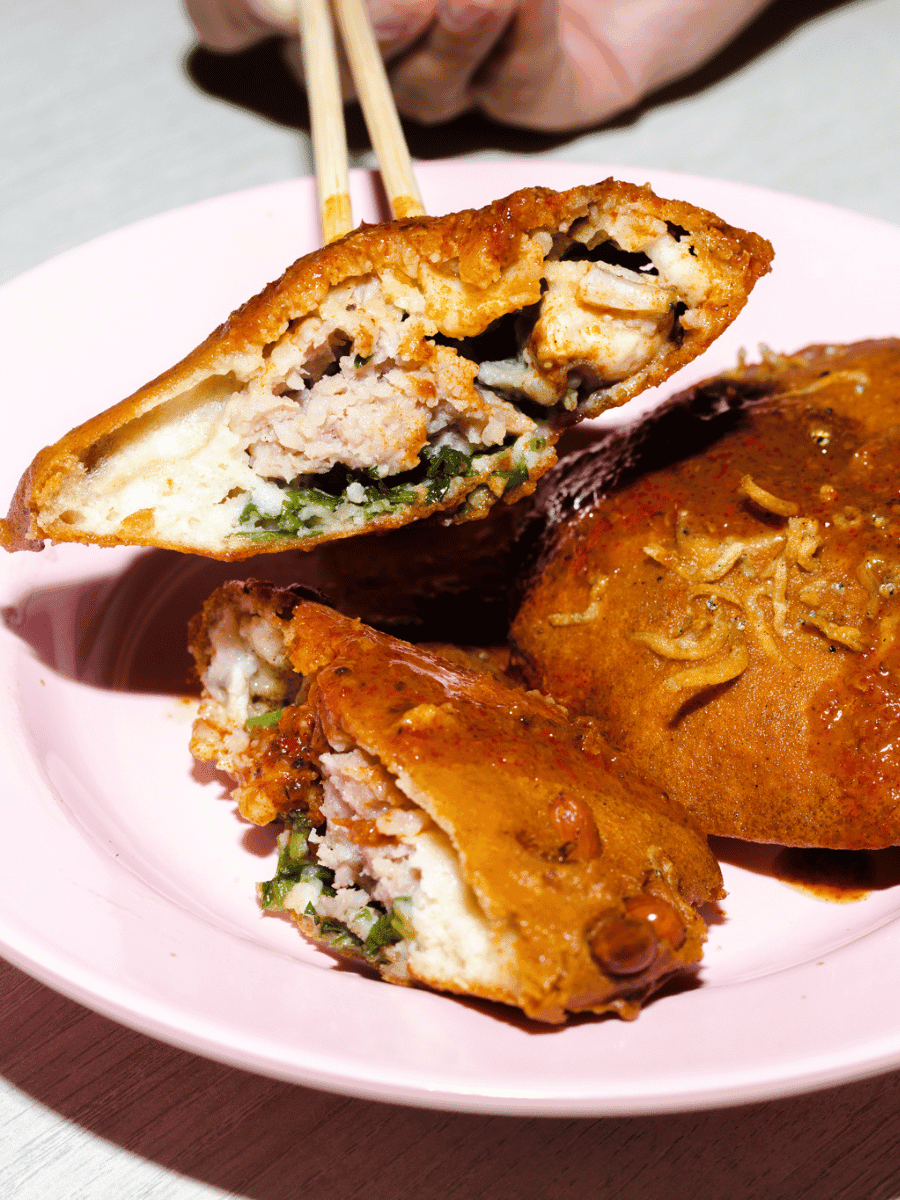
Deep-fried disc of rice-flour batter studded with whole oysters, minced pork and dried shrimp, served with a squeeze of chili sauce. Old Chinatown Singapore's snack.

Silky poached chicken, chicken-fat rice cooked in the poaching broth, dark soy, ginger-scallion and chili sauces. Singapore's most-photographed hawker plate.

Peppery clear pork soup packed with pig's intestine, liver, kidney and lean pork, served with rice and chili sauce. Singapore's Teochew hangover cure.

A plate of rice topped with breaded pork chop, chap chye cabbage, ngoh hiang and a ladle of dark yellow Hainanese curry gravy. Singapore's Chinese-Hainanese hawker specialty.