

Destination
Ipoh
The story
Rojak (Malay for "mixture") is Malaysia's iconic fruit-and-vegetable salad, a chaotic-looking but carefully-balanced dish of chopped pineapple, cucumber, jicama, green mango, tofu puffs, cucumber and boiled potatoes (varies by cook), all tossed with a thick, dark, sweet-savoury dressing built from hae ko (Penang prawn paste), tamarind, palm sugar, chilli and lime. Topped with crushed roasted peanuts and toasted sesame seeds. Served on a plate at hawker centres and mamak stalls; sold from carts by rojak-specialist vendors called "rojak man" at street corners across the country.
Method
In a large mixing bowl, whisk together the hae ko, tamarind paste, palm sugar, lime juice, warm water, chilli paste and salt until smooth and glossy. Taste; adjust for balance (more lime for sharp, more sugar for sweet, more chilli for hot).
Cut all the fruit and vegetables into roughly bite-sized 3cm chunks. Aim for a mix of textures: crisp (cucumber, jicama), soft (pineapple), tangy (green mango), spongy (tofu puffs).
If you like the tofu slightly warm, briefly toast the tau pok pieces in a dry pan for 1 minute per side. Skip if you prefer them room-temperature.
Add all the fruit, vegetables and tofu to the bowl with the sauce. Toss thoroughly with two spoons for 60 seconds, making sure every piece is generously coated in the thick dark sauce.
Divide between 4 shallow bowls or plates. Scatter generously with crushed peanuts and toasted sesame seeds. Serve immediately with extra chilli sauce on the side.
Tips
- Hae ko is essential. Without it, the sauce is just sweet-sour dressing, not rojak. Sold at Malaysian grocers in small jars labelled prawn paste sauce or hae ko. It's the specifically Penang ingredient that defines the dish.
- The sauce must be thick. A watery dressing pools at the bottom of the plate and leaves the fruit dry. Aim for a sauce that clings to the back of a spoon like thick jam; add more palm sugar or reduce the water if it's too thin.
- Mix textures. The whole appeal of rojak is the contrast between crisp (cucumber, jicama), soft (tofu, pineapple), tangy (green mango) and spongy (tau pok). Skipping any category makes the dish one-note.
- Toss just before serving. Fruit and vegetables in the sauce release water over time, thinning it and softening the fruit. Assemble at the last moment.
- Crushed peanuts on top, generously. Not decoration. The peanut crunch is essential to the finished dish. Roast raw peanuts in a dry pan for 4 minutes and crush roughly with a pestle.
More recipes
View all
Silky rice noodle rolls in a dark sweet-shrimp sauce with a scatter of toasted sesame seeds. Penang's morning-market breakfast, cousin to Hong Kong's cheung fun.

Steamed savoury rice cakes topped with fried preserved radish, oil and sesame. Malaysia and Singapore's soft breakfast, eaten with a small spoon.

Egg noodles and rice vermicelli in a deep, orange prawn-shell broth topped with poached prawns, hard-boiled egg, water spinach and fried shallots. Penang's most-loved noodle soup.

Small oysters cooked briefly in a starchy egg batter with garlic and coriander, finished with a squeeze of lime. Penang's coastal Hokkien street snack.
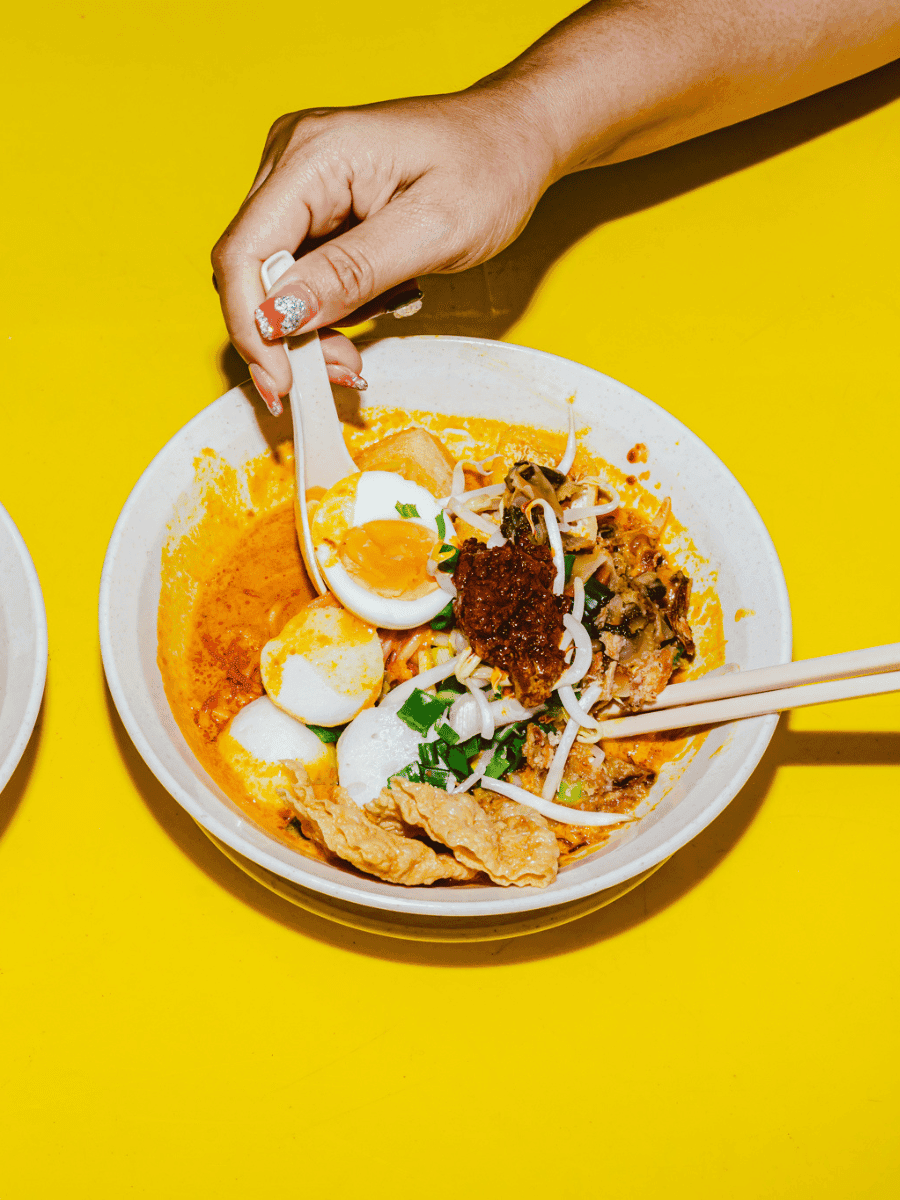
Coconut-based curry noodle soup with prawns, tofu puffs, cockles and a scarlet slick of chilli oil. Malaysia's default lunchtime laksa, richer and softer than its Penang cousin.
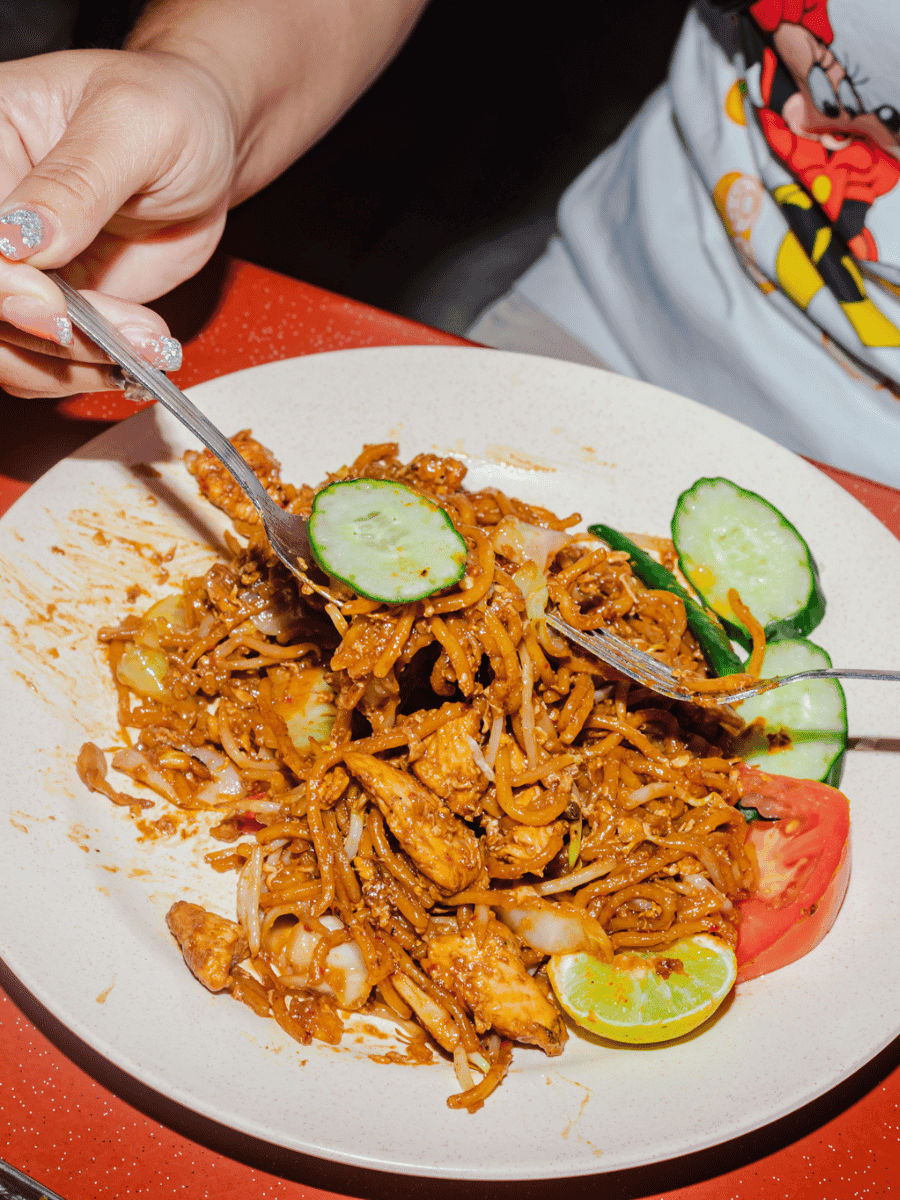
Yellow noodles fired in a screaming-hot wok with sambal, ketchup, egg, potato cubes and tofu puffs. Malaysia's signature mamak-stall plate, ready in six minutes.