

Destination
Ipoh
The story
Malaysian chee cheong fun is a distinct cousin of Hong Kong's cheung fun: silky steamed rice noodle rolls, cut into short pieces and drenched in a very specific Malaysian sauce combination — a thick dark sweet-shrimp sauce (built from prawn paste, tamarind, palm sugar and dark soy) with a scatter of toasted sesame seeds and fried shallots. The Penang version has its own signature: the addition of a chilli-lime sambal on the side, mixed in by the eater to their preferred heat. Sold at every kopitiam (coffee shop) and Chinese street stall from morning until early afternoon.
Method
Combine the hae ko, dark sweet soy, tamarind paste, palm sugar and water in a small saucepan. Warm over low heat, stirring, until the sugar dissolves and the sauce is glossy and slightly thickened (about 5 minutes). Cool.
Whisk together the chilli paste, lime juice, sugar and warm water in a small bowl.
In a large bowl, whisk together the rice flour, tapioca starch, cornstarch and salt. Slowly whisk in the cold water until smooth. Whisk in the oil.
Set up a large pot with a wide steamer basket and bring to a rolling boil. Brush a wide flat metal tray (about 25cm x 20cm) generously with oil.
Whisk the batter briefly. Pour a ladleful onto the oiled tray and tilt to coat the base in a very thin layer (2mm). Steam over high heat for 2 to 3 minutes, until the sheet has set into a smooth, translucent noodle.
Lift the tray out. Working quickly with a wet spatula, roll the noodle sheet up loosely from one side into a cylinder. Slide onto a plate and cut into 4cm pieces.
Re-oil the tray and repeat with the remaining batter until you have enough rolls for 4 servings (about 12 to 16 pieces).
Arrange the noodle rolls on plates. Drizzle generously with the warm prawn paste sauce. Scatter with toasted sesame seeds, fried shallots and spring onion. Serve the chilli sambal in a small dish on the side for each person to mix in.
Tips
- Rice flour, not glutinous rice flour. Rice flour (from Chinese grocers) gives you the correct silky sheet. Glutinous rice flour is a completely different product.
- Hae ko is the Penang signature. Malaysian-Chinese grocers sell it in small jars labelled prawn paste sauce or hae ko. It's what makes the sauce specifically Penang rather than generic. If you can't find it, a mix of Thai shrimp paste + extra dark soy sauce approximates the depth.
- Steam over rapidly boiling water. High heat sets the batter fast; low heat gives you a rubbery, undercooked sheet.
- Sambal on the side, not stirred through. This is a Penang-specific presentation: the chilli sambal is served in a small dish so each eater mixes their own preferred heat. Stirring it through the sauce at the kitchen removes that choice.
- Best served warm. The noodle sheets stiffen as they cool. Serve within 15 minutes of steaming; hold in a warm oven briefly if needed.
More recipes
View all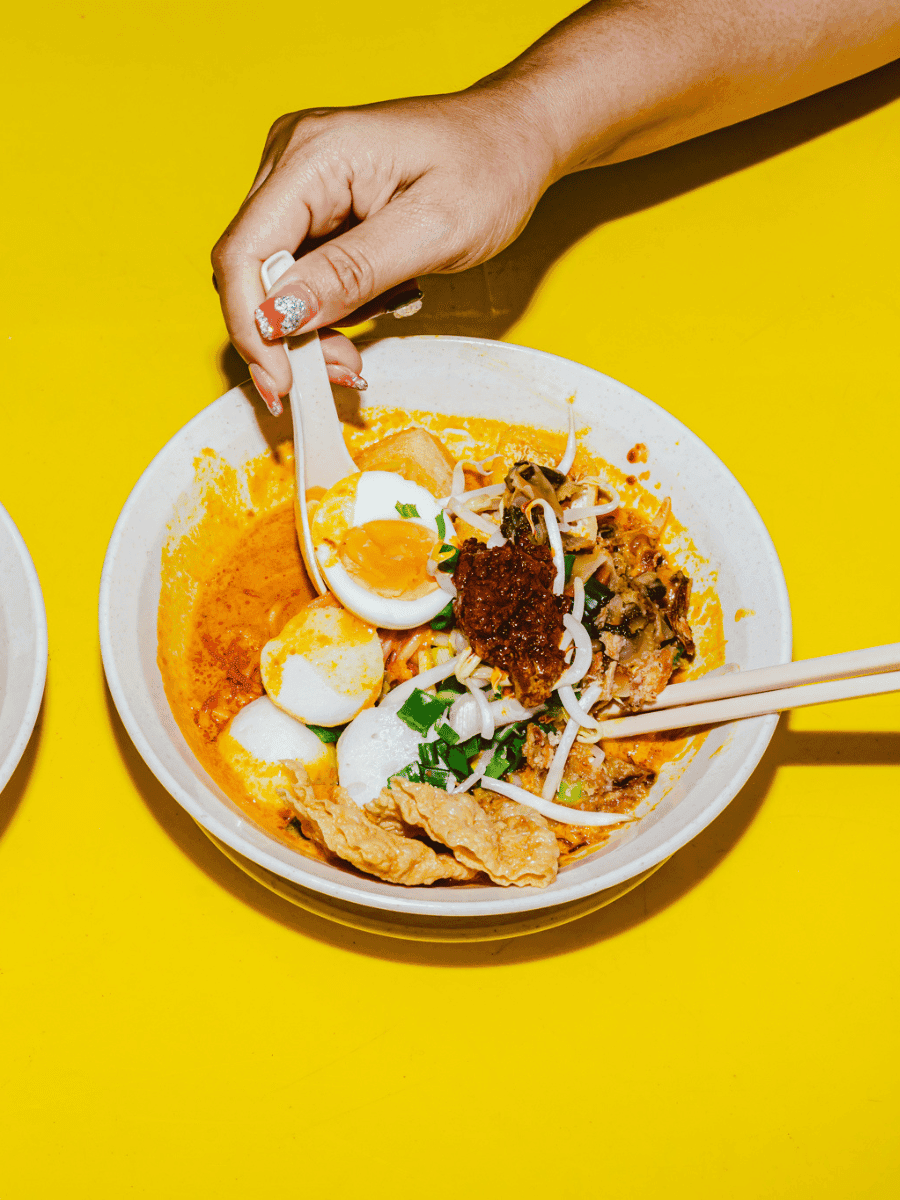
Coconut-based curry noodle soup with prawns, tofu puffs, cockles and a scarlet slick of chilli oil. Malaysia's default lunchtime laksa, richer and softer than its Penang cousin.

Small oysters cooked briefly in a starchy egg batter with garlic and coriander, finished with a squeeze of lime. Penang's coastal Hokkien street snack.

A pyramid of banana-leaf-wrapped coconut rice with sambal, fried anchovies, peanuts, hard-boiled egg and cucumber. Malaysia's national breakfast, sold from every roadside stall before dawn.
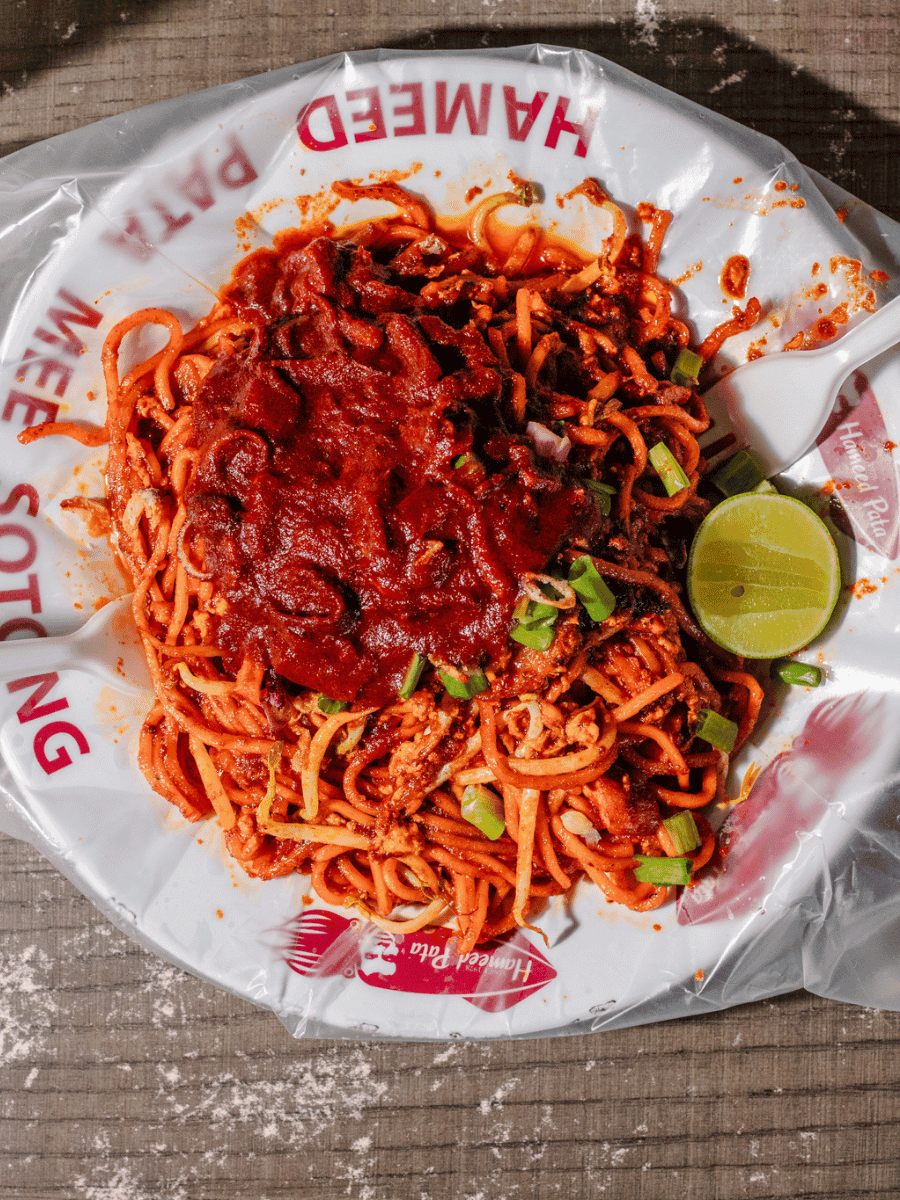
Yellow noodles tossed with squid braised in a dark, sweet, chilli-laced sauce. Penang's Padang Kota street noodle, distinctly its own thing.
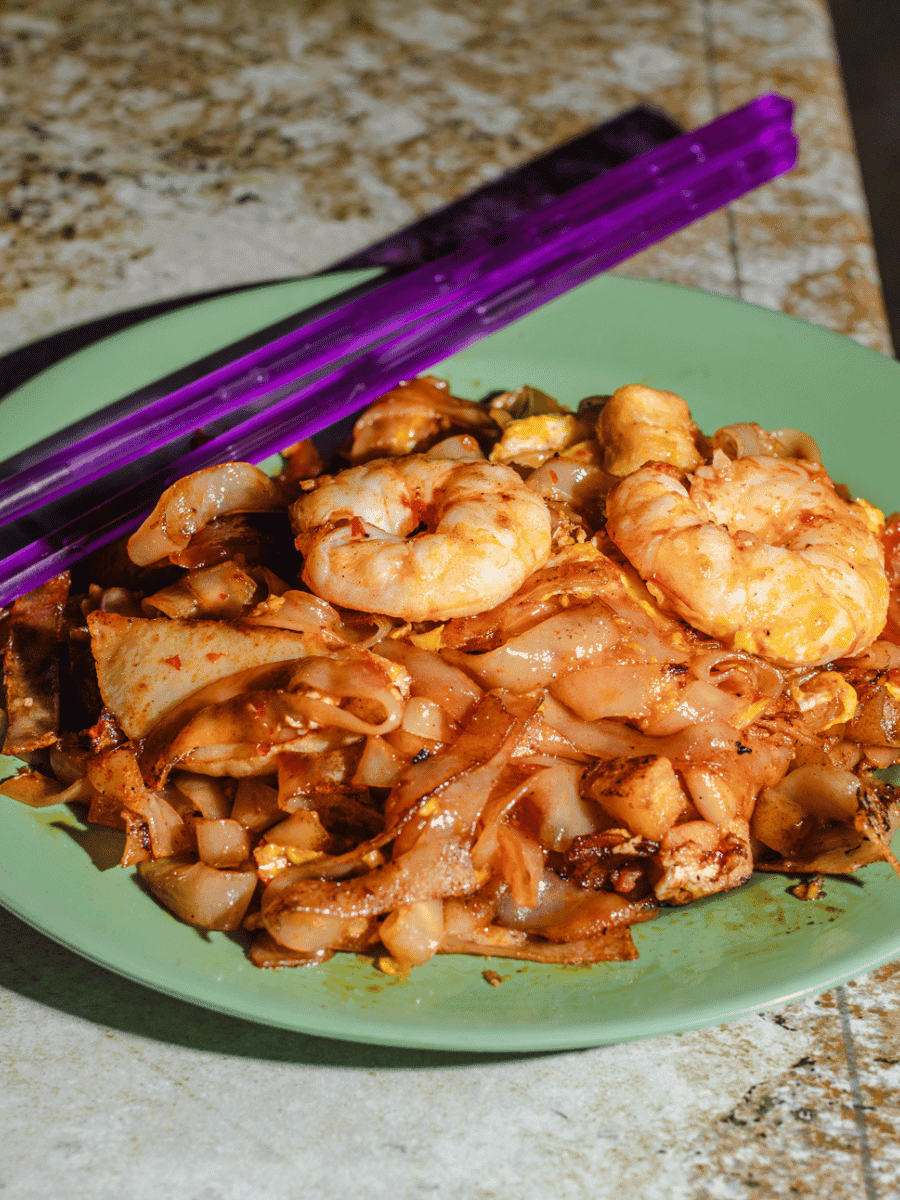
Flat rice noodles stir-fried hard in a wok with prawns, cockles, Chinese sausage, chives, bean sprouts and dark sweet soy. Penang's most famous hawker dish.
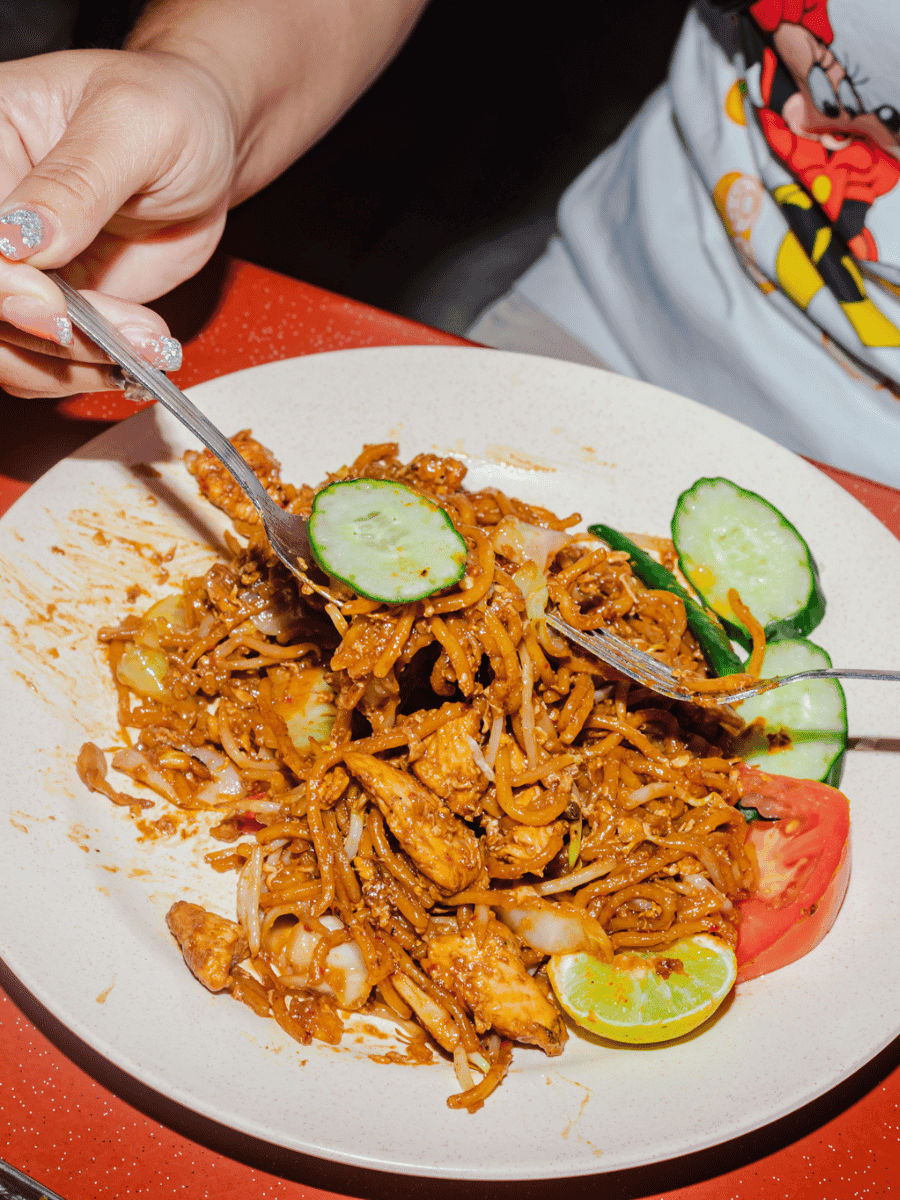
Yellow noodles fired in a screaming-hot wok with sambal, ketchup, egg, potato cubes and tofu puffs. Malaysia's signature mamak-stall plate, ready in six minutes.