

Destination
Ipoh
The story
Oh kio (Penang Hokkien for "oyster egg") is one of Penang's classic Chinese street snacks: small fresh oysters (usually the local Chinese variety) cooked briefly in a starchy egg-and-tapioca batter with garlic, spring onion and coriander, until the batter sets into a soft, slightly gooey texture with the oysters still just barely cooked and their brine intermixed with the eggs. Served on a small plate with a squeeze of lime and a small dish of chilli sauce, always with a cold Tiger beer alongside. Sold from stalls at Penang's night markets, especially in Chulia Street's food centre, and at seafood-focused kopitiams.
Method
Whisk together the chilli paste, fish sauce, lime juice, sugar and warm water in a small bowl. Set aside.
In a bowl, whisk together the eggs, tapioca starch, rice flour, water, salt, fish sauce and white pepper until smooth. Rest 10 minutes.
Drain the oysters and pat gently dry on kitchen paper. Check for shell fragments and discard.
Heat a wide heavy pan (a wok or large frying pan) over medium-high heat with 2 tbsp of the oil.
Add the oysters, garlic and spring onions to the pan. Cook 30 seconds, stirring gently, so the oysters just start to warm through.
Give the batter a quick whisk. Pour it over the oysters in the pan. Reduce heat to medium. Cook 2 to 3 minutes without stirring, letting the batter set around the oysters.
Once the bottom has set, break up the oh kio into rough pieces with a spatula and toss briefly for another 30 to 60 seconds, so the top of the batter cooks through. It should still be slightly soft and glossy, not dry.
Scatter with fresh coriander. Tip onto a plate and serve immediately with lime wedges and the chilli-lime sauce on the side. Cold beer alongside.
Tips
- Small fresh oysters only. Large oysters overcook and turn rubbery; small oysters (2 to 3cm) stay just tender in the brief pan-fry. Sold at Chinese and Southeast Asian fishmongers.
- Tapioca starch is essential. It's what gives oh kio its specific soft, slightly gooey texture. Cornstarch is a workable substitute; regular wheat flour is not.
- Medium-high heat, then medium. Start hot to sear the oysters and set the batter's bottom, then drop to medium to cook through gently. Sustained high heat overcooks the oysters and burns the batter.
- Cook briefly. 3 minutes total is the target. Longer and the oysters turn rubbery and the batter dries out. Oh kio should be soft and slightly wet-looking when served.
- Serve immediately. The texture stiffens as it cools. Straight from the pan to the plate to the table.
More recipes
View all
Steamed savoury rice cakes topped with fried preserved radish, oil and sesame. Malaysia and Singapore's soft breakfast, eaten with a small spoon.

Silky rice noodle rolls in a dark sweet-shrimp sauce with a scatter of toasted sesame seeds. Penang's morning-market breakfast, cousin to Hong Kong's cheung fun.
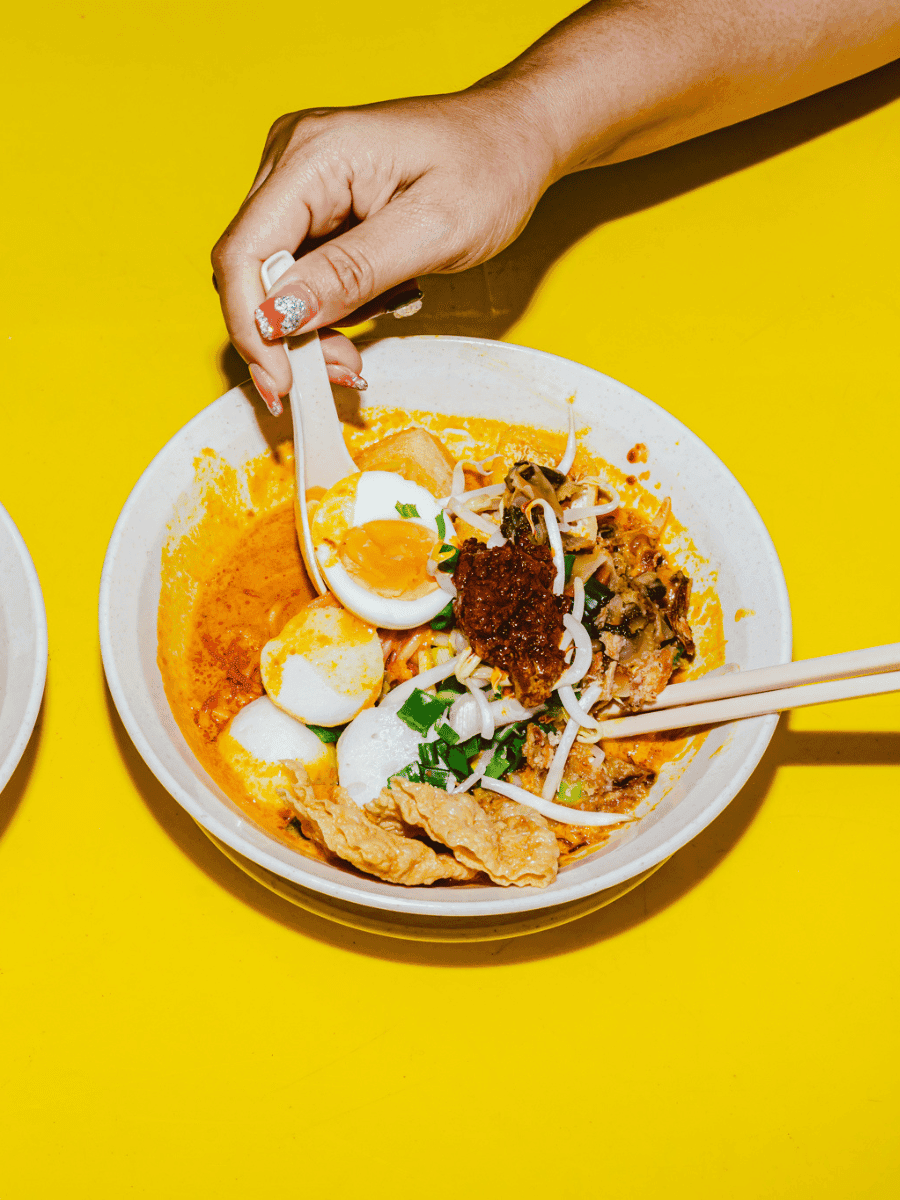
Coconut-based curry noodle soup with prawns, tofu puffs, cockles and a scarlet slick of chilli oil. Malaysia's default lunchtime laksa, richer and softer than its Penang cousin.
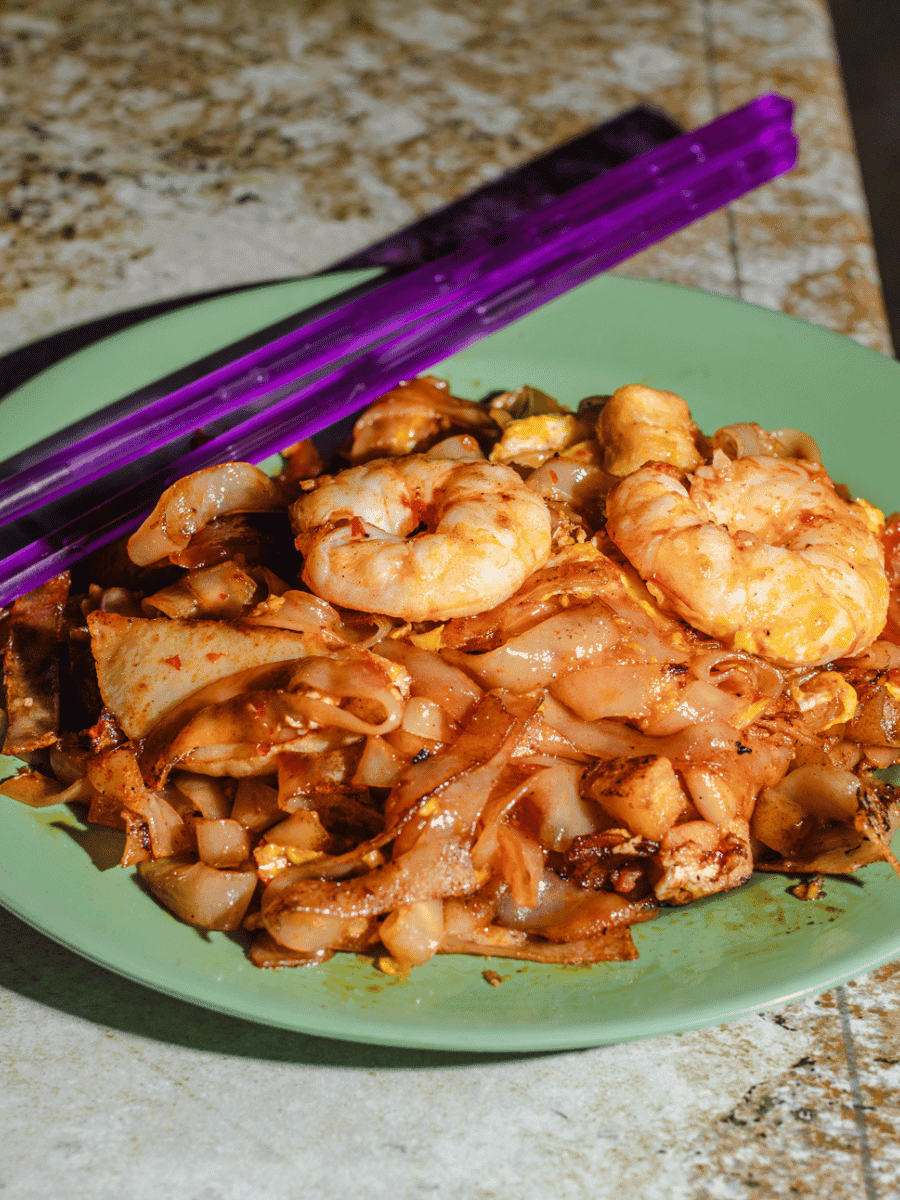
Flat rice noodles stir-fried hard in a wok with prawns, cockles, Chinese sausage, chives, bean sprouts and dark sweet soy. Penang's most famous hawker dish.

Egg noodles and rice vermicelli in a deep, orange prawn-shell broth topped with poached prawns, hard-boiled egg, water spinach and fried shallots. Penang's most-loved noodle soup.

A pyramid of banana-leaf-wrapped coconut rice with sambal, fried anchovies, peanuts, hard-boiled egg and cucumber. Malaysia's national breakfast, sold from every roadside stall before dawn.