
Destination
Bogota
The story
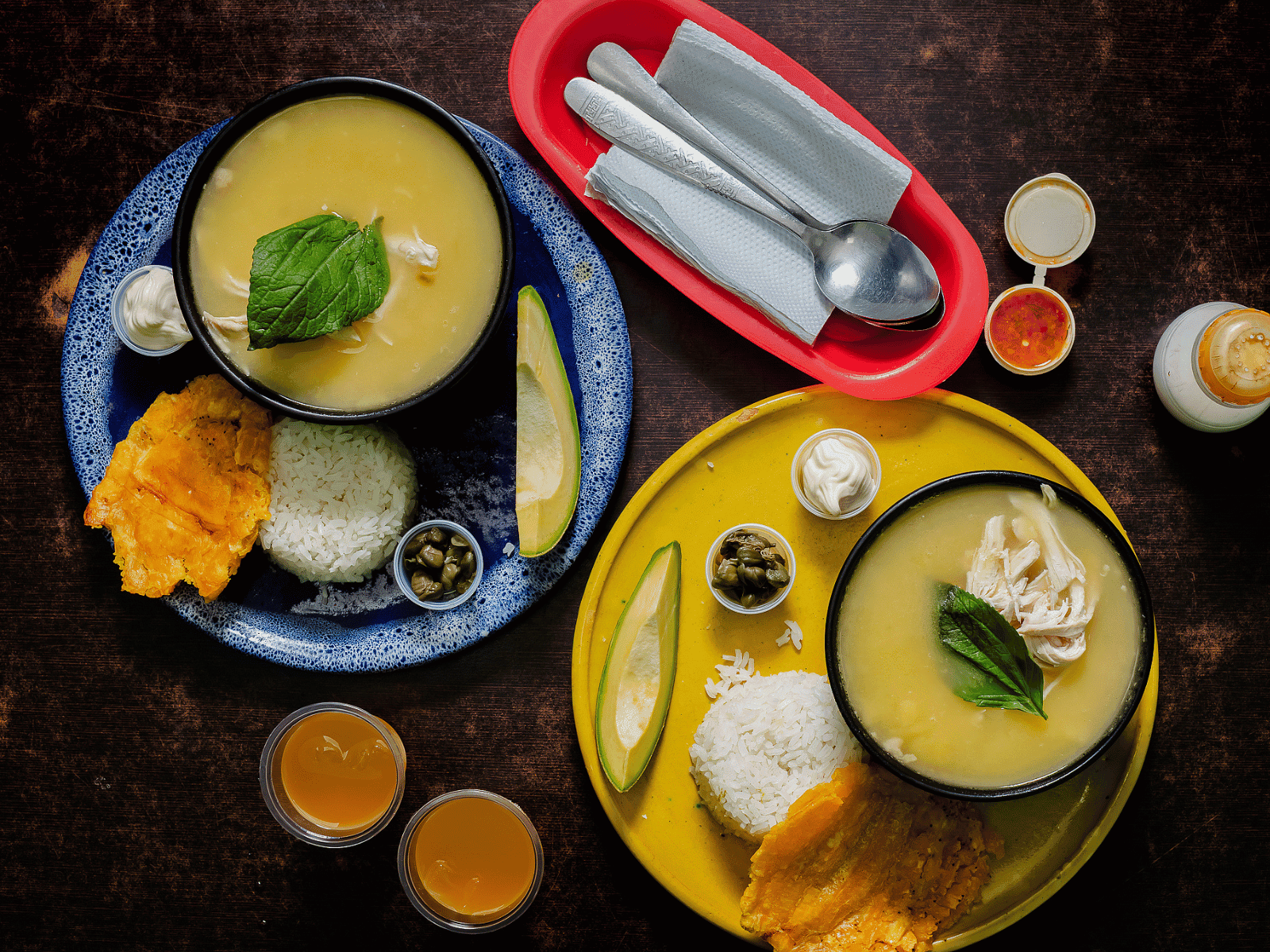
Ajiaco santafereño is the dish that says Bogotá. A thick soup of shredded chicken poached slowly in stock with three specific types of potato (papa sabanera, papa pastusa and papa criolla, each doing a different job), sweet corn on the cob and the native herb guascas that gives the broth its distinctive earthy, almost tarragon-like note. Served in a wide bowl and finished at the table with three garnishes: capers, single cream and slices of avocado. White rice on the side. Cold beer or a glass of chicha.
Method
Place the chicken in a large heavy pot with the quartered onion, garlic, the whites of the spring onions and the cold water. Bring to a gentle simmer, skim any foam, and poach 40 minutes until the chicken is cooked through and the stock is rich.
Lift the chicken out. Strain the stock through a sieve back into a clean pot; you should have about 2.5 litres. Cool the chicken until you can handle it, then discard the skin and bones, shred the meat and set aside.
To the strained stock, add the papa sabanera and papa pastusa (the two that will break down). Bring back to a simmer and cook 20 minutes, stirring occasionally.
Add the papa criolla (whole), the corn rounds and 2 tbsp of the guascas. Simmer another 20 minutes, until the corn is tender and the criollas are cooked through but still holding their shape. The two starchy potatoes should have started to break down and thicken the broth.
Add the shredded chicken back to the pot with the remaining 1 tbsp of guascas. Simmer 5 more minutes to warm the meat and let the herbs bloom.
Taste for salt and pepper. Off the heat, stir in the greens of the spring onions.
Ladle into wide bowls, making sure everyone gets some of each potato, a round of corn and plenty of chicken. Bring the three garnishes to the table in small bowls (cream, capers, avocado) so each person adds their own. Serve rice on the side and ají picante for those who want heat.
Tips
- Guascas is essential. Dried guascas is sold at Colombian and Latin American grocers in small bags. Without it, you have a decent chicken soup but not ajiaco. There is no perfect substitute; tarragon adds a distant hint but isn't the same.
- The three potato rule is real. The two starchy potatoes break down and give body to the broth; the papa criolla stays whole and gives colour and sweetness. Using only one type gives you a lopsided soup.
- Papa criolla is sold frozen in the West. Colombian grocers stock small bags of frozen papa criolla (peeled and whole). Add them straight from frozen; they only need 20 minutes to cook through. Baby new potatoes work as a substitute if you can't find them.
- The three garnishes are not decoration. Each has a purpose: capers add brine, cream adds richness, avocado adds fresh fat. All three at the table so guests can build their own bowl.
- Better the next day. Ajiaco improves overnight as the broth thickens and the guascas flavour deepens. Make it Saturday for a Sunday lunch.
More recipes
View all
Bijao-leaf-wrapped parcels of yellow corn masa, pork, chicken, chorizo, chickpea, potato, egg and hogao, steamed for hours over an open pot. Paisa Sunday breakfast at its most generous.
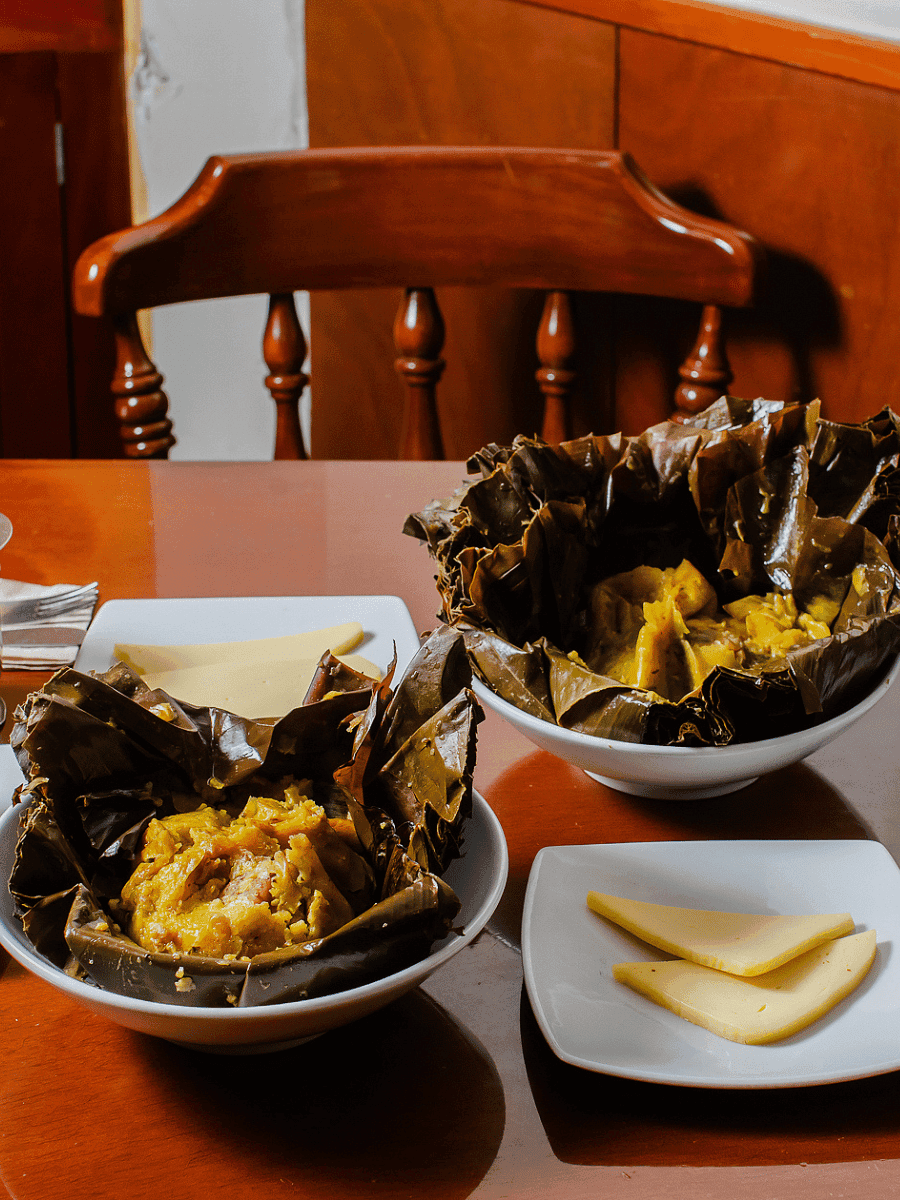
Corn masa wrapped around pork, chicken, egg, potato and rice, tied inside banana leaves and steamed for hours. Bogotá's Sunday-morning tamal, and a full day's project in the kitchen.

A hot broth of milk and water with poached eggs, chopped spring onion and coriander, poured over torn bread. Bogotá's Muisca-inherited breakfast (and hangover cure).

A slow-cooked Andean feast of beef, chicken, ribs and the strange, wonderful native tubers of Colombia's mountain heartland: cubios, ibias, hibias and papa criolla, in one pot.
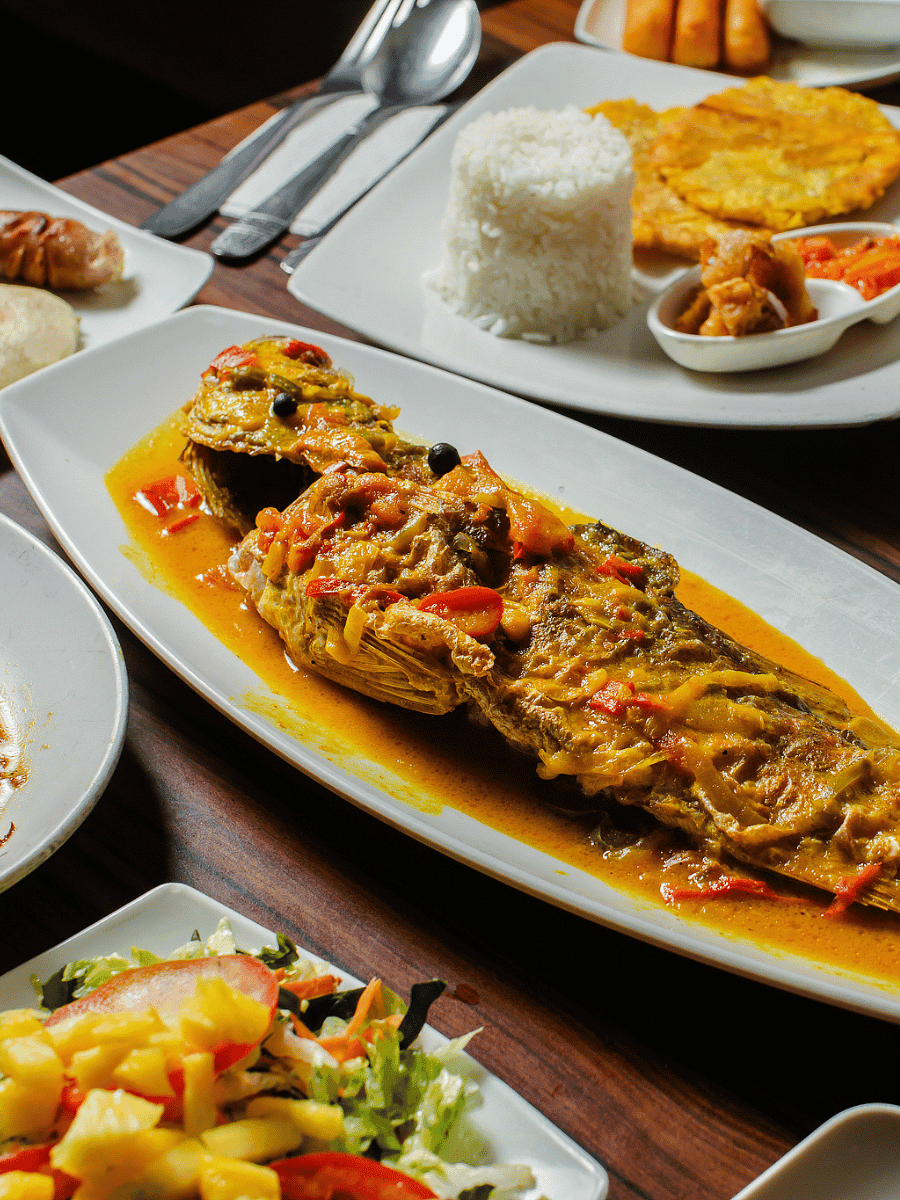
Whole fish poached in a thick coconut milk sauce with tomato, onion and achiote, served over white rice. Cartagena's Sunday-lunch classic, richer and thicker than a soup.

Yellow corn dough wrapped around a filling of shredded chicken, potato and hogao, deep-fried until deep gold and crackly. Colombia's small crunchy street empanada.